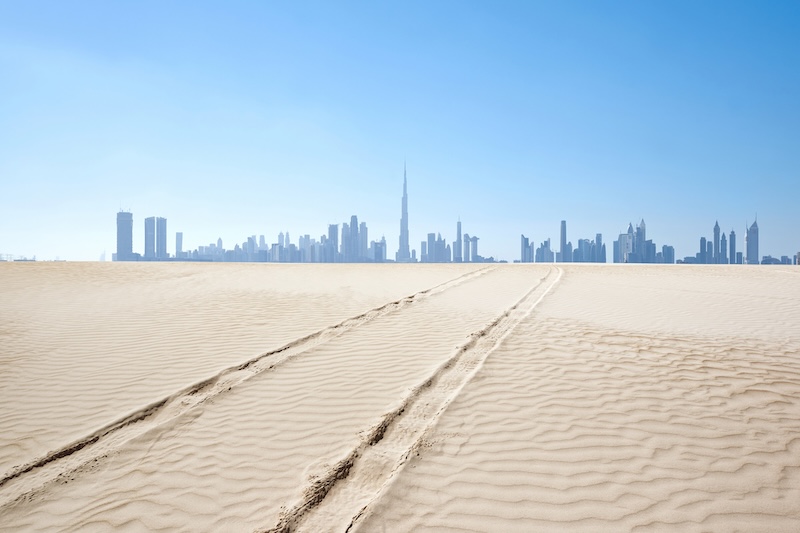
Dubai, Abu Dhabi, Qatar, Beirut, Riyadh, Oman….the list goes on. For years they have been some of the most desirable locations for people all over the world to move to. Since the 1970s a combination of massive amounts of oil money mixed with smart reinvestment has made this part of the world one of the richest and most affluent pockets of planet Earth.
Millions of expats have built careers and fortunes in cities across the UAE whilst increasingly more people have been settling down in Lebanon or Jordan. Many of these countries provide tax-free salaries and are in a geographical area of huge economic expansion. In the United Arab Emirates alone, expatriates account for nearly 90% of the population, a statistic that underscores just how central foreign workers are to the region’s economic model.
A Region Under Pressure
Things have changed in recent months. Conflict in Syria, Palestine, and Israel now combined with a massive regional war involving Iran and Lebanon has made the entire region feel unsafe. Even the more stable countries in the region such as Qatar and Dubai have not been spared from the drone and missile attacks engulfing the region.
Beirut, which was quickly becoming a tourism hotspot, is now home to over 1 million displaced southern Lebanese as villages in the south of the country are being wiped out almost completely by Israeli missiles.

Read More Like This: What’s Next for the UAE and Qatar?
Why the Gulf Still Appeals
In the Gulf region there are still high salaries, particularly in sectors such as finance, construction, and technology, which continue to outpace many Western markets. In Qatar, average expatriate earnings are among the highest globally, and the absence of personal income tax across much of the region allows professionals to accumulate savings at a rate that would be difficult to replicate in Europe or North America.
Governments have also made efforts to modernize their immigration systems, introducing long-term residency schemes and “golden visas” designed to retain talent and attract investors.
Recent reminders of the geopolitical instability have led to a decline in the region’s appeal but that is not the only reason that people are looking for alternative destinations. Residency in many of the Gulf countries is tied to employment. This leaves expats vulnerable to sudden changes in job status. While reforms have been introduced, pathways to permanent settlement or citizenship can be limited.
At the same time, the cost of living in flagship cities such as Dubai has risen sharply.
Why Expats Are Looking Elsewhere
Geopolitics has probably been the biggest factor in recent decision-making. The region has long been characterized by periodic instability but recent tensions have heightened awareness among expatriates and investors alike. Wealth managers report a growing trend of clients diversifying their holdings geographically, often pairing a Gulf-based income with assets or residency rights in Europe.
In some cases, this has translated into a gradual relocation, particularly among those approaching retirement or seeking a more predictable long-term environment.
So where are people moving to now?
Read More Like This: Geopolitical Risk and the Shift Beyond the Gulf
Europe’s Growing Appeal
Well Europe has emerged as a natural destination in this context. Any country within the European Union is more or less institutionally stable and provides high-quality public services. Germany, for example, continues to attract skilled migrants in large numbers, supported by a strong labor market and a robust industrial base.
The general salaries are lower but the security of potential long-term residence and access to social infrastructure is appealing to many.
Further south, countries such as Portugal, Spain, and Greece are benefitting from more migration. Retirees and remote workers are moving to these countries in droves as they have a low cost of living combined with beautiful weather. Studies suggest that the cost of living in parts of Southern Europe is significantly lower than in major Western cities, allowing expatriates to maintain a comfortable lifestyle while reducing financial pressure.

Read More Like This: Why Europe is Winning the Relocation Race
Malta and the Middle Ground
Malta has become something of a bellwether for this trend and found itself as a bit of a middle ground between the UAE and Europe. It is English-speaking, well-connected, and offers a favorable tax regime. It has attracted increasing interest from professionals seeking an alternative to Dubai’s high-cost environment.
Many European companies are headquartered there and estate agents and relocation firms report a noticeable uptick in inquiries from Gulf-based expatriates in recent months. Many of these are exploring the possibility of splitting their time between regions rather than committing fully to one.
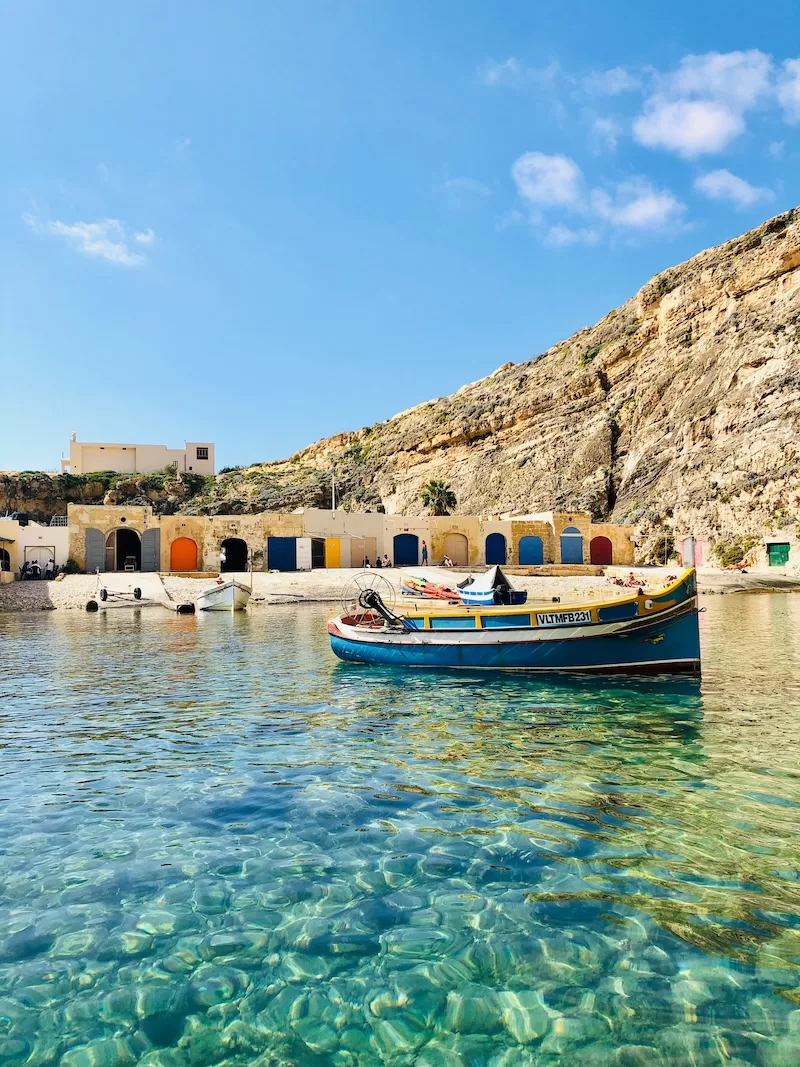
Read More Like This: Malta – A Perfect Expat and Holiday Destination
Asia’s Flexible Alternative
Beyond Europe, Asia-Pacific destinations are gaining traction, particularly among younger professionals and digital nomads. Countries such as Malaysia and Thailand have long been popular for their affordability and quality of life but recent visa reforms have made them more accessible to remote workers.
There is undoubtedly a broader global shift towards this type of mobility that enables individuals to live and work across borders and many Asia-Pacific countries are tapping into that.

Read More Like This: The Ultimate Guide for Future Expats in Thailand
Long-Term Stability
Australia and New Zealand are a lot more expensive than all the aforementioned locations but have seen a growing appeal for expats. Both countries have a great education and healthcare system and are as far away from global conflict as one can be. Factors that are often secondary considerations in the Gulf but become increasingly important over time.
Many expats in the Gulf likely don’t consider themselves to remain there forever and when it comes to raising a family, buying a house, and settling down, Australia and New Zealand seem to be where many former Gulf expats are finding themselves. The ability to secure permanent residency and citizenship remains a decisive advantage for those seeking to put down roots.


Read More Like This: Top 10 Things to Know if You’re Moving to Australia
Lifestyle Migration in the Americas
Countries such as Panama and Costa Rica have developed reputations as retirement and lifestyle destinations. They also have relatively low costs and large, established expat communities. The possibility to make a large income in these countries is quite small but for remote workers whose income is not tied to local employment, the appeal is a high quality of life at a fraction of the cost of more traditional expat hubs.
At the same time, a new category of “hybrid destinations” is emerging of countries that replicate some of the Middle East’s advantages while avoiding its constraints. Cyprus and parts of southern Spain, for example, offer sunshine, international connectivity, and tax incentives but within a European legal and political framework.
These locations are increasingly marketed as alternatives to the Gulf, particularly for those who value lifestyle and stability over maximum earning potential.

Read More Like This: Costa Rica or Bali? A Tale Between Two Paradises
A More Flexible Expat Future
Despite these shifts, it would be misleading to suggest that the Middle East is losing its relevance. It continues to attract a significant share of global workers, particularly in high-paying industries. The United Arab Emirates remains one of the top destinations for high-net-worth individuals and continues to have thousands of millionaires relocating there each year.
The strategy for many who have businesses set up in the Gulf seems not to leave the region entirely but to use it as a base for wealth accumulation while establishing options elsewhere.
Rather than making a single, long-term move, many expats are adopting a more fluid lifestyle. A professional might work in Dubai while maintaining residency in Portugal or invest in property in Spain while earning income in Qatar.
The Gulf remains a powerful engine of opportunity and will likely continue on its upward trajectory, despite regional tensions. However, it is no longer the default choice for globally mobile individuals.
There is now a more complex map of global living. Where Europe offers security, Asia offers flexibility, and the Americas offer value. The Middle East, for its part, continues to offer unmatched earning potential.
In an era defined by uncertainty and opportunity in equal measure, that flexibility may prove to be the most valuable asset of all.
Read More Like This: The Rise of Smaller Countries as Expat Hotspots
Key Takeaways
Why are some expats reconsidering the Gulf?
Rising geopolitical tension, residency tied to employment, limited citizenship pathways, and increasing living costs are causing many expats to look at longer-term alternatives.
Why does Europe appeal to former Gulf expats?
Europe offers institutional stability, better long-term residency options, and stronger public infrastructure, even if average salaries are lower.
Why is Malta positioned as a middle ground?
Malta combines English-speaking accessibility, tax advantages, and strong connectivity, making it attractive to professionals who want a bridge between Gulf life and Europe.
Why are Asia-Pacific countries gaining attention?
Destinations such as Malaysia and Thailand appeal to younger professionals and digital nomads because of affordability, flexibility, and improving visa access.
What is the bigger trend behind this article?
Many expats are no longer choosing one permanent destination. Instead, they are building multi-country strategies that combine income in one region with residency, property, or lifestyle benefits in another.
About the Author
Ethan Rooney is an Irish journalist covering global communities, culture, and niche movements. You can find more of his work here.
Contact Author
"*" indicates required fields
Stay Ahead on Every Adventure!
Stay updated with the World News on Escape Artist. Get all the travel news, international destinations, expat living, moving abroad, Lifestyle Tips, and digital nomad opportunities. Your next journey starts here—don’t miss a moment! Subscribe Now !
Dubai, Abu Dhabi, Qatar, Beirut, Riyadh, Oman….the list goes on. For years they have been some of the most desirable locations for people all over the world to move to. Since the 1970s a combination of massive amounts of oil money mixed with smart reinvestment has made this part of the world one of the richest and most affluent pockets of planet Earth.
Millions of expats have built careers and fortunes in cities across the UAE whilst increasingly more people have been settling down in Lebanon or Jordan. Many of these countries provide tax-free salaries and are in a geographical area of huge economic expansion. In the United Arab Emirates alone, expatriates account for nearly 90% of the population, a statistic that underscores just how central foreign workers are to the region’s economic model.
A Region Under Pressure
If you'd like to read the full story, simply enter your email to subscribe to our newsletter.
For even more expert insights, unmissable resources, and exclusive invites, explore our premium subscription offers here.
OR
Already a Subscriber? Click here to login
Subscription required
You've reached your limit of free articles. For full access to Escape Artist, and all of our insights on travel, moving abroad, and the digital nomad life, click here to Subscribe.
Already a Subscriber? Log in here