Hungary’s simplified naturalization program is one of the most straightforward and affordable ways to gain a second citizenship — if you qualify and know exactly how to prepare.
On paper, the requirements look simple. In practice, the process demands accuracy, organization, and a clear strategy. Done right, it can take you from family papers in a shoebox to an EU passport in hand. Done wrong, it can mean years lost to rework.
If you’re considering the do-it-yourself approach, here are the essential steps, the pitfalls to avoid, and where professional guidance can save you months of time.
Follow this step-by-step guide to apply for and secure Hungarian citizenship yourself.
Step 1: Confirm Your Eligibility
Hungary grants citizenship by descent (jus sanguinis). Under the simplified naturalization program, you may qualify if:
- You have a direct ancestor who was a Hungarian citizen.
- You can prove an unbroken chain from that ancestor to yourself with official records.
- You can speak basic Hungarian in a live interview.
- You have no criminal record and pass background checks.
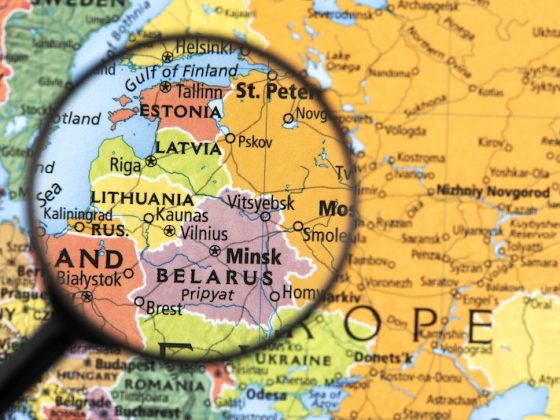
Key point: Your ancestor doesn’t have to have been born in modern-day Hungary. Borders shifted dramatically after the Treaty of Trianon (1920) and again after World War II. Someone born in what is now Slovakia, Romania, Serbia, or Ukraine could still have been a Hungarian citizen at the time.
Read more like this: Dual Citizenship, Is It Right for You?
Where to begin:
- Genealogy platforms like Ancestry or FamilySearch.
- The Hungarian National Archives and free public databases.
- Learn Hungarian Anywhere Network
- Municipal archives or parish records in your ancestor’s hometown — many respond to email requests.
Useful records include birth, marriage, and death certificates; military draft cards; residency registers; and sometimes even photographs with specific matching addresses or names that corroborate other documents.
You’ll also need to collect your own and your parents’ U.S. vital records — birth, marriage, and any name change certificates — then translate and apostille them for Hungary.
The criteria for citizenship are generous, but documentation must be perfectly organized and the proof clear and unbroken. That’s often the difference between success and frustration.

Step 2: Map Your Family Line
Create a timeline from you back to your Hungarian ancestor. For each generation, gather:
- Birth and marriage certificates.
- Death certificates (where applicable).
- Naturalization or name change records.
Name discrepancies are common when families move between languages and alphabets. Keep notes explaining each change, and ensure you have at least two documents to prove the link.
Pro tip: Build a spreadsheet that tracks every document, the language it’s in, and whether it’s been translated and apostilled.
Read more like this: Best Countries to Get Citizenship by Descent
Step 3: Find Proof of Citizenship
This is where many DIY applicants get stuck. You must prove citizenship, not just ethnicity. Acceptable records may include:
- Birth certificates with explicit citizenship notations.
- Old Hungarian passports.
- Military service records from the Kingdom of Hungary.
- Residency or naturalization documents issued by Hungarian authorities.
Earlier records may ONLY exist in the respective RELIGIOUS or municipal archives, and many are handwritten in Hungarian or Latin. Misinterpreting them can set you back months.
Step 4: Legalize and Translate Your Documents
At the current time of writing, Budapest requires:
- Certified translations into Hungarian for all foreign-language documents.
- Apostilles depending on the issuing country.
DIY warning: Not all translators understand the specific terminology for Hungarian citizenship cases. Inaccurate translations are a common reason for delays.
Step 5: Prepare for the Language Interview
This requirement is often misunderstood. There is no standardized exam for simplified naturalization. Instead, the consular officer will speak to you in Hungarian and assess whether you can hold a basic conversation and explain your evidence.
You must be able to:
- Introduce yourself and state your residence.
- Explain your family connection to Hungary.
- Answer questions about your documents.
Fluency is not required. Think tourist-level conversation — but steady, confident, and with clear pronunciation. If you can understand basic questions and respond without hesitation, you are in good shape.
Our Learn Hungarian Anywhere 36-lesson method was built around this exact moment — interview-first, focused only on the language that matters for citizenship.
Step 6: Book Your Consulate Appointment
All applications must be filed in person at a Hungarian consulate. There is no mail-in option. Before booking, confirm:

- Your documents are complete, translated, and legalized.
- You have organized copies in an indexed binder.
- You’ve rehearsed your Hungarian answers until they are natural.
Step 7: File Your Application
On the day of your appointment:
- Greet the officer in Hungarian.
- Present your documents clearly and calmly.
- Answer questions simply, without over-explaining.
If accepted, your file will be sent to the Government Office in Budapest for processing.
Step 8: Wait for the Decision
THE PROCESS MAY TAKE 6–12 months for processing, depending on consulate workload, file complexity, and whether additional LANGUAGE verification is needed. Be aware of holiday and summer breaks that can delay processing times.
If approved, you’ll be asked to take an oath or pledge — usually at the consulate you took the interview. At that moment, you officially become a Hungarian citizen.

Step 9: Apply for Your Passport and ID Card
DURING THE PROCESS DON’T FORGET TO REQUEST AND APPLY FOR YOUR:
- Hungarian passport
- Hungarian ID
- Hungarian address card
With these in hand, you hold full EU citizenship: freedom to live and work in 27 member states, and visa-free/visa-on-arrival travel to more than 180 destinations.
Read more like this: Top 9 Passports by Investment Programs
When DIY Isn’t the Best Option
You could try to do this yourself, but professional help is worth many more in these cases and it saves time and avoids costly mistakes, especially if you face:
- Doubts or eligibility questions (ancestors who may have lost citizenship).
- Gaps or discrepancies in your family line.
- Hard-to-access municipal or church records.
- Uncertainty about translations and apostilles.
- Language learning needs and nerves before the interview.
That’s where we come in. Learn Hungarian Anywhere combines targeted Hungarian language training with document preparation strategies, THAT HAVE HELPED MANY TO HUNGARIAN CITIZENSHIP SUCCESSFULLY.
Final Thoughts
Hungary’s simplified naturalization program is one of the most affordable, powerful second citizenship options available today. But the “straightforward” path only stays simple if you get every detail right.
If you’re going DIY:
- Confirm eligibility thoroughly.
- Organize every document to Hungarian standards.
- Prepare only the Hungarian you’ll actually need.
If you’d rather skip the trial-and-error, the right guidance can turn an intimidating process into a clear, achievable plan — and get you to that Hungarian passport faster with Learn Hungarian Anywhere.
Good luck!
Read more like this: Couple’s Journey from America to Hungarian Citizenship

Where to Learn More
For escape artist subscribers only, we’re offering a free 20 minute consultation talk with our team including Lidia and I — so you can see exactly where you stand and what gaps you need to fill. You can book it by emailing us: [email protected] and you can also get in touch by visiting our socials and links provided.
About the Author
Ethan & Lídia built Learn Hungarian Anywhere on the belief that freedom is earned through knowledge, cultural connection, and self-reliance. Their program transforms Hungarian ancestry into EU citizenship — and the ability to build a new life, from Berlin to Budapest to the beaches of Croatia.
Contact Author
"*" indicates required fields
Stay Ahead on Every Adventure!
Stay updated with the World News on Escape Artist. Get all the travel news, international destinations, expat living, moving abroad, Lifestyle Tips, and digital nomad opportunities. Your next journey starts here—don’t miss a moment! Subscribe Now !
Hungary’s simplified naturalization program is one of the most straightforward and affordable ways to gain a second citizenship — if you qualify and know exactly how to prepare.
On paper, the requirements look simple. In practice, the process demands accuracy, organization, and a clear strategy. Done right, it can take you from family papers in a shoebox to an EU passport in hand. Done wrong, it can mean years lost to rework.
If you’re considering the do-it-yourself approach, here are the essential steps, the pitfalls to avoid, and where professional guidance can save you months of time.
If you'd like to read the full story, simply enter your email to subscribe to our newsletter.
For even more expert insights, unmissable resources, and exclusive invites, explore our premium subscription offers here.
OR
Already a Subscriber? Click here to login
Subscription required
You've reached your limit of free articles. For full access to Escape Artist, and all of our insights on travel, moving abroad, and the digital nomad life, click here to Subscribe.
Already a Subscriber? Log in here