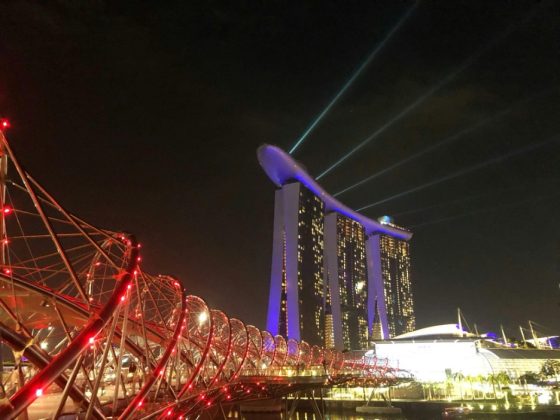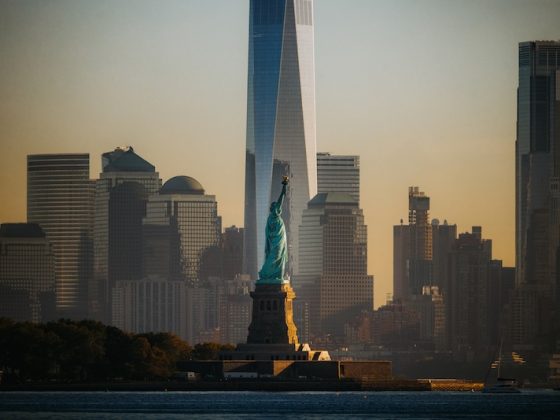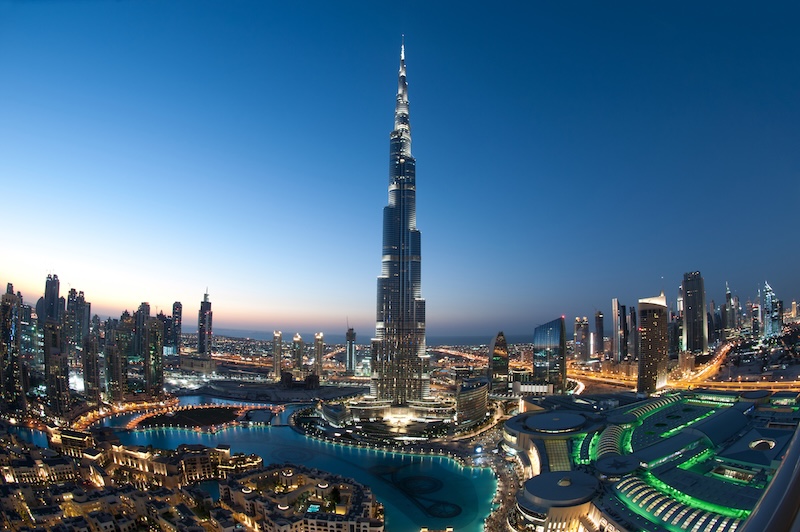
The Gulf region has often been seen as something of an exception to the crises associated with the Middle East in recent decades. The volatility of the region has rarely affected the Gulf states in the same way it has others. Places like Dubai, Qatar, and Abu Dhabi have cultivated reputations as ultra modern hubs of aviation and finance. In recent days, however, images of gleaming skylines and exquisite hotels have been replaced by scenes of burning buildings and rubble. Images that people are unfortunately accustomed to seeing elsewhere in the Middle East, but never in places like Dubai.
What Is Happening in Iran and Why It Affects the Gulf
The full story is still unfolding, but on February 28 tensions between the United States and Iran escalated dramatically. Peace talks were still ongoing when the United States and Israel began striking Iranian military and nuclear facilities as well as civilian infrastructure. Iran’s leader Ayatollah Khamenei was killed on the first day of these strikes and the Iranian military began retaliating.
While the UAE was not an active combatant in the strikes against Iran, the Gulf states host many US military bases from which the strikes were launched. Iran then began striking locations in Dubai, Abu Dhabi, Bahrain, Oman, and Qatar. This brought the Gulf states closer to direct spillover from regional conflict than at any point in recent years.
Gulf airspace was closed and Dubai International Airport, one of the busiest transit hubs in the world, halted or diverted flights. Abu Dhabi’s Zayed International Airport and Doha’s Hamad International Airport followed suit amid rapidly changing aviation advisories. Global airlines scrambled to reroute aircraft around closed corridors. Within 48 hours thousands of flights across the Middle East had been canceled or delayed, disrupting travel between Europe, Asia, Africa, and North America.
The UAE government moved quickly to stabilize conditions. Air defense systems intercepted aerial threats and authorities emphasized that the vast majority of missiles and drones were neutralized before reaching populated areas. While military locations were the primary targets, falling debris caused infrastructure damage in parts of Dubai and Abu Dhabi and several casualties were reported. For a country that has built its brand on safety and order, even these isolated incidents were enough to rattle nerves.
Is It Safe to Travel to the Gulf
Tourism in the Gulf was affected immediately. Dubai’s hospitality sector experienced a large wave of cancellations. Airlines such as Emirates, Qatar Airways, and Etihad suspended or canceled large portions of their schedules. The airports in the Gulf connect global aviation by linking east and west through their hubs. Airport closures and flight cancellations in this region create ripple effects that affect the entire world.
These headlines have triggered concern globally. While aviation disruption is being felt internationally, the situation on the ground in these countries remains relatively stable. Hotels, restaurants, schools, and public services have continued operating normally. Governments have used communication channels to provide frequent updates. Several Western governments have advised their citizens to consider departing the region if routes are available. Those advisories have been framed as precautionary guidance rather than emergency evacuation orders.
The UAE is not an active war zone and the disruption has largely been confined to aviation and proactive security measures. There has been uncertainty and disruption, but daily life is continuing, albeit under heightened alert.
What This Means for the UAE and Qatar
The psychological impact should not be underestimated. The UAE’s expat population constitutes roughly 85 to 90 percent of residents in cities like Dubai. These are professionals who relocated precisely because of perceived stability. For many, the sound of air defense systems activating, even when successfully intercepting threats, punctured the narrative that the Emirates is insulated from the region’s turbulence.
Community groups and social platforms quickly filled with questions about contingency plans and exit strategies. The conflict forced residents to confront a reality long acknowledged by analysts but rarely experienced directly. Geographic proximity to regional flashpoints carries inherent risk.
Qatar has experienced similar strains. Though less visually dramatic than Dubai’s skyline, Doha is a critical part of international aviation and energy markets. Temporary airspace closures disrupted Qatar Airways’ global operations while diplomatic channels worked to prevent further escalation. For a country that invested heavily in its post World Cup global branding, the perception of regional instability poses economic as well as reputational challenges.
The deeper question is whether this moment will fundamentally alter the perception of the Gulf as a safe and stable region. Many travelers and residents may begin to reconsider the UAE or Qatar as destinations.
Global Travel Disruption Spreads Beyond the Region
Global travel has already become more complicated as dozens of routes have been rerouted and extended between Europe and Asia. This has increased flight times and costs. Global airlines such as British Airways, Lufthansa, and Air France issued rolling cancellations to Dubai, Abu Dhabi, and Doha while awaiting security clearances, leaving thousands of passengers stranded in transit hubs from London to Singapore.
Travel insurance providers in the UK and the United States have also updated policy language to clarify exclusions related to acts of war and missile related disruption. Some customers have discovered that trip cancellation coverage does not automatically apply unless governments formally advise against travel.
Cruise itineraries scheduled to dock in Abu Dhabi and Doha have been revised or rerouted entirely. There have already been reports of thousands of canceled hotel and flight bookings in Dubai for the upcoming spring and summer travel seasons.
A Test of Resilience for the Gulf
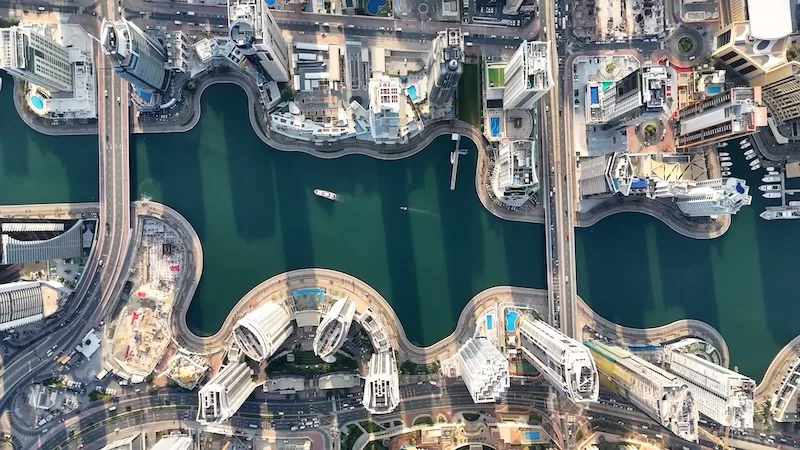
The long term impact will likely depend less on the continuation of the war in Iran and more on how effectively Gulf states manage spillover from the conflict. Gulf nations have remained relatively insulated from multiple regional conflicts in the past. The key question now is whether they can maintain that insulation.
While most of the UAE’s air defenses functioned as intended and infrastructure damage remained limited, convincing the global public that places like Abu Dhabi or Doha remain safe destinations will require sustained effort.
The UAE has historically demonstrated resilience in the face of shocks. The 2008 financial crisis exposed overleveraged real estate markets in Dubai, yet within a few years the city re emerged as a global tourism and business hub. The COVID 19 pandemic temporarily grounded aviation and emptied hotels, but Dubai reopened earlier than many other global cities and rebounded quickly. Oil price collapses and regional diplomatic disputes have tested the federation before, and it has recovered each time.
The present crisis may prove harder to recover from, despite the fact that the region has arguably been less directly affected than in some previous crises.
What Prospective Residents and Travelers Should Consider
For prospective movers, prudence suggests a closer evaluation of regional risk. Anyone considering relocation should understand that a country labeled a safe haven is not immune from geopolitical currents. The Gulf’s stability has always been underpinned by security alliances and strategic balancing. When tensions escalate between global powers and regional actors, the Gulf inevitably feels those reverberations.
At the same time it is important not to conflate proximity with equivalence. The UAE is not Iran, nor Israel, nor a battlefield state. Its domestic security apparatus remains robust and its governance structures remain centralized and responsive.
The tourism sector will likely experience a temporary contraction. High spending leisure travel is central to the region’s economic model, and the travelers drawn to these destinations are often more sensitive to risk.
Once airspace normalizes and the immediate crisis subsides, the underlying attractions of the UAE remain unchanged. Tax advantages, luxury infrastructure, and global connectivity continue to define the country. What may shift is the psychological perception of safety that has long underpinned the Gulf’s global appeal.
A Moment of Uncertainty Rather Than Collapse
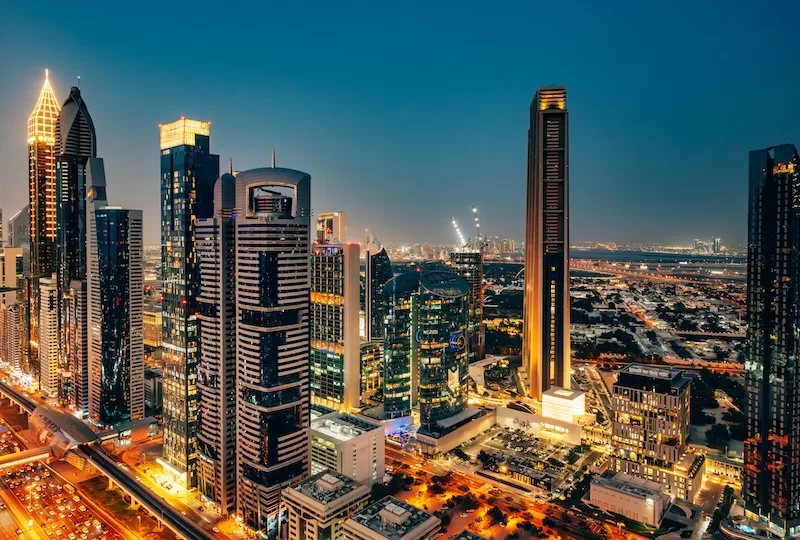
This moment represents a stress test rather than a collapse. It has exposed vulnerabilities tied to the region’s geography but has also demonstrated the capacity of the UAE and Qatar to respond.
For investors or long term residents, the key question is not a single week of disruption but whether the region enters a prolonged period of conflict.
The UAE and Qatar are navigating one of the most serious geopolitical flare ups in recent memory. For readers weighing travel or relocation decisions, the takeaway is nuanced. This is not a moment for complacency, nor is it a reason for wholesale retreat. At the time of writing travel remains possible provided flights are operating, but caution is essential and the situation remains fluid.
If escalation continues the calculus may change. If diplomacy reasserts itself, this disruption may ultimately be remembered as a sharp but temporary shock.
In a region defined by cycles of tension and recovery, the Emirates once again finds itself confronting a familiar question. Whether its promise of stability can endure under pressure.
Key Takeaways
Is it safe to travel to the UAE and Qatar right now?
While aviation disruption is being felt internationally, the situation on the ground in these countries remains relatively stable. Hotels, restaurants, schools, and public services have continued operating normally. However, several Western governments have advised their citizens to consider departing the region if routes are available as a precautionary measure.
How has the regional conflict affected aviation in the Gulf?
Gulf airspace was closed and major hubs like Dubai International Airport, Zayed International Airport, and Hamad International Airport halted or diverted flights. This has disrupted travel between Europe, Asia, Africa, and North America, leading to thousands of flight cancellations and delays.
What is the psychological impact on the expat population?
The UAE’s expat population, which constitutes roughly 85 to 90 percent of residents in cities like Dubai, has been rattled by the sound of air defense systems. This has punctured the narrative that the Emirates is insulated from regional turbulence, leading to questions about contingency plans and exit strategies.
How are the Gulf governments responding to the crisis?
The UAE government moved quickly to stabilize conditions, using air defense systems to intercept aerial threats. Authorities have emphasized that the vast majority of missiles and drones were neutralized before reaching populated areas, and they continue to provide frequent updates through communication channels.
Will this crisis fundamentally alter the perception of the Gulf?
The long-term impact will likely depend on how effectively Gulf states manage spillover from the conflict. While the UAE has historically demonstrated resilience in the face of shocks like the 2008 financial crisis and the COVID-19 pandemic, the present crisis may prove harder to recover from due to the psychological perception of safety.
What should prospective residents and travelers consider?
Prospective movers should understand that a country labeled a safe haven is not immune from geopolitical currents. While the UAE’s domestic security apparatus remains robust, the tourism sector will likely experience a temporary contraction as risk-sensitive travelers reconsider their plans.
About the Author
Ethan Rooney is an Irish journalist covering global communities, culture, and niche movements. You can find more of his work here.
Contact Author
"*" indicates required fields
Stay Ahead on Every Adventure!
Stay updated with the World News on Escape Artist. Get all the travel news, international destinations, expat living, moving abroad, Lifestyle Tips, and digital nomad opportunities. Your next journey starts here—don’t miss a moment! Subscribe Now !
The Gulf region has often been seen as something of an exception to the crises associated with the Middle East in recent decades. The volatility of the region has rarely affected the Gulf states in the same way it has others. Places like Dubai, Qatar, and Abu Dhabi have cultivated reputations as ultra modern hubs of aviation and finance. In recent days, however, images of gleaming skylines and exquisite hotels have been replaced by scenes of burning buildings and rubble. Images that people are unfortunately accustomed to seeing elsewhere in the Middle East, but never in places like Dubai.
What Is Happening in Iran and Why It Affects the Gulf
The full story is still unfolding, but on February 28 tensions between the United States and Iran escalated dramatically. Peace talks were still ongoing when the United States and Israel began striking Iranian military and nuclear facilities as well as civilian infrastructure. Iran’s leader Ayatollah Khamenei was killed on the first day of these strikes and the Iranian military began retaliating.
If you'd like to read the full story, simply enter your email to subscribe to our newsletter.
For even more expert insights, unmissable resources, and exclusive invites, explore our premium subscription offers here.
OR
Already a Subscriber? Click here to login
Subscription required
You've reached your limit of free articles. For full access to Escape Artist, and all of our insights on travel, moving abroad, and the digital nomad life, click here to Subscribe.
Already a Subscriber? Log in here