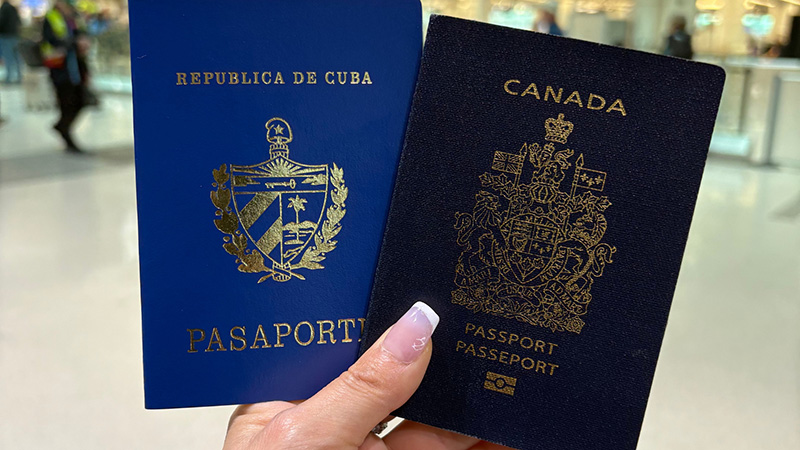
There is a quiet revolution happening in the dusty municipal archives, parish record offices, and consulate waiting rooms of the world. Thousands of people are discovering that they already hold the key to a second passport—not through an expensive ‘Golden Visa’ investment, not through a strategic marriage, and not through years of residency in a foreign country. They are finding it through the simple, undeniable fact of their DNA.
Citizenship by descent, or jus sanguinis (the ‘right of blood’), is one of the most powerful and underutilized pathways to global mobility. It is a dormant legal right, a genetic insurance policy left behind by your ancestors that is waiting to be claimed. In 2026, where borders are becoming more ‘friction-heavy,’ an ancestral passport is the ultimate geographic arbitrage.
The best part? In many cases, you do not need a five-figure legal retainer to claim it. While law firms will tell you the process is an impenetrable thicket of foreign code, the reality is that it is a project of meticulous archaeology. For the determined individual, the path to a second passport is paved with birth certificates and marriage licenses, not billable hours.
In a world of increasing sovereign risk, the ability to pivot between jurisdictions is no longer a luxury; it is a necessity. This guide provides the framework for reclaiming your ancestral sovereignty as a DIY project, ensuring that your future is anchored in more than just a single geography.
The Genetic Asset Class: Reclaiming Your Sovereignty
Most people view their family tree as a hobby—a collection of names and dates to be discussed over Thanksgiving dinner. But for the strategic global citizen, your lineage is a functional asset class. If your grandfather was born in Cork, or your great-grandfather emigrated from the outskirts of Naples, you might already be a citizen of the European Union. You just haven’t filed the paperwork yet.
In 2026, a second passport is more than a travel document; it is a tool for agency. It decouples your future from the political and economic whims of a single nation. It allows you to choose where you work, where you pay taxes, and where you seek healthcare. By reclaiming your ancestral citizenship, you are effectively ‘diversifying your personhood.’
The DIY approach to this process is not just about saving money. It is about understanding the ‘structural integrity’ of your own rights. When you do the legwork yourself—tracking down records in small Polish villages or navigating the Irish Foreign Births Register—you gain a level of operational intelligence that a lawyer simply cannot provide. You aren’t just a client; you are a sovereign actor.
This ‘Genetic Asset Class’ is inflation-proof and borderless. Unlike a bank account that can be frozen or a property that can be taxed, your right to citizenship by descent is an inherent part of your identity. It is the ultimate hedge against the ‘Chaos Variable’ of the modern era. By securing this right, you are building a legacy for your children that is defined by options, not by limitations.

The Archaeology of Identity: The DIY Audit
Before you begin the bureaucratic siege of a consulate, you must conduct a ‘records audit.’ This is the most critical phase of the DIY journey. You are looking for a continuous, unbroken chain of citizenship. You need to prove that the right to that passport was passed down to you like a relay baton, never dropped by an ancestor who renounced their original nationality before the next generation was born.
This phase requires you to become a private investigator of your own past. You will need to source ‘certified’ copies of vital records: birth, marriage, and death certificates for every person in the chain. You are not looking for photocopies or digital scans; you are looking for documents with the ‘raised seal’ of the state—the official imprimatur of legitimacy.
The DIY advantage here is significant. Most law firms will charge you a premium just to write letters to archives that you can contact yourself for the price of a postage stamp. By mastering the art of the ‘records request,’ you bypass the ‘paperwork tax’ and ensure that every document in your dossier is bulletproof. You are the curator of your own heritage.
Pay close attention to ‘naturalization records.’ This is where most ancestral lines are broken. You must prove that your ancestor did NOT become a citizen of their new country before the birth of the next person in your lineage. Finding this proof often involves a ‘deep dive’ into national archives or census records. It is a game of meticulous detail where a single date can be the difference between a new passport and a closed door.

The Bureaucratic Siege: Navigating the Consular Maze
Once you have your ‘Archaeology of Identity’ in order, you face the consulate. This is where most people lose their nerve. Consulate websites are often designed to be intentionally opaque—a ‘bureaucratic filter’ meant to discourage all but the most committed applicants. They want the ‘sluggishness of molasses’ to protect their workload.
In 2026, the consulate appointment is the ‘Gold Ticket.’ In many jurisdictions, wait times for an interview can stretch into years. The DIY applicant knows that the key is not just patience, but ‘consular intelligence.’ You must follow their checklists with the precision of a master watchmaker. If they ask for a document to be ‘apostilled’ and translated by a court-certified linguist, you do exactly that.
The DIY path requires a high ‘tolerance for ambiguity.’ You will likely face conflicting instructions, sudden changes in policy, and the occasional surly clerk. But remember: they are not the ones who grant you citizenship. The law is. If you meet the legal criteria and provide the required proof, the consulate is merely a processor. They cannot deny a right that is already yours.
To succeed in the ‘Consular Siege,’ treat the process as a project management task. Maintain a master folder of every interaction, every document, and every confirmation number. The more organized you are, the less power the bureaucracy has over you. You aren’t just asking for a favor; you are asserting a legal fact.

Regional Snapshots: The ‘Big Three’ in 2026
While many nations offer jus sanguinis, three countries currently lead the pack for DIY ancestral passports due to their relatively clear (though rigorous) pathways.
Italy (Jure Sanguinis): Italy is the ‘holy grail’ of ancestral citizenship because, theoretically, there is no generational limit. As long as your ancestor was alive when the Kingdom of Italy was formed in 1861 and never naturalized elsewhere before their child was born, you have a claim. The DIY path here is well-trodden, with extensive communities of applicants sharing records and strategies.
Ireland (Foreign Births Register): If you have a grandparent born on the island of Ireland, you are entitled to Irish citizenship. The process involves registering on the FBR. In 2026, this is a ‘logistics game.’ The documentation requirements are strict, and the processing times are long, but the legal path is crystal clear. It is perhaps the most straightforward EU passport available through ancestry.
Poland (Confirmation of Citizenship): Poland does not ‘grant’ citizenship to descendants; it ‘confirms’ it. This is an important distinction. Under Polish law, you are likely already a citizen if your ancestors left Poland after 1920 and maintained their ties. The DIY challenge here is the language—all applications must be in Polish—but with the help of a certified translator, the process is highly manageable.

Strategic Mitigation: Handling the ‘Paperwork Gaps’
No family history is perfect. You will inevitably find ‘name discrepancies’—a grandfather whose name was ‘Giuseppe’ in Italy but ‘Joe’ in New York. You will find missing marriage certificates from war-torn regions. You will find ancestors who seemingly vanished from the census for a decade. These are not roadblocks; they are opportunities for strategic mitigation.
The successful DIYer doesn’t panic at a gap; they build a ‘supplemental dossier.’ This involves using ‘secondary evidence’—church records, ship manifests, or naturalization petitions—to bridge the gap. In many cases, an ‘affidavit of identity’ can resolve minor spelling differences. You are building a preponderance of evidence that leads to a single, inescapable conclusion.
This is where the DIY approach truly shines. A lawyer might tell you a missing record is a ‘deal-breaker’ because it’s easier for them to close your file and move on to the next client. But you, with your skin in the game, will keep digging. You will find the parish record that proves the birth happened. You will find the ‘no record found’ letter that allows you to move to the next level of evidence. Your persistence is your greatest strategic advantage.
Mitigation is also about ‘reading the consulate.’ Some consulates are more lenient with minor name changes than others. By joining online forums and talking to fellow DIY applicants, you can learn which ‘fixers’ or which specific pieces of evidence are most likely to be accepted. You are crowdsourcing your success.
Conclusion: The Final Arbiter of Identity
Securing a second passport through ancestry is more than a paperwork exercise; it is a profound reclamation of history. It is a way to honor the journey your ancestors took while simultaneously securing your own future. In a world of ‘sovereign risk,’ your lineage is the one thing no government can take away from you.
By choosing the DIY path, you are not just saving money; you are building the ‘muscles of sovereignty.’ You are learning how to navigate foreign systems, how to verify facts, and how to assert your rights. When you finally hold that second passport in your hand, you will know that it wasn’t bought—it was earned. It is the ultimate geographic pivot, and it starts with a single letter to a dusty archive.
Read More Like This: America’s Second Passport Fever
People Also Ask
Q1. Do I really not need a lawyer for this?
In 90% of cases, no. If your lineage is clear and your records are available, a lawyer is simply a high-priced administrative assistant. You only need legal counsel if your case involves complex ‘court-based’ challenges or if there are significant legal disputes over your ancestor’s naturalization status.
Q2. What is an ‘Apostille’ and why is everyone asking for it?
An Apostille is an international certification that verifies the ‘authenticity’ of a document for use in another country. Think of it as a ‘Super-Notary.’ If you have a US birth certificate, the Secretary of State in the state where it was issued must Apostille it so the foreign government knows it’s legitimate.
Q3. How do I find records if I don’t speak the language of my ancestor?
The ‘Informal Economy of Genealogy’ is your best friend. Sites like FamilySearch and specialized Facebook groups are filled with volunteers who can help you navigate foreign archives. You can also hire ‘local researchers’ (not lawyers) in the home country for a small fee to pull records for you.
Q4. Does claiming a second passport affect my current citizenship?
In most cases (US, UK, Canada, Australia), no. These countries allow dual citizenship. However, you should always audit the current laws of your specific countries to ensure there are no ‘reciprocity risks.’ For the vast majority, adding a second passport is all upside.
Q5. What is the biggest ‘deal-breaker’ in citizenship by descent?
Naturalization. If your ancestor became a citizen of their new country before the next person in your chain was born, they usually ‘severed’ the line of descent. This is the first thing you must check. If the ‘relay baton’ was dropped, the ancestral claim usually ends there.
Contact Author
"*" indicates required fields
Stay Ahead on Every Adventure!
Stay updated with the World News on Escape Artist. Get all the travel news, international destinations, expat living, moving abroad, Lifestyle Tips, and digital nomad opportunities. Your next journey starts here—don’t miss a moment! Subscribe Now!


