The digital nomad movement initially sold a seductive, singular vision: the ability to work from anywhere, live on your own terms, and never stay in one place long enough for the mundane realities of life to set in. For single professionals and young couples, this vision largely delivered.
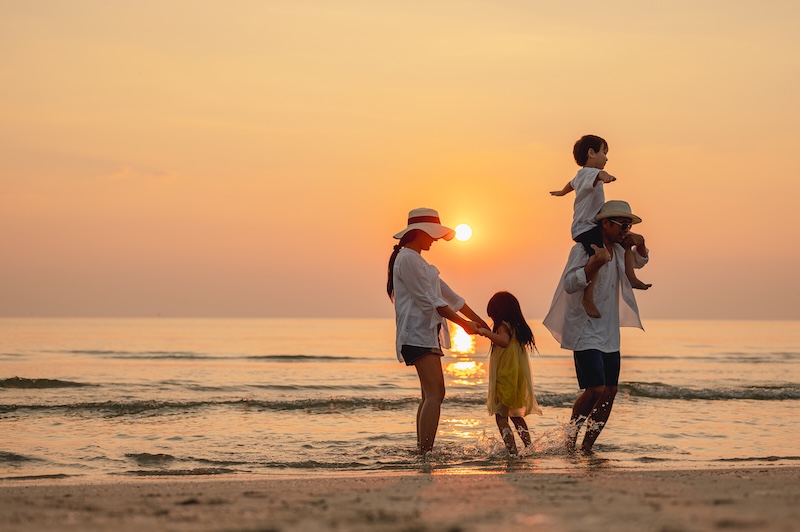
However, for families with children, the reality of constant movement proved to be a far more complex psychological and logistical equation. Children do not just need novelty; they need roots. They need friendships that last longer than a single semester and routines that survive beyond the shift of a time zone.
The traditional ‘nomad’ model often results in what experts call ‘rootless fragmentation.’ For a child, a new Airbnb every three months isn’t an adventure; it is a repeated loss of the familiar. And yet, many modern families are not prepared to retreat into the confines of a single fixed address. They have tasted the autonomy of cross-border living and want their children to possess the cultural fluency that only comes from deep immersion. Out of this tension, ‘slowmadism’ has emerged—not as a compromise, but as a superior, structured framework for international life.
Slowmadism is the practice of rotating between a small number of carefully chosen home bases (hubs) rather than drifting continuously. For families, the most effective version of this strategy involves exactly three hubs. These are three countries, three homes, and three distinct communities, each serving a specific purpose in the family’s development and each visited with enough regularity and duration to build genuine, lasting roots. This is the difference between being a perpetual tourist and a global resident.
The Logic of the Three-Hub Model: Why the Number Matters
The decision to focus on three hubs is not an arbitrary choice; it is a strategic calculation designed to maximize resilience and minimize psychological fatigue. Two hubs often create a binary existence that can feel limiting. It becomes a constant toggle between two worlds, often leading to a ‘grass is always greener’ syndrome where the family is always pining for the other location. Furthermore, two hubs often fail to provide the full spectrum of cultural and climatic diversity that makes the global lifestyle worth the logistical effort.
On the other end of the spectrum, four or more hubs reintroduce the very fragmentation the strategy is designed to prevent. Spreading a family across four distinct communities makes it nearly impossible to maintain deep social ties or navigate the bureaucratic requirements of multiple jurisdictions simultaneously. The ‘carrying cost’—both financial and emotional—of maintaining four homes is typically where the model breaks down.
Three hubs strike the ‘Goldilocks’ balance. They provide enough variety to satisfy the family’s desire for cultural diversity while keeping the rotation cycle manageable. A typical family might spend four months in each location per year, or adopt an asymmetrical pattern (e.g., six months in a primary hub and three in each of the others). This predictability is the foundation of a child’s psychological safety. Knowing that every January the family returns to their friends in Chiang Mai, and every May they return to their favorite playground in Lisbon, transforms the rotation into a routine. In this model, the rotation itself becomes the source of stability.

The Hub Selection Strategy: Functions and Diversification
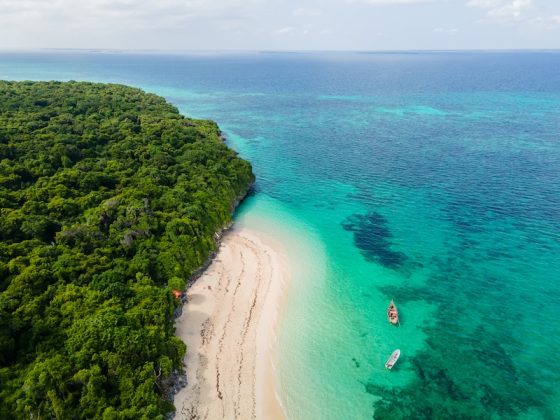
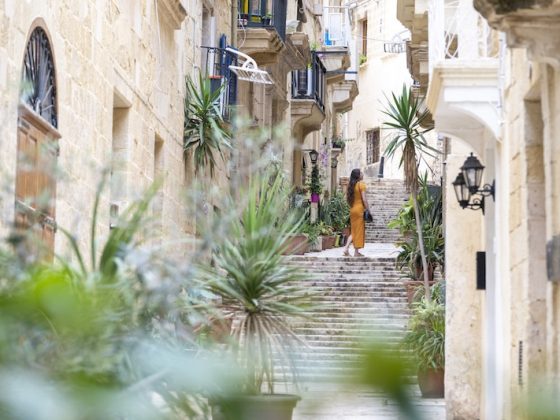
Selecting your three hubs is the most consequential decision in the entire framework. In 2026, this requires a sophisticated understanding of geopolitical trends, visa landscapes, and infrastructure quality. Each hub should serve a distinct function. For example, a family might designate one hub as their ‘Infrastructure and Education’ base (often in a Tier-1 city like Lisbon or Kuala Lumpur), one as their ‘Lifestyle and Wellness’ base (such as Bali or the southern coast of Thailand), and one as their ‘Growth and Connectivity’ base (like Ho Chi Minh City or Mexico City).
The first filter for any hub is legal and residency requirements. You must be able to reside in these countries for your planned duration without violating immigration laws. This often involves a ‘portfolio’ approach to visas: perhaps a D7 passive income visa in Portugal, an LTR visa in Thailand, and a digital nomad visa in Mexico. Countries with renewable tourist visas or low-barrier residency programs are the natural candidates for this model. The key is to ensure that your legal path in each country is clear and sustainable for at least a five-year horizon.
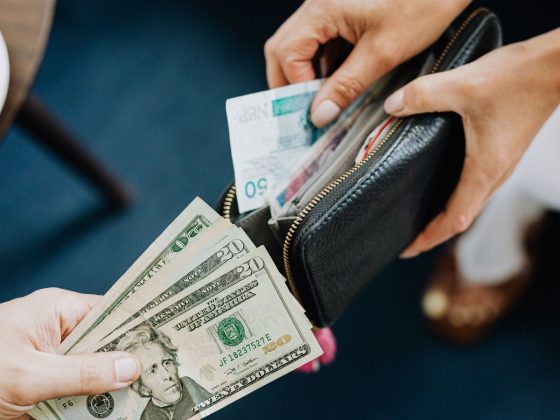
The second filter is cost-averaging. One of the greatest advantages of the three-hub model is the ability to maintain an elite lifestyle by balancing high-cost and low-cost jurisdictions. By spending two-thirds of the year in emerging markets (like Southeast Asia or Latin America) and one-third in a more expensive Western European or North American hub, a family can keep their overall annual expenses significantly lower than if they lived full-time in a single expensive city. This financial efficiency allows for higher spending on the things that matter for global families, such as international travel, private healthcare, and specialized education.
Educational Continuity: Solving the Schooling Puzzle
For families, the primary barrier to the slowmadism lifestyle is almost always schooling. To make three hubs work, you must decouple education from a single physical location. In 2026, the options for this are more robust than ever. Many three-hub families utilize high-quality online academies that provide a consistent curriculum regardless of the family’s GPS coordinates. This provides the academic backbone, while the time in each hub is used for ‘world-schooling’—local enrichment activities, language immersion, and social interaction.
Another popular approach is the ‘Hybrid Primary Hub’ model. The family spends the largest portion of their year (e.g., six months) in their primary hub, where the children are enrolled in a traditional school or a flexible private academy. During the other six months, the family moves to their secondary hubs, switching to project-based learning or homeschooling. The key to success is maintaining a consistent ‘educational narrative’ for the child. The child needs to feel that their learning is progressing in a structured way, even if the scenery changes. This requires parents to be proactive in coordinating with teachers and ensuring that academic records are transferable.
The Logistics of Three Homes: Carrying Costs and Systems
Maintaining three homes sounds like a logistical nightmare, but experienced slowmad families utilize systems to make it routine. In the primary hub, it usually makes sense to maintain a long-term rental or to own property. This serves as the family’s anchor, holding their most precious belongings and providing a familiar home base. In the secondary hubs, the approach can be more flexible. Some families utilize the same furnished rental properties year after year, negotiating ‘loyalty rates’ with landlords who appreciate the guaranteed, recurring income.
In emerging markets like Thailand or Colombia, many families choose to purchase small condominiums. In 2026, a well-located unit in Medellin or Bangkok can be purchased for a fraction of a Western down payment. When the family is in their other hubs, these units can be managed by local agencies as short-term rentals, often generating enough income to cover the annual carrying costs of the property. This transforms a lifestyle expense into a diversified real estate portfolio.
To minimize the stress of moving, successful families develop ‘duplicate systems.’ They keep a full set of kitchen supplies, essential toys, and seasonal clothing in each of their three homes. This allows the family to travel between hubs with only a few suitcases, eliminating the need for expensive international shipping and the psychological burden of packing and unpacking a life every few months. The transition between hubs becomes a known, practiced ritual rather than a chaotic event.
Navigating the Regulatory Minefield: Residency and Tax
The three-hub strategy is a powerful tool for tax optimization, but it requires meticulous compliance. The most common rule across the globe is the ‘183-day rule,’ which states that an individual is considered a tax resident if they spend more than half the year in a country. By design, a slowmad family spending four months in three different countries never reaches this threshold in any of them (assuming they do not have other ties like a local business).
However, in the era of increased global transparency, simply counting days is no longer enough. Many countries use the ‘Center of Vital Interests’ test, which looks at where your family lives, where your children go to school, and where your primary banking and social life are located. To manage this risk, the most sophisticated families establish a ‘Flag Hub’—one country where they intentionally establish full tax residency and use it as their legal and financial headquarters. They then structure their time in the other two hubs specifically to remain below the thresholds that would trigger secondary tax obligations. This requires professional advice from cross-border tax specialists to ensure that the family remains fully compliant while optimizing their global burden.

Social Architecture: Building the Distributed Community
The greatest fear for parents in a mobile lifestyle is that their children will grow up without a ‘village.’ The slowmadism model solves this through what we call the ‘distributed community.’ Unlike the perpetual nomad who meets new people every week only to say goodbye a month later, the slowmad family returns to the same neighbors, the same parks, and the same friends year after year. The relationships are not one-off encounters; they are multi-year friendships that happen to have gaps in the middle.
Maintaining these connections requires intentionality. In 2026, this is facilitated by digital intimacy—children stay in touch with their friends in other hubs through gaming, video calls, and shared online projects. When they return to a hub, they aren’t starting from scratch; they are picking up where they left off. This creates a child who is uniquely adaptable, possessing a global network of peers and a deep sense of cultural empathy. They don’t just have a home; they have three homes. They aren’t from one place; they are from a region of the world.
The Evolutionary Path: Adapting the Model as Kids Grow
No lifestyle framework is permanent. The three-hub model is particularly effective for families with children from birth through age twelve. During these years, the benefits of cultural immersion and linguistic development are at their peak, and children are generally more adaptable to changes in the environment. However, as children enter their teenage years, their needs often shift toward deeper social stability and more specialized academic tracks. Successful slowmad families approach their framework with a ‘three-year review’ cycle.
Every few years, the family should sit down and reassess their hubs. Is the education still working? Are the children’s social needs being met? Has the political or economic situation in a hub changed? Some families choose to consolidate from three hubs to two as their children reach high school, or they may swap one hub for another that offers better athletic or artistic opportunities for their teens.
The goal of slowmadism is not to be a rigid dogma, but to be a flexible tool that serves the family’s growth. By providing a childhood that is both rooted and boundless, slowmadism prepares the next generation for a world that is increasingly interconnected and unpredictable.
Read More Like This: One Family’s Odyssey of Learning Together While Traveling the World
People also ask
Q: How does slowmadism differ from being a digital nomad?
A: Digital nomadism is often characterized by constant travel to new destinations for short periods. Slowmadism is a more settled, intentional rotation between a small number of fixed hubs (usually three) where the family builds deep roots and returns annually.
Q: Is the 183-day rule enough to avoid taxes everywhere?
A: Not necessarily. While spending fewer than 183 days in a country is a major hurdle to tax residency, many countries also look at your ‘Center of Vital Interests.’ It is highly recommended to establish one primary tax home and manage the other hubs carefully under professional guidance.
Q: What is the best schooling option for slowmad families?
A: High-quality online international schools are the most common choice as they provide curriculum continuity across borders. Others use a ‘Hybrid’ approach with local school in a primary hub and project-based learning in others.
Q: How do you handle the cost of maintaining three homes?
A: Many families utilize cost-averaging by staying in emerging markets, and some purchase property in those markets to generate rental income while they are away, effectively offsetting their carrying costs.
About the Author
Contact Author
"*" indicates required fields
Stay Ahead on Every Adventure!
Stay updated with the World News on Escape Artist. Get all the travel news, international destinations, expat living, moving abroad, Lifestyle Tips, and digital nomad opportunities. Your next journey starts here—don’t miss a moment! Subscribe Now !
The digital nomad movement initially sold a seductive, singular vision: the ability to work from anywhere, live on your own terms, and never stay in one place long enough for the mundane realities of life to set in. For single professionals and young couples, this vision largely delivered.
However, for families with children, the reality of constant movement proved to be a far more complex psychological and logistical equation. Children do not just need novelty; they need roots. They need friendships that last longer than a single semester and routines that survive beyond the shift of a time zone.
The traditional ‘nomad’ model often results in what experts call ‘rootless fragmentation.’ For a child, a new Airbnb every three months isn’t an adventure; it is a repeated loss of the familiar. And yet, many modern families are not prepared to retreat into the confines of a single fixed address. They have tasted the autonomy of cross-border living and want their children to possess the cultural fluency that only comes from deep immersion. Out of this tension, ‘slowmadism’ has emerged—not as a compromise, but as a superior, structured framework for international life.
If you'd like to read the full story, simply enter your email to subscribe to our newsletter.
For even more expert insights, unmissable resources, and exclusive invites, explore our premium subscription offers here.
OR
Already a Subscriber? Click here to login
Subscription required
You've reached your limit of free articles. For full access to Escape Artist, and all of our insights on travel, moving abroad, and the digital nomad life, click here to Subscribe.
Already a Subscriber? Log in here