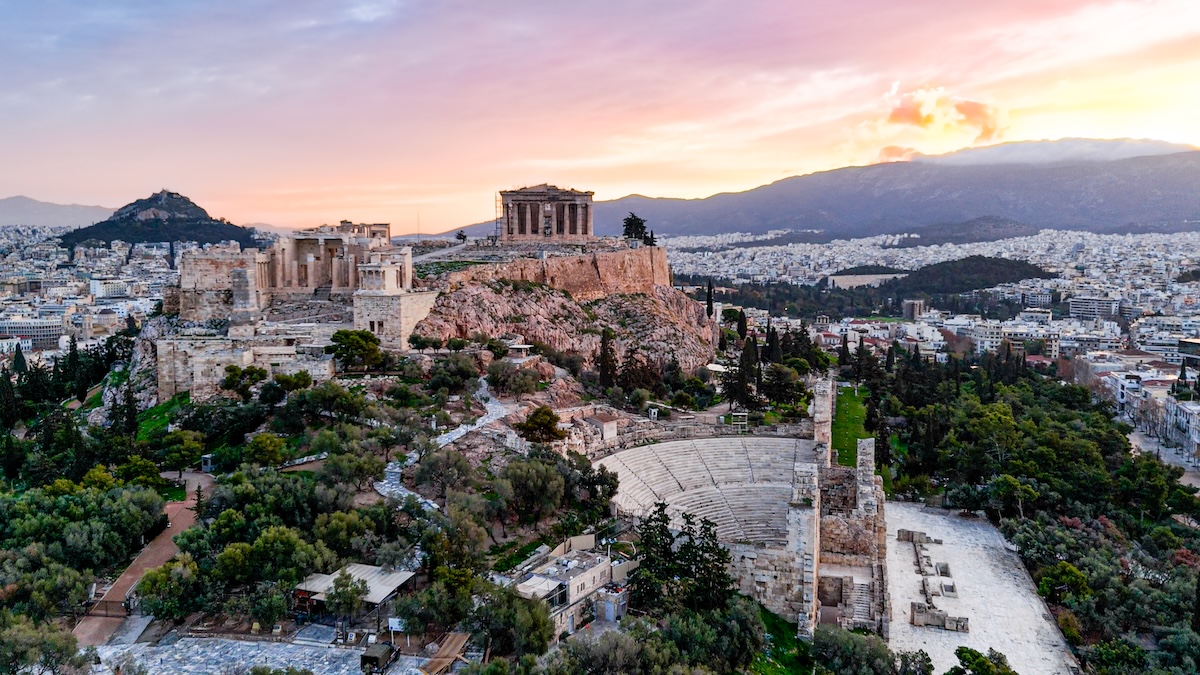
There is a city that has spent most of the past decade being underestimated. Defined, in the international imagination, by the worst years of its recent history rather than by what it is becoming. Seen through the lens of austerity and crisis rather than through the lens of what those years, difficult as they were, quietly produced. That city is Athens.
For years, the conversation about European relocation moved past Greece quickly. The economy was too unstable. The bureaucracy too difficult. The infrastructure too uneven. Other southern European cities captured the imagination while Athens waited at the margins of a discussion it arguably deserved to be part of.
That is changing. The city that absorbed a decade of economic hardship has emerged not in spite of that experience, but shaped by it. A generation of Athenians who stayed, adapted, and built something new during the difficult years has produced a cultural and culinary energy that now has the attention of the world.
Neighbourhoods that were shuttered or neglected have been reimagined. Restaurants that would collect awards in any city are opening in buildings that stood empty through the crisis years. And an influx of international residents drawn by low costs, extraordinary history, and that particular Mediterranean quality of light that no photograph fully captures has added a new layer to a city already ancient with them.
Athens is not trying to be Lisbon or even Barcelona. It is, increasingly and on its own terms, itself. And that is exactly what makes it so interesting.
Read More Like This: Getting Residency In Greece
A City That Has Always Been More Than Its Headlines
There is a particular way that cities with difficult recent histories get discussed. The hardship becomes their dominant narrative, until something shifts and the story changes faster than the coverage does. Athens is at that inflection point.
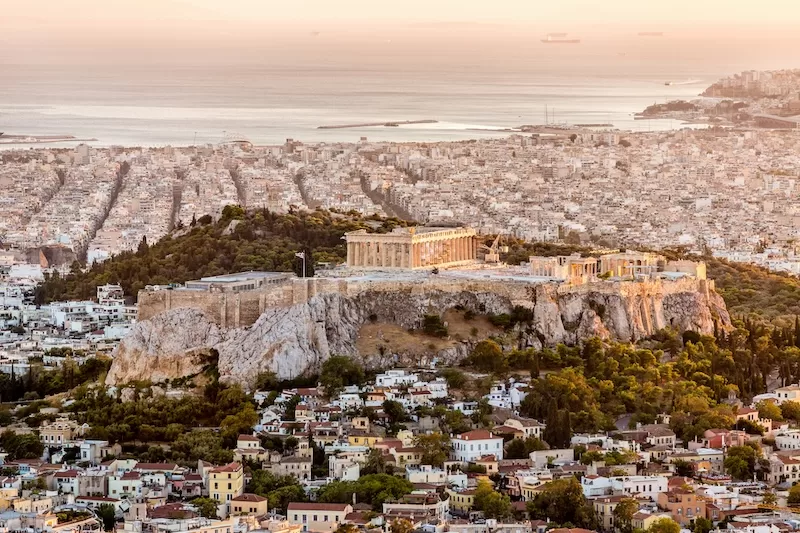
The fundamentals that made it extraordinary have not changed. The Acropolis still rises above the city with the same unhurried authority it has carried for two and a half thousand years. The light, that famous Attic light that painters and poets have tried to describe for centuries, still arrives each morning in a way that feels like an argument for being somewhere specific. The food culture, rooted in olive oil, seafood, lamb, and the geography of the Aegean, remains one of Europe’s most honest and least performed.
What has changed is the layer on top of these fundamentals. A new generation of Athenian restaurateurs, designers, hoteliers, and creative professionals have worked within the city’s constraints to build something that feels entirely contemporary without losing its essential character. The result is a city that is both ancient and genuinely new, and that combination is proving to be exactly what a growing number of people are looking for.
Read More Like This: The Athens Riviera: A Place To Live And Invest
The Numbers Behind the Feeling
There is often a gap between how a city feels and what the numbers say. In Athens, the figures are beginning to catch up with what those who have spent time there already understand.
Housing costs remain significantly below other European capitals of comparable cultural weight. Average asking rents in Athens sit at approximately $11.80 per square metre as of early 2026. Compare that with Lisbon at $19.90, Barcelona at $24.30, or Amsterdam at $23.70, and a picture emerges of a city offering serious value relative to what it actually provides. This is not a peripheral European city with low costs and limited offer. This is a capital with three thousand years of accumulated culture, a world-class food scene in active development, and a Mediterranean quality of life that does not require the financial contortions that comparable cities now demand.
The climate makes the case more clearly still. Athens averages over 300 sunny days per year, with mild winters that allow outdoor life to continue year-round. The sea is not a seasonal amenity. It is a constant. The Saronic Gulf is twenty minutes from the centre. The islands begin just beyond that. For those who have spent years in northern Europe measuring outdoor life in careful weeks, the sheer normalcy of warmth and light in Athens tends to recalibrate expectations quickly.
Foreign resident numbers are growing. The Golden Visa programme, though its property investment thresholds have increased in high-demand zones, continues to attract buyers from beyond the EU. The Digital Nomad Visa allows remote workers to base themselves legally for up to a year. And a quietly expanding community of international residents is building the kind of social infrastructure that makes a city easier to arrive in: networks, recommendations, shared knowledge, and the accumulated experience of people who have already navigated what you are about to.
The Cultural Regeneration That Changed the Conversation
The most significant shift in Athens over the past decade has not been economic, but cultural. The restaurant scene that has emerged in the post-crisis years is genuinely extraordinary. Not in the way that cities manufacture culinary reputation through Michelin diplomacy and international press trips, but in the more durable sense of a food culture that has found a new language while remaining rooted in an old one. Chefs who trained abroad and returned during or after the crisis brought technique and ambition to a cuisine that already had depth, seasonality, and a relationship with its ingredients that most European food cultures would envy.
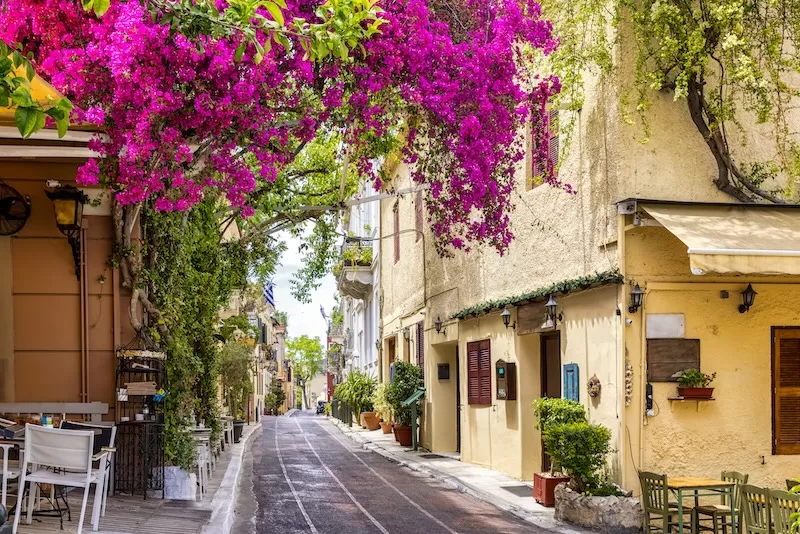
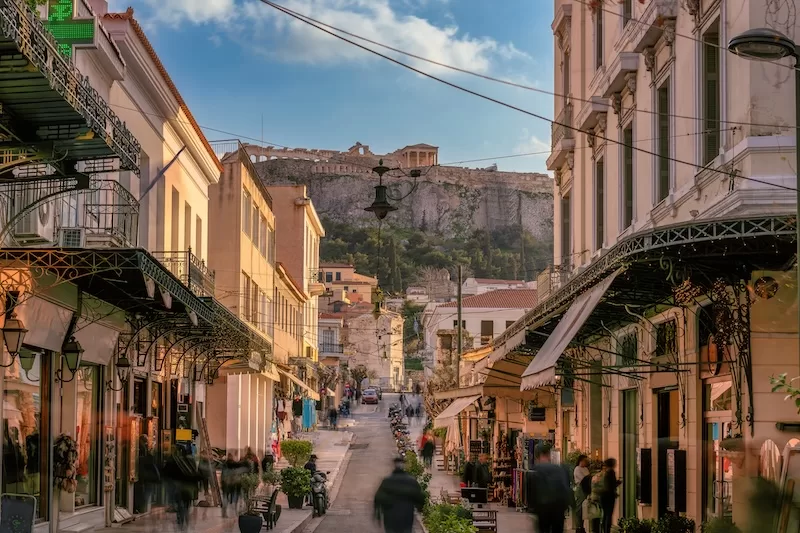
Neighbourhoods that were overlooked or actively avoided have been transformed. Koukaki, the neighbourhood that sits in the shadow of the Acropolis, has become one of the most interesting places in the city to live and eat. Psyrri, once dismissed, now hosts bars and restaurants of genuine quality. Exarcheia, politically distinctive and bohemian in character, has a creative and intellectual density that few city neighbourhoods anywhere can match. Monastiraki opens into markets and archaeology simultaneously.
This is not gentrification in the hollow sense. It is, at its best, a city rediscovering what it has always been capable of, and finding an audience that is, for once, paying proper attention.
Read More Like This: Why You Should Invest in Athens Real Estate
What Athens Asks Of You
No honest account of Athens as a relocation destination leaves out its complications. They are real, and they require engagement rather than optimism alone.
The bureaucracy is significant. Greece’s administrative systems have improved but remain demanding by northern European standards. Residency processes, property transactions, and anything requiring engagement with government institutions benefit from professional legal support. Attempting to navigate Greek bureaucracy without a trusted local lawyer or accountant is an exercise in frustration that most experienced residents simply do not recommend.
The Greek language, while not essential for daily life in the expat-heavy neighbourhoods, matters for deeper integration. English is widely spoken in the primary residential and commercial areas, but Greek rewards those who attempt it in ways that go beyond practicality. It changes the social fabric of daily life. It opens doors that polite tourist-grade interaction keeps closed.
Traffic is serious. Certain areas of the city, particularly around Omonia, require greater awareness than the more settled residential and tourist zones. Infrastructure quality varies by neighbourhood and by context. None of these are reasons not to come. They are reasons to arrive with clear eyes rather than imported assumptions.
Athens does not curate itself for easy arrival. It has too much history and too much character to bother with that. What it offers instead is the possibility of a genuinely deep engagement with a place, the kind that is increasingly unavailable in cities that have been polished specifically for international consumption.

The Emotional Logic of Athens
Cities earn their place in the relocation conversation for reasons that data alone cannot fully explain. There is always something beneath the numbers: a quality of atmosphere, a particular relationship between the human scale and the physical environment, a sense of what daily life actually feels like from the inside.
Athens has that quality in abundance, and it is distinctive. Living alongside the Acropolis is not the same as visiting it. The relationship between daily life and history in Athens is unlike anything available in Europe’s more visited capitals. The ruins are not in a glass case. They are not behind a cordon. They are part of the city in a way that reminds you, regularly and without effort, that the place you are standing has been stood in continuously for longer than almost anywhere else on earth.
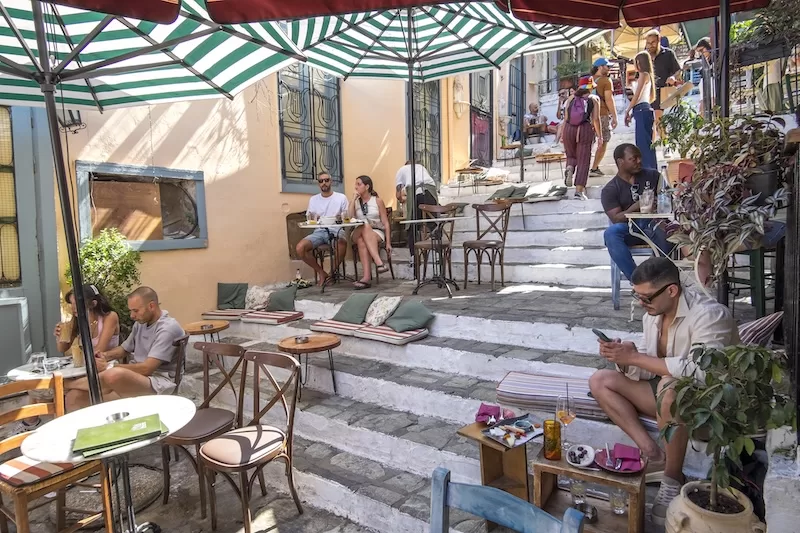
Beyond the history, there is the particular warmth of Greek social life. The culture of the kafeneion, the outdoor table, the meal that extends past its natural ending because no one is ready to leave. These are not tourism-facing performances. They are how Athenians actually live, and they are one of the most compelling things about the city for those who stay long enough to become part of them.
There is also the sea. The Athenian coast stretches south from the city through the Athenian Riviera, a coastline of coves, marinas, and beach clubs that functions as an extension of the city rather than a separate destination. On a warm evening in June, with the Aegean catching the last of the light and the Acropolis visible on the hill behind you, Athens makes a case that is almost unfair in its persuasiveness.
Read More Like This: 9 Canadian Habits I Lost When I Moved to Athens
Why Athens Is Rising in the Relocation Conversation
Athens is rising in the relocation conversation because the factors that held it back for a decade have either resolved or receded, while the factors that make it extraordinary have remained intact.
The economic crisis that defined international perceptions of Greece through the 2010s is not the story of Greece in 2026. The economy has stabilised. Investment has returned. The tourism infrastructure that was always world-class now benefits from better governance and broader ambition. The digital nomad visa, the Golden Visa programme, and a government that has actively courted international talent and capital have built formal pathways into a country that is ready to receive people.
Meanwhile, the cities that Athens was consistently passed over in favour of have become significantly more expensive, more crowded, or more complex to navigate. Lisbon is no longer the bargain it was. Barcelona’s housing market is under severe pressure. Amsterdam and Vienna have high costs and demanding administrative requirements. The relative position of Athens within the European relocation landscape has shifted, not because Athens has changed dramatically, but because the competition has.
For those with the appetite for something genuinely different, Athens offers a version of European city life that is neither curated nor exhausted. It is a city in the middle of its own story, and that middle is turning out to be one of the most interesting chapters it has had in years.
Athens At A Glance
For those considering the move, the numbers help ground the feeling.
| Category | Athens (2026) | Lisbon (Comparison) | Why It Matters |
| Average Rent | ~€11.0/m² | ~€18.5/m² | Lower housing costs, stronger purchasing power |
| Monthly Living (Excl. Rent) | €700–€1,000 | €900–€1,300 | More financial ease in daily life |
| Climate | 300+ sunny days/year | 280+ sunny days/year | Year-round outdoor living |
| Foreign Population | ~16.5% | ~17.2% | International community, not yet saturated |
| Golden Visa Programme | Active, revised thresholds | Suspended | Property investment route to residency |
| Digital Nomad Visa | Available, 1-year | Available, 1-year | Legal long-term remote work route |
| Sea Access | 20 min to Saronic Gulf | 20 min to Atlantic coast | Coast integrated into daily life |
| Island Connectivity | Direct ferry from Piraeus | Archipelago, longer travel | Islands as a genuine weekend reality |
| Healthcare | Public + private available | Public + private available | Supplementary private insurance recommended |
| Historical Environment | Unmatched in Europe | Significant heritage | Daily relationship with civilisational history |
Read More Like This: The Best Neighborhoods and Suburbs in Athens for Investment Property
The Practical Takeaway
Athens is not for those who want a frictionless arrival. It is for those who want something real.
It asks for patience with its bureaucracy, respect for its complexity, and a willingness to engage with a place that has not been redesigned around the preferences of international arrivals. In return, it offers something increasingly difficult to find in European relocation: genuine depth, genuine affordability, and a quality of daily life that does not feel manufactured or precarious.
The window of entry remains open. Athens is gaining attention, but it has not yet been overwhelmed by it. The city that was overlooked for a decade is now being looked at properly, and what people are finding is a Mediterranean capital of extraordinary character, at a price point that still makes the life it offers genuinely achievable.
Athens has always been more than its headlines suggested. For those paying attention in 2026, that is becoming increasingly difficult to ignore.
Read More Like This: The Athens Riviera: A Place To Live And Invest
About the Author
Contact Author
"*" indicates required fields
Stay Ahead on Every Adventure!
Stay updated with the World News on Escape Artist. Get all the travel news, international destinations, expat living, moving abroad, Lifestyle Tips, and digital nomad opportunities. Your next journey starts here—don’t miss a moment! Subscribe Now !
There is a city that has spent most of the past decade being underestimated. Defined, in the international imagination, by the worst years of its recent history rather than by what it is becoming. Seen through the lens of austerity and crisis rather than through the lens of what those years, difficult as they were, quietly produced. That city is Athens.
For years, the conversation about European relocation moved past Greece quickly. The economy was too unstable. The bureaucracy too difficult. The infrastructure too uneven. Other southern European cities captured the imagination while Athens waited at the margins of a discussion it arguably deserved to be part of.
That is changing. The city that absorbed a decade of economic hardship has emerged not in spite of that experience, but shaped by it. A generation of Athenians who stayed, adapted, and built something new during the difficult years has produced a cultural and culinary energy that now has the attention of the world.
If you'd like to read the full story, simply enter your email to subscribe to our newsletter.
For even more expert insights, unmissable resources, and exclusive invites, explore our premium subscription offers here.
OR
Already a Subscriber? Click here to login
Subscription required
You've reached your limit of free articles. For full access to Escape Artist, and all of our insights on travel, moving abroad, and the digital nomad life, click here to Subscribe.
Already a Subscriber? Log in here