There is a particular moment that tends to trigger the thought. It does not arrive dramatically, nor does it feel like a decision at first. It begins as a quiet recalibration. The cost of staying starts to outweigh the effort of leaving. The systems you once trusted feel heavier, less responsive, less aligned with the life you are trying to build. And slowly, almost imperceptibly, the question shifts from whether you could live somewhere else to why you are not already doing it.
In the past, that question led people toward places that promised immediate relief. Lower costs, fewer restrictions, warmer climates, and a sense of distance from whatever they were trying to leave behind. But today, the answer is becoming more deliberate. It is less about escape and more about alignment. Increasingly, that alignment is being found in Europe.
What is striking is not simply that more people are relocating, but that they are choosing destinations that were once considered secondary options. Spain beyond Barcelona. Portugal beyond Lisbon’s historic center. Greece not as a holiday, but as a place to build a life. Even Cyprus, long overlooked, is entering the conversation as a viable base for those seeking both structure and simplicity.
This shift reflects something deeper than changing travel trends. It signals a redefinition of what people value in a place to live, and a growing awareness that lifestyle, infrastructure, and long-term stability are no longer negotiable extras. They are the foundation.

The Shift Away From Traditional Expat Hubs
For years, Latin America dominated conversations around relocation. Countries like Mexico, Costa Rica, and Colombia built reputations as accessible, affordable havens where foreign income could go further and integration felt relatively seamless. That appeal has not disappeared, but it is being reevaluated.
What many expats are beginning to recognize is that low cost of living often comes with trade-offs that become more significant over time. Infrastructure gaps, inconsistent healthcare systems, safety concerns in certain regions, and currency volatility can complicate what initially appears to be a straightforward move. For younger retirees or remote workers planning decades abroad, those variables carry more weight than they once did.
At the same time, global mobility has evolved. Remote work is no longer an exception but an expectation, and with it comes a different set of priorities. People are not just looking for somewhere cheap to live; they are looking for somewhere that works. Reliable internet, access to international airports, strong legal systems, and integration into global financial networks are no longer luxuries. They are baseline requirements.
Europe meets those requirements with ease, and in doing so, it has repositioned itself from a traditional travel destination to a serious long-term base.

Stability as the New Luxury
One of Europe’s most understated advantages is its institutional stability. While headlines often focus on bureaucracy or regulatory complexity, those same systems provide a level of predictability that is difficult to replicate elsewhere.
Healthcare is a prime example. Across much of Europe, residents gain access to high-quality public or hybrid healthcare systems that significantly reduce out-of-pocket costs. For Americans accustomed to navigating private insurance markets, this alone can be transformative. The ability to access consistent, affordable care without the looming fear of catastrophic expenses reshapes not only financial planning but overall peace of mind.
Legal protections and property rights follow a similar pattern. Purchasing real estate in countries like Spain, Portugal, or Greece comes with well-established frameworks that protect foreign buyers. Contracts are enforceable, ownership is secure, and the risks—while still present—are far more transparent than in many emerging markets.
This sense of stability extends into everyday life. Public transportation functions reliably. Cities are walkable. Infrastructure is maintained. These may seem like small details, but over time they define the quality of life in ways that are difficult to quantify but impossible to ignore.

Lifestyle Without Compromise
If Europe’s practical advantages form the foundation of its appeal, its lifestyle offering is what makes the decision feel effortless.
There is a rhythm to life in Europe that remains deeply intact despite modern pressures. Meals are not rushed. Public spaces are designed to be used. Social life extends beyond private homes into plazas, cafés, and coastal promenades. For those relocating from fast-paced urban environments in the United States or the United Kingdom, this shift can feel less like a change of scenery and more like a recalibration of priorities.
Importantly, this lifestyle does not require sacrificing access to modern conveniences. Cities like Valencia, Lisbon, and Athens offer a balance that is increasingly difficult to find elsewhere: vibrant cultural scenes, strong international communities, and contemporary infrastructure, all layered onto environments that still feel human in scale.
This balance is particularly appealing to remote workers and entrepreneurs, who are no longer tied to a specific location but still require a certain level of connectivity and dynamism. Europe allows them to work globally while living locally, without the disconnect that often comes with more transient expat hubs.

The New European Hotspots
While traditional capitals like Paris, London, and Rome continue to attract global attention, the real story lies in a new generation of European cities that are quietly redefining what relocation looks like.
Valencia has emerged as one of Spain’s most compelling destinations, offering coastal living, a strong food culture, and a lower cost base than Madrid or Barcelona. It combines modern infrastructure with a distinctly local atmosphere, making it particularly attractive to those seeking integration rather than isolation.
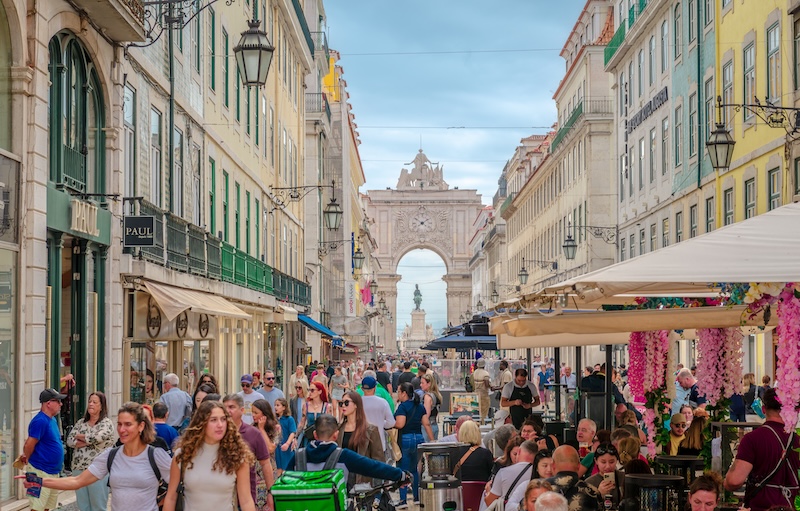
Lisbon remains a cornerstone of Europe’s expat movement, despite rising prices and evolving tax incentives. Its appeal lies not only in its climate and geography, but in its openness. English is widely spoken, the startup ecosystem is growing, and the city has positioned itself as a gateway between Europe, Africa, and the Americas.
Athens has undergone a quiet renaissance. Once associated primarily with economic crisis, it is now attracting investors, creatives, and remote workers drawn by its affordability relative to Western Europe and its proximity to some of the most iconic landscapes in the Mediterranean.
Beyond these, Greece’s islands, Cyprus, and parts of Southern Italy are seeing increased interest, particularly from those looking to combine lifestyle with long-term residency options. These destinations offer a slower pace without complete disconnection, appealing to individuals who want space without sacrificing access.

Residency, Mobility, and the European Advantage
Perhaps one of Europe’s most significant draws is its approach to residency and mobility. Unlike many regions, where relocation can feel temporary or precarious, Europe offers structured pathways to long-term settlement.
Residency programs across Spain, Portugal, and Greece provide relatively accessible routes for non-EU citizens, often tied to property investment or proof of income. While some of these programs are evolving, the underlying principle remains consistent: Europe is open to those who can contribute economically while integrating into local systems.
The real advantage, however, lies in what comes after. Residency in one European country often provides access to the broader Schengen Area, allowing for seamless travel across much of the continent. Over time, this can lead to permanent residency or even citizenship, creating a level of global mobility that extends far beyond the initial move.

For British nationals navigating post-Brexit limitations, and for Americans seeking greater international flexibility, this is not a minor benefit. It is a fundamental shift in how they can structure their lives.
The Financial Equation Reconsidered
It would be misleading to suggest that Europe is universally cheaper than Latin America or Southeast Asia. In many cases, it is not. But the financial equation is more complex than a simple comparison of monthly expenses.
What Europe offers is value. While rent or property prices may be higher in certain cities, they are offset by lower healthcare costs, reduced transportation expenses, and the absence of many hidden costs that can accumulate elsewhere. Public services function as intended, reducing the need for private alternatives.
There is also a growing recognition that cost of living should be evaluated alongside cost of risk. Political instability, currency fluctuations, and inconsistent regulation can erode financial advantages over time. Europe, for all its perceived expense, offers a level of predictability that allows for more accurate long-term planning.
For those earning in stronger currencies or maintaining international income streams, this balance often tilts decisively in Europe’s favor.

A Cultural and Emotional Shift
Beyond the tangible benefits, there is a more subtle reason why Europe is attracting a new generation of expats. It offers a sense of belonging that feels increasingly important in a fragmented world.
For Americans and Canadians, Europe provides familiarity without sameness. There is enough cultural overlap to ease the transition, but enough difference to make the experience meaningful. For British nationals, particularly those seeking to regain a sense of European identity post-Brexit, the appeal is even more pronounced.
This is not about tourism. It is about integration. Learning a language, navigating local systems, building relationships that extend beyond the expat bubble. Europe, with its layered histories and strong local identities, rewards those who engage with it on that level.
Designing a Smarter Plan B
Relocating to Europe is no longer a romantic notion reserved for retirees or adventurers. It is increasingly viewed as a strategic decision, one that aligns lifestyle, financial planning, and long-term security.
For many, it begins as a second residency, a foothold that provides optionality. Over time, it can evolve into something more permanent, a redefinition of where home exists and what it means. The key is not simply choosing a destination, but understanding how that destination fits into a broader life strategy.
This requires planning. Understanding visa requirements, tax implications, and local regulations. Spending time on the ground before committing. Building networks that extend beyond the initial excitement of relocation.
But for those willing to approach it with intention, the rewards are significant. Europe offers not just a place to live, but a framework within which to build a different kind of life.

The New Direction of Global Living
The increase in Americans leaving the United States—reportedly at levels not seen since the mid-20th century—reflects a broader shift in how people think about home. The same is true, in different ways, for
Canadians and Britons navigating their own economic and political landscapes.
Relocation is no longer driven solely by necessity. It is driven by choice. And with that choice comes a more discerning approach to where and how people move.
Europe, with its balance of stability, lifestyle, and long-term opportunity, is meeting that moment. It is not the cheapest option, nor the easiest in every respect. But it is, increasingly, the one that makes the most sense. For those building a Plan B, that distinction matters.
About the Author
Contact Author
"*" indicates required fields
Stay Ahead on Every Adventure!
Stay updated with the World News on Escape Artist. Get all the travel news, international destinations, expat living, moving abroad, Lifestyle Tips, and digital nomad opportunities. Your next journey starts here—don’t miss a moment! Subscribe Now !
There is a particular moment that tends to trigger the thought. It does not arrive dramatically, nor does it feel like a decision at first. It begins as a quiet recalibration. The cost of staying starts to outweigh the effort of leaving. The systems you once trusted feel heavier, less responsive, less aligned with the life you are trying to build. And slowly, almost imperceptibly, the question shifts from whether you could live somewhere else to why you are not already doing it.
In the past, that question led people toward places that promised immediate relief. Lower costs, fewer restrictions, warmer climates, and a sense of distance from whatever they were trying to leave behind. But today, the answer is becoming more deliberate. It is less about escape and more about alignment. Increasingly, that alignment is being found in Europe.
What is striking is not simply that more people are relocating, but that they are choosing destinations that were once considered secondary options. Spain beyond Barcelona. Portugal beyond Lisbon’s historic center. Greece not as a holiday, but as a place to build a life. Even Cyprus, long overlooked, is entering the conversation as a viable base for those seeking both structure and simplicity.
If you'd like to read the full story, simply enter your email to subscribe to our newsletter.
For even more expert insights, unmissable resources, and exclusive invites, explore our premium subscription offers here.
OR
Already a Subscriber? Click here to login
Subscription required
You've reached your limit of free articles. For full access to Escape Artist, and all of our insights on travel, moving abroad, and the digital nomad life, click here to Subscribe.
Already a Subscriber? Log in here