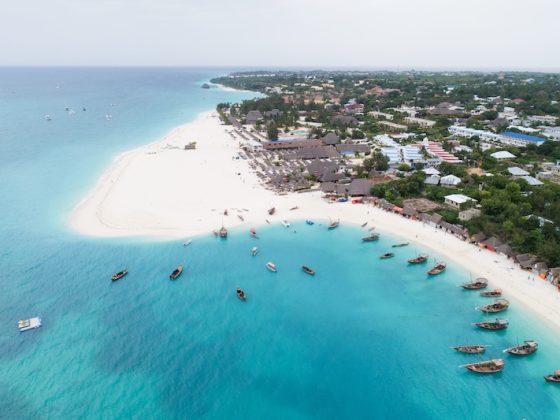
The golden years have traditionally been sold as a glossy brochure of seaside villas and lunches that last long enough to require a second coat of sunscreen, but for most, that remained a pretty picture on a fridge rather than a plane ticket in hand. We’ve spent decades treating the overseas escape as a luxury reserved for the wealthy, a narrative fueled by aspirational magazines and a healthy dose of wanderlust.
The scenery hasn’t changed, but the math certainly has. The global economy has decided to play a particularly cruel game of keep-away with the traditional retirement milestones across North America and Europe. We are currently facing a reality where the cost of living has outpaced wage growth by a staggering margin over the last decade, and healthcare inflation consistently ignores the speed limit of general CPI. According to current projections, global medical costs are set to rise by roughly 10.3% this year alone, with North America seeing jumps of over 9%. When you factor in that the average 65-year-old today can expect to live well into their mid-80s, the nest egg starts to look more like a tiny birdseed.
The math of staying put is no longer adding up for a generation that is living longer while their pensions feel like they’ve been through a high-heat dryer cycle. Consequently, moving your tax residency to a more favorable jurisdiction has become a calculated defensive maneuver. What was once viewed as an indulgence has pivoted into a sophisticated hedge against domestic inflation and the rising cost of existing.
This article aims to look at how you can the escape hatch fantasy with a tactical framework for long-term living. By examining why certain countries absorb residents more effectively than others, we aim to show you how to use geography as a tool to restore proportionality to your life, turning retirement from a fixed destination into a movable, resilient project.
Affordable is the New Luxury
The traditional American retirement (one built on a 401(k) and a paid-off mortgage) has hit a structural ceiling. With domestic living costs for those over 65 now averaging $5,000 per month, the gold watch era has been replaced by the era of the geographic pivot.
What we are seeing is a decoupling of lifestyle from location. For the modern retiree, moving abroad has become a primary strategy for the well-prepared. Even high-net-worth individuals are migrating, driven by a domestic healthcare market that has become the most expensive in the world. When private insurance premiums in the U.S. average $18,000 per person annually, the logic of moving to a system like Greece’s (where top-tier care costs a fraction of that)becomes impossible to ignore.
This rise in affordable retirement abroad is fueled by three specific 2026 catalysts:
- The Stability Deficit: Political polarization and rising crime rates at home have turned safe European havens like Portugal and Greece into the new standard for peace of mind.
- The Healthcare Arbitrage: JCI-accredited facilities in hubs like Penang and Panama now offer Western-standard care without the corporate markups that have made aging in North America a financial liability.
- The Digital Residency Revolution: Modern visa programs have finally caught up to reality, offering clear, structured pathways for anyone with a stable passive income to trade a high-inflation environment for one that respects their nest egg.
The Arbitrage of Aging: Beyond the Discount Rack
Affordability in retirement is frequently misunderstood as a hunt for the cheapest rent and the lowest-tier grocery bills. But real fiscal peace comes from volatility reduction. You can find a basement apartment in a crumbling city that is inexpensive but remains very stressful because the surrounding systems are failing. On the other hand, a modestly priced town in Greece or Nicaragua can feel profoundly stabilizing because the structure of daily life is different and effective.
Purchasing Power vs. The Cost of Survival
The distinction lies in the burn rate of your daily existence. In many traditional retirement destinations, the middle-class lifestyle isn’t built on a foundation of high-interest debt and asset-heavy services. Housing consumes a smaller slice of the pie, and transportation turns from a high-maintenance private vehicle to walkable urban cores or robust public transit. When you decouple healthcare from employment and social life from constant commercial transactions, your cost of life drops even if your standard of living rises.
Resilience in the Local Loop
True affordability manifests as systemic resilience. Retiring in a region where local production and labor-based services drive the economy provides a shield against globalized asset bubbles. In these markets, price shocks move with the sluggishness of molasses instead of the volatility of lightning. Sourcing fruit from a farm ten miles away instead of a multi-national cold chain insulates your budget from global oil spikes and the latest shipping crisis.
The Power of Currency Alignment
We also need to talk about the invisible raise. Living on a hard-currency income (like the USD or Euro) in a country with a weaker local currency or a lower cost-of-living index is a structural alignment. In 2026, the Big Mac Index and similar Purchasing Power Parity (PPP) metrics show that the same $4,000 USD monthly pension that feels like a tight squeeze in Seattle or London can command a life of relative luxury and high-tier private healthcare in Southeast Asia or Latin America. This widens the gap between what you have and what you need. It shifts your posture from a defensive “how long will this last?” to a sustainable “what shall we do today?”
The Pressure Points at Home
To understand the rise of affordable retirement abroad, it helps to look at what is failing retirees at home. We are witnessing a perfect storm where the cost of existing has outpaced the safety nets designed to support it. For many, staying in your home country has become a high-stakes gamble against accelerating overhead.
Housing, a Dragging Anchor
Housing is the most obvious fracture. In developed economies, home values have roughly doubled over the last decade, yet for the retiree, this wealth is often a trap. Even if you own your home outright, the carrying costs (property taxes, maintenance, and utility bills) are skyrocketing. In the U.S., for instance, homeowners spent $21 billion more on insurance in 2024 than in 2021, with some premiums jumping 20% annually in high-risk zones. Downsizing, once the silver bullet of retirement planning, can now result in trading a large mortgage-free home for a smaller condo with HOA fees that rival a monthly rent payment.

Healthcare: The Great Predictability Gap
Healthcare is the second, and perhaps more terrifying, stressor. It’s not just the cost that keeps retirees up at night; it’s the unpredictability. A 65-year-old couple retiring in the U.S. can expect to spend upwards of $395,000 on medical expenses throughout their retirement, and that’s excluding the wildcard of long-term care. With medical inflation projected to hit 9.2% in North America this year, the deductible dance has become a central part of the aging experience. In an environment where costs are a moving target, financial elasticity is the only thing standing between a retiree and a permanent state of panic.
Longevity Without Elasticity
We are living through a biological miracle and a financial crisis at the same time. Living into your 90s is a gift, but the math was never designed for a forty-year post-work life. Most pension and social security systems were built on the assumption that you’d exit the stage a decade after retiring. Today, seven out of ten people over 65 will need some form of long-term care, with the median cost of assisted living now hovering around $5,900 per month.
Affordable retirement abroad doesn’t magically cure aging, but it provides the financial crumple zone that domestic life lacks. It turns housing into a manageable fixed cost and healthcare into a transparent, accessible system and not a scarily escalating variable. In short, it truly makes longevity something to celebrate.
The 2026 Shortlist
Choosing a destination is a high-stakes calculation that should focus on auditing the structural integrity of a country’s retirement systems. While dozens of nations court foreign capital, a few stand out by offering a cohesive ecosystem where legal stability and fiscal incentives are underpinned by a world-class healthcare infrastructure. These frontrunners are some of the most resilient options on the map.
Greece
Greece currently holds the top spot for retirees who prioritize social integration and tax efficiency. The 7% flat tax for foreign pensioners remains a significant draw for those moving from high-tax jurisdictions in the West. Beyond the fiscal perks, the country ranks first globally in 2026 for its affinity score, reflecting how easily expats build deep social networks. The healthcare system in urban hubs like Athens or Thessaloniki offers a high standard of care, with private insurance premiums remaining remarkably low for seniors.
Portugal
Portugal continues to be a primary choice for those seeking a soft landing. While Portugal’s popular Non-Habitual Resident tax regime has evolved in recent years, the D7 visa remains a cornerstone for retirees thanks to its straightforward requirements and alignment with passive income criteria. Portugal’s appeal lies in its predictable infrastructure. The utilities work, the internet is world-class, cultural offerings are plentiful, the landscape is diverse enough to fit any taste, and the public safety ratings are among the highest in Europe. For a retiree, Portugal offers a lifestyle that feels stable even when global markets are volatile.
Panama
In Latin America, Panama remains the most sophisticated option due to its legendary Pensionado program. More than a visa, it’s a lifetime discount card that provides 25% off utility bills, 50% off movie tickets, and 20% off medical consultations. The use of the U.S. Dollar as a primary currency eliminates the risk of local devaluation, making it a hard currency haven. It remains an ideal choice for those who want a lower cost of living without the complexity of managing foreign exchange risk.
Spain
For retirees focused specifically on health outcomes and a high-quality public floor, Spain is difficult to beat. It consistently ranks in the top five globally for healthcare efficiency and life expectancy. The Convenio Especial allows expats to pay into the public system for a modest monthly fee, providing total peace of mind regarding long-term care. When combined with the country’s extensive high-speed rail network, it offers a level of mobility that makes a car-free retirement entirely feasible.
Malaysia
Malaysia stands out as the primary Southeast Asian stronghold for those who value infrastructure that matches Western standards at a fraction of the cost. The revised MM2H (Malaysia My Second Home) program provides a structured path for retirees to settle in hubs like Kuala Lumpur or Penang, where English is widely spoken and the legal system feels familiar. The real draw here is the private healthcare corridor. Penang, in particular, has become a global center for medical excellence where specialist appointments are often walk-in affairs. The final bill reflects local labor costs, bypassing the typical inflation of corporate pharmaceutical markups.

Read More Like This: Your 2025-2026 Guide to Which Countries Offer Retirement Visas
The Secret Sauce of Retiree-Friendly Nations
Not all low-cost countries are created equal. You can find a bargain-bin price tag on a beach in a developing nation, only to realize that the savings are offset by the cost of flying back to the West for a simple MRI. The difference between a temporary expat bubble and a sustainable retirement destination lies in its structural integrity.
The Service Economy vs. The Tourist Trap
The most resilient retirement destinations are those with robust local economies designed to serve residents, not just seasonal visitors. If a town’s infrastructure only works at full capacity when the cruise ships are in port, anyone staying long-term is essentially a visitor paying peak-season premiums for basic services. Countries like Greece (ranked #1 in the 2026 Global Retirement Index) and Portugal succeed because their food, utilities, services, transportation, and labor markets are geared toward everyday local life.

In these retirement-friendly countries, price shocks move at a snail’s pace. Since the service economy is labor-based, the cost of a haircut, a meal out, or home maintenance remains tied to local wages. According to recent data, and despite rising costs, a retired couple can live comfortably in Portugal on roughly $2,200 to $2,800 per month, while the same lifestyle in a tourist trap jurisdiction would see those costs fluctuate wildly based on seasonal demand.
Choosing a location with this kind of structural integrity ensures the budget remains a predictable constant. It is the difference between being part of a stable community and being a permanent customer in a gift shop.
Invisible Infrastructure and the Boredom Metric
While a hyper-modern skyscraper makes for a great Instagram backdrop, it’s useless when you need to turn on a tap or see a doctor. Real resilience in a retirement destination comes from the boring stuff. You want a town where the electricity doesn’t vanish during a light breeze and the local governance is functional enough to a fix a pothole before it becomes a local landmark. Places that work without constant, expensive upgrades age better alongside their residents. As mentioned previously, Panama and Costa Rica have spent decades refining their Pensionado programs, offering retirees discounts of up to 50% on entertainment and 25% on medical bills, truly the sign of a government that has successfully integrated an aging foreign population into its national blueprint.
The Social Physics of Aging
Maybe the most underrated factor is the cultural expectation around aging. In many societies throughout Latin America and the Mediterranean, older adults remain highly visible and socially integrated. Retirement doesn’t mean a withdrawal from the world. In these cultures, the affinity rating (the ease with which expats build a social life) is amazingly high. Greece, for instance, holds the number one spot globally in 2026 for this specific metric, followed closely by Panama, Costa Rica and Portugal.
This social integration frequently backed by deliberate government strategy. Countries like Portugal have implemented “Active and Healthy Ageing Action Plans” which is built around a simple but telling premise: aging is not a problem to be managed, but a phase of life worth investing in. The plan prioritizes health and well-being, personal autonomy, and independent living, alongside income protection, lifelong learning, skills requalification, and continued participation in civic life. The framework reflects a broader shift toward prevention and long-term quality of life, aiming to reshape how the needs of the senior population are addressed over the coming decades. The emphasis is less on dependency and more on agency, positioning older adults as active contributors to society instead of passive recipients of care.
In Costa Rica, the National Council for the Older Adult (CONAPAM) operates with a rights-based approach, moving away from a traditional welfare-only model. Their strategy focuses on intergenerational programs where seniors are incentivized to remain in community leadership roles, ensuring they don’t lose their social floor.
In these regions, social life does not require a pay-to-play model. When a neighborhood prioritizes the ritual of the morning market run or the slow-motion café culture over high-octane commercialism, your bank account finally gets to take a breath. In these pockets of the world, life happens in the public square, not behind a paywall. Being part of a local festival that doesn’t demand a cover charge or a VIP wristband makes the discretionary budget feel like a relic of a more frantic past. The Greek concept of siga-siga (slowly, slowly) or the Latin American emphasis on the tertulia (social gathering) means that a three-hour afternoon coffee is a cultural standard. When daily interactions carry less transactional tension and you can exist in public spaces without a membership fee, the psychological cost of living plummets.

These communities often operate on informal networks of care that scale down much more gracefully than the institutionalized systems at home. This might show up in the form of a neighbor checking in because they didn’t see you at your usual coffee spot or the local pharmacist knowing your history by heart. At any rate, this social density provides a layer of security that money typically tries to buy through expensive independent living facilities.
Healthcare Abroad: Less About Luxury, More About Access
Healthcare is many times the deciding factor for retirees considering a move abroad, and it is also the subject most prone to urban legends. While some imagine a medical vacation in a high-tech spa, the reality for a savvy retiree is really about trading a system of high-stress financial wildcards for one where you know what things cost before you’re staring at the bill.
The Layered Reality: Public, Private, and Hybrid
In many popular retirement destinations, healthcare doesn’t operate as a monolithic take it or leave it proposition. Instead, it offers a layered model that allows you to calibrate your care to your budget. Public systems, like the Serviço Nacional de Saúde in Portugal or Spain’s Sistema Nacional de Salud, provide a vital baseline of universal coverage. For the expat, this ensures that an unfortunate event won’t result in a lifestyle-ending debt.
For those who want immediate specialist access and the kind of concierge service that usually requires a membership at a country club, private clinics and insurance are remarkably accessible. For example, private health insurance for retirees in Spain typically ranges from about €50 to over €150 per month for more comprehensive plans, meaning annual premiums for someone age 65+ often fall in the neighborhood of $600–$2,000 USD+, which is essentially what many North Americans pay just to keep their deductibles from looking like a mortgage payment. Many retirees opt for a hybrid approach: they use the public system for the big stuff and keep a private plan for same-week specialist visits and dental care.

The Decoupling of Cost and Quality
The key advantage here is the restoration of the doctor-patient relationship. In the high-overhead systems of the West, appointments have become 15-minute sprints against an insurance billing code. In countries like Mexico or Costa Rica, it’s not uncommon for a doctor to spend an hour with a patient. In Mexico, a private consultation might cost you $40 to $60, and the transparency is such that the price is often posted on the wall like a café menu, a concept that would give most American hospital administrators a nervous tic.
This transparency acts as a vital hedge against global medical inflation. For 2026, medical costs are projected to rise by 9.2% in North America, while many European destinations are seeing more stable trends around 8.2%. Moving to a jurisdiction with lower baseline costs and more efficient delivery, helps you keep medical inflation at bay and protect your nest egg from the rising cost of staying alive.
Managing the Chaos Variable
Continuity of care is another hidden benefit that pays dividends over time. Establishing a medical home in a place where the pharmacist knows your name and the GP really has the time to read your chart makes the entire aging process feel like a managed transition, not a series of emergencies.
None of this eliminates the need for tactical planning. Highly specialized conditions may still require travel to regional medical hubs, and insurance structures vary wildly by residency status. However, for the daily management of chronic conditions and the predictable needs of aging, the international model often provides a level of financial and emotional elasticity that the stay put strategy cannot match. It creates a known, manageable environment out of what was once an escalating variable.
Community Over Consumption
One of the most overlooked benefits of an international retirement is the transition away from a social life that works as a series of commercial transactions. In many high-cost hubs, seeing people usually requires a reservation, a cover charge, or at the very least, a $15 cocktail. When daily existence is decoupled from this constant need to spend, the financial and emotional pressure on a fixed income begins to lift.
The Plaza Effect: Socializing as a Daily Routine
In lower-cost, high-affinity countries like Greece, Spain, or Mexico, social connection is baked into the physical environment. It happens in public spaces through routine encounters. You find it in the local markets, the neighborhood cafes, and the central plazas where people recognize each other by virtue of being present. This shift matters immensely because it replaces planned activity with organic familiarity.
Studies in urban design and public health show that people who live in walkable, third-place-rich neighborhoods tend to feel more socially connected, largely because daily life naturally creates opportunities for casual interaction beyond home and work. Research on social isolation and loneliness shows that the health consequences of lacking social connection (including among older adults in the U.S. and Canada) are comparable to well-established risk factors like smoking up to 15 cigarettes a day. This comparison comes from large meta-analyses and has been highlighted by the U.S. Surgeon General’s advisory on social connection and community health, which ties social disconnection to higher risks of premature mortality and chronic disease. Moving to a high-social-density culture effectively builds a safety net of human connection that doesn’t require a membership fee.

From Acquaintances to Density
For the expat retiree, this environment often results in social networks that are smaller in numbers but significantly denser in quality. You might have fewer total acquaintances than you did in your professional life, but you have far more daily familiarity. This reduces the loneliness disguised as activity that often plagues Western retirement, where people keep busy to feel connected. In a plaza culture, you aren’t performing productivity; you are simply part of the fabric of the street.
The New Retirement Profile
The modern move abroad bears little resemblance to the rigid, one-way departures of previous decades. In 2026, the people pursuing this path represent a diverse spectrum of age, employment, and lifestyle. We are seeing a new retirement that functions as a dynamic, multi-chapter project, moving away from the old concept of a final destination.
The Rise of the Semi-Retiree
Many folks now exit the traditional 9-to-5 earlier than previous generations while maintaining a professional footprint. A good chunk of this group identifies as semi-retired, leveraging remote work culture to supplement their income in lower-cost countries. Data suggests that roughly 22% of the U.S. workforce is remote, with a growing segment consisting of mid-career professionals and pre-retirees testing new locations before officially punching out.
These professionals build sustainable lives in hubs like Portugal, Spain, and Mexico. These countries have matured their visa programs, such as Spain’s Visado para Teletrabajadores, allowing individuals to maintain high-tier incomes while benefiting from a local cost of living often 30% to 50% lower than in major North American cities.

From Forever Homes to Geographic Agency
The long-held ideal of the forever home is giving way to an adaptable approach. Modern retirees assemble a portfolio of options: a home base in a favorable tax jurisdiction, seasonal residences to stay close to family, and a global healthcare strategy spanning borders. This represents a clear manifestation of geographic agency.
This flexibility changes the nature of retirement planning. Instead of betting everything on one irreversible move, the new profile involves adjusting locations based on health needs, family commitments, or currency strength. Retirement has transformed into a phase of life defined by the freedom to move, ensuring a person’s lifestyle is no longer a hostage to their local zip code’s inflation rate.
Read More Like This: retirement visas and how to qualify
Risks, Friction, and the Reality Check
The narrative of moving abroad often skips the granular difficulties that define the actual experience. Realizing the benefits of a global retirement requires a high tolerance for ambiguity and a willingness to navigate systems that do not prioritize speed.
Bureaucracy and the Tax of Patience
Moving your life to a new country involves several close encounters with local bureaucracy. Residency permits, tax registrations, and utility setups rarely move at the pace of a digital-first economy. In many Mediterranean and Latin American countries, the paperwork tax is paid in time and frustration. While services like Portugal’s e-residency have streamlined certain processes, the reality often involves physical appointments, stamps, and a cultural vibe that rewards patience over efficiency.
The Distance from Legacy Systems
Moving your life across an ocean turns family and estate planning into a high-stakes logistical puzzle. Maintaining a presence in your relatives’ lives across eight time zones is a job in itself, and the distance tax hits hardest when an emergency or a wedding requires a last-minute, four-figure flight.
There’s also the bureaucratic chain. The U.S. remains one of the few nations that taxes based on citizenship, not geography. This creates a permanent, legally mandated link to the IRS that demands meticulous record-keeping. To avoid the nightmare of being taxed twice on the same dollar, you’ll likely find yourself on a first-name basis with a specialized tax professional whose fees become a fixed line item in your new, international life.
The Myth of Frictionless Living
There is a common misconception that a lower cost of living automatically leads to a stress-free life. Many times, you’re only trading one set of stresses (financial) for another (logistical). Language barriers can turn a simple plumbing issue or a bank visit into a day-long ordeal. The most successful retirees abroad are those who view these frictions as part of the price of admission for their increased purchasing power and improved quality of life.
Planning Without Locking Yourself In
The most successful international transitions share a common trait: they rarely stem from a single, all-or-nothing commitment. Pragmatic retirees treat the move as a series of experiments, viewing it as an evolving project instead of a final judgment. They spend a full year renting before even looking at a property deed to ensure they experience the reality of a town during the peak tourist season as well as the quiet, often rainy, winter months. This period of observation provides firsthand data on healthcare efficiency and local community vibes that no index can replicate.
Building a resilient retirement involves layering options to avoid single-point failure. Instead of betting an entire financial future on one property or a single legal system, seasoned movers maintain geographic and fiscal flexibility. This might look like keeping a modest landing pad in their home country while establishing a base abroad, or perhaps diversifying assets across multiple currencies. In 2026, where residency rules and tax treaties can shift with a single election cycle, the ability to pivot has become more valuable than any fixed investment.
What Retirement Abroad Says About the Future
This surge in international relocation is more than a collective search for cheaper espresso; it represents a fundamental rebalancing of the global “silver economy.” As populations age rapidly across the West and parts of Asia, the traditional borders of retirement are dissolving. The United States has entered what demographers call the “Peak 65” period, during which more than 4.1 million Americans are turning 65 each year through at least 2027, marking the largest retirement wave in the country’s history. At the same time, the global silver economy (the aggregate spending power of people over 60) is already responsible for well over a quarter of worldwide consumer spending, a share expected to keep rising as longevity increases and retirement stretches longer. Together, these trends signal not just an aging population, but a reallocation of economic gravity, with older adults shaping markets, housing patterns, and even migration flows in ways that were barely visible a generation ago.
Aging Populations and Global Rebalancing
We are moving toward a world where aging populations are no longer confined to specific retirement states or suburbs. Instead, they are becoming a mobile, global class of consumers and citizens. Countries like Greece (which topped the 2026 Global Retirement Index) and Panama have recognized this shift early, positioning themselves not just as destinations, but as service hubs for the world’s aging wealth. This movement forces a competitive evolution where governments must actively bid for retirees. Success in this global market depends on offering stable legal frameworks alongside tax incentives that complement a foundation of robust infrastructure.
Retirement as a Geographic Choice, Not a Finish Line
The most significant signal for the future involves the end of retirement as a fixed, final endpoint. The concept of fading into the background is being replaced by a model of active, geographic choice. Your quality of life is no longer dictated solely by the pension system of your birth country. When you treat retirement as a strategic relocation of your human and financial capital, you participate in a global market that values your presence.
As we look toward the 2030s, the successful retiree views their geography as a tool. Whether moving to optimize a tax position or to access superior care, the goal remains the same: ensuring that the final third of life is defined by agency. Retirement has moved from being a finish line to being the ultimate geographic pivot.

Key Takeaways
Is affordable retirement abroad only for people with large savings?
A common misconception suggests that global relocation is a luxury for the wealthy, but reality now tells a different story. In many cases, those with moderate, fixed incomes stand to benefit the most. Relocation to a country with lower baseline costs essentially increases a pensioner’s purchasing power.
Does retiring abroad mean giving up quality healthcare?
The trade-off between cost and quality is no longer a given. In the 2026 Global Retirement Index, countries like Spain, France, and Costa Rica received top marks for healthcare precisely because they offer world-class medical infrastructure at a fraction of North American prices. Many of these destinations provide modern, JCI-accredited hospitals and English-speaking specialists. The primary difference is often found in the billing: a specialist consultation in a private clinic in Malaysia or Mexico might cost $40 to $60, while procedures like hip replacements can be 50% to 70% cheaper than in the U.S., even when accounting for insurance.
Is it risky to rely on another country for retirement?
Every financial strategy involves risk, but the nature of that risk changes when you move abroad. While staying put leaves you vulnerable to domestic inflation and healthcare spikes, moving introduces variables like currency fluctuations and shifting residency laws. The key to mitigating these concerns lies in flexibility. Successful retirees treat their relocation as a sovereign portfolio, diversifying their assets across different currencies and legal systems to ensure that a policy change in one country does not jeopardize their entire retirement.
Can retirees return home if circumstances change?
Maintaining a reversible retirement has become a definitive hallmark of the modern expat strategy. Many retirees opt for the flexibility of renting in their new country, which keeps their primary assets liquid while they maintain a small landing pad back home. This setup provides a solid exit strategy if family needs or health circumstances change. The rise of geographic agency has transformed moving abroad into a tactical choice that stays adjustable. It serves as a dynamic lifestyle play instead of a one-way exit.
Is affordable retirement abroad about lifestyle or survival?
For the majority of retirees today, the move sits squarely between these two poles. While some are motivated by the desire for affordable luxury (such as being able to afford regular travel or domestic help) many others view it as a way to sustain their autonomy. It is a strategy to ensure that dignity and engagement remain possible without the constant shadow of financial pressure.
The Ultimate Geographic Pivot
Choosing a path for retirement abroad is a calculated move to reclaim agency at a stage where flexibility carries far more weight than ambition. The true appeal for most involves restoring a sense of proportionality to daily existence. There is a profound relief in housing costs that stop eating up the budget and healthcare that works as a reliable service and not a financial trap. This transition fosters a change of pace where simply being present is more valuable than constant commercial transactions.
This shift reflects a total reframing of retirement. No longer a static final chapter or a fixed destination, the third act has evolved into a movable structure. It is a framework designed to adjust as health, finances, and family ties shift over the decades. Geography has transformed into a sophisticated tool for lifestyle design. The most successful retirees are the ones who build enough optionality into their lives to handle whatever the future brings.
If you are looking seriously at how your next chapter might look, staying informed is just as vital as staying inspired. Subscribe to the Escape Artist newsletter for pragmatic reporting and a global perspective that ignores the usual fluff. We provide the practical insights and cross-border planning needed for those who want more choices and fewer assumptions about how life is supposed to go.
About the Author
Contact Author
"*" indicates required fields
Stay Ahead on Every Adventure!
Stay updated with the World News on Escape Artist. Get all the travel news, international destinations, expat living, moving abroad, Lifestyle Tips, and digital nomad opportunities. Your next journey starts here—don’t miss a moment! Subscribe Now !
The golden years have traditionally been sold as a glossy brochure of seaside villas and lunches that last long enough to require a second coat of sunscreen, but for most, that remained a pretty picture on a fridge rather than a plane ticket in hand. We’ve spent decades treating the overseas escape as a luxury reserved for the wealthy, a narrative fueled by aspirational magazines and a healthy dose of wanderlust.
The scenery hasn’t changed, but the math certainly has. The global economy has decided to play a particularly cruel game of keep-away with the traditional retirement milestones across North America and Europe. We are currently facing a reality where the cost of living has outpaced wage growth by a staggering margin over the last decade, and healthcare inflation consistently ignores the speed limit of general CPI. According to current projections, global medical costs are set to rise by roughly 10.3% this year alone, with North America seeing jumps of over 9%. When you factor in that the average 65-year-old today can expect to live well into their mid-80s, the nest egg starts to look more like a tiny birdseed.
The math of staying put is no longer adding up for a generation that is living longer while their pensions feel like they’ve been through a high-heat dryer cycle. Consequently, moving your tax residency to a more favorable jurisdiction has become a calculated defensive maneuver. What was once viewed as an indulgence has pivoted into a sophisticated hedge against domestic inflation and the rising cost of existing.
If you'd like to read the full story, simply enter your email to subscribe to our newsletter.
For even more expert insights, unmissable resources, and exclusive invites, explore our premium subscription offers here.
OR
Already a Subscriber? Click here to login
Subscription required
You've reached your limit of free articles. For full access to Escape Artist, and all of our insights on travel, moving abroad, and the digital nomad life, click here to Subscribe.
Already a Subscriber? Log in here