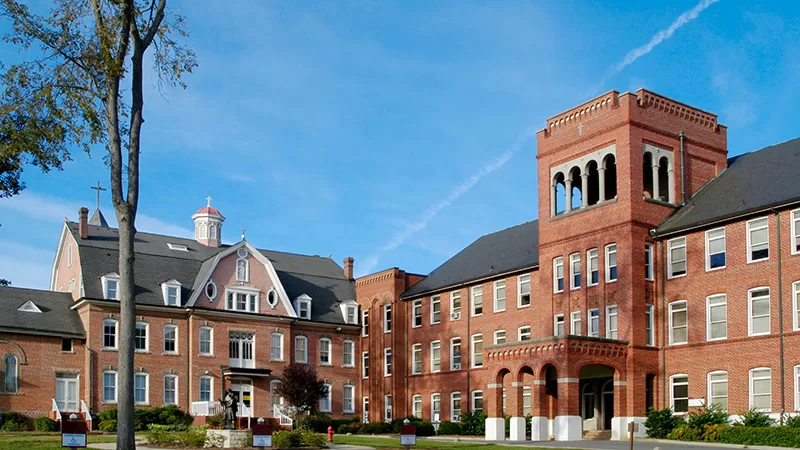
The conversation about international schooling almost always begins and ends in the same place: the elite international academy. For the uninitiated expat, these institutions are presented as the only viable path—a non-negotiable insurance policy for a child’s future. We see the Olympic-sized pools, the glass-walled science labs, and the ‘brand-name’ curricula, and we assume that a $30,000-per-year price tag is the baseline for quality.
But in 2026, this assumption has become a strategic liability. For many families, the ‘Elite Academy’ is not an investment; it is a financial anchor. It is the expense that forces parents back into the corporate grind, limits their geographic flexibility, and ultimately undermines the very freedom that drew them to the expat life in the first place. You move abroad to escape the ‘rat race,’ only to find yourself running faster just to keep your children in a hermetically sealed bubble of Western privilege.
The reality on the ground is far more interesting. Across the world’s emerging expat hubs, a new ‘Educational Arbitrage’ is taking place. Strategic families are discovering that they can secure a rigorous, culturally rich, and globally recognized education for a fraction of the cost of the marquee schools. They are realizing that ‘value’ in education is not found in the architectural budget of a campus, but in the breadth of a child’s experience.
In a world where personhood is being diversified and borders are becoming more porous for the mobile class, the choice of school is the ultimate portfolio decision. This guide audits the landscape of global education, providing a framework for finding high-quality schooling that supports your lifestyle rather than consuming it.

Read More Like This: How To Facilitate Your Children’s Heart-Led Learning, Passion, and Creativity Through Worldschooling
Auditing the ‘True Cost’
Before you can find value, you must understand the ‘Gilded Cage’ of the elite international school. The headline tuition figure—often reaching $25,000 to $35,000 per year in cities like Singapore, Dubai, or Ho Chi Minh City—is just the entry fee. Once you are inside, the ‘hidden tax’ of the elite bubble begins to accrue.
You face enrollment fees, capital levies, technology ‘contributions,’ and mandatory building funds that can add another $5,000 to your annual bill. Then there is the social cost: the expectation of high-end school trips, expensive extracurriculars, and a peer group whose lifestyle can create a distorted sense of reality for a developing child. For a family with multiple children, this can easily become a $100,000-a-year obligation.
This expenditure creates a ‘Freedom Gap.’ It tethers the family to high-earning, high-stress roles in specific high-cost cities. It prevents the family from moving to a more affordable ‘lifestyle’ destination because they fear they cannot ‘downgrade’ their child’s education. The strategic expat asks: Is this expenditure actually buying a better outcome, or is it merely buying a sense of social security?
The ‘Gilded Cage’ model also limits the child’s exposure to the actual country they are living in. By spending their days in an English-speaking compound with other wealthy expatriates, they miss out on the very cultural fluency that makes a global childhood valuable. You are paying a premium to keep them in a bubble that may actually decrease their ‘Global IQ’ in the long run.

Read More Like This: International Schooling: An Education Like No Other
The Local Private School
In markets like Thailand, Malaysia, Colombia, and Portugal, the single best value proposition is often found in local private schools that cater to the host nation’s upper-middle class. These schools offer a level of academic rigor that often rivals or exceeds the ‘Elite Academies,’ but at a price point ranging from $2,000 to $6,000 per year.
The arbitrage here is not just financial; it is cultural. A child in an elite international school often lives in an ‘English-only’ vacuum, gaining only a superficial understanding of their host country. Conversely, a child in a high-quality local private school gains genuine fluency in a second language and forms deep, lasting friendships with local peers.
They experience education as it is lived by the majority of the population, not as a curated ‘luxury product.’ This builds a level of adaptability and resilience—the ‘Global IQ’—that is far more valuable in the 2026 economy than a prestigious crest on a blazer. While the facilities may be more modest, the ‘human capital’ of the teaching staff is often exceptional, driven by a national culture that prioritizes academic achievement.
Local private schools also provide a gateway into the local ‘social fabric.’ Through their children’s school, expat parents often form connections with local families that would be impossible to achieve in the insulated expat bubble. This social capital is a vital part of your long-term success and stability in a new country. It is the ultimate hedge against sovereign risk.

Read More Like This: Raising Global Kids Without Breaking the Bank
The Hybrid Middle Ground
For families who aren’t ready to go ‘fully local,’ a thriving middle market of bilingual academies and ‘hybrid’ schools has emerged. These institutions combine the national curriculum with international frameworks like the Cambridge International Examinations, the American Common Core, or selected components of the International Baccalaureate.
These schools are the ‘Sweet Spot’ of the expat education market. They offer the comfort of English-language instruction and transferable credits, but without the ‘brand-name premium’ of the elite schools. Tuition in this tier typically sits between $4,000 and $10,000, making them highly accessible for location-independent professionals and digital nomad families.
In cities like Chiang Mai, Lisbon, or Merida, these schools have become community hubs for families who prioritize quality and immersion over prestige. They offer smaller class sizes and more personalized attention than the ‘mega-academies,’ proving that in education, ‘bigger’ is rarely ‘better.’
The hybrid model also offers greater flexibility. Because the curriculum is based on international standards, it is much easier to move your child between schools in different countries if your ‘sovereign journey’ takes you elsewhere. You get the benefits of an international education without the exorbitant cost associated with the ‘Elite’ branding.
Read More Like This: Why Families Are No Longer Raising Children in One Place
2026 Regional Audit: Where the Value Lives
The value equation for schooling is a geographic variable. To win the game of educational arbitrage, you must choose your jurisdiction with care. In 2026, we see several standouts:
Thailand: The gap here is the widest in the world. An elite school in Bangkok can cost $25,000, while a top-tier bilingual school in Chiang Mai—offering a comparable academic outcome—can be found for $4,000. Thailand is the capital of ‘Value Schooling’ for the strategic expat.
Malaysia: One of the most competitive markets in Asia. You can secure a mid-tier British-curriculum education for $8,000 to $12,000, or a high-performing Chinese-medium private school for under $4,000. Malaysia offers an incredible range of price points for Every family.
Portugal: While international tuition is rising, the Portuguese public system remains surprisingly robust in smaller towns. For those seeking private options, bilingual schools in the $6,000 to $10,000 range offer a sophisticated gateway to European higher education.
Colombia & Mexico: These markets offer exceptional value in the $3,000 to $7,000 range. The academic culture in cities like Medellin and Merida produces graduates who consistently place in top-tier global universities at a fraction of the cost found elsewhere.
Read More Like This: A Different Way to Raise a Family Abroad
Beyond the Brochure
Finding value requires you to look past the glossy marketing. To evaluate a school properly, you must move from being a ‘consumer’ to being a ‘strategist.’ This starts with an in-person audit.
First, ignore the facilities and look at the ‘Human Energy.’ Visit the school in person. Are the students engaged? Is there a sense of warmth and curiosity in the classrooms, or does it feel like a factory? No amount of high-tech gadgetry can compensate for a lack of passionate teaching.
Second, tap into the ‘Expat Underground.’ Don’t just talk to the admissions officer; talk to the parents in the local Facebook groups. Ask about the ‘hidden friction’—the school’s responsiveness to concerns, the quality of the English support, and the social inclusivity of the student body. Finally, audit the ‘Output.’ Where do the graduates actually go? If a $5,000-a-year school is consistently sending kids to reputable universities in Europe and the Americas, you have found a high-alpha investment. You are looking for a track record of results, not just a promise of prestige.
Education as a Variable Investment
The most important shift for the expat parent is to stop thinking of education as a fixed expense and start seeing it as a variable investment. Your goal is not to spend the maximum amount possible; your goal is to find the environment that serves your child’s specific needs at a price point that sustains your family’s freedom.
A child who navigates a bilingual school in Mexico or a local private school in Malaysia graduates with more than just a diploma. They graduate with a ‘Global Resilience’—a deep understanding of cultural nuances and a comfort with diversity that no ‘Elite Academy’ can truly replicate. In the 2026 economy, that resilience is the only real insurance policy.
Read More Like This: Homeschooling vs. International Schools
People Also Ask
Q1. Will my child be at a disadvantage for university if they don’t attend a ‘name-brand’ international school?
No. Admissions officers at top universities are increasingly looking for ‘Contextual Achievement.’ A student who excels in a local private school in an emerging market, shows genuine bilingualism, and has a unique cultural perspective often stands out more than a ‘standard’ international school applicant.
Q2. How do I handle the ‘Language Barrier’ in a local private school?
Most local private schools in expat hubs are accustomed to ‘transitional students.’ Look for schools with strong ESL support or those that offer a ‘Bridge Program.’ Children are biologically wired for language acquisition; with immersion, they usually bypass the barrier entirely.
Q3. Are these ‘affordable’ schools actually safe and well-regulated?
In countries like Thailand, Malaysia, and Portugal, the private education sector is heavily scrutinized by the government. While they may not have the luxuries of an elite school, they must meet strict standards for safety and curriculum. Your own due diligence is your best tool for verification.
Q4. What is the biggest risk of choosing a local private school?
The primary risk is ‘Curricular Misalignment.’ If you plan to return to your home country in 12 months, a local curriculum might make reintegration difficult. However, for long-term expats, the benefit of ‘Local Immersion’ far outweighs the risk of temporary academic friction.
Q5. Can I really find a quality international-standard education for under $5,000?
Yes, but you have to leave the high-cost capital cities. In ‘Tier 2’ hubs like Chiang Mai, Medellin, or Merida, $5,000 buys a level of educational quality and community engagement that is often superior to the mass-market schools in high-cost capitals.
Contact Author
"*" indicates required fields
Stay Ahead on Every Adventure!
Stay updated with the World News on Escape Artist. Get all the travel news, international destinations, expat living, moving abroad, Lifestyle Tips, and digital nomad opportunities. Your next journey starts here—don’t miss a moment! Subscribe Now !
The conversation about international schooling almost always begins and ends in the same place: the elite international academy. For the uninitiated expat, these institutions are presented as the only viable path—a non-negotiable insurance policy for a child’s future. We see the Olympic-sized pools, the glass-walled science labs, and the ‘brand-name’ curricula, and we assume that a $30,000-per-year price tag is the baseline for quality.
But in 2026, this assumption has become a strategic liability. For many families, the ‘Elite Academy’ is not an investment; it is a financial anchor. It is the expense that forces parents back into the corporate grind, limits their geographic flexibility, and ultimately undermines the very freedom that drew them to the expat life in the first place. You move abroad to escape the ‘rat race,’ only to find yourself running faster just to keep your children in a hermetically sealed bubble of Western privilege.
The reality on the ground is far more interesting. Across the world’s emerging expat hubs, a new ‘Educational Arbitrage’ is taking place. Strategic families are discovering that they can secure a rigorous, culturally rich, and globally recognized education for a fraction of the cost of the marquee schools. They are realizing that ‘value’ in education is not found in the architectural budget of a campus, but in the breadth of a child’s experience.
If you'd like to read the full story, simply enter your email to subscribe to our newsletter.
For even more expert insights, unmissable resources, and exclusive invites, explore our premium subscription offers here.
OR
Already a Subscriber? Click here to login
Subscription required
You've reached your limit of free articles. For full access to Escape Artist, and all of our insights on travel, moving abroad, and the digital nomad life, click here to Subscribe.
Already a Subscriber? Log in here