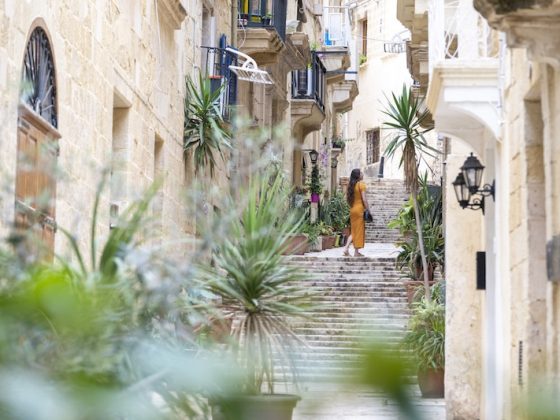
Brunette curls fastened in pigtails atop a small round face dance through the wind as the little girl scurries to the classroom on a mission to avoid the collective standstill for the national anthem. Getting caught in this would simply delay her start to the exciting festivities of the day ahead. This mysterious child is me, roughly a decade ago, patriotically dressed in red, white, and blue, hurriedly on my way to the International Day assembly in the auditorium. To provide a brief outline, in elementary school, International Day consists of a parade and an assembly that the whole school attends, followed by an array of activities that acknowledge and encourage appreciation of the many cultures of the world. A decade ago, that little girl thought International Day was just a fun excuse to color in maps of the world in place of literacy and numeracy classes.
Other classes that were occasionally skipped on account of International Day were “taster lessons” for languages that we would go on to spend five more years intensively studying. The concept of taster lessons is something that I always found to be clever, because it gave us a chance to learn the basics of a language and then choose which one we wanted to study in depth; I have also been able to count to twenty in at least five languages for quite some time now. Just to give a general idea of how young we were when being exposed to foreign language, our school policy, and that of other schools that I am familiar with, is that students must learn the country of residence’s language from the age of Kindergarten until sixth grade; well before the introduction of language taster lessons. To summarize, this makes for 10-year-old kids who most likely speak their parents’ language at home, while learning their home country’s language in school, in addition to a separate language study of their choice. If not for any other reason, International School is extremely beneficial because of this strong focus on language, providing its students with skills that will set them apart from others when applying for employment in the future.
International Schools are also known for challenging students with rigorous high school curriculums that prepare them for university. While I was touring universities, I heard time and time again that the International Baccalaureate is the most rigorous program in the world, and I can absolutely vouch for this. My peers and I dedicated two years of our lives to six classes, three at a higher level and three at a standard level. Additionally, we could not graduate until we completed 150 volunteer hours for creativity, action, and service, as well as take a “Theory of Knowledge” class, which I can confidently say was significantly more difficult than freshman year Philosophy 101. As if this was not already enough work, the IB requires us to independently write an “Extended Essay” on one of our subjects, which is essentially a college-level paper. Apart from pushing adolescents to their full potential, the popularity of the IB program also connects students from around the world, giving them a common experience to bond over. This is something that I didn’t realize until I got to the United States and met other international students who had gone through the same strenuous two years as I had.
Furthermore, growing up in an environment that encourages acceptance and breeds friendships across several cultures causes a kind of naiveté in the minds of the children who are fortunate enough to have grown up in a similar setting to myself. This constant exposure and interaction with people from different race, language, and cultural backgrounds shielded us from some of the problems that other less-diverse communities have. Racism, for example, seemed such a distant social problem during my upbringing because I had not experienced it firsthand until moving to the United States. We were of course made aware of the issue through different forms, such as the news media, history classes, and movies; however, I had never felt as close to it as I currently do as a college student in America.
Ultimately, the International School community, and more specifically the IB program, has greatly prepared me for the workload of university, and it has provided me with skills that will continue to benefit me for the rest of my life. Being educated in a place that integrated the cultures of the world with little issues of prejudice and with a positive outlook on learning was an invaluable experience, one that many of us “third culture” kids take for granted – without even realizing it until we have left the nest. Although a lot was expected from us, and often times it got stressful, I would not trade my unique learning experience for anything.
Contact Author
"*" indicates required fields
Stay Ahead on Every Adventure!
Stay updated with the World News on Escape Artist. Get all the travel news, international destinations, expat living, moving abroad, Lifestyle Tips, and digital nomad opportunities. Your next journey starts here—don’t miss a moment! Subscribe Now !
Brunette curls fastened in pigtails atop a small round face dance through the wind as the little girl scurries to the classroom on a mission to avoid the collective standstill for the national anthem. Getting caught in this would simply delay her start to the exciting festivities of the day ahead. This mysterious child is me, roughly a decade ago, patriotically dressed in red, white, and blue, hurriedly on my way to the International Day assembly in the auditorium. To provide a brief outline, in elementary school, International Day consists of a parade and an assembly that the whole school attends, followed by an array of activities that acknowledge and encourage appreciation of the many cultures of the world. A decade ago, that little girl thought International Day was just a fun excuse to color in maps of the world in place of literacy and numeracy classes.
Other classes that were occasionally skipped on account of International Day were “taster lessons” for languages that we would go on to spend five more years intensively studying. The concept of taster lessons is something that I always found to be clever, because it gave us a chance to learn the basics of a language and then choose which one we wanted to study in depth; I have also been able to count to twenty in at least five languages for quite some time now. Just to give a general idea of how young we were when being exposed to foreign language, our school policy, and that of other schools that I am familiar with, is that students must learn the country of residence’s language from the age of Kindergarten until sixth grade; well before the introduction of language taster lessons. To summarize, this makes for 10-year-old kids who most likely speak their parents’ language at home, while learning their home country’s language in school, in addition to a separate language study of their choice. If not for any other reason, International School is extremely beneficial because of this strong focus on language, providing its students with skills that will set them apart from others when applying for employment in the future.
International Schools are also known for challenging students with rigorous high school curriculums that prepare them for university. While I was touring universities, I heard time and time again that the International Baccalaureate is the most rigorous program in the world, and I can absolutely vouch for this. My peers and I dedicated two years of our lives to six classes, three at a higher level and three at a standard level. Additionally, we could not graduate until we completed 150 volunteer hours for creativity, action, and service, as well as take a “Theory of Knowledge” class, which I can confidently say was significantly more difficult than freshman year Philosophy 101. As if this was not already enough work, the IB requires us to independently write an “Extended Essay” on one of our subjects, which is essentially a college-level paper. Apart from pushing adolescents to their full potential, the popularity of the IB program also connects students from around the world, giving them a common experience to bond over. This is something that I didn’t realize until I got to the United States and met other international students who had gone through the same strenuous two years as I had.
If you'd like to read the full story, simply enter your email to subscribe to our newsletter.
For even more expert insights, unmissable resources, and exclusive invites, explore our premium subscription offers here.
OR
Already a Subscriber? Click here to login
Subscription required
You've reached your limit of free articles. For full access to Escape Artist, and all of our insights on travel, moving abroad, and the digital nomad life, click here to Subscribe.
Already a Subscriber? Log in here