Added 10 September 2026. This piece is about why people leave Costa Rica, and the honest answer for most of them is money. It gives almost no figures, so here they are.
| San Jose | Per month |
|---|---|
| One-bedroom, city centre | about $800 |
| One-bedroom, outside centre | about $645 |
| Three-bedroom, city centre | about $1,590 |
| Basic utilities | about $81 |
| Home internet | about $52 |
| Single person, before rent | about $1,010 |
| Average local take-home pay | about $889 |
A single foreigner needs roughly $1,655 a month in San Jose before anything discretionary. Average local pay is $889. That is the whole tension the article describes: Costa Rica is affordable measured against North America and expensive measured against Costa Rica, and the people who leave are usually the ones who budgeted for the first and met the second. The eighteen dollar imported yogurt in this piece is not an anecdote, it is the entire economics of imported goods on a small market.
Figures crowd-sourced from residents via Numbeo for San Jose (545 submissions, 37 contributors, updated 30 August 2026).
Many people move to Costa Rica announcing, often, that they are staying forever. But a few years later, some pack their bags. It rarely happens all at once. There is usually a period of quiet contemplation first. The kind where someone sits on their porch, listening to the constant buzz of insects they still cannot identify and the occasional dramatic squawk of a parrot overhead, wondering if maybe, just maybe, it is time to go.
Sometimes it is the humidity that seems to wrap around you like a damp blanket. Sometimes it is the endless rustle of paperwork required to accomplish even simple things. And sometimes it is something small, like realizing you would really like a bowl of Cheerios and some mac and cheese.
The first few times I watched friends pack up and leave, I was surprised. After all, this place is beautiful. But over time, I understood why. I came here looking for a major life change. I wanted something different. I expected things to be different.
Some people move here wanting better weather. They picture endless sunshine and beach days. Others are chasing a lower cost of living and an easier lifestyle. The reality is more complicated.
Daily life in Costa Rica has its own rhythms, quirks, and unexpected challenges. For some people, those differences become part of the adventure. For others, they become reasons to leave.
The Dream versus the Reality
Many visitors fall in love with Costa Rica during vacations and begin imagining what life would be like if they stayed for good. For some, that dream becomes a reality. Retirees, digital nomads, entrepreneurs, and families relocate to experience the famous pura vida lifestyle. But living somewhere is very different from visiting for a week or even a month.
While many expats settle here for decades, others decide to move back home or try another country. In most cases, the difference comes down to expectations and how well someone adapts to a new culture and lifestyle.
Understanding both sides helps explain why some people leave Costa Rica while others end up building a life here.
The Cost of Living Surprise
One of the biggest surprises for newcomers is the cost of living. Many people assume that moving to Central America means everything will be cheaper. Costa Rica does not always cooperate with that assumption.
Imported goods, electronics, and vehicles can cost more because of import taxes and transportation costs. Even groceries can become expensive if you want the same brands you bought back home.
Housing prices have climbed in many popular expat areas, especially near beaches and tourist towns. It is possible to live well here, but maintaining a North American lifestyle can get expensive fast.
The difference often comes down to flexibility. If you adapt to local foods and a simpler lifestyle, you can save quite a bit. If you insist on importing your old lifestyle, your bank account may empty fast.
For example, if you want American-brand Greek yogurt, you need to visit a high-end grocery store where a tub can cost eighteen dollars. The Costa Rican version might cost six or seven, but it tastes different. If you like it, great; you have saved money. If you don’t, you either pay more or go without. That sounds like a small issue, but these adjustments add up.
There is also a cost that has nothing to do with price tags. Since the start of 2023 the colón has strengthened by about a quarter against the US dollar, so a pension paid in dollars now buys noticeably less, even where local prices have barely moved. We set out the numbers in why Costa Rica got more expensive for Americans while prices stayed flat.

Bureaucracy: Bring Patience
Another challenge expats often mention is bureaucracy. Government processes here can be slow and require an impressive amount of paperwork. Applying for residency, registering property, starting a business, or handling legal matters may involve multiple visits to multiple offices, sometimes for reasons that remain unclear. Rules can change midstream, which adds another layer of confusion. Even things that sound simple, like opening a bank account or renewing documents, can take longer than expected.
For people accustomed to fast digital systems and online forms, this pace can feel frustrating. Patience helps. So does hiring someone local who understands the system.
There is also, in some situations, a culture of “greasing the wheels.” Some people are comfortable navigating that reality. Others object to it, and for them, that alone can become a deal-breaker.
Adjusting to a Slower Pace
Costa Rica is known for its relaxed culture, often summarized with the phrase pura vida. For many people, that slower pace is what they had been hoping to find. But not everyone adjusts with ease. Construction projects, home repairs, deliveries, and services often take longer than people expect. Schedules can be flexible. Deadlines sometimes feel more like suggestions.
At first, many expats find this charming. Later, less so. Utilities can also be unpredictable. Losing water or electricity for a few hours is not unusual. After a while, you learn to keep flashlights, extra water, batteries, and candles nearby. It becomes part of the routine.
However, if you run an online business or need reliable infrastructure every minute of the day, those interruptions can start to feel less like quirks and more like deal-breakers.
Healthcare Considerations
Costa Rica has a strong healthcare system and many excellent doctors. However, access to specialized care can depend on where you live. Most advanced medical facilities are located in larger cities like San José. People living in remote areas or coastal towns may need to travel several hours for certain treatments or specialists.
For younger residents, this is not a major concern, but retirees or people managing ongoing medical conditions sometimes find the distance challenging. There is also the financial side to consider. U.S. Medicare and most insurance do not cover medical care in Costa Rica.
While healthcare here is much cheaper than in the United States, those costs can still add up over time. Once you get permanent residency, you can join the public healthcare system (CAJA), which has a low monthly fee but is otherwise free. However, many expats prefer private healthcare because it tends to be faster and more predictable.
Culture, Language, and Homesickness
Living abroad always requires adapting to a new culture, language, and way of doing things. Many expats embrace this process and enjoy learning Spanish, navigating new systems, and becoming part of their local communities. Others struggle.
Distance from family and long-time friends can also become harder as the years pass. Missing birthdays, weddings, and holidays can take an emotional toll.
Families with children are often more likely to leave at some point. Young kids tend to adapt and enjoy the experience. But as they get older, they may want educational or career opportunities that are easier to find back home. At that point, many families begin reconsidering their long-term plans.
Why Many Decide to Stay
The Natural Environment Is Hard to Walk Away From
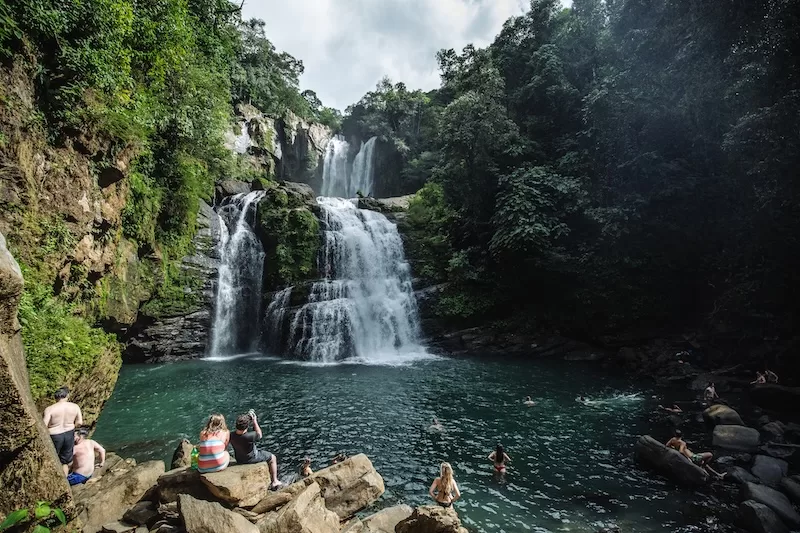
Costa Rica has a way of making nature part of your daily routine, whether you planned for it or not. You do not have to schedule time to see wildlife. It shows up anyway. Howler monkeys will wake you up before your alarm. Sloths hang in roadside trees as if they have nowhere else to be. Toucans and scarlet macaws cut across the sky while you are doing something ordinary, like making coffee.
The country fits an unusual amount into a small space. You can go from dense rainforest to cool cloud forest to a Pacific beach in a matter of hours. People talk about doing a volcano hike in the morning and catching the sunset by the ocean later that day, and it is not an exaggeration.
Places like Arenal Volcano and Manuel Antonio National Park are crowded but there is a reason. The scenery holds up. If being in nature matters to you, it is hard to come up with a better everyday setup.
Life Slows Down in a Way That Starts to Make Sense
While the slower pace is one of the biggest reasons people leave, it is also one of the main reasons others stay. At first, it can feel inefficient. But over time, a lot of people realize the alternative was not necessarily better. Constant urgency, packed calendars, and measuring your day by productivity start to feel less convincing once you step away from them.
You adjust. You stop expecting everything to happen quickly. You spend more time outside. Conversations last longer. A trip to the store is no longer just a task to complete. It is not that life becomes perfect. It just becomes easier to move through without feeling like you are always behind.

Stability Matters More Than You Think
Costa Rica does not always get credit for how unusual its stability is in the region.
After the Costa Rican Civil War of 1948, the country abolished its military and redirected that money into education, healthcare, and environmental protection. That decision still shapes daily life in ways people often underestimate.
For short-term plans, it might not make a big difference. However, if you’re considering a long-term commitment, like buying property or establishing roots, it becomes highly significant. The predictability here offers a greater sense of security for making commitments compared to other nations in the region, as you’re not constantly anticipating a sudden governmental coup that will upend your world .
The Weather Does What It Is Supposed to Do
For many, the climate alone settles the debate. No more winters, scraping ice off the windshield, or months where going outside feels like a chore. Instead, you’ll experience a dry season, a rainy season, and a variety of microclimates depending on your chosen location.
Along the coast, it is consistently hot. In the Central Valley, around San José, it stays mild enough that people describe it as eternal spring. After a while, your tolerance changes. What used to feel cool starts to feel cold. The idea of moving back to long winters becomes harder to justify.
People and Community Make a Difference
Costa Ricans, often called Ticos, are as friendly as their reputation suggests. People greet each other. Neighbors talk. Shop owners remember you. There is a level of everyday interaction that can feel unfamiliar if you are coming from a place where people keep to themselves.
What makes a bigger difference over time is language. As your Spanish improves, your world expands. Conversations become easier, and you start forming more friendships with Costa Ricans, not just other expats. That shift is important. It is the point where life starts to feel less temporary.
There are also strong expat communities, especially in places like Tamarindo, Atenas, and along the southern Pacific coast. They make the transition easier, sometimes a little too easy if you never step outside that circle.
People who tend to stay long-term find a balance. They build connections in both worlds, and that is what makes it feel like home instead of a long visit.
Finding the Right Fit
Living abroad is not always better. It is just different, and sometimes that difference is what people are looking for. Costa Rica rewards a certain mindset. You have to be willing to give up some convenience, accept a slower pace, and deal with things not working the way you expect.
Not everyone wants that. And not everyone should. But for the people who do adjust, the trade-offs start to feel worth it. Life feels less rushed, more outdoors, and a bit more grounded in day-to-day experiences instead of constant forward motion.
For those who stay, Costa Rica stops feeling like a place they moved to and starts feeling like a place that reshaped how they live. Something built around nature, community, and a perspective summed up in a phrase you hear everywhere: pura vida.
Key Takeaways
Why do some expats leave Costa Rica after moving there?
Because the reality of daily life can feel very different from the vacation version. What looks like paradise at first can become frustrating if someone struggles with humidity, paperwork, slower systems, higher-than-expected costs, or distance from familiar comforts and people.
Is Costa Rica actually cheap for expats?
Not always. The article makes it clear that Costa Rica can get expensive fast if someone tries to maintain a North American lifestyle, especially in popular beach towns and expat-heavy areas. People who adapt to local foods and simpler habits tend to do much better financially.
Is bureaucracy really one of the biggest challenges?
Yes. Slow government processes, repeated paperwork, unclear rules, and long wait times for basic administrative tasks are presented as one of the most common frustrations for expats. For some, it is manageable. For others, it becomes a serious reason to leave.
What kind of person tends to struggle most in Costa Rica?
Someone who wants convenience, speed, and their old lifestyle with minimal compromise. The article suggests Costa Rica can be difficult for people who expect things to work quickly, predictably, and exactly as they did back home.
Why do many expats end up staying for good?
Because over time, the trade-offs begin to feel worth it. Nature becomes part of everyday life, the slower rhythm starts to make sense, the climate becomes hard to leave, and relationships with both locals and expats start to create a real sense of home.
What makes Costa Rica especially compelling long term?
The combination of natural beauty, political stability, warm weather, and strong community. For people building a life rather than just chasing a fantasy, those factors carry more weight over time than convenience alone.
What is the real bottom line of the article?
Costa Rica is not universally better. It is better for a certain kind of person. People who adapt, let go of constant urgency, and build a life around nature, community, and flexibility often find that Costa Rica changes not just where they live, but how they live.
About the Author
Semi-retired teacher and theater professional Tam Matthews moved to Costa Rica in January of 2023 with her two dogs. She writes about expat life on Substack.
Contact Author
"*" indicates required fields
Stay Ahead on Every Adventure!
Stay updated with the World News on Escape Artist. Get all the travel news, international destinations, expat living, moving abroad, Lifestyle Tips, and digital nomad opportunities. Your next journey starts here—don’t miss a moment! Subscribe Now !
Added 10 September 2026. This piece is about why people leave Costa Rica, and the honest answer for most of them is money. It gives almost no figures, so here they are.
| San Jose | Per month |
|---|---|
| One-bedroom, city centre | about $800 |
| One-bedroom, outside centre | about $645 |
| Three-bedroom, city centre | about $1,590 |
| Basic utilities | about $81 |
| Home internet | about $52 |
| Single person, before rent | about $1,010 |
| Average local take-home pay | about $889 |
A single foreigner needs roughly $1,655 a month in San Jose before anything discretionary. Average local pay is $889. That is the whole tension the article describes: Costa Rica is affordable measured against North America and expensive measured against Costa Rica, and the people who leave are usually the ones who budgeted for the first and met the second. The eighteen dollar imported yogurt in this piece is not an anecdote, it is the entire economics of imported goods on a small market.
If you'd like to read the full story, simply enter your email to subscribe to our newsletter.
For even more expert insights, unmissable resources, and exclusive invites, explore our premium subscription offers here.
OR
Already a Subscriber? Click here to login
Subscription required
You've reached your limit of free articles. For full access to Escape Artist, and all of our insights on travel, moving abroad, and the digital nomad life, click here to Subscribe.
Already a Subscriber? Log in here