If you’re looking for information about the most affordable European cities to live in 2026, chances are a decision is taking shape. Maybe rent has climbed too fast where you are. Maybe Europe feels like a possibility, but only if the numbers make sense. Either way, the question is practical: where can a real, permanent life still be cost-friendly next year, not just for a season, but for everyday living.
Affordability is not about choosing the cheapest place and hoping for the best. It’s about finding cities where costs stay in balance with how people live. Places where housing doesn’t swallow the budget, where groceries are easy to manage, where public transport makes a car optional rather than essential, and where healthcare supports everyday life with a reliable safety net.
That balance has become harder to come by. Many European cities that once felt attainable now come with overheated housing markets, stricter residency rules, and expenses that quietly rise from one month to the next. At the same time, there are places that continue to offer something steadier. Cities where rent still reflects local wages, food remains fresh and reasonably priced, getting around is straightforward, and daily life feels manageable rather than overwhelming.
This article is meant to help you focus on those places. It looks ahead to 2026 and highlights European cities expected to remain easier on the wallet, based on current cost trends and living conditions on the ground. These are cities that support setting down roots, establishing longer leases, and settling in, long after the first excitement of arrival gives way to everyday life.
Read More Like This: Escape Artist’s Ultimate Guide to Moving to Europe
Why Affordability in Europe Might Look Different in 2026
Europe’s cost landscape has changed shape over the past five years, and many people have felt it firsthand. Cities once known for reasonable rents and manageable daily expenses have changed under the weight of short-term rentals, remote-work migration, and a growing focus on visitor-driven economies. In many familiar hubs, long-term housing has become harder to secure, nudging residents toward smaller apartments, longer commutes, or monthly costs that no longer feel connected to local wages.
Data confirms what many residents already feel. Eurostat data show that between 2010 and the fourth quarter of 2024, house prices in the EU increased by 55.4% and rents by 26.7%, with capital cities seeing the sharpest increases. In places like Lisbon, Amsterdam, and Prague, rent has grown faster than incomes, reshaping who those cities realistically work for over the long term. At the same time, a different pattern has taken hold elsewhere. Parts of Eastern and Southern Europe have invested in transport, healthcare, and digital infrastructure, improving everyday quality of life without triggering the same level of price escalation seen in more saturated markets.
This split is shaping what affordability will mean in 2026. The focus is shifting away from which city looks cheapest right now and toward which ones are likely to remain workable over time. Cities where housing, food, transport, and services stay aligned with local earning power tend to feel more predictable. Rent moves at a steadier pace. Prices are easier to anticipate. Planning beyond the next lease feels realistic rather than risky. Those conditions are most often found outside capital-city pressure zones and away from places built primarily around short-term demand, with lifestyles designed for residents first.
How Affordability Is Measured in This Article
Affordability is often boiled down to a single figure, but real life rarely works that way. What looks good on paper can feel very different once habits settle in and months start stacking up. This article takes a layered approach, combining verified data with practical markers that show how a city holds up over time. The aim isn’t to crown the cheapest place in Europe, but to highlight cities where expenses are likely to stay easier to handle once everyday life, longer stays, and forward planning come into play.
Cost of living benchmarks
The data points referenced throughout this article draw primarily from Numbeo and national statistical offices, carefully cross-checked to avoid anomalies or overly optimistic snapshots. Monthly estimates are based on a single adult renting a one-bedroom apartment in the outskirts, where most permanent residents tend to live, rather than in areas shaped mainly around short-term demand.
These benchmarks reflect current conditions and recent trends, not outdated reputations. The cities included here show a pattern of steadiness across several expense categories, rather than relying on one unusually low cost to appear affordable. That consistency matters heading into 2026, as price swings and sudden increases have become just as important to watch as headline costs when deciding where a budget is likely to hold.
Rent, utilities, and daily expenses
Rent remains the single most influential variable in any affordability calculation. In cities that still qualify as cost-friendly by European standards, housing typically absorbs 25 to 35% of monthly expenses. In contrast, high-pressure markets like Paris, Amsterdam, or Dublin regularly exceed 45%, leaving little room for flexibility when costs rise elsewhere.
Utilities, transport, and groceries carry equal weight in this analysis because they shape comfort over time. A city with cheap rents but expensive heating, unreliable transport, or inflated food prices often proves harder to live in than expected. On the other hand, places with efficient public transport, consistent utility costs, and accessible local markets tend to support steadier monthly planning, even if headline rent appears slightly higher.
Lifestyle value beyond price
An affordable city should not demand constant compromise just to function. The comparison is less about finding the lowest sticker price and more about finding a place that supports sustained living. Much like choosing shoes for a long walk rather than for display, a city proves its value by how well it carries you forward, not by how it looks at the starting line.
The Most Affordable European Cities to Live in 2026
Sofia, Bulgaria
Sofia remains one of the most consistently affordable capital cities in the European Union, and in 2026 its appeal rests on more than price alone. Days take place against a backdrop of broad boulevards, neighborhood bakeries, and a mountain ridge visible from tram stops and office windows. The city feels functional without feeling stripped down, offering the essentials of urban life without the constant financial friction found elsewhere.

According to Numbeo cost of living data, average monthly expenses for a single adult excluding rent hover around €740. Long-term rental prices remain among the lowest in the EU for a capital city. A one-bedroom apartment in residential districts typically ranges between €450 and €650 per month, depending on neighborhood and building age. Utilities tend to be moderate, and internet costs are low by European standards (from €10 to €18), reflecting Bulgaria’s strong digital infrastructure.
Public transport is one of Sofia’s strengths. A single ride costs roughly €0.80, and monthly passes remain inexpensive at around €25, making it easy to live without a car. The metro system connects residential districts to the city center efficiently, and daily errands rarely require long commutes. For healthcare, Bulgaria’s public system covers residents, while private clinics offer short wait times and transparent pricing, a combination that appeals to long-term residents balancing cost with reliability.
Sofia also benefits from Bulgaria’s flat tax rate of 10% on personal income, one of the lowest in the EU, which continues to attract remote professionals and entrepreneurs. While residency processes require planning, administrative costs remain comparatively light, and operating expenses stay stable once settled.
For 2026, Sofia stands out not because it promises luxury at a discount, but because it delivers something increasingly rare in Europe: a capital city where monthly budgets remain stable and life feels financially legible over the long term.
Best for: Remote professionals and EU residents who prioritize low taxes, stable expenses, and a capital city with minimal financial friction.
Bucharest, Romania
Bucharest often defies first impressions. The city’s wide avenues and monumental architecture hint at scale, but daily life has a cozier feeling: local cafés peaking between apartment blocks, neighborhood parks filled in the early evening, and a café culture that stretches into the workday without making waves. For lasting residents, Bucharest offers a rare combination of space, affordability, and momentum.
Regular monthly expenses for a single adult excluding rent typically fall between €700 and €800. Rental prices remain accessible for a capital city. A modern one-bedroom apartment outside the city center frequently rents for €400 to €600 per month, with newer developments offering better insulation and lower utility costs than older stock.
Romania’s infrastructure adds to the value proposition. Reasonably priced fiber connections are widely available, which has supported a growing coworking ecosystem across central neighborhoods such as Dorobanți, Universitate, and Tineretului, making the city especially workable for remote professionals. Public transport costs remain low, with metro and tram networks providing broad coverage and monthly passes priced well below Western European equivalents.
Healthcare access combines a public system with an extensive private network. Many residents rely on private clinics due to short wait times and transparent pricing, while public hospitals cover more complex treatments. Food costs remain moderate, particularly when shopping at local markets, and dining out stays accessible, falling between €8 and €20 per person in an inexpensive restaurant.
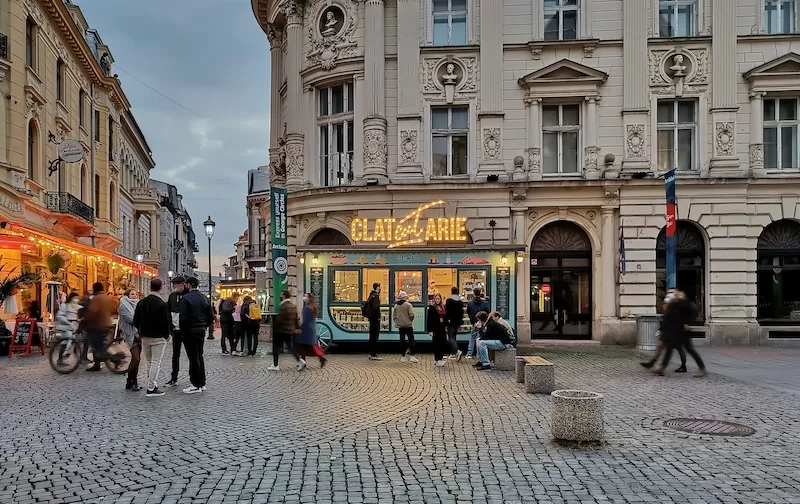
What sets Bucharest apart heading into 2026 is its cost stability. While other regional capitals have experienced sharp rental inflation, Bucharest’s prices have risen at a more measured pace. That resilience, paired with improving infrastructure and sustained affordability, positions the city as one of the more dependable options among the most affordable European cities to live in 2026 for those seeking a capital with room to settle rather than scramble.
Best for: People who want space, remote workers, fast internet, and big-city infrastructure without paying big-city prices.
Porto, Portugal
Porto sits at a different point on Europe’s affordability spectrum, but it continues to earn attention because the trade-offs feel proportionate. Life in Porto is shaped by compact neighborhoods, daily errands done on foot, and a social pace that encourages lingering rather than rushing. Compared to Lisbon, Portugal’s capital, Porto operates on a more resident-oriented scale, particularly once you move beyond the historic riverfront and high-traffic visitor zones.
Ordinary monthly living costs for a single adult are typically around €700-€800 excluding rent. Housing remains the main differentiator. Longstanding rents in Porto are generally 25 to 30% lower than in Lisbon, especially in neighborhoods such as Paranhos, Bonfim, or parts of Vila Nova de Gaia. A one-bedroom apartment in non-central neighborhoods commonly falls between €800 and €1000 per month, depending on building condition and proximity to metro lines.
Daily expenses remain within reach by Western European standards. Public transport is reliable and affordable, with monthly passes around €40 covering almost everything from metro and buses to regional trains. Grocery costs stay reasonable when shopping locally, and dining out remains part of regular life, with daily menus available in some places at only €8-€15. Utilities are moderate, particularly in newer or renovated buildings that reflect Portugal’s push toward energy efficiency.
Portugal’s public healthcare system adds an important layer of stability. Residents benefit from broad coverage, while private care is widely available at transparent prices. Safety, political stability, and well-established residency pathways continue to draw long-term movers, especially those planning several years rather than short stays.

Best for: Long-term movers seeking residency clearness, walkable neighborhoods, and a socially rich lifestyle, even at a slightly higher cost.
Read More Like This: Living in Porto as an Expat
Valencia, Spain
Valencia occupies a rare middle ground in Western Europe. It offers the infrastructure and services of a major Spanish city, paired with a scale that keeps routines easier to handle. Streets are built for movement rather than spectacle, neighborhoods function year-round, and the city’s relationship with the sea feels integrated into everyday rather than reserved for weekends or high season.
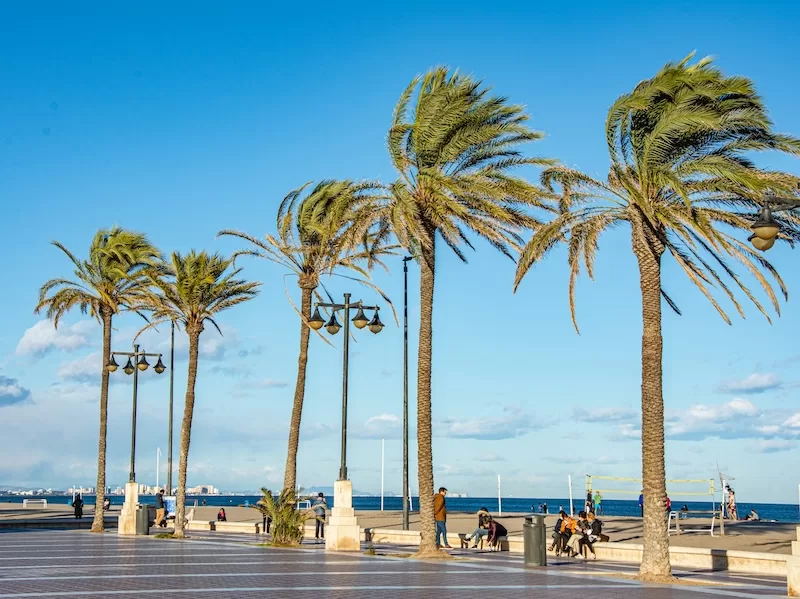
Typical monthly living costs for a single adult usually fall between €700 and €1,000, excluding rent. Rental prices remain one of Valencia’s strongest advantages. A one-bedroom apartment outside the historic center generally rents for €700 to €900 per month, particularly in areas such as Benimaclet, Patraix, or Campanar, where residential life outweighs visitor demand.
Public transport is efficient, supported by a metro, tram, and bus network that connects residential districts to the city center and the coast without relying on a car. Many residents also cycle, aided by long bike lanes and flat terrain. Grocery prices remain moderate, especially when shopping at neighborhood markets, and eating out continues to feel like part of everyday life rather than a luxury expense.
Spain’s healthcare system gives residents reassurance. Public healthcare is widely accessible, and private options are reasonable and well-distributed, contributing to Spain’s consistently high rankings for healthcare outcomes in Europe. Administrative processes can be tough to get through, but they are easy to anticipate once established.
Valencia’s advantage in 2026 will be that the city distributes its quality of life evenly. Services work across neighborhoods, public spaces are used daily, and access to the coast does not come with the price volatility typical of resort-driven markets. For residents, that translates into fewer compromises and less financial compression over time. Valencia fits best for people looking to stay comfortably anchored in Western Europe without absorbing the full weight of its price pressures.
Best for: Those who want Western European systems, strong healthcare, and coastal access without the pressure or pricing of Spain’s largest cities.
Thessaloniki, Greece
Thessaloniki operates on a different register than Athens. It is Greece’s second city, but it carries itself with less pressure and fewer extremes. Life unfolds along a long waterfront promenade, through residential neighborhoods with strong local identity, and around a café culture that anchors daily routines. The city feels lived-in first, visited second.
Normal monthly expenses for a single adult excluding rent typically range from €800 to €1,000. Rental prices remain accessible by Southern European standards. A one-bedroom apartment outside the central districts commonly rents for €400 to €550 per month, with better value found in neighborhoods east of the center where permanent residents dominate the market.
Daily costs stay reasonable. Public transport is inexpensive (a one-way ticket is only €0.60), and while Thessaloniki’s metro has been long anticipated, buses cover most residential areas effectively. Grocery prices reflect Greece’s agricultural base, particularly for fresh produce. This also helps keep prices relatively low at cheaper but high-quality restaurants, with prices ranging from €8 and €20 for a meal. Utilities fluctuate seasonally, but overall household costs remain manageable.
Healthcare access combines Greece’s public system with a wide network of private clinics that offer short wait times and transparent pricing. Greece’s updated digital nomad visa and residency options have also improved clarity for non-EU residents planning longer stays.
Thessaloniki’s appeal in 2026 lies in its liveability rather than optimization. It suits people who want Mediterranean life without the compression, crowds, or pricing volatility found in capital cities. Among the most affordable European cities to live in 2026, it tends to suit those who value social continuity, climate, and cultural depth without paying a premium.

Best for: Residents drawn to Mediterranean living, strong social culture, and a slower-paced city that still supports year-round life.
Kraków, Poland
Kraków presents a different kind of affordability. It is orderly, compact, and anchored by systems that work consistently. The city’s historic center draws visitors, but residential life extends well beyond it into neighborhoods built around tram lines, local schools, and everyday services. For long-time residents, Kraków feels structured without being stiff.
Average monthly expenses for a single adult excluding rent fall between €800 and €950. Rental prices have risen in recent years but remain controlled compared to Western Europe. A one-bedroom apartment outside the city center typically rents for €700 to €800 per month, particularly in districts such as Podgórze, Krowodrza, or Nowa Huta.
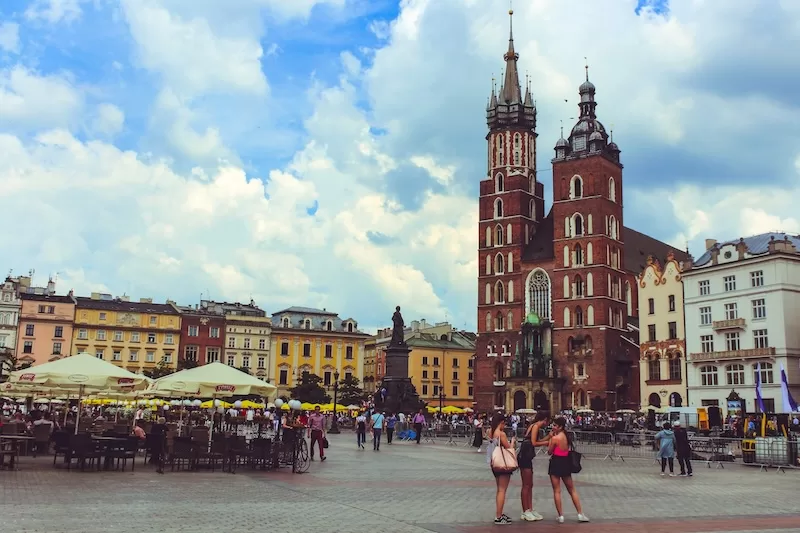
Public transport is a major strength. Trams and buses are frequent, reliable, and low-cost, with a monthly public transport pass priced at around €35, allowing most residents to live comfortably without a car. Utilities are consistent, and grocery costs remain moderate, especially for staple goods. Poland’s climate introduces seasonal variation in heating costs, but newer buildings and improved insulation have tempered those swings.
Healthcare access combines a public system with growing private coverage, often offered through employment or affordable monthly plans. Poland’s central location within Europe also reduces travel costs, making regional mobility easier and cheaper than from more peripheral locations.
Kraków’s value in 2026 lies in stability. Costs rise gradually rather than abruptly, services are dependable, and the day-to-day benefits from long-standing civic investment.
Best for: People who value stability, safety, and dependable infrastructure, and prefer a structured city with gradual cost growth.
Budapest, Hungary
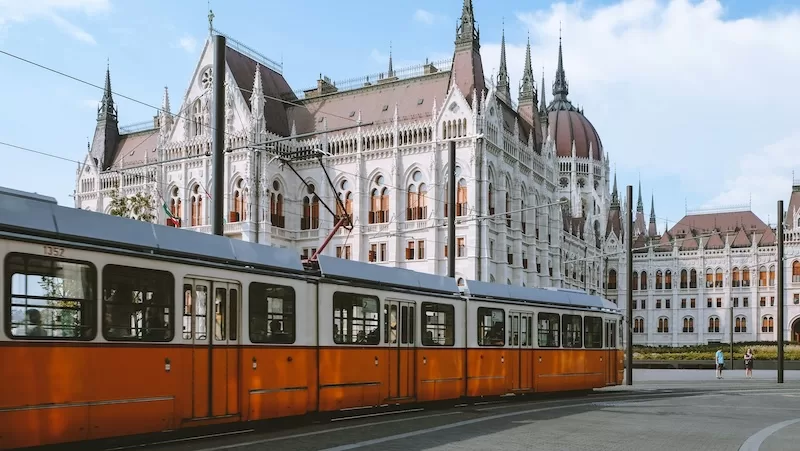
Budapest makes an immediate visual impression, but its affordability story plays out in the details. Beneath the grand façades and river views is a city where life is comfortable, walkable, and surprisingly economical for its scale. Residential districts retain strong local character, and the divide between visitor areas and lived-in neighborhoods is clearly defined.
Drawing from Numbeo data, average monthly expenses for a single adult excluding rent typically range from €700 to €850. Rental prices vary by district, but a one-bedroom apartment outside the core neighborhoods generally rents for €550 to €750 per month, offering good value relative to the city’s size and amenities.
Budapest’s public transport network is extensive and affordable, comprised of metro lines, trams, and buses that make car ownership unnecessary for most residents. Grocery prices remain competitive, and dining out is accessible, particularly outside tourist-heavy areas. Utilities are moderate, though older buildings may require careful evaluation for heating efficiency.
Healthcare access includes a public system supplemented by a well-developed private sector, with private clinics also commonly used. Hungary’s residency options require more structured planning than some Southern European countries, but EU citizens benefit from straightforward settlement processes.
Budapest’s strength in 2026 lies in scale at a manageable cost. It offers the cultural depth, architecture, and services of a major European capital without matching its financial demands. The city works especially well for those who want a full-bodied city experience while keeping monthly expenses reasonable.
Best for: Those who want a full capital-city experience, culture and scale included, while keeping monthly expenses within reach.
Visas, Residency, and Practical Logistics
Affordability only works if staying is legally straightforward. A place can look perfect on paper, but without a clear residency pathway, even the best cost breakdown becomes distant theory. For anyone planning to live in Europe in 2026 rather than cycle through short stays, visas, residency, healthcare access, and administrative realities matter as much as rent.
Across the cities highlighted in this guide, residency options vary a lot. Portugal, Spain, Greece, and Romania remain among the more accessible countries for non-EU nationals, particularly for retirees, remote professionals, and those with passive income.
Long-stay visas, digital nomad frameworks, and renewable residency permits provide relatively straightforward routes to legal residence, though documentation requirements and processing times differ. These systems tend to reward preparation, and applicants who plan several months ahead are usually best positioned.
Bulgaria and Hungary operate differently. Residency is possible, but the process is less flexible. Income thresholds, local address registration, and renewal rules require careful sequencing, and timelines can feel rigid compared to Southern Europe. For EU citizens, freedom of movement simplifies settlement in both countries, but non-EU nationals should expect a more procedural experience.
Healthcare access is closely tied to residency status. In most cases, legal residents gain access to public healthcare systems after registration, often supplemented by private insurance or out-of-pocket private care. Spain, Portugal, and Greece combine broad public coverage with inexpensive private options, while Romania, Bulgaria, and Hungary rely more heavily on private clinics. Costs remain reasonable across all locations but understanding when and how coverage begins is essential for budgeting and peace of mind.
Tax obligations are another variable that shapes affordability over time. Residency status often triggers tax residency after a certain number of days spent in-country, and rules differ by jurisdiction. Bulgaria’s flat tax system stands out for its simplicity, while Spain and Portugal require more nuanced planning depending on income source and residency category. Consulting a local tax advisor early can prevent costly surprises later.
The practical takeaway is simple. Affordable living in Europe is also about choosing a country whose legal framework aligns with your plans. Immigration portals, official government guidance, and local legal professionals remain the most reliable sources of up-to-date information. With clarity on residency and logistics, the cities in this guide shift from possibilities to places where long-term life can realistically take shape.
Cost of Living Snapshot by Category
Numbers matter most when they translate into real choices. The ranges below reflect typical monthly expenses across the cities featured in this guide. While individual circumstances vary, these figures offer a baseline for permanent living rather than short stays or temporary setups.
Rent outside the city center (€450 to €1000)
This range reflects one-bedroom apartments in residential neighborhoods where long leases are common. At the lower end, cities such as Sofia and Bucharest still offer well-connected districts within this bracket. At the upper end, cities like Porto and Valencia fall here when renting outside historic cores or high-demand zones. Building age, insulation quality, and proximity to public transport can influence costs as much as location.
Utilities and internet (€120 to €180)
Monthly utilities typically include electricity, heating or gas, water, waste collection, and a standard internet connection. Costs vary seasonally, particularly in colder climates, but most cities in this guide benefit from regulated utility pricing or competitive providers. Internet service is widely reliable, with fiber connections common even in more budget-friendly neighborhoods.
Groceries per month (€200 to €300)
Food costs remain one of the most stable categories across these cities. Local markets, bakeries, and neighborhood supermarkets keep prices accessible, especially for fresh produce and staple goods. Shopping habits matter. Cooking at home regularly tends to anchor spending at the lower end of this range, while a mix of home cooking and casual dining out moves it upward.
Public transport (€20 to €40)
Monthly passes across the featured cities are notably cost-friendly by European standards. Metro, tram, and bus networks are designed for daily use rather than occasional trips, reducing the need for car ownership. In cities with strong cycling infrastructure, transport costs can fall even further.

Common Trade-Offs to Consider
Every affordable city comes with a learning curve. The financial upside is often immediate, while the adjustments surface in everyday moments. Knowing what to expect, and how to work with it, makes the transition a lot easier.
- Language barriers in the day-to-day
Trade-off: English is common in professional settings, but everyday tasks often take place in the local language, from pharmacy visits to conversations with landlords or municipal offices.
Pro tip: Learn the basics early, especially numbers, dates, and common requests. Even a small vocabulary changes the tone of interactions and speeds things up more than perfect grammar ever could.
- Slower or more paper-heavy bureaucracy
Trade-off: Registrations, permits, and official appointments can take time and often involve multiple steps or in-person visits.
Pro tip: Treat administration as a project, not an interruption. Build time buffers, keep physical copies of documents, and ask locals or expat groups which offices are most efficient before booking appointments.
- Fewer international schooling options
Trade-off: Outside major capitals, international schools may be limited, and local schools often operate entirely in the national language.
Pro tip: Research schools by neighborhood rather than city and start conversations early. Many families find that language immersion accelerates integration far faster than expected, especially for younger children.
- Less convenience, more routine
Trade-off: Certain specialty goods, services, or same-day conveniences may be harder to find or less standardized than in high-cost global hubs.
Pro tip: Lean into local alternatives. Neighborhood markets, repair shops, and service providers often replace convenience with reliability and lower long-term costs.
- Different social vibes
Trade-off: Work hours, mealtimes, and social habits may not match familiar patterns, especially in Southern Europe.
Pro tip: Adjust schedules rather than resist them. Aligning daily patterns with local habits often unlocks better service, easier social connections, and a stronger sense of belonging.
Affordability often asks for flexibility, but it also gives something back. In many of these cities, the adjustments fade faster than expected, replaced by a sense that life has found a more comfortable pace.
Key Takeaways
Which European city is expected to be the cheapest to live in 2026?
Among the cities covered, Sofia and Bucharest continue to rank lowest for total monthly expenses, particularly when rent, transport, and groceries are considered together. Both cities offer capital-level infrastructure at significantly lower cost than Western European counterparts.
Are these cities suitable for families planning long-term stays?
Yes. Valencia, Porto, and Kraków are particularly well suited to families due to access to public healthcare, family-friendly neighborhoods, and established education systems. School availability and language should be researched by neighborhood.
Can a single person realistically live on €1,200 per month in Europe?
Yes, in several cities on this list, including Sofia, Bucharest, Kraków, and Thessaloniki, €1,200 per month can support a comfortable lifestyle, especially when renting outside the city center and relying on public transport.
How good is healthcare in the most affordable European cities?
All featured cities provide access to public healthcare systems once residency is established, alongside private clinics. Spain and Portugal consistently rank high for healthcare outcomes, while private care fills gaps effectively in Eastern Europe.
Do non-EU citizens need visas to live in these cities?
Yes. Non-EU citizens typically require long-stay visas or residency permits. Portugal, Spain, Greece, and Romania offer relatively accessible pathways, while Bulgaria and Hungary require more structured planning.
Is remote work practical in these cities?
Very much so. Internet infrastructure is reliable across all cities listed, with Romania and Bulgaria ranking among Europe’s fastest for broadband speeds. Coworking spaces and remote-friendly cafés are common in most urban districts.
How much do costs vary by neighborhood within the same city?
Costs can vary significantly. Renting outside historic centers or tourist-heavy areas often reduces housing costs by 20 to 30% while maintaining good transport access and local services.
Are these cities affected by seasonal price swings?
Most cities in this guide support year-round residential life. Valencia, Kraków, and Sofia are particularly stable, while Porto and Thessaloniki can see modest seasonal rent pressure near tourist zones.
From Research to Reality in 2026
By 2026, looking for affordability in Europe is no longer just about chasing bargains or betting on the next “undiscovered” city, but about choosing places where daily life makes sense, where rent leaves room to breathe, public systems work and a month feels predictable enough to plan the next one.
The cities highlighted in this article are connected by a shared quality rather than a shared price point. They offer balance, costs that stay proportionate, and services that support routine rather than complicate it. Neighborhoods designed for people who live there, not just pass through. In a European landscape reshaped by rising prices and shifting priorities, that balance has become the real marker of value.
For anyone considering a move, curiosity should be matched with preparation. Digging into neighborhoods, residency options, healthcare access, and long-term costs turns possibility into confidence. Subscribe to our newsletter to explore city-specific guides, practical breakdowns, and long-form insights that move past surface impressions and into everyday reality.
Contact Author
"*" indicates required fields
Stay Ahead on Every Adventure!
Stay updated with the World News on Escape Artist. Get all the travel news, international destinations, expat living, moving abroad, Lifestyle Tips, and digital nomad opportunities. Your next journey starts here—don’t miss a moment! Subscribe Now!


