I spent last weekend on the Costa Brava. It was one of those trips that had no grand intention behind it, a few days away, a change of scene, the kind of thing you tell yourself you will do more often and then somehow never quite manage. And yet by the time I drove back south toward Barcelona on Sunday evening, something had shifted. Not dramatically, not in the way that transformative travel is supposed to work in the stories people tell about it. Just quietly, in the way that the right place at the right time has a habit of reminding you why you chose to build your life where you did.
I have lived many lives in many places. London, where I grew up and where the city formed me in ways I am still discovering. Ibiza, where I first understood what it meant to choose a life rather than inherit one. Mallorca, Madrid, the UAE, years across Africa that gave me a perspective on the world I could not have found anywhere else. Each of those places left something in me. But Catalonia, which I have now called home for longer than anywhere else since London, keeps doing something none of the others quite managed. It keeps surprising me. And this weekend, on a cliff above a cove somewhere near Cap de Creus with almost no one else around, it did it again.
What I want to write about is not just the weekend, though the weekend was its own kind of gift. I want to write about what Catalonia actually is, as a place to live rather than to visit, and why I think it is one of the most underrated decisions an expat can make. Not underrated in the sense that no one knows about it. Barcelona is one of the most written-about cities in Europe and the Costa Brava fills up every summer with visitors who know exactly how beautiful it is. Underrated in the sense that very few people seem to grasp what it offers when you stay. When you stop passing through and start actually living inside it.
Read More Like This: Why Barcelona Keeps Rising on the World’s Happiness Rankings
A Region That Holds Everything
People who have not spent real time in Catalonia tend to think of it as Barcelona plus coastline. Which is a bit like describing a symphony as melody plus rhythm. The region has a texture and a depth to it that reveals itself slowly, and the more time you give it, the more it gives back.
The drive north from Barcelona along the coast road is itself a kind of argument for staying. You pass through towns that have not been smoothed into uniformity, where the church squares still anchor daily life, where old men play petanque in the shade and nobody is performing anything for anyone. The landscape gets wilder as you go north, the Pyrenees gathering on the horizon, the coastline becoming more dramatic, the coves more secret and more beautiful, until you reach Cap de Creus, that extraordinary point where the mountains finally give up and throw themselves into the sea, and you understand you are somewhere that has not been replicated anywhere else on earth.
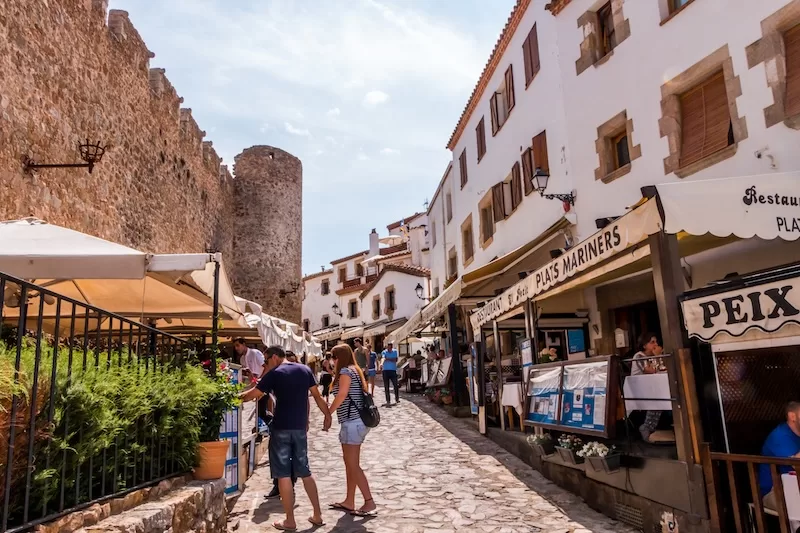
Cadaques sits just before that point, white and almost improbable, accessible only by a winding mountain road that has kept it from the worst of what mass tourism does to beautiful places. Salvador Dali lived and worked here for much of his life, which tells you something about the quality of the light and the particular strangeness of the landscape. Begur, a little further south, is another of those places I return to with a frequency that has stopped requiring justification. The old castle on the hill. The terrace bars where you can sit long after lunch has technically ended. The path down to the beach at Aiguablava, which on a September morning, when the summer crowds have thinned, feels like a gift offered quietly and personally to whoever is paying attention.
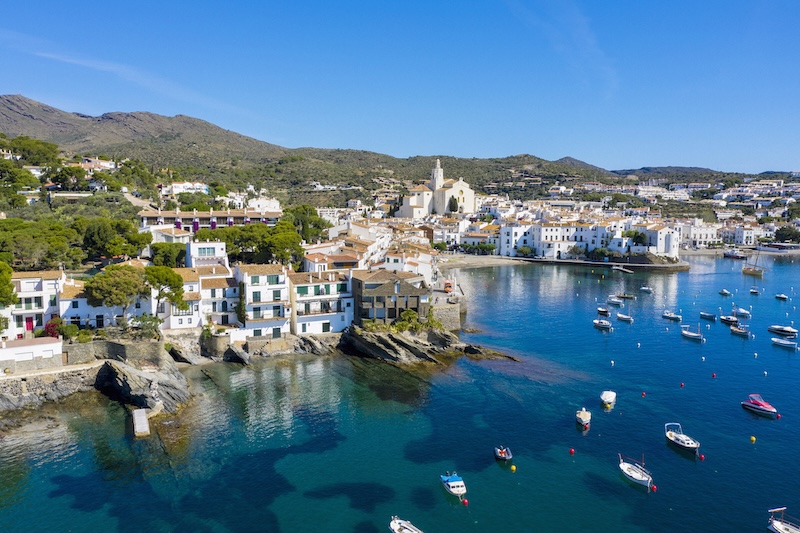
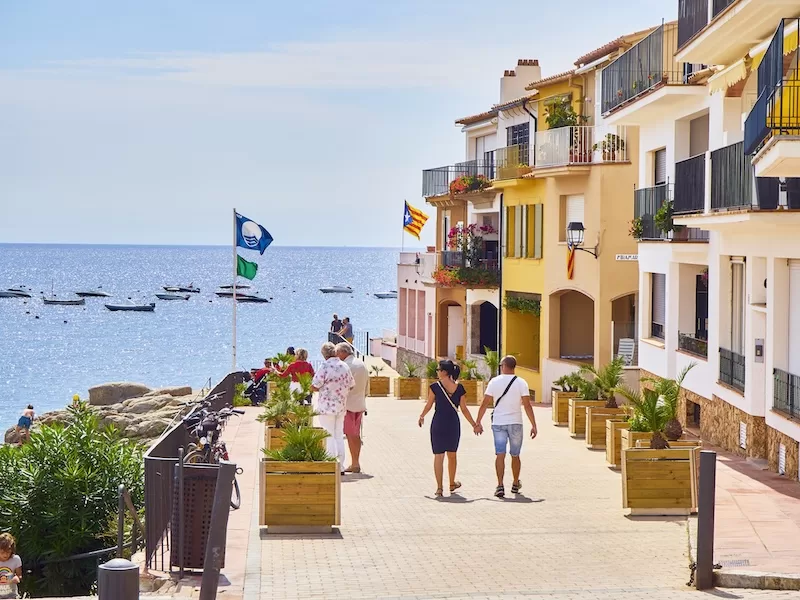
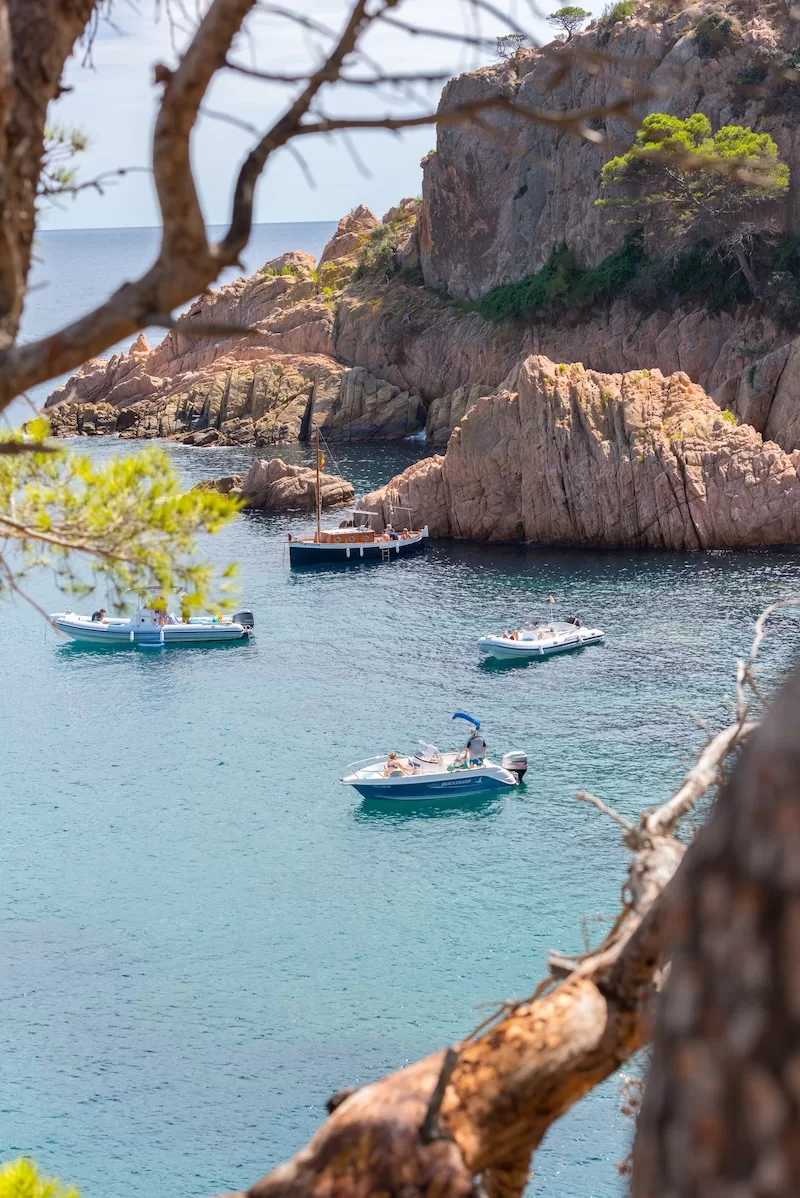
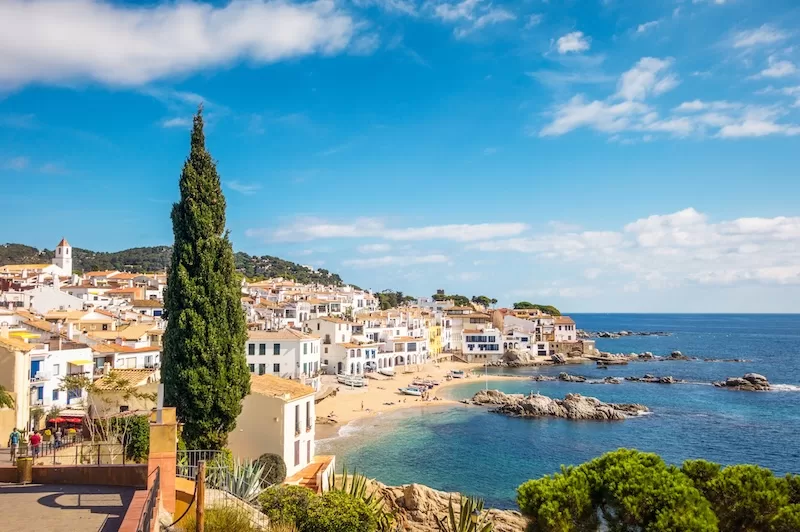
This weekend I was in and around Palafrugell, wandering between Calella de Palafrugell and Llafranc, two small coves connected by a coastal path that in the late afternoon light on a clear day in early summer is as beautiful a walk as I know. The kind of walk that empties your head of everything that has been cluttering it and replaces it with nothing in particular, which is exactly what you need sometimes, and what this coast delivers with a reliability I have come to depend on.
Read More Like This: Summer Is Calling: Our Top 10 Destination Picks
Barcelona on Its Own Terms
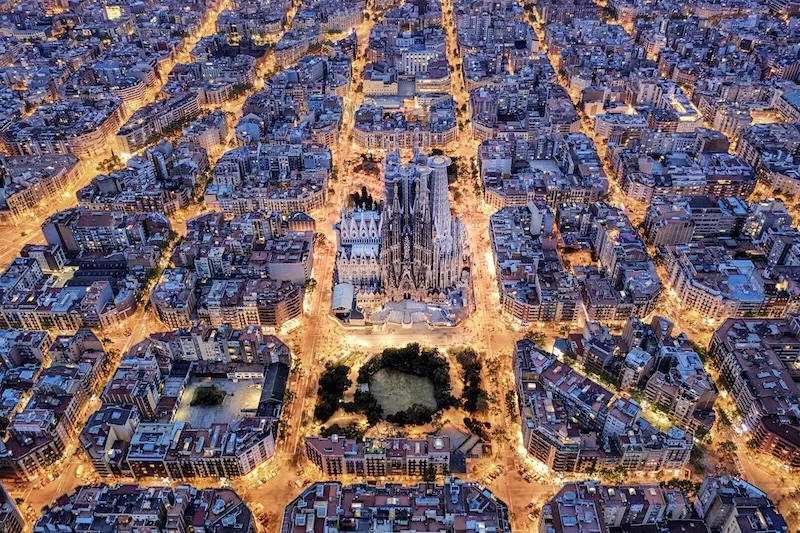
I want to say something true about Barcelona, because the city tends to attract a kind of hyperbole that eventually stops meaning anything. Yes, it is beautiful. Yes, Gaudi. Yes, the food. Yes, the light that falls across the tiled rooftops of Gracia on a late spring afternoon in a way that makes you want to abandon whatever you were doing and simply stand in it. All of that is real and none of it is the whole story.
What I love about Barcelona, what I loved about it the first time I came here and love about it still, is the quality of the ordinary day. The coffee at the bar on the corner, drunk standing up, the way it should be done. The neighbourhood markets where the fish is so fresh it still smells of the sea and the stallholders know what you like and set it aside. The evenings that begin after nine and do not rush themselves toward an ending. The architecture, which at its best is not just beautiful but genuinely strange and alive, as though the city itself has an imagination and periodically insists on showing you.
I also think Barcelona is one of the most liveable cities in Europe for anyone who needs to remain connected to the world while also actually enjoying where they live. The high-speed train to Madrid takes under three hours. Valencia is a little over that to the south. Paris is reachable by train in a day if you want it, and increasingly people do, because the train from Barcelona through the foothills of the Pyrenees and up into France is one of those journeys that reminds you why overland travel is worth the extra hours. The airport is there for everything else, but I find myself using it less and less, which feels like a small and personal victory.
Read More Like This: Cost of Living in Spain: What to Expect in 2026
The Reach of It
One of the things that consistently delights me about living in this corner of Spain is how much is within easy reach, and how different each of those things is from the last. France is less than two hours north, and the towns of the French Roussillon just across the border, Collioure, Perpignan, feel like natural extensions of the Catalan world rather than a foreign country. The culture bleeds across that border in a way that reflects the reality of the region’s history, which predates the nation-states on either side of it and has its own distinct language, its own distinct identity, its own fierce sense of itself.
Girona, about an hour north of Barcelona, is a city that deserves far more attention than it receives, given how comprehensively Barcelona tends to dominate any conversation about the region. It has one of the most intact medieval city centres in Europe, a Jewish quarter that dates back to the ninth century, and a food culture that produces some of the most quietly exceptional cooking in the country. El Celler de Can Roca is here, one of the most celebrated restaurants in the world, but it exists alongside an ecosystem of smaller, less famous places built for locals rather than visitors, which are frequently better.
The mountains are an hour from the city in the other direction, and in winter they carry snow. I grew up in London and then spent years in places where seasons barely registered, and the return of a real winter, however mild by northern standards, still gives me a small pleasure I have never entirely been able to explain. It feels like being back in time with the world, like belonging to the turning of things rather than simply observing it from somewhere unchanging.
Read More Like This: Why Europe is Winning the Relocation Race
What the Seasons Teach You
Nobody tells you, before you move to a place like this, what the rhythm of the year will do to you. I spent a long time in environments where the seasons were either absent or extreme, the Gulf where summer is something to be survived indoors, equatorial Africa where the rains are the only real marker of time passing. There is a freedom in that kind of constancy but there is also something missing, some anchoring to the natural world that you do not notice you lack until you get it back.
Spring in Catalonia arrives with a generosity that still catches me off guard every year. The almond blossom first, then everything at once in a rush of warmth and colour and the particular smell of the air that is impossible to describe to someone who has not experienced it. Summer is full and long and warm and the sea is always there, the answer to every question the day raises. Autumn is, if anything, more beautiful, the light shifting into gold, the tourist traffic thinning, the mushroom season bringing its own pleasures for anyone willing to get up early and head into the hills above the coast. Winter is quiet and clear and good for thinking, the kind of season that does not demand anything of you and in return gives you back to yourself.
I know this sounds like contentment, and I suppose it is. But it is a contentment that has been tested and earned through enough years of living elsewhere to know what it is worth. I did not arrive here and immediately feel at home. I arrived here and slowly, incrementally, over many weekends like this one just past, found that the word home had quietly reattached itself to a place. And that is not nothing. For someone who has spent as long as I have in motion, that is, in fact, everything.
Read More Like This: How to Learn and Understand the Culture of Your New Expat Home
Why I Stopped Looking
I have lived in enough places to know the difference between falling in love with somewhere and belonging to it. The first is easy and happens often, a beautiful city seen at its best, a landscape that catches you at the right moment, a week where everything conspires to make a place seem perfect. The second is rarer and quieter and built from ordinary days rather than extraordinary ones. It is knowing where to go when you need to think. It is the particular satisfaction of a Saturday morning at the market, buying tomatoes that taste the way tomatoes are supposed to taste. It is the feeling, arriving back from a trip somewhere else, of returning to something real.
I have that here. And I think what this weekend reminded me, driving back down the coast with the sea on my left and the last of the light on the hills above Girona, is that the searching was always going to end somewhere. I am glad, genuinely and without reservation, that it ended here. In a region that has a city and a coastline and mountains and medieval towns and two countries on its doorstep and four hundred years of its own distinct culture pressing up against the surface of everything. A place that rewards the decision to stay with something new every single time you think you have seen all of it.
I had not seen all of it. I never will. And that, more than anything else, is why I stopped looking.
Read More Like This: The Midlife Escape Plan: When Work Finally Sets You Free
Key Takeaways
Is Catalonia a good place to live?
Catalonia offers a strong balance of city life, coastline, mountains, historic towns and access to the rest of Europe. It can suit expats who want variety without needing to choose between an urban or outdoor lifestyle.
What does Catalonia offer beyond Barcelona?
The region includes the Costa Brava, Girona, the Pyrenees, medieval towns, fishing villages and easy access to southern France. The landscape becomes increasingly dramatic toward Cap de Creus in the northeast.
What is daily life in Barcelona like?
Daily life includes neighbourhood markets, local cafes, late evenings, distinctive architecture and strong transport connections. The city remains internationally connected while still offering a strong sense of local routine.
Can you live in Catalonia and remain connected to the rest of Europe?
Yes. Barcelona has high-speed rail links to major Spanish cities, international air connections and direct routes into France. Girona and the French border are also within easy reach from much of the region.
Does Catalonia have distinct seasons?
Yes. Spring brings blossom and warmer weather, summers are long and coastal, autumn is quieter and cooler, and winter is generally mild but still seasonal.
Which places stand out in Catalonia?
Barcelona, Girona, Cadaqués, Cap de Creus, Begur, Aiguablava, Calella de Palafrugell and Llafranc all offer different versions of Catalan life, from city living to small coastal communities.
Why can Catalonia feel like home for long-term expats?
The appeal often comes from ordinary routines rather than tourism alone: local markets, familiar neighbourhoods, easy weekend escapes and the sense of returning to somewhere that feels settled and real.
About the Author
Contact Author
"*" indicates required fields
Stay Ahead on Every Adventure!
Stay updated with the World News on Escape Artist. Get all the travel news, international destinations, expat living, moving abroad, Lifestyle Tips, and digital nomad opportunities. Your next journey starts here—don’t miss a moment! Subscribe Now !
I spent last weekend on the Costa Brava. It was one of those trips that had no grand intention behind it, a few days away, a change of scene, the kind of thing you tell yourself you will do more often and then somehow never quite manage. And yet by the time I drove back south toward Barcelona on Sunday evening, something had shifted. Not dramatically, not in the way that transformative travel is supposed to work in the stories people tell about it. Just quietly, in the way that the right place at the right time has a habit of reminding you why you chose to build your life where you did.
I have lived many lives in many places. London, where I grew up and where the city formed me in ways I am still discovering. Ibiza, where I first understood what it meant to choose a life rather than inherit one. Mallorca, Madrid, the UAE, years across Africa that gave me a perspective on the world I could not have found anywhere else. Each of those places left something in me. But Catalonia, which I have now called home for longer than anywhere else since London, keeps doing something none of the others quite managed. It keeps surprising me. And this weekend, on a cliff above a cove somewhere near Cap de Creus with almost no one else around, it did it again.
What I want to write about is not just the weekend, though the weekend was its own kind of gift. I want to write about what Catalonia actually is, as a place to live rather than to visit, and why I think it is one of the most underrated decisions an expat can make. Not underrated in the sense that no one knows about it. Barcelona is one of the most written-about cities in Europe and the Costa Brava fills up every summer with visitors who know exactly how beautiful it is. Underrated in the sense that very few people seem to grasp what it offers when you stay. When you stop passing through and start actually living inside it.
If you'd like to read the full story, simply enter your email to subscribe to our newsletter.
For even more expert insights, unmissable resources, and exclusive invites, explore our premium subscription offers here.
OR
Already a Subscriber? Click here to login
Subscription required
You've reached your limit of free articles. For full access to Escape Artist, and all of our insights on travel, moving abroad, and the digital nomad life, click here to Subscribe.
Already a Subscriber? Log in here