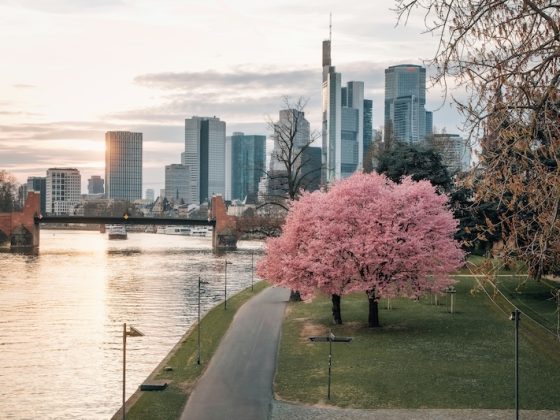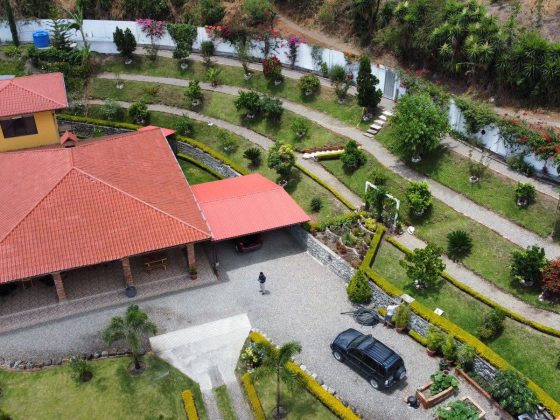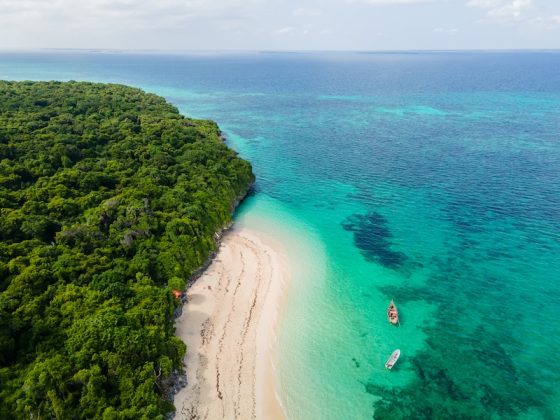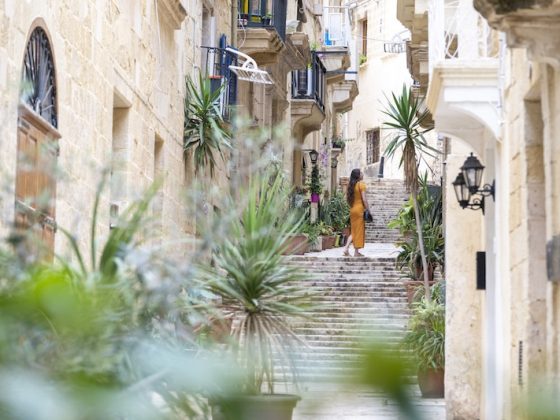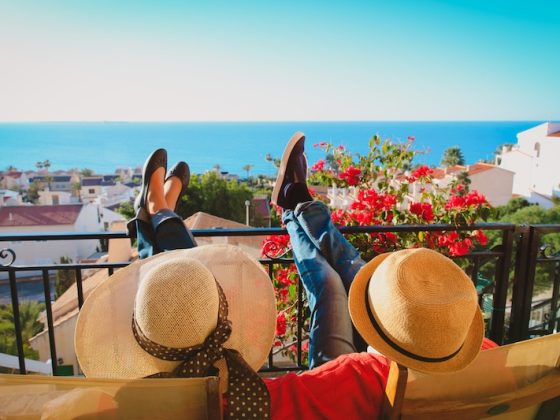
There is a familiar pattern in the way people talk about relocating to Spain. The conversation usually begins with cities. Barcelona enters first, as it so often does, carrying its reputation for design, energy, and international cachet. Madrid follows as the professional and cultural capital. Malaga has increasingly secured its place as the more relaxed coastal option, with sun, connectivity, and a growing expat presence helping to explain its rise.
And yet, for many people considering a move to Spain, especially those no longer interested in speed, spectacle, or the pressure of large-city life, the real question may not be which city to choose. It may be whether city life is the right model at all.
That is where Andalusia becomes especially interesting, not only as Spain’s warm southern region, but as a place that offers alternatives to the urban script. Because beyond Malaga, beyond the coastal strip, and beyond the usual relocation shorthand, there is another version of life available here. Quieter. More spacious. Less performative. And, for the right person, arguably closer to what moving to Spain was meant to be in the first place.
Read More Like This: Living in Mallorca, Spain’s Star Island
The Southern Light, and What Comes With It
Andalusia’s climate is part of the appeal, and there is no point pretending otherwise. With around 320 days of sunshine a year, it remains one of the brightest and most temperate parts of Europe. For Americans and northern Europeans alike, that fact alone can seem persuasive.
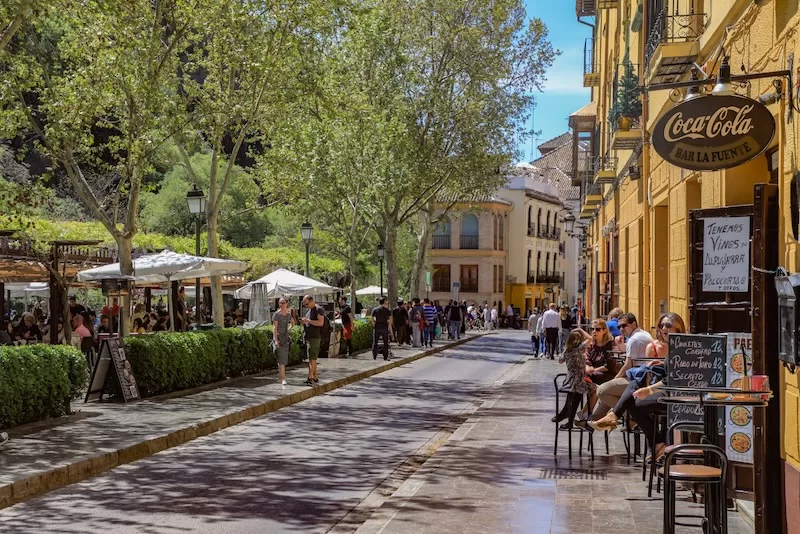
But climate, on its own, rarely explains why a place becomes livable. What matters more is what forms around it. In Andalusia, the weather supports a way of life built around outdoor rhythm, public sociability, and a certain daily spaciousness that feels increasingly scarce elsewhere. Meals happen outside.
Conversations happen outside. Streets, plazas, terraces, and walking routes are not occasional luxuries but part of the architecture of ordinary life. Good weather is one thing. A life shaped well by it is another.

Malaga Is the Gateway, But Not the Whole Story
Malaga is often the point of entry into this part of Spain, and understandably so. It is one of the country’s most accessible cities, with an international airport connected to much of Europe and with growing links to North America. It is also a university city, a city of museums, and a place whose Roman and Moorish past still gives structure to the present.
Its appeal is real. So is its convenience. High-speed rail places Madrid within easy reach, and from there the rest of the world opens quickly. For many expats, retirees, and remote professionals, that degree of connectivity is not incidental. It is part of what makes a move feel viable rather than romantic. But Malaga’s importance lies partly in what it leads to, because once you move beyond the city, Andalusia begins to reveal a broader and more nuanced case for itself.
Read More Like This: Cost of Living in Spain: What to Expect in 2026
Not Everyone Wants the Same Spain
One of the errors often made in relocation writing is to assume that everyone is looking for a version of the same life, only in a different location. A more affordable apartment. Better weather. A walkable neighborhood. A pleasant cafe culture. These things matter, certainly. But they do not describe the whole field of desire.
Some people are not looking for another city, however livable. They are looking for relief from city logic itself. Less density. Less noise. Less rush. Less feeling that one is constantly negotiating traffic, cost, and overstimulation simply to get through the day. For those people, the most compelling parts of Spain may lie not in its major urban centers, but in the places just beyond them.
The Eastern Side of Malaga Tells a Different Story
The contrast within Malaga province is striking. To the west, the Costa del Sol becomes increasingly associated with wealth, polish, and a kind of international visibility that appeals strongly to some buyers. Marbella and Estepona represent that world well: marinas, luxury developments, global brands, and a social landscape shaped as much by money as by geography.
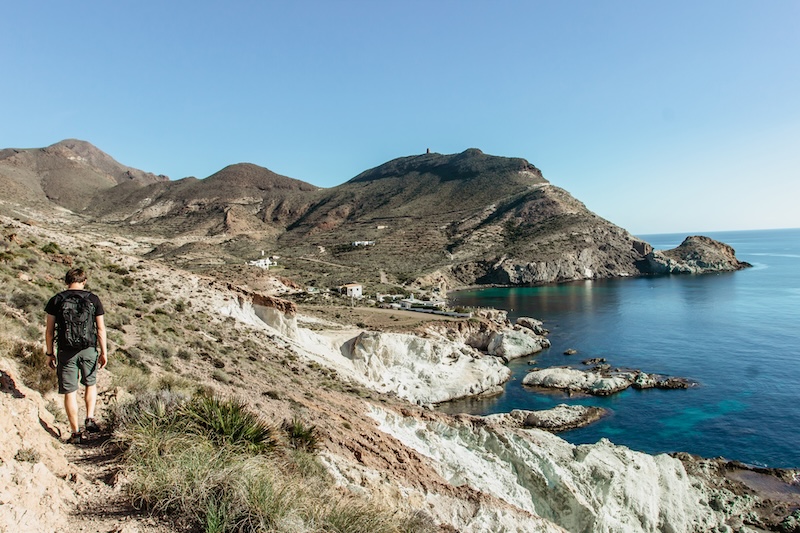
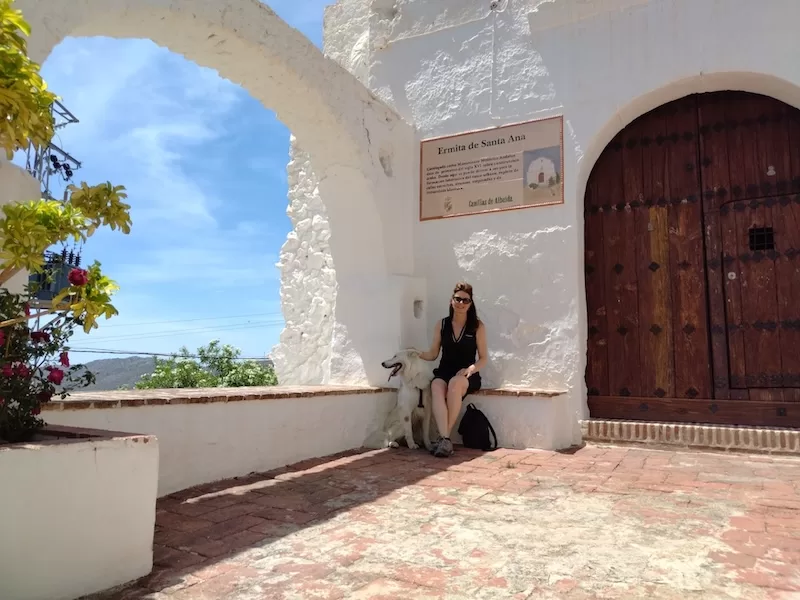
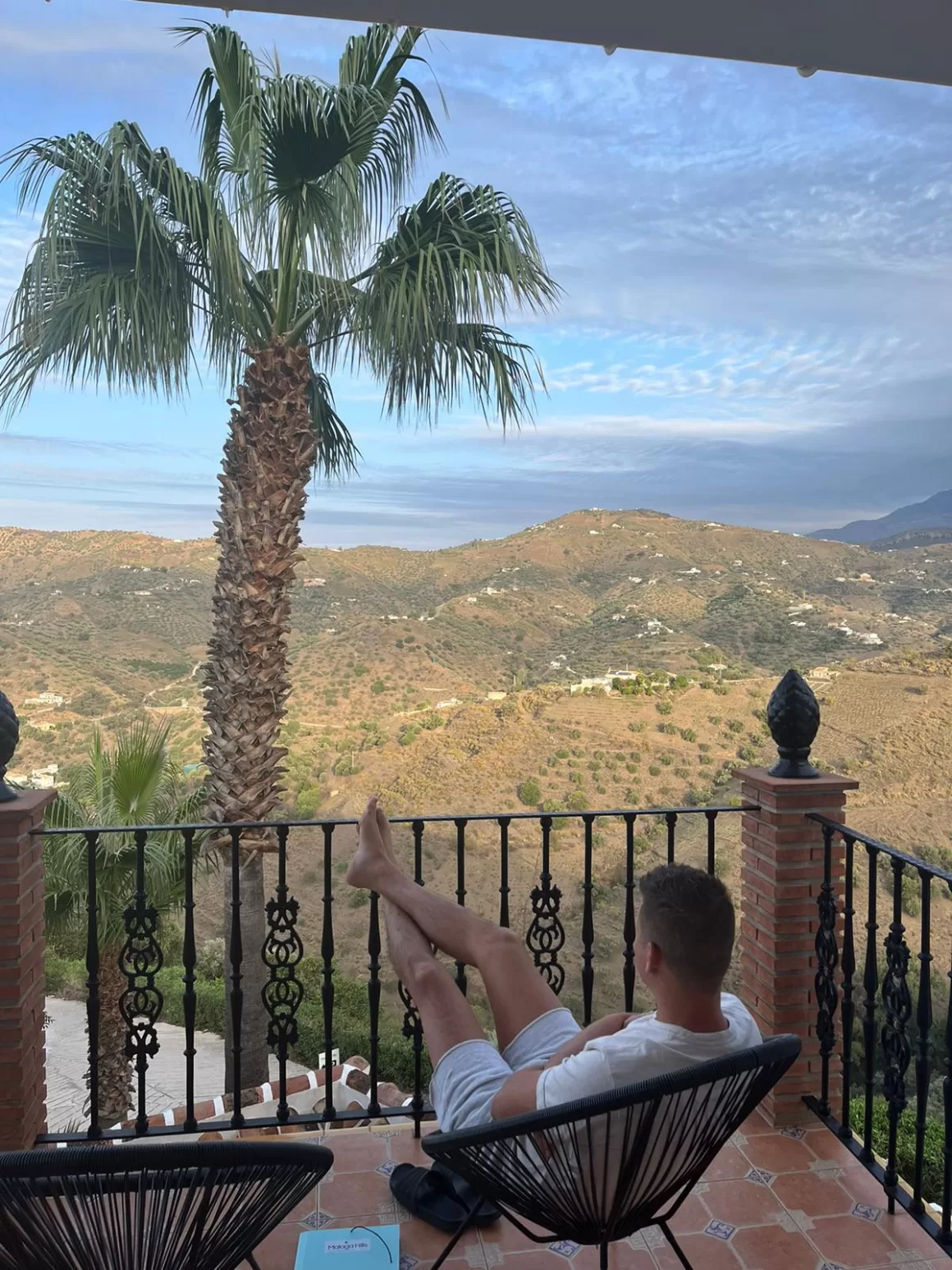
To the east, the mood changes. The coastline softens. The pace slows. The mountains come closer to the sea. And the region begins to feel less curated, less engineered toward display. This is where a different kind of Andalusian life becomes visible. Inland from the eastern coast, above Nerja and within reach of the Mediterranean, villages such as Competa and Canillas de Albaida offer something that the better-known urban and coastal centers often cannot: stillness without isolation.
What Places Like Competa Actually Offer
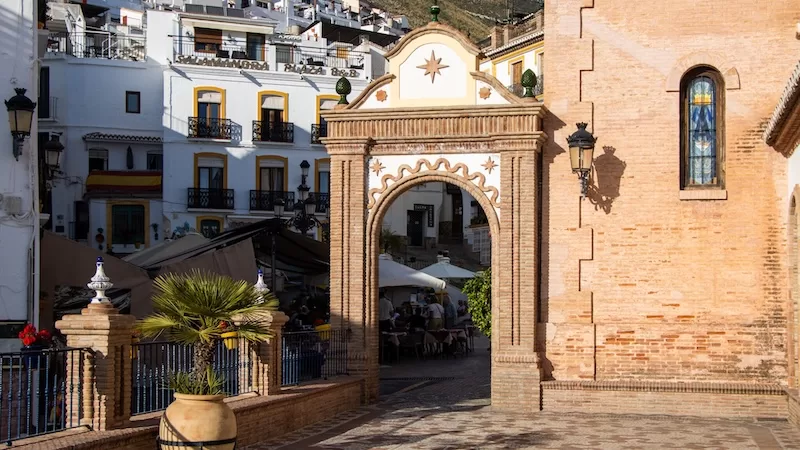
It would be easy to misread a mountain village as a retreat from practical life, as though choosing peace means accepting remoteness or compromise. But that is not quite what places like Competa represent. What makes Competa interesting is not simply its beauty, though it has that in abundance. It is that the village manages to combine a quieter setting with real infrastructure. There are schools, restaurants, shops, medical services, sports facilities, and a well-established international community. Daily life is not improvised here. It is lived.
For people relocating, especially families, retirees, or those seeking a longer-term base rather than a romantic interlude, functionality matters just as much as atmosphere. The ideal place is rarely the most picturesque in isolation. It is the place where ordinary life remains workable and pleasant on a wet Monday, an overheated August afternoon, or a busy week in winter. Competa also offers proximity: within roughly thirty minutes, one reaches the coast, with beaches, larger retail options, and all the additional services that coastal life brings. One does not have to choose absolutely between the two.
Read More Like This: Cost of Living in Spain vs USA, and What It Really Means
International, But Not Anonymous
Another reason villages like Competa deserve more attention in the relocation conversation is that they challenge the assumption that international life only happens in cities. Competa has a notably international population, with around 48 percent of residents coming from abroad. That gives the village a texture that is worth taking seriously. It remains recognizably Spanish in its setting, rhythm, and identity, yet it is also legible to outsiders.
For many people moving from the US, the UK, the Netherlands, Germany, or Scandinavia, that balance matters. Pure immersion is often idealized in theory. In practice, many movers want something more sustainable: local character, yes, but also some social ease, some familiarity, and a degree of openness that makes a new life easier to build. In that sense, villages like Competa may offer a particularly interesting middle ground. They are not urban expat bubbles, but neither are they closed worlds.
Why This Matters Now
This shift in attention, from city prestige to broader quality of life, is not accidental. Across Europe and beyond, many people are recalculating what they want daily life to feel like. The old hierarchy, where the most desirable address was assumed to be the busiest, most visible, or most internationally recognized, has begun to weaken. What people increasingly value now is not only access, but proportion. Enough infrastructure. Enough beauty. Enough connection. But also enough quiet. Enough space. Enough psychological ease.
That is why Andalusia deserves a broader reading than it often receives. It is not simply the warm south. Nor is it only the land of Seville, Granada, Cordoba, and Malaga, important though those cities remain. It is also a region in which smaller places, especially those near the coast but set within the mountains, may offer one of the most convincing answers to a modern relocation question: where can life feel calmer without becoming smaller?

Read More Like This: Top 10 Things to Know if You’re Moving to Spain
The Case for Looking Beyond the Cities
Cities will continue to dominate much of the relocation conversation, and not without reason. They concentrate work, transport, culture, and visibility in ways that are easy to explain and easy to market. But for many people, especially those moving not for ambition alone but for a more coherent life, the better option may lie just outside the center of the frame.
That is where parts of Andalusia begin to make their strongest case. Not noisily. Not as spectacle. But with something more persuasive in the long run: a life with light, space, community, access, and a pace that feels easier to inhabit. For those who still assume that relocating well in Spain means choosing the right city, that may be the most important correction of all.
Read More Like This: Spain’s Lessons of Self-Discovery
Key Takeaways
Why are some people looking beyond Spain’s major cities?
Some movers are no longer searching for a different version of city life. They want less noise, density, traffic and overstimulation while retaining access to services, community and transport.
The article argues that smaller communities in Andalusia can provide that balance.
What makes Andalusia attractive for people considering relocation?
The region offers warm weather, outdoor living, public sociability and a slower daily rhythm. Its plazas, terraces, streets and walking routes allow outdoor life to become part of the ordinary routine rather than an occasional activity.
Why is Málaga an important gateway to southern Spain?
Málaga provides international airport access, high-speed rail connections, universities, museums and other city infrastructure.
Its importance also comes from the access it provides to smaller towns and villages throughout the surrounding province.
How does eastern Málaga Province differ from the western Costa del Sol?
The western side is associated with destinations such as Marbella and Estepona, where luxury development, marinas and international visibility are more prominent.
The eastern side is described as quieter, less curated and more closely connected to the surrounding mountains and traditional villages.
What does Cómpeta offer people considering a move?
The article describes Cómpeta as a mountain village with schools, restaurants, shops, medical services, sports facilities and an established international community.
It also offers access to the coast and larger services without requiring residents to live directly in a busy coastal centre.
Does living in a smaller Andalusian village mean becoming isolated?
Not necessarily. Villages such as Cómpeta combine a quieter setting with practical infrastructure, international residents and relatively easy access to beaches, shops and larger towns.
About the Author
Ruud Lampers is a Dutch publisher and hotelier based in Cómpeta, Andalusia. He relocated from Amsterdam, where he ran SheMedia, and now writes about life in southern Spain from the perspective of someone who made the move and stayed.
Contact Author
"*" indicates required fields
Stay Ahead on Every Adventure!
Stay updated with the World News on Escape Artist. Get all the travel news, international destinations, expat living, moving abroad, Lifestyle Tips, and digital nomad opportunities. Your next journey starts here—don’t miss a moment! Subscribe Now !
There is a familiar pattern in the way people talk about relocating to Spain. The conversation usually begins with cities. Barcelona enters first, as it so often does, carrying its reputation for design, energy, and international cachet. Madrid follows as the professional and cultural capital. Malaga has increasingly secured its place as the more relaxed coastal option, with sun, connectivity, and a growing expat presence helping to explain its rise.
And yet, for many people considering a move to Spain, especially those no longer interested in speed, spectacle, or the pressure of large-city life, the real question may not be which city to choose. It may be whether city life is the right model at all.
That is where Andalusia becomes especially interesting, not only as Spain’s warm southern region, but as a place that offers alternatives to the urban script. Because beyond Malaga, beyond the coastal strip, and beyond the usual relocation shorthand, there is another version of life available here. Quieter. More spacious. Less performative. And, for the right person, arguably closer to what moving to Spain was meant to be in the first place.
If you'd like to read the full story, simply enter your email to subscribe to our newsletter.
For even more expert insights, unmissable resources, and exclusive invites, explore our premium subscription offers here.
OR
Already a Subscriber? Click here to login
Subscription required
You've reached your limit of free articles. For full access to Escape Artist, and all of our insights on travel, moving abroad, and the digital nomad life, click here to Subscribe.
Already a Subscriber? Log in here