There is a version of the Middle East that most internationally minded investors have decided they already understand. Dubai for the skyline, the tax efficiency, and the deal flow. Abu Dhabi for the sovereign wealth and the prestige. Riyadh for those willing to engage with the politics alongside the opportunity. The region, in the minds of most Plan B planners, has been mapped and filed, and the interesting decisions, the thinking goes, have already been made by the people who moved earlier.
That assumption has left something genuinely remarkable almost entirely overlooked. Oman has spent the past four years building one of the most coherent residency-by-investment frameworks in the Gulf, attaching it to a country that offers political stability, zero personal income tax, world-class infrastructure, and a culture that has historically been among the most welcoming to foreigners anywhere in the region. The people who have found it tend not to talk about it loudly. The ones who have not found it are still looking at Dubai floor plans, paying Dubai prices, and wondering whether the trade-offs are adding up the way they once did.
What follows is an honest assessment of what Oman’s Golden Residency program actually offers, who it is suited for, and why the window of advantage that currently exists around it is not guaranteed to stay open indefinitely.
Read More Like This: Getting Residency In Dubai
Why Oman Has Stayed Off the Radar
The short answer is that Oman has never marketed itself the way Dubai has. The Sultanate has, for decades, pursued a deliberate policy of managed growth rather than spectacular expansion. While its neighbour was building the world’s tallest tower and hosting Formula One races, Oman was investing in roads, hospitals, universities, and a governance structure that prioritised long-term stability over short-term spectacle. The result is a country that lacks the brand recognition of the UAE but delivers something the UAE has consistently struggled to provide: a genuine sense of place, a capital city that feels coherent at human scale, and a political environment that has remained notably calm through decades of regional turbulence.
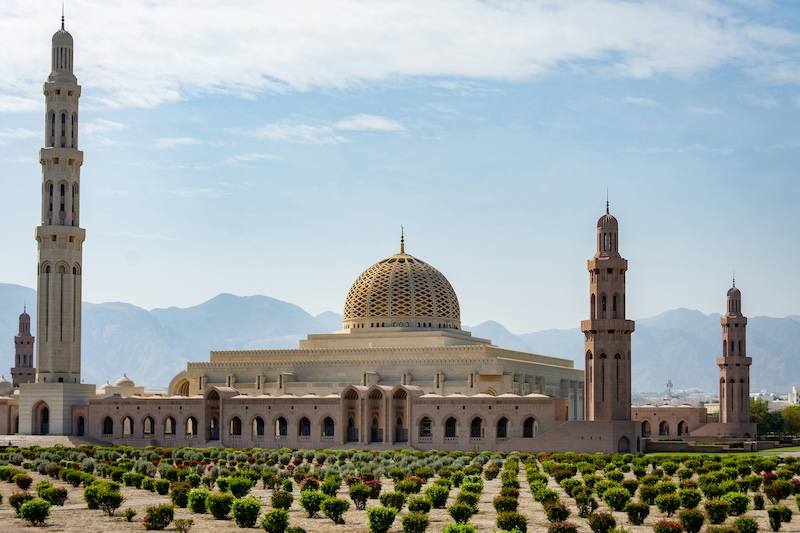
Muscat is a city that surprises visitors who arrive with low expectations. The architecture is regulated by law to maintain a consistent aesthetic, keeping building heights modest and facades in traditional Omani style regardless of what sits behind them. The roads function well. The hospitals are of a standard that competes with the best private healthcare in the region. The crime rate is among the lowest of any comparable city in the world. And the Omani national character, open, curious, and genuinely hospitable rather than transactionally welcoming, makes daily life feel different in ways that are difficult to articulate but easy to feel within a week of arriving.
Oman also carries a geopolitical profile that distinguishes it sharply from its neighbours. The Sultanate has maintained diplomatic relations with effectively every significant regional power simultaneously, a feat of careful neutrality that has made it a trusted back-channel in regional diplomacy for decades. It did not participate in the Qatar blockade. It has not been drawn into the proxy conflicts that have periodically destabilised the broader Gulf. For anyone building a Plan B that needs to remain functional through geopolitical turbulence, that track record is worth examining seriously rather than taking on faith.
Read More Like This: What’s Next for the UAE and Qatar?
The Golden Residency Program: What It Actually Offers
In 2021, Oman launched its Integrated Residency System, which includes what has come to be known as the Golden Residency, a long-term residency pathway designed specifically to attract foreign investors, retirees, and individuals of exceptional talent or means. The program has been expanded and refined since its initial launch, and what exists today is a well-structured framework with multiple entry points depending on the applicant’s profile and objectives.
The program operates across two tiers, each with distinct financial thresholds and residency durations. Tier One, the primary investment route, requires a minimum qualifying investment of OMR 500,000, approximately USD 1.3 million at current exchange rates, and grants a ten-year renewable residency permit. That figure places it above entry-level Caribbean citizenship programs, but the comparison does not hold up under scrutiny. What Oman offers in return is not a small-island passport with limited visa-free access. It is a decade of legal residency, renewable from there, in a stable, tax-free Gulf country with genuine infrastructure, a convertible currency pegged to the US dollar, and a quality of life that is difficult to match anywhere in the region at any price point. Family members including spouses and dependent children are covered under the primary applicant’s permit.
Tier Two provides a five-year renewable pathway for applicants who meet lower qualifying investment thresholds or who are retirees with fixed monthly income requirements. Individuals over the age of 55 who can demonstrate a monthly income of at least OMR 4,000 from pension or investment income, roughly USD 10,400 per month, qualify under this route. It carries the same core benefits as Tier One and has attracted particular interest from high-income retirees from the United Kingdom, Europe, and North America who want a warm-climate, tax-free base without the infrastructure compromises that often accompany lower-cost alternatives in Southeast Asia or Latin America. A third route, aimed at professionals and individuals of specialised talent, allows residency for those who can demonstrate significant income, professional achievement, or academic distinction, with specific criteria that continue to evolve as the program matures.
Read More Like This: Tax-Friendly Destinations Around the World
The Tax Picture and What It Means in Practice
Oman levies no personal income tax on individuals. There is no capital gains tax and no inheritance tax. Wealth held and earned within the Sultanate is not subject to the layered personal taxation that residents of most Western countries navigate as a matter of routine. A value-added tax of five percent, introduced in 2021, applies to most goods and services and is among the lower VAT rates of any country that levies it. Corporate tax applies to Omani-registered businesses at a standard rate of fifteen percent, with meaningful incentives available to companies operating in designated free zones and special economic areas.
For those whose income derives primarily from foreign sources, including pensions, dividends, rental income from overseas property, or investment returns from offshore vehicles, the Omani tax environment is functionally neutral, in the sense that money arrives and remains without additional deduction at the personal level.
The Omani rial has been pegged to the US dollar since 1986 at a rate of approximately 0.385 OMR to one USD, a peg that has held through oil price collapses, regional conflicts, and global financial crises without interruption. For residents holding dollar-denominated assets, this eliminates currency conversion volatility as a planning variable in a way that few other jurisdictions can genuinely claim. The practical stability this creates for financial planning over multi-year time horizons is a benefit that tends to be underestimated by those who have not lived through the alternative in less stable currency environments.
For US citizens, the standard caveat applies in full. American tax obligations follow passport holders wherever they reside, and both FBAR and FATCA reporting requirements apply to accounts held in Oman as in any other foreign jurisdiction. A competent cross-border tax professional familiar with both US obligations and Omani structures is the first professional relationship to establish, not an afterthought to be addressed once the residency permit has arrived.
How Oman Compares to the Obvious Alternatives
The comparison to Dubai is worth working through carefully because it is the one most prospective applicants will make instinctively. Dubai offers more developed financial infrastructure, a larger international professional community, more direct flight connections, and arguably greater career opportunity for those building businesses in sectors where network density matters.
These are real advantages for a specific profile of resident, and for that profile, Dubai may well remain the correct answer. What Dubai does not offer is Oman’s political stability record, its cultural authenticity, its natural landscape, or its relative absence of the performative quality that has come to define much of public and commercial life in the emirate. The cost of living in Muscat is meaningfully lower than in Dubai across most categories, and Oman’s real estate market, while appreciating, has not yet experienced the same price compression that has made Dubai an increasingly expensive proposition for those arriving now rather than five years ago.
The comparison to Portugal, which remains the most popular European Plan B destination for North Americans, is a different exercise entirely. Portugal’s residency pathway leads eventually to an EU passport, which is an outcome Oman’s program does not offer and cannot replicate. For applicants whose primary objective is EU citizenship and Schengen access, Portugal remains the appropriate answer regardless of what Oman offers. For applicants whose priorities are tax efficiency, climate, safety, quality of daily life, and a stable base from which to manage global assets, Oman competes seriously with Portugal and wins on several dimensions that a European location cannot match, including the tax environment, the year-round climate, and the absence of the housing and cost pressures that have changed the character of Portugal’s major cities over the past five years.
Read More Like This: Lisbon: The Relocation Capital That Refuses to Fade
The Practical Path Forward
The process of obtaining Omani Golden Residency begins, as most serious international planning does, with qualified professional advice rather than online research. The Integrated Residency System is administered through the Royal Oman Police in coordination with relevant ministries, and the documentation requirements are specific, must be correctly assembled, and do not benefit from improvisation. Qualified Omani legal advisers and licensed real estate professionals who work regularly with international clients are the appropriate starting points. For the real estate route, the Integrated Tourism Complexes, known as ITCs, are the designated areas where foreigners may purchase freehold property, and include developments such as The Wave Muscat, Muscat Hills, Almouj, and Saraya Bandar Jissah, each operating under its own master plan with different mixes of residential, hospitality, and commercial use. Due diligence on the specific development, the developer’s track record, and the resale market characteristics of the asset type in question is at least as important here as in any other international property acquisition, and probably more so given the relative youth of the foreign ownership framework.
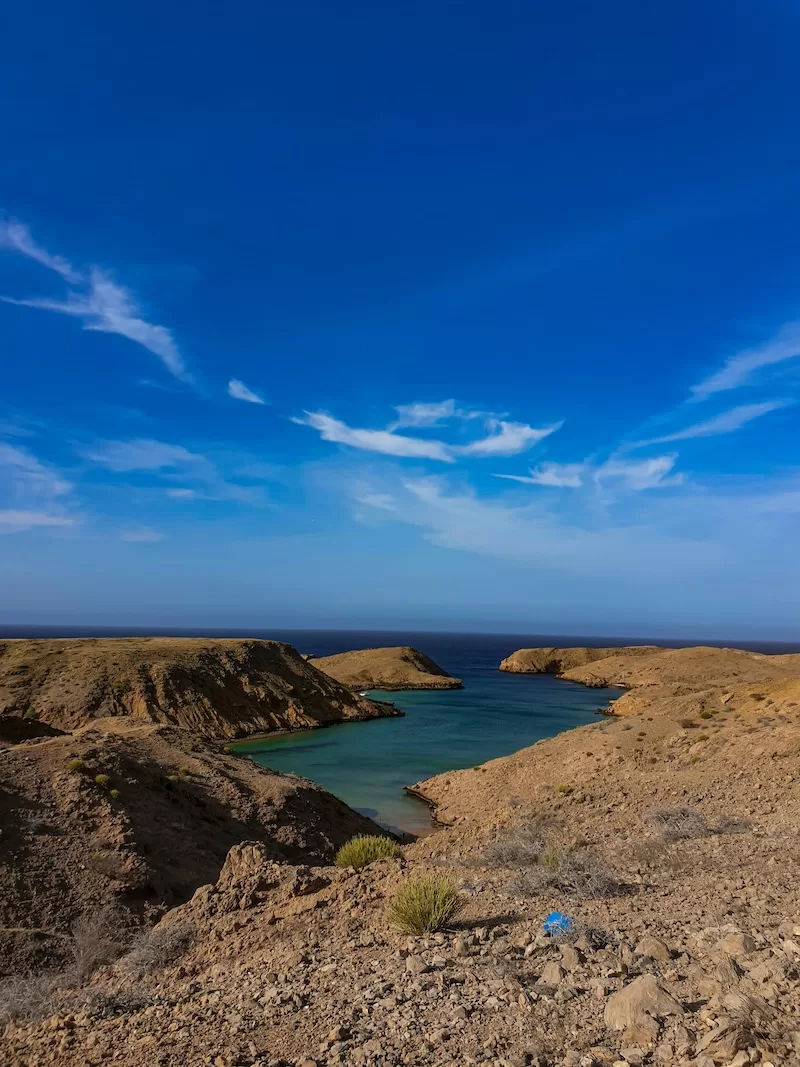
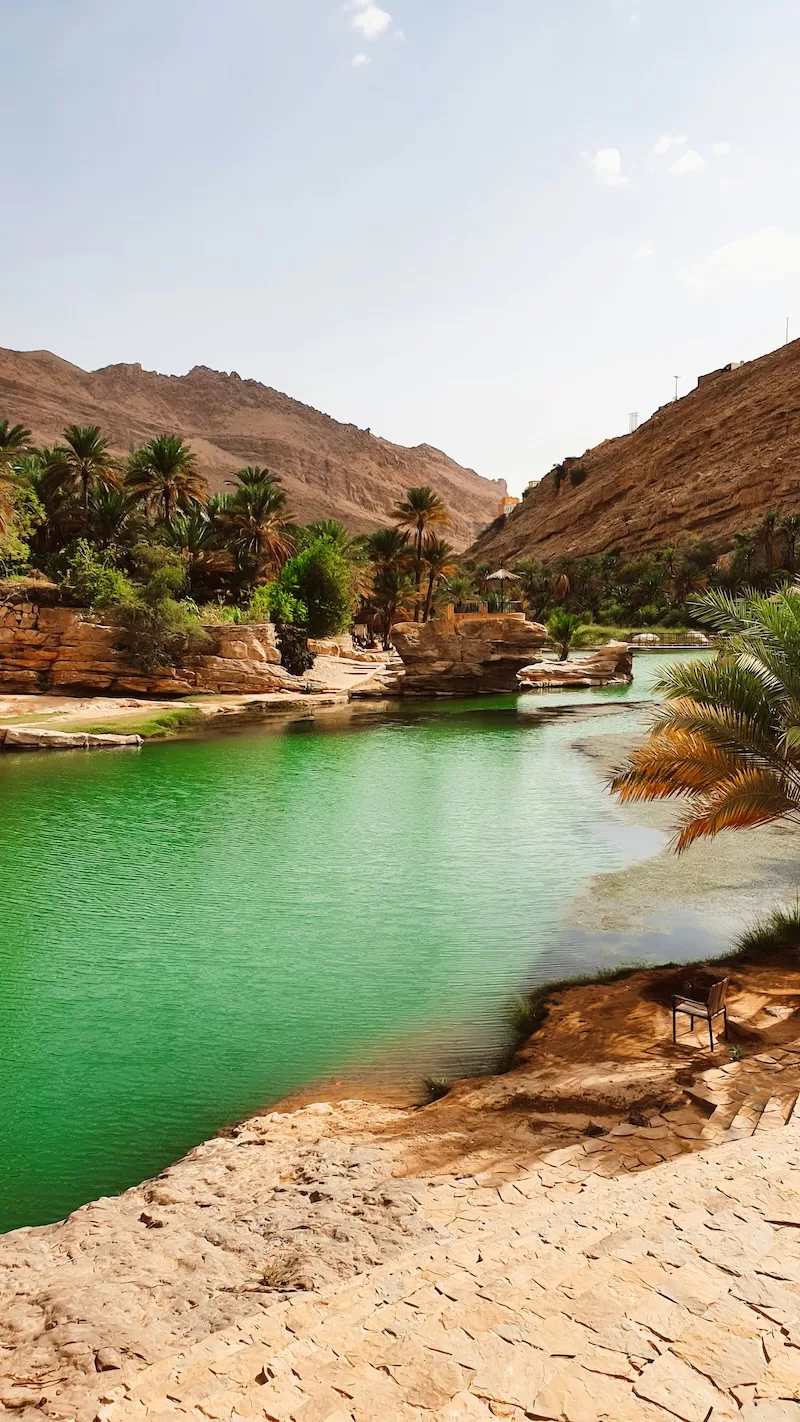
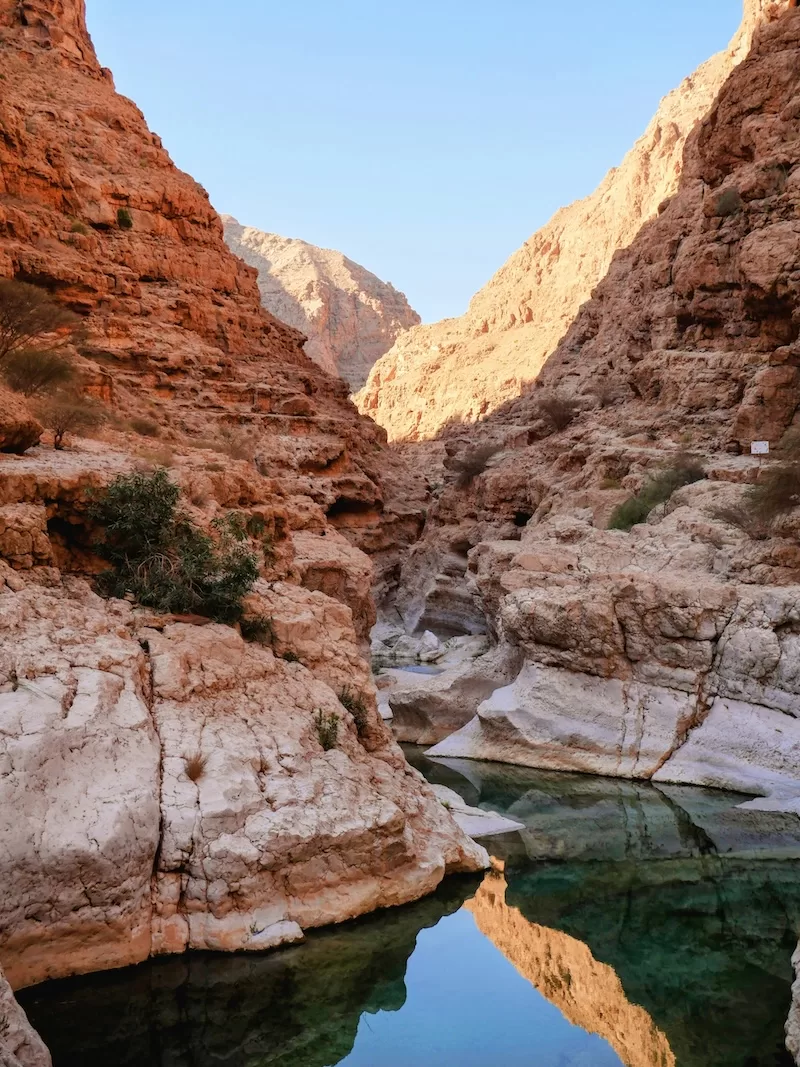
The timeline from initial application to residency approval varies by individual circumstance but typically runs between three and six months for complete, well-prepared applications. Banking relationships, which require the residency permit and supporting documentation to establish formally, are straightforward once the permit is in hand, though local professional guidance on which institutions best serve international residents’ needs is worth seeking before opening accounts. The natural environment that surrounds daily life in Oman, the Hajar Mountains rising from the interior, the three-thousand kilometre coastline that remains largely undeveloped by regional standards, the Dhofar monsoon season that transforms the southern landscape between June and September, all of it becomes accessible in ways that weekend visits never quite prepare you for, and that sustained residency gradually reveals as one of the less-advertised and more durable reasons people who come to Oman for the tax efficiency tend to stay for reasons that have nothing to do with tax at all.
The Bigger Picture
Building a resilient international life has always required looking slightly ahead of consensus. The places that deliver the best outcomes for Plan B planners are rarely the ones occupying the front page of the financial press at the moment decisions are being made. They are the places where the fundamentals are sound, the trajectory is clear, and the crowd has not yet arrived in sufficient numbers to change the pricing or the character of what drew serious people there in the first place.
Oman fits that description in 2026 with a clarity that is difficult to argue with honestly. The fundamentals are as strong as any in the region. The political stability record speaks for itself across four decades of consistent behaviour through genuinely difficult circumstances. The tax environment is as clean as any sovereign state outside a handful of micro-jurisdictions. The quality of life, for those who want what Oman actually offers rather than what they imagine the Gulf ought to offer, is genuinely and sustainably high. And the international resident community, while growing steadily, has not yet reached the density that changes the character of a place or prices out the people who arrived when the argument for being there was not yet obvious to everyone.
The Middle East’s most overlooked Plan B is not a secret that requires extraordinary effort to uncover. It is simply a country that has been patient while others competed for attention, that has built its institutions and its infrastructure while others built their brands, and that now offers a package of advantages that the people paying close attention are beginning to find difficult to ignore. For those paying attention now, that patience is the opportunity.
Read More Like This: The New Middle East Alternatives for Global Expats
Key Takeaways
Why is Oman becoming more relevant for Plan B planning?
Oman offers a combination that is becoming harder to find: long-term stability, low personal taxation, solid infrastructure, and a calmer lifestyle than many of the region’s better-known destinations. For investors who want a Gulf base without the intensity or pricing pressure of Dubai, Oman deserves a closer look.
What makes Oman’s Golden Residency different from other residency programs?
Oman’s program is not built around passport access or lifestyle marketing alone. It is tied to a stable Gulf country with real infrastructure, a dollar-pegged currency, regulated real estate options for foreigners, and a political profile that has remained notably neutral in a volatile region.
Is Oman a replacement for Dubai?
Not for everyone. Dubai still has stronger business density, more international networking, and better global brand recognition. Oman makes more sense for people who value stability, quality of life, lower visibility, lower daily pressure, and a more grounded long-term base.
Is Oman a replacement for Portugal?
No, not if the main goal is eventual EU citizenship. Portugal remains stronger for applicants who want an EU pathway. Oman is more compelling for those prioritizing tax efficiency, Gulf access, climate, personal safety, and a stable base outside Europe.
Who should consider Oman’s Golden Residency?
Oman is best suited for internationally mobile investors, high-income retirees, asset holders, and families who want a serious second base rather than a flashy relocation story. It is especially relevant for people who already understand the Gulf but want an option outside the UAE.
What is the biggest risk with Oman’s Golden Residency?
The main risk is not that Oman is unstable. The bigger risk is assuming the current window will stay the same indefinitely. As more investors discover Oman, pricing, demand, and program rules may change. Proper legal, tax, and property due diligence should happen before any move is made.
Contact Author
"*" indicates required fields
Stay Ahead on Every Adventure!
Stay updated with the World News on Escape Artist. Get all the travel news, international destinations, expat living, moving abroad, Lifestyle Tips, and digital nomad opportunities. Your next journey starts here—don’t miss a moment! Subscribe Now !
There is a version of the Middle East that most internationally minded investors have decided they already understand. Dubai for the skyline, the tax efficiency, and the deal flow. Abu Dhabi for the sovereign wealth and the prestige. Riyadh for those willing to engage with the politics alongside the opportunity. The region, in the minds of most Plan B planners, has been mapped and filed, and the interesting decisions, the thinking goes, have already been made by the people who moved earlier.
That assumption has left something genuinely remarkable almost entirely overlooked. Oman has spent the past four years building one of the most coherent residency-by-investment frameworks in the Gulf, attaching it to a country that offers political stability, zero personal income tax, world-class infrastructure, and a culture that has historically been among the most welcoming to foreigners anywhere in the region. The people who have found it tend not to talk about it loudly. The ones who have not found it are still looking at Dubai floor plans, paying Dubai prices, and wondering whether the trade-offs are adding up the way they once did.
What follows is an honest assessment of what Oman’s Golden Residency program actually offers, who it is suited for, and why the window of advantage that currently exists around it is not guaranteed to stay open indefinitely.
If you'd like to read the full story, simply enter your email to subscribe to our newsletter.
For even more expert insights, unmissable resources, and exclusive invites, explore our premium subscription offers here.
OR
Already a Subscriber? Click here to login
Subscription required
You've reached your limit of free articles. For full access to Escape Artist, and all of our insights on travel, moving abroad, and the digital nomad life, click here to Subscribe.
Already a Subscriber? Log in here