Sustainable travel is sometimes marketed as a high-end luxury, all organic linens and $600-a-night eco-villas. But let’s be clear: more often than not, that’s greenwashing with a high price tag. If you strip away the marketing, the most authentic sustainability usually comes from necessity. In many parts of the world, having a small footprint is just how life works because it makes economic sense.
People in these places rely on public transport because it’s the most efficient way to move. They eat locally because the food is fresher and cheaper. They repair things because they value the resource. For the budget traveler, stepping into these existing systems is the ultimate life hack, lowering your costs while naturally shrinking your environmental impact without the need for a performative eco-label.
In this article, we aren’t looking for green-certified resorts. We’re looking at seven destinations where sustainability and affordability are naturally aligned. Our goal is to show you where you can stop consuming a destination like a product and start participating in it as a system. The spotlight will shine on some of the places that didn’t really build their economies around excess in the first place. These are your best bets for a meaningful getaway that doesn’t require a compromise between your ethics and your bank account.
This shift, more than any certification or greenwashing, is where true sustainable travel begins.
Why Sustainable Travel and Budget Travel Are No Longer Opposites
For years, sustainable travel and budget travel were framed as two completely different personality types. One was marketed as the “conscientious” path: a high-end world of $600-a-night eco-villas, organic linens, and carbon offsets that made virtue feel like an expensive hobby. The other was the “budget” route, often dismissed as a fast-and-loose scramble through hostels and cheap flights where the only thing being sustained was a caffeine addiction.
But that divide has officially collapsed. In the real world, the most affordable ways to move through a country today naturally overlap with lower consumption and deeper integration into local life. According to the Booking.com Sustainable Travel Report 2024, of the people who want to travel more sustainably, 32% believe that it is the right thing to do, but 16% believe traveling more sustainably will enhance their experience and 11% believe they would have a more authentic experience of the local culture. It turns out that efficiency and restraint don’t just feel better, they are perceived as a gateway to a more real experience and, on top of that, they can cost less. When you strip away the heavy branding layers and the tourist-only infrastructure, you find that reducing your impact and your spending usually happen at the exact same moment.
The places where this overlap is strongest aren’t the polished eco-destinations you see in brochures. Instead, they are the countries and regions where systems were built for residents. In these spots, the systems of food, transport, and housing haven’t been redesigned for the short-term tourist churn, making them perfect testing grounds for a more sustainable, affordable way of living.
How lower costs often reflect lower consumption
Budget travel works best in places where people consume less by default. These are environments defined by traits like smaller homes and shorter supply chains. In these settings, you spend less because there is simply less “extra” to buy. You aren’t being upsold on a curated experience because you’re busy navigating the city exactly how the locals do.
For example, when you look at the logistics, it turns out that eating local isn’t solely a trendy menu tagline; it’s a massive shortcut to a smaller footprint. Shorter, localized supply systems cut out the endless parade of intermediaries and long-haul shipping that bloat both the price and the carbon emissions of your dinner.
By leaning into these simpler systems, you’re basically opting out of the carbon-heavy machinery of global trade in favor of something that’s easier on the planet and much easier on your wallet. It’s the difference between paying for a tomato’s plane ticket and just paying for the tomato. It’s a lower-impact experience that allows you to settle in without the tourist tax on your budget or the planet.

The overlap between slow travel and sustainability
Slow travel is frequently marketed as a luxury for people with endless vacation days, but it is the ultimate cost-cutting maneuver. Staying in one place for three weeks instead of three days does more than lower your transport costs; it unlocks resident-style pricing, the kind of weekly or monthly rates that are completely invisible to the weekend tourist who is just passing through.
From a sustainability perspective, moving less is also the single most effective way to shrink your footprint without actively trying. When you aren’t constantly bouncing between airports or train stations, you’re opting out of the carbon-heavy logistics churn that defines modern travel. You’re also skipping the industrial cleaning cycles and single-use waste that come with constant one-night hotel stays.
Sustainability here isn’t about achieving some impossible state of zero-waste perfection; it’s about reducing the number of high-impact decisions you have to make. When you move less, you consume less. When you consume less, you spend less. The alignment is purely practical. It’s about finding a destination where the local vibe (the local market, the metro line, the neighborhood park) works so well that you don’t feel the need to constantly escape to the next thing. More than visiting, you feel like you’re building a temporary routine that supports both your wallet and the world you’re exploring.
What Makes a Destination Eco-Friendly Without Raising the Price
Not all green destinations are created equal. In fact, plenty of places simply outsource their environmental costs or repackage basic scarcity as a high-end virtue. You’ve probably seen it: the rustic cabin that costs more than a five-star hotel just because it has high end bamboo furniture. The places that actually manage to stay affordable while limiting their impact aren’t trying to sell you a vibe; they simply share a few sensible, structural traits that make sense for the people who live there.
Transport systems built for locals, not tourists
If a city’s transit system is designed to get a nurse to a shift or a student to class, it’s going to be cheaper, more frequent, and far more resilient than a shuttle designed to whisk tourists from the airport to a resort. Reliable public transport is the ultimate budget-sustainability crossover. It removes the need for the private buffer of a rental car or a fleet of idling Ubers.
Beyond the savings, these systems distribute your money more fairly, supporting the everyday infrastructure of real neighborhoods and secondary cities. It’s a logistical win-win: a 2024 report by the American Public Transportation Association found that individuals can save nearly $13,000 annually by ditching a car for public transit. Apply that logic to your travel budget, and suddenly that expensive eco-trip looks a lot more like a smart financial move.

Food cultures that rely on proximity and seasonality
The best way to eat sustainably on a budget is to find a place where people still eat locally grown food by default. We’re talking about seasonal produce, regional grains, and fish landed at the nearby harbor. Dishes built around what’s available this morning, not what was flown in from another hemisphere last night. These food cultures are naturally low-waste and filling, but they also cut out the massive environmental hidden cost of refrigeration and industrial packaging.
Comparing the logistics and the math is also quite simple: eating local isn’t a feel-good choice, it’s a massive shortcut to a smaller footprint. Research into food systems shows that when you cut out long-haul shipping, you’re essentially deleting a huge chunk of transport-related greenhouse gas emissions from your dinner. National case studies consistently find that localized consumption leads to measurable drops in CO₂ because you aren’t paying for the carbon-heavy machinery of global trade. From a purely practical standpoint, comparing a short local supply chain to a long-distance one is like comparing a bicycle to a cargo ship.
As a traveler, you get the benefit of eating world-class meals for the price of a local lunch and opt out of the expensive, fossil-fuel-intensive middleman, all without having to hunt down a restaurant with a “certified organic” sticker on the window.

Housing that favors small-scale, locally owned stays
Large-scale hotels are resource-heavy by design. They are essentially small cities that require massive amounts of centralized energy and water to keep the vacation illusion alive. Smaller guesthouses, family-run rentals, and long-stay apartments scale much more gently. They use utilities more carefully (mostly because the owner is the one paying the bill) and they tend to be buildings that are adapted over time rather than constantly razed and rebuilt.
In destinations where local ownership is the norm, prices stay anchored to local income levels instead of being inflated for the international market. When you choose to spend your vacation in accommodations designed for living and not for flexing on social media, you get more autonomy, more space, and a nightly cost that won’t make you gasp for air. You’re choosing a home base that supports the local economy directly, ensuring your stay leaves a positive mark on the neighborhood and not a deep dent in your savings.
Read More Like This: Sustainable Living Abroad
Seven Eco-Friendly Destinations That Work on a Budget
Let’s be clear: these destinations aren’t perfect, and we shouldn’t romanticize them into some kind of sustainable utopia. Life in these places has its own grit and bureaucratic tangles. However, what they do share is a structural alignment between affordability and low-impact living. They aren’t trying to sell you a green experience; they just function in a way that rewards longer stays and a healthy curiosity about life beyond the headline cities.
Portugal (beyond Lisbon and Porto)
Portugal’s reputation for being affordable has put a massive strain on Lisbon and Porto, turning them into centers of high-rent and tourist-saturated streets. But much of the country still operates at a much more manageable scale. If you head into the interior regions like the Alentejo or the Beiras, you’ll find lower rents and a food system that remains deeply local because that’s just how it’s been for centuries. The supply chain is rarely more than a few kilometers long: you’re eating bread from the village bakery and vegetables from the neighbor’s garden.
It’s also a place where repair culture still thrives. You’ll find cobblers and seamstresses on side streets who can fix a boot or a zipper for a few Euros, sparing you from the buy-and-toss cycle of fast fashion.
Portugal’s real strength is its everyday infrastructure. The country now generates well over half of its electricity from renewable sources, largely wind, solar, and hydropower, which lowers energy volatility for residents and long-stay visitors alike. Portugal’s national grid operator (REN) reported that in 2024 renewable power sources produced about 36.7 TWh of electricity, enough to meet roughly 71% of the country’s national demand, with hydropower, wind, and solar collectively driving the record share.

Trains, though not as reliable outside of major hubs, connect some of the main regional hubs, even rural ones, and local markets still anchor most neighborhoods. For travelers staying weeks or months, the cost-to-impact balance is unusually favorable.
Even the Azores are getting in on the act, combining renewable energy investment with agricultural self-sufficiency. It’s a place where contingency planning feels easy because the systems are designed for residents first.
Georgia (Tbilisi and regional hubs)
Georgia is a masterclass in how affordability and sustainability intersect without any fancy branding. In Tbilisi, you don’t need a rental car to feel like a functioning human. The public transport is incredibly cheap and extensive, from metro to city buses to the ubiquitous marshrutkas (shared vans) that connect the most random regional towns with minimal overhead.
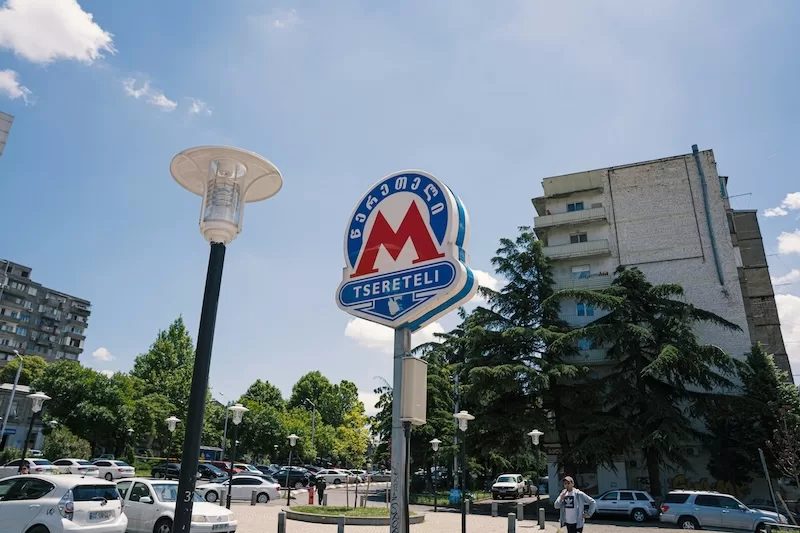
The food culture is a budget traveler’s dream: it revolves around local bread, cheese, and seasonal vegetables that are filling and low waste by tradition. Even the wine culture (the oldest in the world) relies on small regional producers rather than massive, export-driven monocultures, keeping the carbon footprint of your evening glass of Saperavi red wine remarkably low.
If you move outside the capital to hubs like Kutaisi, you’ll find energy use is modest and consumption is naturally restrained.
Vietnam (central coast and secondary cities)
Vietnam’s affordability isn’t an accident; it’s a byproduct of density and a food system that prioritizes immediacy. If you skip the short-haul flights and take the national rail line, you can traverse the country with a fraction of the emissions. Overnight trains are a classic two-for-one travel hack, covering long distances while removing the need for a night of accommodation.
The street food economy is perhaps the most efficient food system on the planet. Meals are cooked fresh, sold locally, and consumed right there on the sidewalk. Because everything is prepared in real-time based on market availability, there is incredibly little food waste or industrial packaging involved. Interestingly, eating out in Vietnam often costs less than cooking for yourself, which is a rare win for the budget.

Also, when you choose family-run guesthouses and slowing your pace, your money stays directly in the hands of the people who manage the land. Plus, you’re supporting a system that keeps energy use per capita relatively low compared to the heavy-resource demands of a five-star resort.
Nicaragua (colonial cities and Pacific coast)
Nicaragua offers a rare combination of low energy intensity and deep community integration. Because the travel economy is built around community-scale lodging and walkable colonial towns, you naturally avoid the resort sprawl that plagues other coastal destinations.
Besides, even resorts here lean sustainable. On the Pacific Coast, places like Gran Pacifica offer both the dreamy beach landscape many are looking for with lodgings that prioritize eco-friendly materials, activities that make it easy to immerse yourself in nature, and ecosystem protection activities through their turtle sanctuary and release program. Plus, their local restaurant stays true to the regional script, focusing on Nicaraguan produce. It’s a setup that keeps everything fresh, local, and—most importantly—aligned with a system that respects the land instead of continuously extracting from it.
Small hotels and guesthouses dominate the landscape, and a significant portion of the national grid is powered by renewable energy.
Public transport and shared shuttles are the norm, meaning you don’t need a private buffer to get around. Life moves a bit slower, and the food centers on local staples and seasonal produce. It requires a bit more patience and a willingness to adapt to fewer modern conveniences, but the tradeoff is a trip that feels like participation and not just consumption.

Mexico (Oaxaca and inland cities)
If you want to see what sustainability looks like before it was turned into a marketing buzzword, go to Oaxaca. You don’t need a car when the city is this walkable and the market culture is this vibrant. The regional cuisine (rightly world-famous) is built on local grains and traditional methods that predate industrial supply chains by centuries. When you eat at a market comedor, you are supporting a food system that bypasses industrial processing and relies on the biodiversity of the surrounding valley, keeping costs low and carbon emissions even lower.
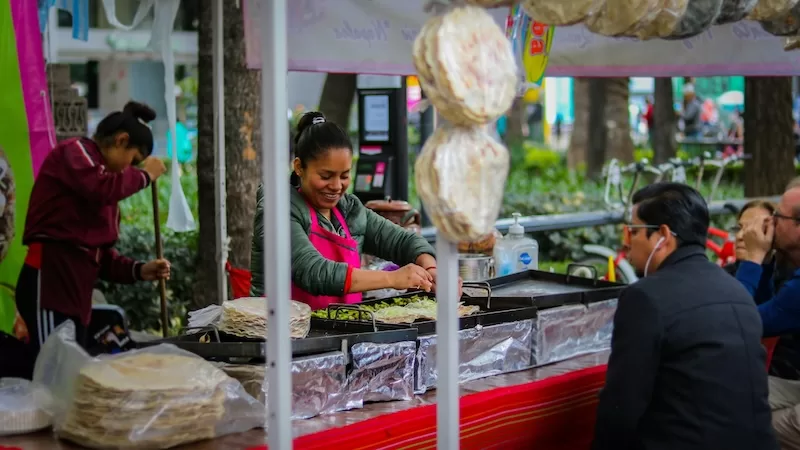
These inland hubs also avoid the extreme water stress and energy demands of the coastal resort corridors. Housing here is designed for actual residents, meaning you get a functional kitchen and a local neighborhood vibe for a fraction of the cost of a coastal hotel. According to recent tourism data, Oaxaca has seen a rise in long-stay visitors who are opting for monthly rentals over hotels, which significantly reduces the environmental pressure of high-turnover tourism. It’s a place where sustainability isn’t a curated experience, it’s what happens when you decide to live like a local for a while.
Romania (Transylvania and smaller cities)
Romania is the underdog of low-impact travel. Its extensive rail network and modest consumption patterns make it a perfect sustainable destination. While Western Europe spent decades favoring highways, Romania maintained a dense rail network, which was at one time the fourth largest railway network in Europe. For a traveler, this means you can skip the rental car and move between medieval towns with a carbon footprint that’s practically negligible. The housing stock favors smaller, energy-efficient apartments, and the food system is a beautiful blend of subsistence agriculture and regional markets.
Many households still ferment, preserve, and cook seasonally, which keeps costs incredibly low and cuts out the need for industrial imports. This is a practical survival strategy that happens to have the side effect of being extremely eco-friendly. It also keeps your daily costs shockingly low: you’re paying for high-quality, local food without the “organic” markup.
Romania rewards the traveler who has a little patience. The infrastructure isn’t flashy, but it’s functional. The environmental upside comes from a system that never scaled toward excess in the first place.
Indonesia (outside resort-heavy Bali)
Indonesia is so much more than the resort-heavy enclaves of Bali. If you head to Java, Sumatra, or Sulawesi, you’ll find a country running on village economies and regional food networks. Mobility is powered by an efficient web of motorbikes, minibuses, and trains that are far more affordable and lower-impact than a private car fleet.
The food is regional and filling: rice, fresh fish, and vegetables with minimal packaging. The distance between the source and your plate is often measured in meters, not miles. This lack of industrial packaging and refrigeration lowers the carbon footprint and makes world-class meals accessible for the price of a snack.
Accommodation commonly involves family-run homestays where you’re essentially a temporary member of the household. It’s a modest way to live that keeps your environmental strain low and your bank account healthy, proving that the best way to see Indonesia is to move slowly and avoid the resort-only zones.

Read More Like This: The Countries That Make Starting Over Feel Possible
The Trade-Offs That Come With Budget-Friendly Sustainable Travel
If you’re looking for a seamless, curated experience where every whim is anticipated, these destinations might wear you down. Choosing the lower-impact, lower-cost route requires a little more effort, a little flexibility. After all, you’ll be a temporary participant in a system that doesn’t necessarily care that you’re on vacation.
Less convenience, more self-reliance
The first thing you’ll notice is that the buffers are gone. You will carry your own bags, navigate transit maps that may not be translated into three languages, and adjust to shop hours that revolve around local life and not tourist demand. English might not be the default, and comfort will be something you find through local knowledge and not something you buy from a concierge. It’s a trade-off that keeps your footprint small and your wallet full, and though it asks for more of your mental energy in return, the self-reliance you get is the point. It transforms the trip from a series of transactions into a genuine skill set. For example, navigating a local bus route or successfully ordering a meal in a neighborhood market can be a micro-victory that builds a sense of agency you’d never get from a tour bus. Plus, when you do the work yourself, you’re reducing the labor extraction and inflated pricing that define high-end tourism. You aren’t merely looking at a culture through a glass window; you’re participating in the same systems that sustain the community. This shift keeps your footprint small, but more importantly, it leaves you with something rarer than a souvenir: the confidence of knowing you can navigate the world on its own terms.
The “Time Tax” on Low-Impact Logistics
One of the biggest trade-offs is that sustainable, budget-friendly systems normally require more of your time. When you opt for the local train instead of a private shuttle or walk to the central market instead of ordering delivery from an app, you are essentially trading your hours for a smaller footprint and a thicker wallet. In the world of long-term travel, we call this the logistics lag. You have to be okay with the fact that your day won’t be a high-speed highlight reel. It’s more of a slow-burn experience where the journey to find a specific local ingredient or figure out a bus transfer is the activity.
Infrastructure gaps versus environmental upside
You have to be prepared for the fact that many of these destinations lack the redundancy we’re used to. Power outages might happen, or the bus might be two hours late because of a mudslide or a local festival. In these moments, it’s important to remember that these gaps usually reflect a genuine limit on resources, not a lack of effort.
For the pragmatic traveler, the environmental upside (living in a place that doesn’t waste energy on vacation illusions) and the massive cost savings are worth the occasional cold shower or slow commute. The key here is expectation management. Sustainable budget travel might not be for people who need a polished finish on everything; but it’s definitely for people who value resilience and authenticity.
The Mental Load of Default Living
When you stay in a place built for residents, you lose the “tourist exemption.” You have to care about things that travelers in resort zones get to ignore, like how the local waste-sorting system works, when the neighborhood water pressure might dip, or which days the local bakery is closed for a town festival. This cognitive load is the participation price. You’re managing a life, not just a holiday. While this provides a firsthand experience of what living abroad actually looks like, it can be exhausting if you aren’t prepared for the mental shift from being pampered to being functional.
How Travelers Can Lower Their Impact Without Spending More
Here’s a secret the travel industry doesn’t want you to know: You do not need to buy anything special to travel sustainably. You don’t need the bamboo cutlery set, the eco-certified solar charger, or a wardrobe made entirely of hemp. Real sustainability is about making fewer moves and fewer demands on the local infrastructure. It’s about restraint, which, conveniently, is also the best way to keep your budget under control.
Staying longer and moving less
If you want to slash your carbon footprint and your expenses in one go, just stay put. The length of your stay is the single strongest predictor of how much you’ll spend and how much you’ll pollute. When you stop treat-hopping across a continent and settle into a city for a few weeks, your transport emissions drop off a cliff.
More importantly, staying longer shifts your relationship with a place from “consumer” to “resident.” You start to unlock those weekly and monthly rates that are the holy grail of budget travel. You stop making the wasteful decisions that come with being in a rush, like grabbing a packaged sandwich at the airport because you’re catching a flight, or taking a taxi because you haven’t had time to figure out the metro. You stop chasing highlights and start living within reach, which is where the real life of a city happens.
Eating where locals eat and adjusting to the vibe
Local food systems aren’t designed from scratch to be sustainable, they’re designed to feed people efficiently. When you fold yourself into these pre-existing customs, you’re reducing packaging, transport, and waste without even trying. Eat at the neighborhood markets, watch out for daily set menus, buy the fruit that’s in season (and therefore cheap) instead of the imported stuff that’s been sitting on a boat for a month. Your tastebuds (and your wallet) will thank you.
Adjusting your schedule to local habits (like eating a big lunch when the set menus are cheapest or shopping when the market is freshest) is a way to align with a lower-impact lifestyle. These choices cost less because they require fewer intermediaries. You’re essentially cutting out the “tourist tax” and the “carbon tax” at the same time.
The “One-Bag” Logic
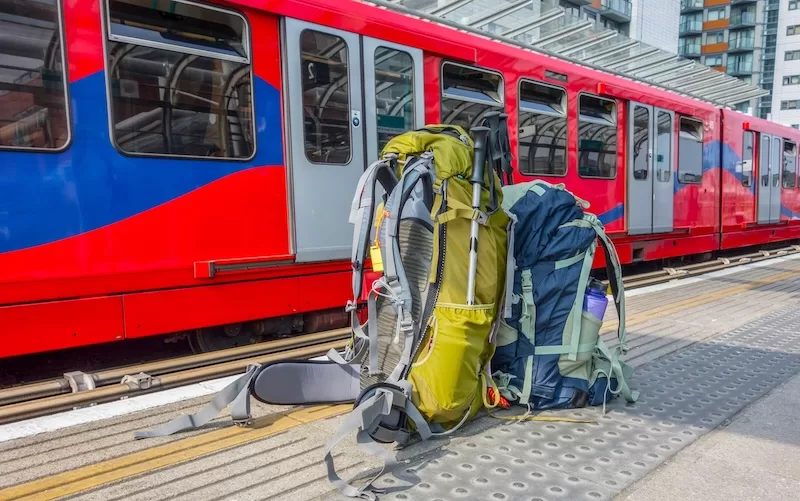
From a sustainability standpoint, every extra kilo you carry requires more fuel to move, whether that’s on a plane, a bus, or your own back. If you stick to one bag, you make yourself public-transit compatible. You don’t need a private van to get to your guesthouse because you can easily hop on a local bus or walk ten blocks. It’s a small logistical shift that keeps you nimble, lowers your costs, and ensures you aren’t a burden on the systems you’re visiting.
Opting for Analogue Exploration
One of the best ways to lower your impact is to stop relying on high-energy entertainment. Instead of booking a motorized tour or a resource-heavy experience, try walking. Walking is the ultimate low-impact, zero-cost way to stress-test a neighborhood. It reveals the small things (the local pharmacy, the leafy park, the best coffee stand, the funny house façade, the unusual landmark) that you’d miss from the window of an Uber. It’s the difference between consuming a destination through a screen or a windshield and feeling the texture of the place under your feet.
Key Takeaways
Is sustainable travel always more expensive?
No. It might look that way because sustainability is frequently packaged as a premium product. Eco-lodges or carbon-neutral tours are layered on top of destinations that already have high costs. In practice, many of the lowest-impact travel choices are also the cheapest. Public transport instead of taxis, local food instead of imported menus… Sustainability becomes expensive when it is marketed as an upgrade instead of lived as a baseline.
Can budget travel still support local communities?
Yes, when spending aligns with local systems. Staying in locally owned accommodation, eating at neighborhood restaurants, shopping at markets, and using everyday transport keeps money circulating locally. What matters less is how much you spend, and more where it goes.
Does flying to a distant destination cancel out sustainability gains?
Flights carry a real environmental cost, and distance matters. That said, impact is cumulative. One long-haul flight followed by a two- or three-month stay can result in lower overall emissions than multiple short trips closer to home. Staying longer, flying less frequently, and avoiding internal flights once you arrive can meaningfully reduce total impact.
Are these destinations suitable for first-time travelers?
Some are, some require more adaptability. Countries with strong public transport, clear signage, and established tourism infrastructure tend to be easier entry points. The learning curve is part of the trade-off. Travelers willing to plan a little more and rely less on convenience tend to get more value, both financially and experientially.
How long do you need to stay to see cost and sustainability benefits?
Usually two to four weeks is where the shift becomes noticeable. Beyond a month, many travelers find that their costs flatten while comfort increases. This is also where environmental impact per day drops significantly.
Is slow travel realistic if you are working remotely?
For many people, yes. Slow travel pairs well with remote work because it reduces logistical overhead. Fewer moves mean fewer disruptions to routine, connectivity, and focus. Destinations with reliable internet, affordable housing, and low daily costs allow remote income to stretch further without requiring constant productivity pressure.
How do visas and residency factor into sustainable travel?
Visa policies shape behavior. Countries that allow longer stays encourage slower movement and deeper integration. Short visas push travelers toward faster, higher-impact travel patterns. Some of the destinations discussed offer long-stay visas, renewals, or residency pathways that make slower, lower-impact living legally and logistically easier.
Sustainability, Affordability, and the Places That Don’t Scale Toward Excess
The destinations where budget travel and sustainability overlap most cleanly aren’t the ones chasing eco-labels or redesigning themselves for the green tourist. They are the ones where transport systems serve residents, food systems follow the seasons and housing is built for living, not for high-speed nightly turnover.
For the traveler, the lesson is simple, though it might not always be comfortable: lower impact can mean having fewer convenience buffers. Lower costs normally require a higher dose of patience. The real trade isn’t between ethics and enjoyment, but between speed and depth. When you choose slow travel and modest expectations, you’re reducing your spending and your strain on the environment; while at the same time discovering which places are resilient enough to support a life without excess.
Over time, this stops feeling like a clever travel strategy and starts feeling like a lifestyle filter. The locations that work for budget-conscious, low-impact travel are often the same ones that offer a higher quality of life for the long haul. They are built on systems that already function at a human scale, proving that you don’t need a massive budget to live (or travel) well. At its most honest, sustainable travel isn’t about doing more with less guilt. It’s about doing less, more deliberately, in places that never required excess to begin with.
If you’re looking to move beyond the tourist surface, subscribe to the Escape Artist newsletter. You’ll find practical insights on international living, local economies, and long-term lifestyle planning, no matter what your style of traveling, living or investing is.
Contact Author
"*" indicates required fields
Stay Ahead on Every Adventure!
Stay updated with the World News on Escape Artist. Get all the travel news, international destinations, expat living, moving abroad, Lifestyle Tips, and digital nomad opportunities. Your next journey starts here—don’t miss a moment! Subscribe Now !
Sustainable travel is sometimes marketed as a high-end luxury, all organic linens and $600-a-night eco-villas. But let’s be clear: more often than not, that’s greenwashing with a high price tag. If you strip away the marketing, the most authentic sustainability usually comes from necessity. In many parts of the world, having a small footprint is just how life works because it makes economic sense.
People in these places rely on public transport because it’s the most efficient way to move. They eat locally because the food is fresher and cheaper. They repair things because they value the resource. For the budget traveler, stepping into these existing systems is the ultimate life hack, lowering your costs while naturally shrinking your environmental impact without the need for a performative eco-label.
In this article, we aren’t looking for green-certified resorts. We’re looking at seven destinations where sustainability and affordability are naturally aligned. Our goal is to show you where you can stop consuming a destination like a product and start participating in it as a system. The spotlight will shine on some of the places that didn’t really build their economies around excess in the first place. These are your best bets for a meaningful getaway that doesn’t require a compromise between your ethics and your bank account.
If you'd like to read the full story, simply enter your email to subscribe to our newsletter.
For even more expert insights, unmissable resources, and exclusive invites, explore our premium subscription offers here.
OR
Already a Subscriber? Click here to login
Subscription required
You've reached your limit of free articles. For full access to Escape Artist, and all of our insights on travel, moving abroad, and the digital nomad life, click here to Subscribe.
Already a Subscriber? Log in here