
Introduction
A shift is underway. Migration trends are no longer driven only by crisis, conflict, or economic survival. People are relocating with intention, choosing places that improve their daily life. This change has been building for years, accelerated by remote work, rising housing costs, and a growing awareness that geography shapes more than scenery.
Movement today is less often driven by emergency alone. More folks are relocating with intention, choosing places that support everyday routines and long-term stability. Remote work has made location more flexible, while housing costs have forced a closer look at how much pressure daily life can reasonably hold. At the same time, there is a growing recognition that geography shapes experience in lasting ways, far beyond scenery or climate.
Across regions, priorities are being reassessed. Space is evaluated differently. Time carries more weight. Income is judged by what it allows on an ordinary day. The result is a new map of movement, shaped less by borders and more by livability. These new migration trends are reshaping where people choose to live, favoring places that hold up over time rather than demanding constant trade-offs.
Understanding these patterns matters. They influence housing markets and infrastructure decisions, but they also reveal something deeper. They show how definitions of a good life continue to evolve in a world where mobility is no longer exceptional, but increasingly practical.
Read More Like This: Global Roundup: Migration, Markets, and Tourism Shifts
The Big Picture: Why Migration Patterns Are Changing Now
From necessity to choice-driven movement
For most of modern history, migration followed pressure. People moved when staying became literally impossible, pushed by war, scarcity, extreme climate events, or the absence of opportunity. That logic still exists, but it doesn’t really paint the full picture anymore. Today’s migration trends point to something more deliberate. Movement is increasingly proactive, shaped by planning instead of urgency, with relocations happening before systems strain or personal trade-offs become too costly.
Quality of life has taken on a central role in these decisions. Instead of moving as a last resort, people increasingly relocate in search of environments that make daily life feel sustainable. According to the United Nations, approximately 281 million people were living outside their country of birth in 2020, representing about 3.6 percent of the global population, a figure that includes both those displaced by necessity and those moving by choice. What has transformed most noticeably within this mix is motivation among the latter group. Education, lifestyle considerations, retirement planning, and flexible work arrangements now sit alongside traditional economic drivers. The change feels less like leaving a city under duress and more like choosing a neighborhood that fits better, guided by livability and not pure survival.
The growing importance of timing and agency
Another defining feature of current migration patterns is timing. Moves are happening earlier in life stages and with more foresight. Many no longer wait for a breaking point to consider alternatives. Instead, relocation becomes part of a longer planning horizon that includes career flexibility, family needs, and financial sustainability.
This sense of agency matters. When relocation is driven by choice, they arrive with different expectations. Integration tends to happen faster. Decisions are less reactive. The move is framed as an adjustment, not an escape.
The role of mobility, technology, and remote work
Technology has reshaped how movement feels on a practical level. Distance carries less weight than it once did, and work no longer anchors people to specific buildings or cities in the same way. Communication tools, cloud-based systems, and global payment platforms allow daily life to continue with fewer interruptions after a move.
Access to healthcare systems, education platforms, and international banking has expanded alongside this shift, making relocation feel more manageable and less risky.
Trial living and gradual settlement
As a result, mobility has become easier to test. Short stays are no longer framed as detours, and longer commitments no longer feel irreversible. People spend time in a place before deciding how deeply to settle. Expectations adjust. Routines form gradually.
Migration now happens in stages, not in a single leap. A temporary stay becomes seasonal, seasonal becomes semi-permanent. This flexibility has changed how relocation is approached, turning it into a process modeled by experience instead of by a one-time decision made under pressure.
Economic Gravity Has Shifted
Cost of living pressures and purchasing power
In many major cities, housing has become the breaking point. Rent has climbed faster than wages for years, and for many it now absorbs an outsized share of monthly income. What starts as a budgeting problem frequently turns into a bigger question about location. Staying begins to feel like constant compromise, and looking elsewhere starts to make sense.
That is where places like Southern Europe, parts of Latin America, and Southeast Asia enter the picture. In these regions, the same income might support a more manageable way of living. Space is less constrained. Daily expenses feel more predictable. Life gains a little slack.
The numbers back this up. The OECD reports that housing affordability has declined in more than two-thirds of its member countries since 2015, with the sharpest pressure felt in large urban centers. As costs rise, migration trends increasingly follow practical math. People gravitate toward places where financial pressure eases instead of compounding month after month.

Rebalancing everyday expenses
Beyond housing, the broader cost structure of daily life plays just as an important role. Transportation, food, healthcare, and utilities all factor into how sustainable a place feels over time. In cities where these expenses escalate together, even high earners can feel constrained. In contrast, regions with lower baseline costs offer a different experience of stability.
This rebalancing allows focus to shift away from constant financial calibration. Decisions become less reactive. Planning stretches further into the future. Over time, this sense of control becomes one of the strongest arguments for relocation.
Wage arbitrage and global income mobility
The dramatic expansion of remote work since the pandemic has loosened the link between where work happens and where income is earned, creating new choices about where people live and work. Research from OECD shows that remote work spread rapidly across regions after 2020, with cities and capitals experiencing a sharp rise in remote job uptake and workers no longer tied to a single workplace for daily employment. For people earning in stronger currencies, income no longer has to mirror local cost structures. This flexibility has reshaped how relocation is approached, particularly among professionals, freelancers, and entrepreneurs who can carry their work with them.
Earning dollars or euros while living elsewhere changes the texture of daily decisions. Savings feel sturdier and long-term plans feel less fragile. Smaller cities and secondary regions benefit as a result, offering stability without the overhead associated with global hubs. These places usually provide the same essential services, but without the financial compression that defines larger markets.

Financial clarity and longer horizons
When finances stop dominating every calculation, other priorities surface more clearly. Time feels less scarce. Trade-offs feel more intentional. The move itself becomes less about chasing advantage and more about aligning costs with values.
It is similar to adjusting the lens on daily life. Work remains in focus, but the surrounding details sharpen once financial pressure recedes from the center of the frame. Seen this way, it becomes easier to understand why economic gravity is pulling many toward places that favor sustainability over spectacle.
Lifestyle Has Become a Serious Variable
Climate comfort and daily livability
Climate has shifted from a background consideration to something people weigh much more seriously when deciding where to live. Not as a pursuit of perfect weather, but as a practical question of how the body moves through the day. Long periods of extreme heat, drawn-out winters, or increasing environmental instability make even simple routines more demanding. Over time, that strain accumulates. It affects everything from energy to social life.
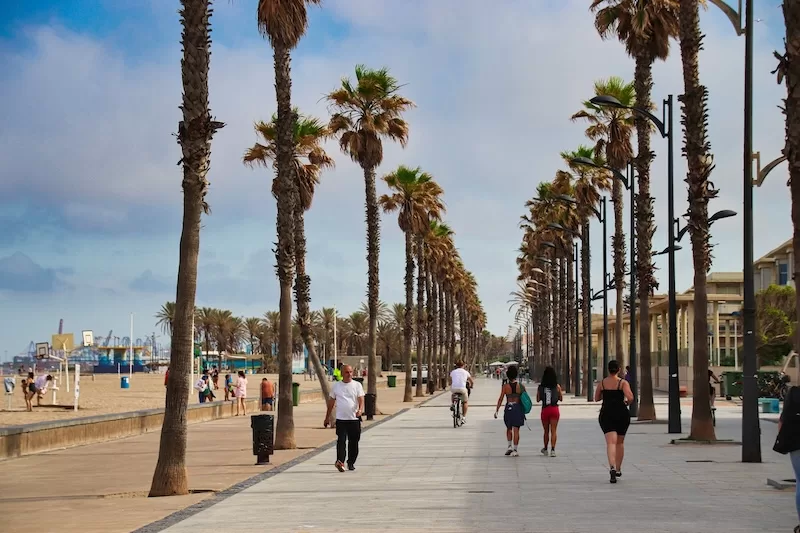
This helps explain the growing appeal of temperate regions and coastal areas. In these places, daily life tends to flow with fewer interruptions. Outdoor time fits easily into workdays and weekends alike. Social plans do not require constant recalculation around weather extremes. Mediterranean climates, highland regions, and coastal corridors benefit from this change because they allow people to move through their days without needing to brace against the environment.
In this sense, the draw is not dramatic scenery or seasonal appeal, but places where everyday life feels workable across most of the year.
How environment shapes routine over time
What matters most is not how a place feels on arrival, but how it holds up after familiarity sets in. Climate influences small decisions that repeat daily, from when errands happen to how often people gather outdoors. Over months and years, those patterns shape satisfaction far more than initial impressions. Places that support consistent routines tend to feel easier to settle into. That cumulative ease plays a decisive role in where folks choose to stay long term.
Pace of life and social infrastructure
Alongside climate, the pace of daily life carries a lot of weight. Satisfaction hinges on how smoothly ordinary tasks fit together. Walkable streets, public spaces designed for regular use, access to fresh food, and services that work as expected all influence whether a place feels livable beyond the first few months. These elements rarely dominate relocation conversations at the beginning, but they become central once novelty fades. They determine how folks interact with their surroundings and with one another. Over time, this infrastructure shapes a sense of belonging.
Why smaller cities often feel easier to live in
These qualities help explain the growing appeal of secondary cities. Capital hubs offer opportunity and visibility, but they also demand constant attention. Smaller cities tend to operate at a different scale. Daily life feels more navigable. Community forms without requiring deliberate effort. Familiarity builds naturally. For many folks, that balance proves more durable than size or prestige. In the context of new migration trends, places that support an even, predictable rhythm usually outperform larger centers when it comes to long-term satisfaction.
Remote Work and Location Flexibility
From movement to something more settled
The early image of the digital nomad was defined by someone always on the move. Short stays, frequent changes, a life kept deliberately light. That version still exists, but it no longer reflects how most mobile workers think about relocation today. What has emerged instead is a tilt toward stability, with flexibility serving as a foundation rather than a goal in itself.
This change is closely tied to how work has evolved. Remote work moved from exception to expectation in many industries, allowing workers to carry their income across borders without constant disruption. As this model normalized, priorities changed. Community began to matter more. Access to healthcare became part of the calculation. Legal clarity started to feel essential rather than optional. Mobility stopped being about movement for its own sake and became a way to choose where life functions best.
As a result, the line between traveler and resident has blurred. Newcomers arrive intending to test a place, then discover reasons to stay. A few months stretch into a year, temporary housing gives way to longer leases. Routines form. Familiarity builds. Relocation settles in gradually, shaped by experience and not necessarily a fixed plan.
Why remote work accelerated global mobility
Remote work did more than remove the commute. It changed how people relate to place. Without daily ties to an office, location became something to evaluate and not accept at face value. Time zones mattered less. Presence became more flexible. For many workers, this opened the door to living in places that better supported their health, finances, and personal goals.
This was not limited to freelancers or tech workers. Professional services, creative industries, consulting, and even parts of corporate employment adapted. Once location flexibility proved viable at scale, it became part of long-term planning and not just a temporary arrangement.
Countries adapting policy to mobile workers
Governments have responded to this shift with policies that reflect how mobility now works in practice. More than 50 countries offer visas designed for remote workers, acknowledging that income and location no longer need to align in traditional ways. Portugal, Spain, Costa Rica, and Estonia are among the most visible examples, each offering pathways that provide legal certainty without requiring immediate long-term commitment.
Portugal’s digital nomad visa, introduced in 2022, drew strong interest within its first year, signaling demand for options that support both flexibility and continuity. These programs are designed for those who intend to stay and contribute locally without committing immediately to permanent residency.
Together, these policies reflect a broader adjustment. Mobility is no longer treated as a transitional phase between careers or life stages. It is increasingly recognized as a legitimate way of structuring work and life over time, with legal frameworks evolving to support that change.
Families, Not Just Individuals, Are Moving
Education systems and healthcare access
Families approach migration with a different set of questions. The focus moves from possibility to continuity, from short-term flexibility to how daily life will hold up over time. Education and healthcare tend to sit at the center of these decisions, not as abstract systems, but as services families rely on regularly.
Countries with clear residency pathways and accessible public services tend to draw more long-term interest. Spain and Portugal come up a lot for their healthcare coverage and family-oriented routines that align well with everyday life. Costa Rica appeals in a different way, offering strong community ties and an outdoor-oriented lifestyle that many families value once they settle in. These destinations show how reshaping where people live increasingly involves a long view and not just a temporary experiment.
Safety, routine, and long-horizon thinking
For families, predictability often matters more than novelty. Migration decisions tend to revolve around how smoothly days unfold, how safe neighborhoods feel, and how manageable basic systems are to navigate. Cultural openness helps, but so does bureaucracy that is easy to navigate after the initial adjustment period.
These moves usually signal commitment. Families are not testing a phase, but laying groundwork. Migration becomes more about building a place that can support school years, habits, and the accumulation of familiarity that turns a location into home.
Where People Are Going
Southern Europe and the Mediterranean
Southern Europe continues to surface in migration conversations, not as a novelty, but as a place where daily life still feels workable. In countries like Portugal, Spain, Greece, and Italy, interest frequently settles outside the capital cities. Regional hubs and coastal towns offer reliable infrastructure without the constant intensity that defines larger urban centers.
Healthcare is accessible. Public transportation blends into everyday life. Streets are walkable. For many individuals, that balance matters more than proximity to a global capital. These are places where routines take shape quickly, and where living feels less like a negotiation.
Read More Like This: The Most Affordable European Cities to Live in 2026

Latin America and coastal communities
Latin America has emerged as another strong focal point in current migration patterns, particularly in countries such as Nicaragua, Costa Rica, Colombia, and Panama. Affordability plays a role, but it rarely tells the whole story. Climate comfort, social ease, and cultural openness can shape decisions just as strongly.
Coastal communities tend to offer the easiest transitions. Established expat populations provide familiarity without overtaking local life, making it easier for newcomers to find their footing while still feeling connected to place. Over time, these areas appeal less as destinations and more as settings where the day-to-day settles into balance.

Secondary cities over capital hubs
Across regions, one pattern repeats consistently. Smaller cities tend to hold many longer than capital hubs. The reasons are simple. Daily life simply runs more smoothly. Distances are shorter. Services feel usable instead of stretched to the last penny. Community forms without constant effort.
Capital cities still attract newcomers with opportunity and energy, but secondary cities might win on longevity. They offer structure without pressure and familiarity without overload. In the context of new migration trends, this balance has proven especially appealing to those planning several years ahead.
What These New Migration Trends Mean Long Term
These new trends point to something more permanent than a passing response to recent events. They reflect deeper transformations in how people work, plan, and measure stability over time. As movement becomes more intentional, its effects ripple outward. Housing markets adjust gradually. Infrastructure follows patterns of sustained demand. Policy evolves in response to lived reality instead of pure short-term pressure. Change happens incrementally, shaping neighborhoods and regions over years instead of months. Places that support everyday life tend to benefit most, not because they promise status or spectacle, but because they function well once the novelty fades.
For individuals, recognizing these patterns makes long-term planning clearer. For regions, it offers a chance to grow with purpose. Understanding where and why people are moving helps align decisions with how life really is lived, now and in the years ahead.
Read More Like This: Our Good News Round-Up for Expats in 2026
FAQs
Q1. What are the main drivers behind current migration trends?
Decisions are increasingly modeled by daily livability. Cost of living pressures, lifestyle priorities, and the ability to work remotely all influence where newcomers choose to settle, many times in working in combination.
Q2. Are these migration trends temporary, or are they likely to last?
Most indicators suggest these changes are structural. Changes in work flexibility, demographics, and long-term planning point toward sustained movement and not a short-lived response to recent events.
Q3. Which regions are seeing the most consistent inflows?
Southern Europe, parts of Latin America, and smaller cities outside major capitals continue to attract long-term residents, particularly where infrastructure and daily life feel manageable.
Q4. Is remote work required to relocate abroad successfully?
No. Many people relocate for retirement, family reasons, or local employment. Remote work expands options, but it is not the only viable pathway.
Q5. Do families approach migration differently than individuals?
Yes. Families tend to focus on continuity. Education systems, healthcare access, safety, and predictable routines usually carry more weight than flexibility or experimentation.
Q6. How are governments responding to these migration patterns?
Many countries have adapted by offering remote work visas, clearer residency pathways, and policies designed to attract longer-term residents rather than short-term visitors.
Q7. Does moving abroad always mean a permanent commitment?
Not necessarily. Many relocations begin as trial periods. Newcomers test a location before deciding to stay, adjust plans, or move again as circumstances evolve.
Q8. How should someone start evaluating a potential move?
Looking beyond housing costs is essential. Healthcare access, residency rules, community integration, and how daily life functions often matter more than initial impressions.
Reading Into the Latest Migration Patterns
Migration today is more and more defined by intention. People are no longer chasing abstract ideals or brief escapes. They are choosing places that support ordinary days, the ones filled with routines, responsibilities, and small moments that make life feel settled. These migration trends point to a broader recalibration, one that favors places offering continuity, access, and the ability to plan beyond the short term.
For those considering a move, understanding these patterns makes things a bit clearer. It helps separate lasting signals from passing noise. For regions welcoming new residents, it offers a framework for growth that aligns with how locals really live, and not just how places are marketed.
The map is shifting, but not erratically. It is being redrawn through thousands of individual decisions made with care and foresight. Paying attention to where those choices are leading reveals more than destinations. It reveals how ideas of home, stability, and opportunity continue to evolve.
To explore deeper insights on global living, residency pathways, and place-based decision-making, subscribe to our newsletter for ongoing analysis or explore related guides designed to support thoughtful relocation and long-term planning.
Contact Author
"*" indicates required fields
Stay Ahead on Every Adventure!
Stay updated with the World News on Escape Artist. Get all the travel news, international destinations, expat living, moving abroad, Lifestyle Tips, and digital nomad opportunities. Your next journey starts here—don’t miss a moment! Subscribe Now!