Checked and current, 10 September 2026. The rule itself is stated correctly. Ninety days inside the Schengen area in any rolling 180-day period, across 29 member states. Both figures are right, and the European Commission publishes an official short-stay calculator that does the arithmetic for you.
One point of history to tighten. The article says Schengen was established in 1985 by five countries. The agreement was signed on 14 June 1985 by five members of what was then the EEC. The border-free area itself only began operating on 26 March 1995. Ten years apart, and the second date is the one that created the thing this article is about.
Verified against published Schengen area documentation and the European Commission’s short-stay calculator, checked 10 September 2026. The claim that entry and exit days both count as full days is widely repeated and we could not confirm it against an official source, so treat it as prudent practice rather than a quoted rule. Border policy changes: confirm with the authorities of the country you are entering before relying on any of this.
The Schengen Area was established in 1985 by five EU countries and has grown significantly since, expanding into a border-free zone of 29 European nations. For most travelers, crossing between member countries requires no passport checks, no visas, and no paperwork beyond showing up. For citizens of the United States, Canada, the United Kingdom, Australia, and many other countries, short stays within this zone are permitted without any visa at all. It is one of the great conveniences of modern travel, and for decades it worked exactly as intended.
That was before the world changed the way it moves.
The Rule That Catches People Off Guard
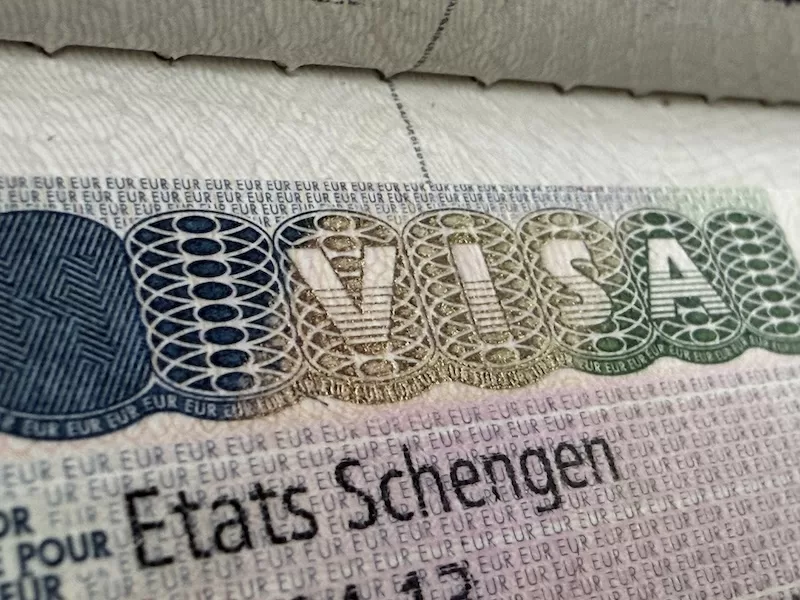
The freedom of the Schengen Area comes with one significant constraint, known as the 90/180 rule. Travelers from visa-exempt countries may spend no more than 90 days inside the Schengen zone during any 180-day period. All 29 member countries effectively count as a single destination for this purpose, meaning a month in France, a month in Italy, and a month in Spain adds up to three months inside Schengen, not three separate trips to three separate countries.
The complexity lies in how that 180-day window is calculated. It is not a fixed block that resets on a calendar date. It is a rolling window that moves forward one day at a time. On any given day, border authorities look back exactly 180 days and count how many of those days the traveler was present inside the zone. If the total exceeds 90, the traveler is overstaying, regardless of whether they feel like they have been there that long. Entry and exit days both count as full days, meaning a single overnight trip technically consumes two days of allowance. The rule is precise, cumulative, and increasingly difficult to game.
For most visitors, this is not a problem. A two-week vacation to Portugal does not require a spreadsheet. But for a growing number of people, remote workers, retirees living part of the year in Europe, and long-term slow travelers who spend months rather than weeks moving between countries, the 90-day ceiling becomes a genuine structural obstacle.

Read More Like This: Inside North Macedonia: Europe’s Most Unexpected Reinvention
Why the Schengen Shuffle Emerged
The Schengen Shuffle is the informal name for a travel strategy built around that constraint. The basic premise is straightforward: spend time inside the Schengen zone, exit before reaching the 90-day limit, spend time in a non-Schengen country until enough days fall out of the rolling window to allow re-entry, and repeat. In practice, this might mean a few months in Spain or France, followed by a reset period in Albania, Montenegro, Georgia, or Morocco, before returning to Europe again.
Three trends collided to make this approach not just viable but increasingly popular. The first is the rise of remote work, which untethered professionals from fixed office locations and made sustained multi-country travel logistically possible for a much larger group of people. The second is the growth of slow travel culture, where the goal is depth rather than breadth, spending months in a single place rather than racing through a bucket list of cities in two weeks. The third is the increasing appeal of the non-Schengen countries just outside Europe’s borders, which two decades ago might have felt like inconvenient detours and now read as genuine destinations in their own right.
Albania and Montenegro, in particular, have become fixtures on the circuit. Both offer the kind of Mediterranean coastline and old-town charm that draws people to Europe in the first place, at a fraction of the cost, with none of the Schengen clock ticking in the background. What started as a logistical workaround has, for many, become a lifestyle, a deliberate rhythm of alternating between the European mainstream and the quieter, cheaper edges just beyond its borders.

Read More Like This: Europe’s Residency Thresholds Are Changing
What the Shuffle Actually Involves
One of the most persistent misconceptions about the Schengen Shuffle is that leaving the zone resets the 90-day allowance. It does not. The system does not reset based on departure. It continuously recalculates eligibility based on the previous 180 days, which means that even after spending time outside Schengen, a traveler does not automatically regain all 90 days upon re-entry. Days become available again gradually, as earlier stays fall outside the rolling window. A traveler who used all 90 days and immediately left would need to spend 90 days outside the zone before those days became available again.
This is why careful planning is not optional for anyone attempting the Shuffle seriously. Returning too early can mean arriving at a border with far fewer remaining days than expected, and border authorities, working with increasingly precise digital records, are not in the habit of being lenient about it. The EU’s Entry/Exit System, which is progressively rolling out across member states, records all border crossings digitally and tracks them automatically. The era of informal interpretation at passport control, where a sympathetic officer might wave through a traveler with a complicated itinerary, is ending.
The mathematical reality of the rolling window means that the Shuffle requires genuine tracking. Anyone attempting it needs to know not just how many days they have used in total, but which specific days those were, because the calculation on any given date depends entirely on the distribution of past stays across the previous six months.
The Risks Are Real
The appeal of the Schengen Shuffle is genuine, but so are the consequences of getting it wrong. Overstaying a Schengen visa can result in fines, forced removal, and entry bans that apply across all 29 member countries simultaneously. A single miscalculation does not just close off one destination. It can close off the entire zone for a significant period, which for someone whose life and work are structured around access to Europe represents a serious disruption.
There is also a broader policy reality to consider. The 90/180 rule was designed for tourism and short visits, not for the kind of sustained, structured lifestyle migration that the Shuffle represents. Governments across Europe are increasingly aware of this gap between what the rules were designed for and how they are actually being used, and the response has been to formalize alternatives rather than to look the other way. Digital nomad visas, longer-stay residence permits, and more structured pathways into European residency have all expanded significantly in recent years, partly in response to the demand that the Shuffle represents.
The emergence of those legal alternatives is, in some ways, the most important development in this space. The Shuffle exists in a gap between short-term tourism and formal residency. As that gap narrows, both through stricter enforcement on the tourism side and expanded options on the residency side, the calculus around whether the Shuffle is the right approach shifts considerably.

Read More Like This: The Most Affordable European Cities to Live in 2026

What It Signals About the Future of Mobility
Taken together, the rise of the Schengen Shuffle says something broader about how the relationship between people and place is changing. A generation ago, the decision to spend an extended period in another country implied a fairly permanent commitment: a job, a lease, a visa application, a whole logistical overhaul. Today, for a growing number of people, it implies a spreadsheet, a flexible lease, and a flight booked a few weeks out. The infrastructure of modern life, from remote work to short-term rental platforms to low-cost carriers, has made sustained international mobility not just possible but relatively frictionless for those with the right passport and the right income.
The Schengen rules have not kept pace with that shift, and the Shuffle is what fills the gap in the meantime. Whether Europe eventually builds a formal pathway for the kind of long-term, non-resident mobility the Shuffle represents, or whether enforcement simply tightens until the strategy becomes unworkable, the underlying demand is not going anywhere. If anything, as more people structure their lives around location flexibility rather than location permanence, the pressure on those 90 days is only going to increase.
The Schengen Area currently comprises 29 European countries. The 90/180 rule applies to all visa-exempt travelers, regardless of nationality. The EU’s Entry/Exit System is progressively rolling out across member states.
Read More Like This: Escape Artist’s Ultimate Guide to Moving to Europe
Key Takeaways
How long can an eligible traveler remain in the Schengen Area?
An eligible short-stay traveler may generally spend up to 90 days in the Schengen Area during any rolling 180-day period.
Does each Schengen country provide a separate 90-day allowance?
No. Time spent across all participating Schengen countries is combined into one allowance.
Does leaving the Schengen Area reset the 90 days?
No. The allowance is calculated using the previous 180 days, so days become available again gradually as earlier stays fall outside that window.
Do the arrival and departure dates count?
Yes. The date of entry counts as the first day of the stay and the date of exit counts as the final day.
How long must someone remain outside Schengen after using all 90 days?
Someone who uses the full 90-day allowance consecutively will generally need to remain outside Schengen for another 90 days before a full allowance becomes available again.
What is the Schengen Shuffle?
The Schengen Shuffle is an informal travel strategy in which long-term travelers alternate between time inside the Schengen Area and time in countries outside it while remaining within the 90/180-day limit.
Is the Schengen Shuffle a visa or formal immigration status?
No. It is a travel-planning strategy, not a visa, residency category or legal right to remain in Europe.
What can happen if a traveler overstays?
Potential consequences include fines, removal, difficulties at future borders and temporary restrictions on re-entering the Schengen Area.
When should a traveler consider a long-stay visa instead?
A long-stay visa or residence permit may be more suitable when someone wants to live primarily in one country, work there, remain longer than 90 days or have predictable year-round access.
About the Author
Ethan Rooney is an Irish journalist covering global communities, culture, and niche movements. You can find more of his work here.
Contact Author
"*" indicates required fields
Stay Ahead on Every Adventure!
Stay updated with the World News on Escape Artist. Get all the travel news, international destinations, expat living, moving abroad, Lifestyle Tips, and digital nomad opportunities. Your next journey starts here—don’t miss a moment! Subscribe Now !
Checked and current, 10 September 2026. The rule itself is stated correctly. Ninety days inside the Schengen area in any rolling 180-day period, across 29 member states. Both figures are right, and the European Commission publishes an official short-stay calculator that does the arithmetic for you.
One point of history to tighten. The article says Schengen was established in 1985 by five countries. The agreement was signed on 14 June 1985 by five members of what was then the EEC. The border-free area itself only began operating on 26 March 1995. Ten years apart, and the second date is the one that created the thing this article is about.
Verified against published Schengen area documentation and the European Commission’s short-stay calculator, checked 10 September 2026. The claim that entry and exit days both count as full days is widely repeated and we could not confirm it against an official source, so treat it as prudent practice rather than a quoted rule. Border policy changes: confirm with the authorities of the country you are entering before relying on any of this.
If you'd like to read the full story, simply enter your email to subscribe to our newsletter.
For even more expert insights, unmissable resources, and exclusive invites, explore our premium subscription offers here.
OR
Already a Subscriber? Click here to login
Subscription required
You've reached your limit of free articles. For full access to Escape Artist, and all of our insights on travel, moving abroad, and the digital nomad life, click here to Subscribe.
Already a Subscriber? Log in here