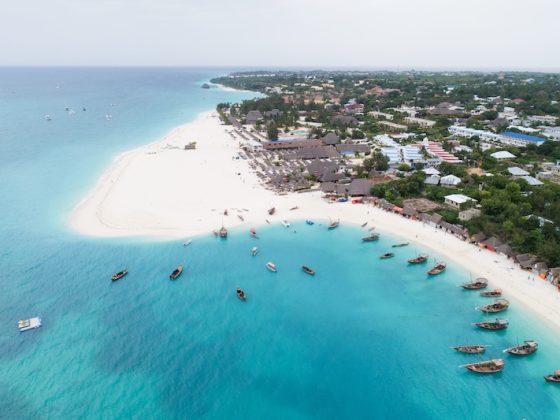
Bali has occupied a particular place in the expat imagination for long enough that most serious Plan B planners have already filed it away under a category that does not quite fit anymore. Too crowded, the thinking goes. Too expensive relative to what it was. Too many influencers, not enough infrastructure.
The people making that argument are not entirely wrong. But they are applying an outdated template to a place that changed significantly in 2022, when Indonesia introduced the Second Home Visa and quietly created one of the more compelling long-stay residency frameworks in Southeast Asia.
The old Bali for long-term expats involved a patchwork of social visas, border runs to Singapore or Australia every sixty days, and a legal status that was at best informal and at worst a source of genuine anxiety. The Second Home Visa changed that picture in a meaningful way.
For the first time, financially independent foreigners have a legitimate, multi-year pathway to living in Indonesia without needing a local employer or the constant administrative friction that defined longer stays under the previous system. What has not changed is the thing that drew serious people to Bali in the first place.
Read More Like This: Costa Rica or Bali? A Tale Between Two Paradises
What the Second Home Visa Actually Is
Launched under Government Regulation No. 48 of 2021 and available to applicants from October 2022, the Second Home Visa is Indonesia’s first genuine residency pathway for high-net-worth individuals who want to live in the country without working for a local employer.
It comes in two tiers, a five-year and a ten-year option. The core financial requirement is straightforward. Applicants must either place a deposit of approximately USD 130,000 in a state-owned Indonesian bank, or demonstrate ownership of qualifying property in Indonesia valued at a minimum of USD 1,000,000. The deposit remains in the account for the duration of the visa and earns interest.
The five-year visa can be extended once for a further five years. After three years of continuous legal residency, applicants become eligible to apply for the ITAP, Indonesia’s equivalent of permanent residency. Immediate family members, including spouses, children, and parents, can be included under the principal applicant’s visa.
There is one critical limitation every serious applicant needs to understand clearly from the outset. The Second Home Visa does not permit local employment or business activities targeting the Indonesian market. It is designed for the financially independent resident living on foreign income, not for someone who intends to work for Indonesian clients or employers.

Read More Like This: Want to Live in Bali Permanently? Here’s How
Bali in 2026: The Honest Geography
Bali is not a single place in any practical sense. It is an island of roughly 5,600 square kilometres with distinct regions that offer radically different daily experiences, price points, and communities. Choosing where to base yourself matters as much as any other planning decision.
Canggu remains the undisputed centre of Bali’s digital nomad and young professional community. The infrastructure for remote work is genuinely excellent, with multiple coworking spaces offering reliable high-speed internet and monthly memberships starting from around USD 120. A one-bedroom villa with a pool in Canggu now runs between USD 700 and USD 1,200 a month on an annual lease.
Ubud, in the island’s interior, offers a different set of trade-offs. The rice terraces, yoga studios, and arts scene attract a more contemplative kind of resident, and prices are generally 15 to 25 percent lower than in Canggu for comparable accommodation. A one-bedroom villa in Ubud typically runs between USD 500 and USD 900 a month.
Sanur has emerged as a favoured option for families and longer-term residents who want a calmer environment without sacrificing access to good schools, healthcare facilities, and reliable amenities. Pererenan and Umalas, immediately north of Canggu, offer comparable lifestyle to their more famous neighbour at meaningfully lower rents and have become the default recommendation from established residents who know where the value has migrated.

Read More Like This: How Southeast Asia Is Redefining the Modern Plan B
The Cost of Living in Real Terms
A single person living comfortably in Bali in 2026 should budget between USD 1,800 and USD 2,500 a month. That figure covers a private one-bedroom villa or apartment in a popular expat area, daily dining at a mix of local warungs and mid-range restaurants, a scooter rental, utilities, co-working access, and a reasonable social budget.
Budget-conscious residents willing to live slightly outside the prime areas and eat predominantly at local restaurants can reduce that figure to between USD 1,000 and USD 1,500 a month without sacrificing the fundamental quality of Bali life. Families with children in international schools should plan for USD 4,500 to USD 7,000 a month, as international school tuition is the dominant variable in any family budget.
Housing contracts in Bali are almost universally paid upfront on an annual basis, which requires capital liquidity but produces significantly lower effective monthly rates than shorter-term arrangements. Utilities for a standard villa, including electricity, water, and high-speed fibre internet, run between USD 80 and USD 150 a month.
Healthcare for routine needs is inexpensive, with a private clinic visit costing between USD 20 and USD 40. For serious medical situations, the standard advice is to be prepared to travel to Singapore or Bangkok, both accessible from Bali’s Ngurah Rai International Airport within a few hours.
The Tax Question
Indonesia treats anyone present in the country for more than 183 days in a twelve-month period as a tax resident, which in principle means they are subject to Indonesian income tax on their worldwide income.

In practice, Indonesia has double taxation treaties with a significant number of countries, and many Second Home Visa holders manage their days carefully to remain below the 183-day threshold. Those who do become Indonesian tax residents face a progressive tax scale ranging from 5 percent on lower income bands to 35 percent on income above approximately USD 220,000.
The interaction between Indonesian tax residency, home country tax obligations, and any applicable double taxation treaties is a genuinely complex area that requires qualified cross-border tax advice before establishing residency, not after. For US citizens, the standard reminder applies in full. American tax obligations follow the passport regardless of where the holder lives, and FBAR and FATCA reporting requirements apply to Indonesian bank accounts as in any other foreign jurisdiction.
Read More Like This: The New Path for American Expats
Who This Works For and Who It Does Not
The Second Home Visa is genuinely well-suited to a specific and relatively well-defined profile. The financially independent individual or couple with passive income from investments, pensions, or foreign employment will find Bali and the Second Home Visa a serious and workable combination.
The USD 130,000 deposit requirement is a meaningful threshold but not a prohibitive one for the audience that Plan B planning typically addresses, and the interest earned on the deposit partially offsets the cost of the placement over the visa duration.
The visa is less well-suited to those who plan to run businesses targeting the Indonesian market, those who need a pathway to citizenship in the near term, or those whose primary objective is a low-cost base rather than a high-value lifestyle at a reasonable price. Bali is not the cheapest place in Southeast Asia. It is arguably the most liveable, and the Second Home Visa has given that liveability a legal structure it previously lacked.
Bali’s reputation has always run slightly ahead of and slightly behind its reality depending on who was writing about it and when. The Second Home Visa represents a genuine structural improvement in what Indonesia offers. For those it suits, the combination of a legally sound long-stay framework, a quality of life that is genuinely exceptional, and a cost base well below comparable living in Australia, the United States, or Western Europe is a combination that deserves to be taken seriously.
Read More Like This: Summer Is Calling: Our Top 10 Destination Picks
Key Takeaways
What does Indonesia’s Second Home Visa actually give you?
Indonesia’s Second Home Visa gives financially independent foreigners a legal long-stay route to live in Indonesia for five or ten years, depending on the visa option and requirements met. For Bali, this matters because it replaces the older pattern of short-term visa hopping with a more structured residency framework.
Is Bali still a serious Plan B option?
Yes, but not for the same reasons people used to talk about Bali. The stronger case for Bali today is not that it is cheap or trendy. It is that the island now sits inside a clearer long-stay residency framework, while still offering strong lifestyle value, established expat infrastructure, healthcare access, international schools, and a deep remote-work ecosystem.
Who is the Second Home Visa best suited for?
This route is best suited to financially independent individuals, couples, retirees, investors, and foreign-income earners who can support themselves without local Indonesian employment. It is not ideal for someone who needs to work for Indonesian clients, build a local business targeting the domestic market, or use Indonesia as a fast citizenship pathway.
How much does it cost to live comfortably in Bali?
A single person living comfortably in Bali should expect to budget around USD 1,800 to USD 2,500 per month in a popular expat area. More budget-conscious residents can live for less outside prime locations, while families using international schools need a much higher monthly budget.
Which areas of Bali make the most sense for long-term residents?
Canggu remains strong for remote workers and younger professionals, Ubud appeals to residents looking for a quieter creative and wellness-focused base, Sanur is better suited to families and long-term residents, and areas like Pererenan and Umalas may offer better value near the main expat zones.
What is the main risk with choosing Bali as a residency base?
The main risk is assuming that lifestyle appeal is the same as a complete residency plan. Visa rules, tax residency, healthcare planning, banking, schooling, and income structure all need to be reviewed before committing. Bali can work very well, but only when the legal and financial side is planned properly.
Contact Author
"*" indicates required fields
Stay Ahead on Every Adventure!
Stay updated with the World News on Escape Artist. Get all the travel news, international destinations, expat living, moving abroad, Lifestyle Tips, and digital nomad opportunities. Your next journey starts here—don’t miss a moment! Subscribe Now !
Bali has occupied a particular place in the expat imagination for long enough that most serious Plan B planners have already filed it away under a category that does not quite fit anymore. Too crowded, the thinking goes. Too expensive relative to what it was. Too many influencers, not enough infrastructure.
The people making that argument are not entirely wrong. But they are applying an outdated template to a place that changed significantly in 2022, when Indonesia introduced the Second Home Visa and quietly created one of the more compelling long-stay residency frameworks in Southeast Asia.
The old Bali for long-term expats involved a patchwork of social visas, border runs to Singapore or Australia every sixty days, and a legal status that was at best informal and at worst a source of genuine anxiety. The Second Home Visa changed that picture in a meaningful way.
If you'd like to read the full story, simply enter your email to subscribe to our newsletter.
For even more expert insights, unmissable resources, and exclusive invites, explore our premium subscription offers here.
OR
Already a Subscriber? Click here to login
Subscription required
You've reached your limit of free articles. For full access to Escape Artist, and all of our insights on travel, moving abroad, and the digital nomad life, click here to Subscribe.
Already a Subscriber? Log in here