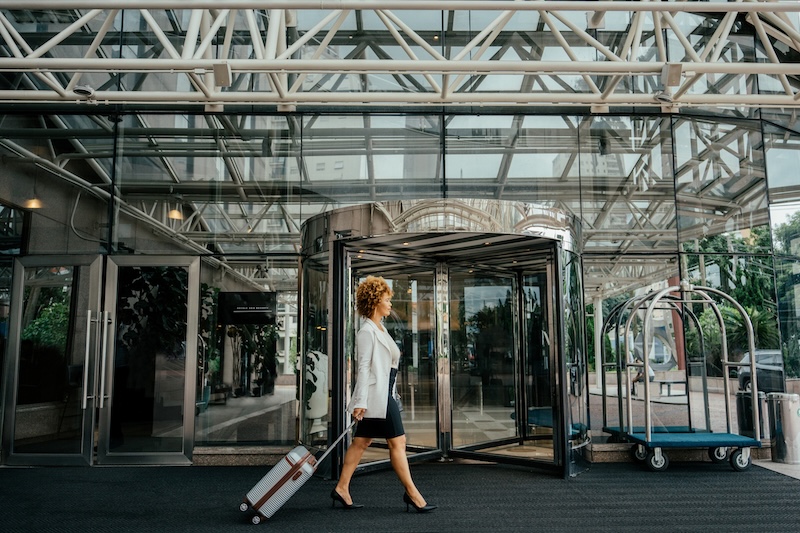
We’ve all been there: you fly into a city, spend forty-eight hours staring at the inside of a conference room or a sterile hotel lobby, and fly home feeling like you never really left the airport. For a long time, that was just the price you paid for doing business. You endured the trip and didn’t experience the place. It was just another day at the office… in another country.
That is, at least until the event of “bleisure”. Valued at $692.7 billion in 2024, the bleisure travel market is growing quickly, with projections pointing to a 17.8% annual growth rate over the next decade.
The momentum is driven by changing expectations. Bleisure might be a clunky corporate buzzword, but the logic behind it is finally starting to catch up with the way we live nowadays. It’s the realization that if you’re already on the ground in Lisbon, Tokyo, or Mexico City, why are you rushing back to a home office just to hop on another Zoom call?
Combining work and travel isn’t about being a digital nomad or trying to work from a beach chair: it’s usually the opposite. It’s a strategy to reclaim the time that disappears into airport security lines and using it to breathe. It’s about shifting the math so that a work trip stops being a drain on your energy and starts being something that also adds leisure value to your life.
In this article, we’re going to look at how to pull this off without dropping the ball at work. We’ll get into the difference between a working vacation and true bleisure, and why your choice of destination should have more to do with your Wi-Fi and time zones than how many museums are nearby.
The Rise of Bleisure Travel
Why business trips no longer end at the airport
For decades, business travel followed a strict “by-the-book” script. You flew in, you performed, and you flew out. In that era, any extra day tacked onto a trip was viewed with skepticism, seen as either an indulgence or a lack of professional focus. It was a byproduct of a world where “face time” was the only metric that mattered. If you weren’t back at your desk by Monday morning, the assumption was that you weren’t working.
But the math has changed, and the old script is failing. We’ve reached a point where nearly 60% of business trips now include a “leisure” component, but that term is a bit misleading. “Leisure” makes it sound about laziness, when in reality it’s about efficiency. When the most expensive hurdle (the flight) is already cleared and paid for by a client or employer, rushing home to a high-cost routine just to sit in another Zoom call is a waste of resources.
The need to be physically present in a specific office is vanishing. We’re seeing a massive shift toward “integrated presence,” with recent workforce research showing that roughly 70% of professionals now favor flexible work arrangements that allow at least some remote work or hybrid schedules, reflecting a shift toward valuing location flexibility. This started with people realizing that if their output stays sharp, their geography shouldn’t matter.
The business trip no longer needs to be a binary event where you’re either on the clock or off the grid, and the goal of bleisure isn’t to “get away” with staying an extra three days in Tokyo or Berlin. It’s the realization that if the work is getting done, the return flight is just an arbitrary deadline that doesn’t serve anyone.
How remote work changed the value of travel days
For a long time, travel days were effectively “lost” days. You were in transit, out of pocket, and essentially useless to your team until you physically sat down at a desk. Because that time was “lost,” there was a frantic pressure to make the trip as short as possible. You flew in, exhausted yourself, and flew out, all to minimize the time you were away from your “real” workspace.
Remote work deleted that tension. When your workspace is digital, the time spent in a new city is just a simple change in your coordinates, not a drop in productivity.

This has completely reframed the value of the trip itself. If you can put in a high-output morning from a relaxed apartment in Berlin and then spend the evening decompressing in a way that isn’t possible back home, you haven’t “lost” a day: you’ve optimized it. You’re trading the sterile, draining environment of a transit hub for a setting that restores your energy. For the strategic professional, the question is no longer “Is this trip worth the hassle?”, but instead “How can this trip work harder for me?“.
By staying longer, you’re turning a high-speed sprint into a more convenient pace, in all aspects. You’re taking the flight that someone else likely paid for and using it to subsidize a week where your life feels more balanced and your focus is sharper. You’ve stopped surviving the trip and started using it as a tool to buy back your own time.
What Bleisure Travel Looks Like
Extending a work trip without turning it into a vacation
The biggest mistake people make with bleisure is announcing it. They treat those extra three days like a mini-honeymoon, post a photo of a cocktail at 2:00 PM on a weekday, and wonder why their boss is suddenly breathing down their neck.
Effective bleisure is about maintaining a seamless professional attitude while your environment completely resets. During the 9-to-5, nothing should change. You’re on the calls, you’re hitting the deadlines, and your output is as sharp as it would be in a cubicle in Ohio. The goal is to make the location change irrelevant to everyone but you. You might arrive forty-eight hours early to let the jet lag burn off before the first presentation, or stay through the following Tuesday to see what a city looks like when the “business trip” energy fades.
If you’re trying to hit five museums in a day while managing a project, you’re going to burn out before you even get to the airport. The real play is slow exposure. It’s finding a local coffee shop with rock-solid Wi-Fi, eating at neighborhoods where people live, and figuring out how a city breathes once the novelty wears off.
Recent data suggests that a high percentage of travelers believe having bleisure options makes them more productive. Why? Because you’ve removed the “stress tax” of a frantic 48-hour trip. You aren’t rushing home to decompress; you’re decompressing in real-time. Integrating leisure with business trips can support better work-life balance and overall well-being for professionals, a key factor in sustained performance and satisfaction on the road.
The difference between bleisure and digital nomad life
It’s easy to lump “bleisure” in with the digital nomad crowd, but they aren’t the same thing. Being a digital nomad is a lifestyle choice; it’s a commitment to constant motion and the sometimes-exhausting logistics of being a “permanent tourist.” Bleisure, on the other hand, is a strategic pivot. It’s for the professional who still has a home base but has realized that the traditional 48-hour business trip is a massive waste of potential.
The nomad is often chasing a vibe; the bleisure traveler is chasing efficiency. You aren’t trying to live out of a backpack or find the next big hotspot. You’re simply refusing to rush back to a cubicle just because the meeting ended. While nomads spend a huge chunk of their mental bandwidth on the “where” and the “how,” a good bleisure stint is focused on the “result.” You’re taking a trip that’s already on the calendar and stretching it until it starts to allow your brain to balance itself again instead of feeling like it’s on a frantic sprint.
This distinction matters because it changes how you show up. You’re still an active agent in your career, hitting your deadlines and keeping your promises. The only difference is that when 5:00 PM hits, you’re walking through the streets of Mexico City or Tokyo instead of sitting in a glass-walled office waiting for the traffic to clear. And that small reward helps your brain increase its focus during working hours.
Read More Like This: Limited Time, Better Travel: How to Make Short Trips Count
Choosing Destinations That Support Both Work and Life
Infrastructure that matters more than attractions
The biggest trap in bleisure is picking a spot based on how good the sunset looks on Instagram. A destination that looks like a dream on social media can quickly turn into a logistical nightmare if the “basics” aren’t dialed in.
When scouting the best bleisure travel destinations for remote work, you must look past the tourist traps. Cafes with consistent power outlets matter more than postcard views, and a reliable public transport system beats a bucket-list attraction every time. If it takes you forty-five minutes to find a decent workspace or a grocery store, you’ve just burned your “leisure” margin for the day.
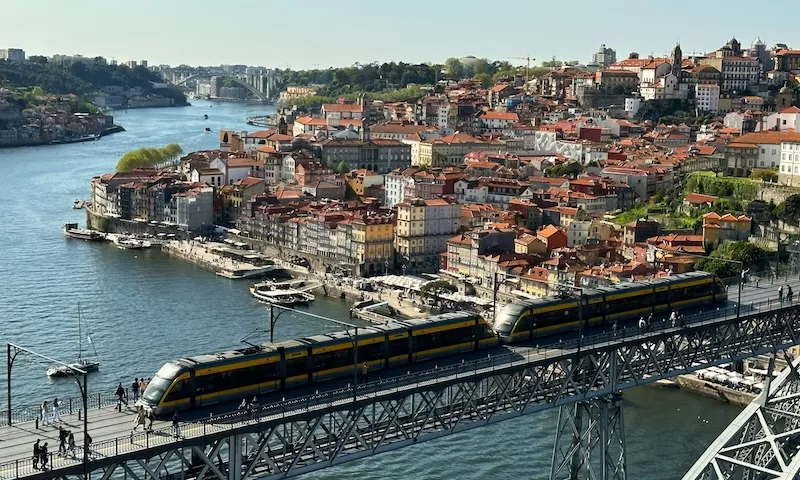
This is why seasoned travelers often skip the “world-famous” capitals in favor of regional hubs or secondary cities: places like Valencia instead of Madrid, or Da Nang instead of Ho Chi Minh City. These spots often have the same “expat ecosystem” and rock-solid connectivity but without the friction of the major tourist hubs.
Recent data highlights that for “anywhere workers,” the top priority isn’t the climate or the culture: it’s the internet speed and the cost of living. In The World Economic Forum’s Travel and Tourism at a Turning Point report emphasizes digital infrastructure (including fast, reliable connectivity) as a key priority for destinations and travelers alike. You need a walkable neighborhood where you can grab a high-quality meal and get back to your connected laptop in thirty minutes. You need a workspace that doesn’t feel like a temporary fix.
And let’s remember connectivity isn’t just about Wi-Fi; it’s about how hard it is to get in and out of the city. A smooth arrival and departure makes extending a stay feel like a solid choice, but if you’re in a secondary hub with only one flight out a day, a single delay can turn your “extra three days” into a logistical nightmare.
When you choose a destination that supports your work, you’re ensuring that your leisure time is yours to spend. It’s the difference between a frustrating week spent fighting with local logistics and a seamless stint where you actually have the energy to enjoy the city once the laptop closes. The play is to pick the place that makes the “boring” stuff easy so the “fun” stuff is doable.
Time zones, flight routes, and workday overlap
Time zones shape the bleisure experience more than almost anything else. If you’re a New York-based professional working in Lisbon, you’ve hit the jackpot: you have a quiet morning to yourself to explore or decompress, and your “workday” doesn’t even start until early afternoon. But if you flip that and try to work West Coast hours from Southeast Asia, you’re looking at 2:00 AM conference calls. Data from a paper published in the Organization Science Journal shows that even a one-hour shift in “temporal distance” can reduce synchronous communication by 11%. When that gap grows to six or eight hours, you aren’t just working remotely: you’re “time-shifting,” which is a fast track to burnout.
Your move should be to find a location that allows for at least a partial overlap with your home office. You want a schedule that feels manageable, not one that turns your entire life into a series of late-night shifts. When your workday aligns with the local rhythm, the experience feels like an upgrade. When it doesn’t, you’re just a tired person in a pretty city.
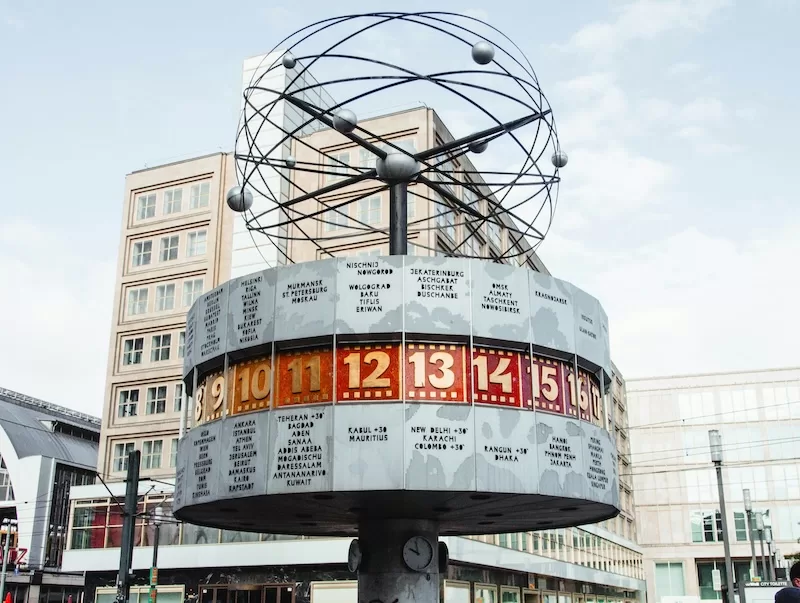
Bleisure works best when the location cooperates with your existing rhythms. You’re looking for high-frequency flight routes and time zones that don’t force you to sacrifice your sleep just to stay relevant in the Slack channel. The biggest hurdle isn’t the jet lag; it’s how to stay productive while traveling for business. Most people fail because they try to ferociously sightsee everything during the day. The best move is maintaining a seamless 9-to-5 front so your boss never even notices the change in your coordinates
Read More Like This: How Geography Is Rewriting the Rules of Living
Planning a Bleisure Trip Without Complicating Your Job
Setting expectations with employers or clients
Clarity is the foundation of sustainable bleisure. Your employer doesn’t need a play-by-play of your weekend plans, but they do need the absolute certainty that your output won’t dip. It’s vital to establish trust through explicit boundaries. You have to be the one to define your availability, response times, and deliverables before anyone has the chance to ask.
When you frame your extension as “personal time outside of work hours,” you keep the conversation simple and professional. You’re signaling that you understand the duty of care and the distinction between the company’s dime and your own. You earn the right to stay by being the most reliable person on the team during the 9-to-5.
Data shows this proactive approach works: 22% of travelers would turn down a business trip if they couldn’t extend it for personal time. Forward-thinking companies are starting to realize that supporting these extensions is a low-cost way to boost retention.
If you do it right, your employer stops seeing your extra days as a distraction and starts seeing them for what they really are: a tool for burnout prevention. Combining work and leisure is a high-performance reset that forces a psychological detachment from the grind and restores your baseline. It’s the difference between crashing on your couch at home and coming back from a trip feeling mentally energized and ready to hit your next target. You return to the office refreshed, instead of feeling like you need a vacation from your business trip. The key is to make sure that the only thing your boss notices about your trip is how well the work got done.
Flights, lodging, and expense boundaries
Bleisure works best when the financial boundaries are unshakeable. Most companies are happy to cover the round-trip flights, since they were paying for them anyway, but the minute the business portion ends, the clock starts on your personal tab. But when you pay for your own extension, you remove any grounds for your employer to question how you’re spending your time.
One of the most effective tactics is to have the hotel split your folio at check-in. One bill goes to the corporate card for the “work” nights; the second goes to your personal card for the “life” nights. This avoids the nightmare of manually highlighting line items on a credit card statement three weeks later. Industry research points out that distinguishing business costs from personal costs is one of the main policy challenges travel managers face as more employees blend work and leisure.
From a personal finance perspective, this is where you win. You are effectively taking a high-cost international flight and turning it into a portable bonus. Instead of paying for two separate trips, one long flight replaces two, and longer hotel stays often unlock extended stay discounts that aren’t available to the 48-hour traveler.
You’re also escaping the event-priced lifestyle. When you’re on a frantic business trip, you eat expensive room service or airport food because you have no choice. In a bleisure stint, your meals become routine: you’re buying groceries or eating at local spots where the prices align with reality. At the very least, you have the choice of where to go without being constrained by urgency or compressed timelines. The smart move is to use the company’s travel budget to get you to the starting line, then use your own budget to live once you’re there.
Costs, Taxes, and Compliance at a High Level
What stays simple and what can get complex
For the average professional, a few extra days or even weeks in a country is a non-event. You’re a visitor who happens to have a laptop, not a tax resident. Most countries aren’t going to hunt you down for staying a week after a conference in Tokyo. The trouble only starts when you lose track of the math. The “183-day rule” is the big red line: spend more than half a year in one spot, and the government starts looking at your paycheck like it’s theirs. Keep your stints short, and you stay in the safe zone where you’re just a tourist who answers emails.
You don’t need a law degree to win this; you just need to avoid the obvious mistakes. Don’t try to sign local contracts, don’t open a local bank account for a ten-day stay, and don’t tell a border agent you’re “moving here for work” when you’re just there to clear your inbox and eat good pasta.
You want your geography to be a non-factor in your professional life. By keeping your bleisure stays tactical and temporary, you get all the benefits of global mobility without the compliance tax that comes with a permanent move. You have to keep the logistics so simple that they’re invisible, leaving you with nothing to focus on but the work and the city.
Common misunderstandings about visas and taxation
The biggest misunderstanding is that opening a laptop on a tourist visa is an automatic crime. In reality, the world is in a gray area. Most countries haven’t updated their laws since the fax machine, so they don’t really have a definition for “answering an email while eating a croissant.” Enforcement varies, but the reason most bleisure travelers operate without incident is that they aren’t taking a local job. You aren’t competing with a local worker for a local salary; you’re just bringing your own work to a different view. As long as you aren’t trying to rent an office or sign up for local social security, you aren’t on the radar.
A common hurdle in any bleisure travel policy is the “Tax Residency” boogeyman. People think the moment they land, the local government wants a cut of their salary. That’s not how it works. Residency is about your center of life: where you keep your dog, where your kids go to school, and where you spend the vast majority of your year. A few extra days or even a three-week stint doesn’t move that needle. The tax man only gets interested when you start hitting the 183-day mark or start sourcing income from local clients.
Bleisure keeps it light, temporary, and exploratory. By treating these trips as short-term experiments, far from the ghost of permanent moves, you avoid the complexity of tax treaties and visa hurdles. You’re there to sample the lifestyle, not to audit the local revenue service. Stay fast, stay mobile, and keep your professional anchors firmly back home. That’s how you win the game without ever having to talk to a bureaucrat.
Making Leisure Time Count Without Burning Out
Designing off-hours that restore energy
It sounds like a paradox, but too much leisure can wreck you. If you pack your evenings with an Olympic-level itinerary, you’re just replacing work-stress with travel-stress. The most successful bleisure travelers aren’t checking off bucket lists. They’re the ones taking two-hour walks with no destination, eating unstructured meals at a neighborhood spot, and finding a local gym or park where they can maintain a routine.
The data shows that real recovery comes from psychological detachment. Research into traveler well-being suggests that low-effort activities in a new environment do more for your mental clarity than high-intensity tourist activities. It’s the fresh feeling of being in a new place that helps you energize, not cramming every sight seeing spot in the hours where you should be enjoying the slow life.

When you approach travel this way, you’re proving to yourself that you can be just as productive (and significantly happier) when your off-hours mean something. The goal is to return home feeling like you’ve been living a better version of your life, not like you need a week to recover from your “break.” The play is to move slow, stay quiet, and let the city come to you.
Why “seeing everything” is the wrong goal
This is the FOMO trap that kills most trips. People treat a new city like a video game they have to 100% complete before they’re allowed to leave. But here’s what’s important to remember: in a bleisure trip, you don’t need to see every monument, hit every top-rated bar, or understand the entire history of the local architecture in one go. In fact, if you try, you’ll miss the most important part: the feeling of actually living there. The goal is to figure out if you like the way the air smells and the way the locals move, not to collect a set of digital badges for your Instagram story.
Leaving with unanswered questions is a feature, not a flaw. Think of it as a low-stakes reconnaissance mission. If you leave a city feeling like there’s still more to discover, that’s a massive win. It’s a clear signal that the place has actual depth: a reason to come back, or even a reason to consider a more permanent move later. On the flip side, if you spend three days slow-playing a neighborhood and realize you’re bored out of your mind, you’ve just saved yourself from making a massive relocation mistake down the road.
Recent data on “Slow Travel” trends shows that travelers who engage with fewer attractions but deeper local experiences report a much higher quality of life score during their stay. By refusing to play the “sightseeing marathon” game, you’re reclaiming your mental bandwidth. You aren’t a tourist on a deadline; you’re a professional with the luxury of time. The trick is to leave them wanting more. Including yourself.
Bleisure as a Gateway to Bigger Life Decisions
Using short stays to test long-term compatibility
Bleisure travel is the ultimate gateway to bigger life decisions because it forces you to deal with the mundane. When you’re answering emails from a local cafe or trying to find the perfect spot for a 10:00 AM Zoom call, you’re more than a tourist. You start answering the questions that a week at a luxury hotel could never touch: Does the local Wi-Fi hold up? Is the neighborhood walkable after dark? Can you find a decent grocery store without a twenty-minute Uber?
Data from the Global Business Travel Association shows that travelers are staying 20% longer than they did just a few years ago. And they aren’t just staying for the fun of it; they’re gathering data. Many professionals now choose their business destinations based on personal appeal, effectively using their employer’s travel budget to subsidize a trial run of a new life.
This slow exposure is a clear signal. If you leave a city feeling like you’ve found a vibe that works for you, you’ve just confirmed a potential relocation without the massive tuition fee of moving blindly. On the flip side, if the local infrastructure frustrates you, you’ve saved yourself from a six-figure mistake.
Bleisure provides a window into a different pace of life, letting you test the waters before you ever decide to jump in. It’s the difference between “dreaming” about a move and knowing if you could thrive there.

When bleisure turns into a Plan B mindset
Most people’s “Plan B” (that “one day I’ll move to Italy” dream) is built on a fantasy. It’s based on a two-week vacation where they never had to deal with a deadline or a crashing router. But when you master bleisure, your Plan B is built on boots-on-the-ground reality. You’ve worked there, you’ve dealt with the local bureaucracy, you’ve found the good co-working spots and the fast Wi-Fi. You aren’t guessing anymore.
This accumulation of experience is a massive psychological unlock. Confidence grows because you’ve proven that your professional value isn’t tied to a specific desk.
For some, bleisure stays an occasional perk, a way to make a boring conference in Frankfurt be a little less draining. But for the strategist, it can be the first step toward a more flexible life. You’re using mobility as a tool to diversify your life, learning how to operate practically and on your own terms.
In that sense, mastering bleisure is about de-risking the idea of change. You’ve turned the “business trip” into a low-cost, high-reward laboratory for your future.
Key Takeaways
How long can a bleisure stay realistically last without creating complications?
Most bleisure stays work best when they stay short. A few extra days or a week is usually straightforward. Issues tend to appear only when trips stretch into months or become frequent in the same country.
What makes a destination good for work, not just tourism?
Reliable internet, easy daily logistics, and comfortable places to work matter more than attractions. If normal routines feel easy, the destination works.
How should professionals think about visas during short work-plus-leisure trips?
Short bleisure stays typically fall under standard tourist rules. Concerns usually arise only with long, repeated stays or visible local work activity.
Can bleisure travel reduce overall travel costs over time?
Often, yes. One longer trip can cost less than separate work and leisure travel, especially when flights are already covered and accommodation costs normalize.
How can bleisure experiences inform longer-term relocation or Plan B decisions?
They show what daily life feels like. That lived exposure often reveals more than research or short vacations ever could.
Does bleisure travel work for most careers?
It works best in roles with flexibility and clear deliverables, but it’s possible anywhere expectations are well defined.
How do employers usually view bleisure travel?
Generally positively, as long as work performance stays strong and personal costs remain separate.
Is bleisure travel sustainable long term?
Yes, bleisure travel is sustainable long-term when you prioritize fewer destinations and slower movement over constant travel.
What are the actual benefits of business and leisure travel for my career?
Beyond the views, it’s a high-performance reset. It allows for detachment from the grind, meaning you return to the office recharged instead of needing a vacation from your trip.
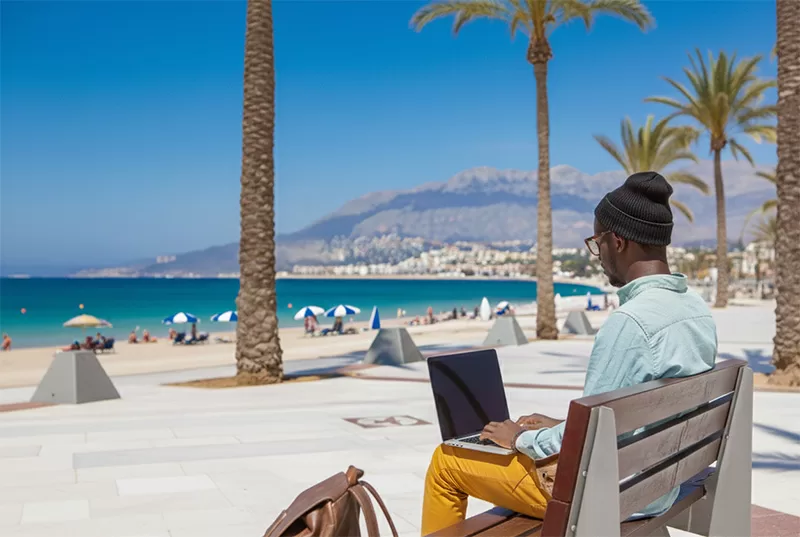
Trading the Cubicle for the Terrain
We’ve spent decades treating business travel like a prison sentence, a high-speed blur of beige conference rooms and airport lounges where the only goal was to survive the trip and get back to real life. But the real play is recognizing that the wall between your career and your geography has already crumbled.
“Bleisure” is a tactical reclamation of your time. It’s the realization that if the flight is paid for and the work is getting done, the return date is the only thing standing between you and a low-stakes experiment in a different life. By mastering the art of staying reliable and professional during the day and intentional after work is done, you stop being a tourist and start being a resident-in-training.
You’re testing the Wi-Fi, the walkability, and the vibe of a city to see if it supports the life you want to lead. Maybe it’s a gateway to a permanent move or just a way to ensure your job adds to your life instead of draining it. In any case, mobility is the ultimate leverage, and bleisure if a fantastic gateway.
Join the inner circle at the Escape Artist Newsletter, where we break down the boots-on-the-ground strategies for residency, citizenship, and lifestyle design that the brochures won’t tell you. Subscribe here and get regular insights on how to build your own Plan B.
Contact Author
"*" indicates required fields
Stay Ahead on Every Adventure!
Stay updated with the World News on Escape Artist. Get all the travel news, international destinations, expat living, moving abroad, Lifestyle Tips, and digital nomad opportunities. Your next journey starts here—don’t miss a moment! Subscribe Now!


