Checked and current, 10 November 2026. This is a personal account of moving to Dubai, and the story below is left as it was written. Some of what it describes has changed since. This note sets out what is different now, what still holds, and gives a plain answer to the question most readers arrive with.
Is Dubai a good place to live in 2026?
For some people, yes. Dubai suits you if you want to keep your salary free of income tax, live in a clean and well run city, and get a residence visa through a job, property or remote work. It does not suit you if you struggle in heat, need cheap rent, or expect the personal freedoms of home. In 2026 there is a new factor to weigh: Iranian missile and drone strikes hit the UAE from late February, and the region is still tense. The safety row in the table below has the details.
Pros and cons of living in Dubai at a glance
| Pros | Cons |
|---|---|
| No personal income tax on your salary | Americans still file a US return and can still owe US tax |
| Residence visas through a job, property (Golden Visa from AED 2 million) or remote work (from US$3,500 a month) | Most visas are tied to a job or sponsor, so losing the job puts your stay at risk |
| Low street crime and a strong sense of personal safety | Iranian strikes hit the UAE in 2026 and a lasting peace deal is not yet in place |
| Health insurance is compulsory, and employers must cover their staff | Rent takes a large share of an average salary, even with rents easing |
| Modern roads, airports and fast home delivery | Average daily highs of about 40 to 42°C from June to September |
| A very international city where most residents are foreign born | Strict laws on speech, dress and behaviour, and WhatsApp and FaceTime calls are still not permitted |
What has changed since this was written
| The article says | Now, November 2026 |
|---|---|
| 1. There is no address system | Every building entrance in Dubai has a 10 digit Makani number from Dubai Municipality, and flats can have their own. Home delivery is routine: The National counted about 92,000 delivery bikes in Dubai in December 2025. |
| 2. Internet calls are blocked | Still largely true. WhatsApp and FaceTime calls are not on the regulator’s approved list. Approved apps include Microsoft Teams, Zoom, Google Meet and Botim. A VPN is legal for normal use, but misuse can bring fines of AED 500,000 to AED 2 million. |
| 12. Alcohol is sold only in hotels and private clubs, and the licence needs your boss to sign | Licensed shops such as MMI and African + Eastern now sell to adults over 21 who hold a personal licence. The licence has been free since January 2023 and you apply in store or online with your Emirates ID. The 30% sales tax was dropped in 2023 and brought back on 1 January 2025. Since November 2020, federal law no longer punishes drinking for adults over 21. |
| 15. The weekend is Friday and Saturday | Since 1 January 2022 the UAE government weekend has been Saturday and Sunday, with Friday a half day. |
| 6. Workers are badly treated | Partly holds. A new labour law came in during 2022, employer fines rose in 2024, and outdoor work is banned from 12:30 to 3pm between 15 June and 15 September. Human Rights Watch still reports in 2026 that the sponsorship system gives employers too much control and that unions are banned. |
| 3. It is really hot | Holds. Average daily highs at Dubai airport are about 40 to 42°C from June to September (NOAA 1991 to 2020 normals). The 120°F in the article is a peak day, not an average. |
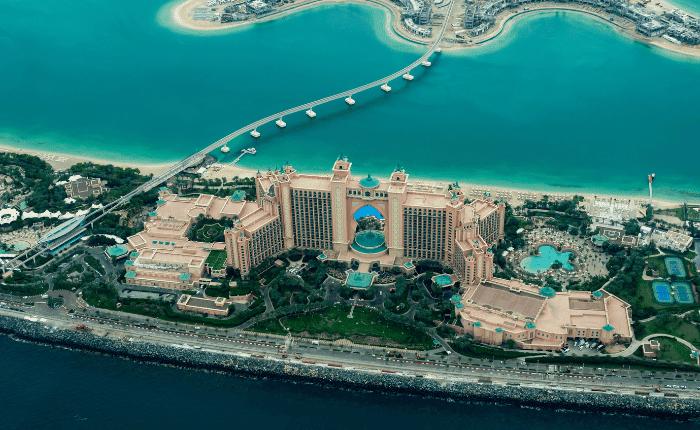
| Not covered: safety | From 28 February 2026, Iranian strikes hit the UAE, including Dubai airport, Jebel Ali port and buildings on Palm Jumeirah. By the 8 April ceasefire the UAE reported 13 people killed and 224 injured. A later truce broke down in July. As of early November no new attacks on the UAE had been reported and the airports were open, but some airlines had not yet returned. |
| Not covered: rent | Rents are easing. CBRE puts average Dubai rents 7% lower in the third quarter of 2026 than a year earlier. Other trackers differ, and Cavendish Maxwell still shows a small rise, so check the area you want. |
What held up: there is still no income tax, the heat is as bad as described, and traffic cameras are everywhere. Not rechecked: the personal stories, the prices quoted inside them, and the opinions in reasons 4, 5, 8 to 11, 13, 14 and 16 to 20. The cost and rent figures in the next section are from September 2026.
If you want Dubai as a backup option rather than a full move, our guide to getting a second residency compares the easier routes.
Sources: Dubai Municipality, Makani; The National, 16 Dec 2025; Khaleej Times on TDRA approved call apps; Khaleej Times on VPN rules, 27 Mar 2026; Khaleej Times on alcohol rules; Khaleej Times on the 30% tax; u.ae, working week; Gulf News, midday ban, 8 Jun 2026; Human Rights Watch World Report 2026; The National, 1 Mar 2026; Khaleej Times, 8 Apr 2026; Gulf News, 3 Nov 2026; Arabian Business on CBRE, 4 Nov 2026; Khaleej Times on Cavendish Maxwell, 2 Nov 2026; PwC tax summary; u.ae, Golden Visa; u.ae, remote work visa; u.ae, health insurance.
Cost check, 10 September 2026. The cost figures below are accurate. A single person spends about 4,193 dirhams a month before rent, against the 4,000 to 4,500 quoted, and a family of four about 14,763, against 14,000 to 15,000. Both are close enough to use.
What the article leaves out is rent, and in Dubai rent is the argument. Everything above excludes it. Here is what it costs.
| Dubai, per month | Dirhams | US dollars |
|---|---|---|
| One-bedroom, city centre | 8,921 | about $2,431 |
| One-bedroom, outside the centre | 5,507 | about $1,501 |
| Three-bedroom, city centre | 16,577 | about $4,516 |
| Three-bedroom, outside the centre | 10,850 | about $2,956 |
| Basic utilities, 915 sq ft flat | 887 | about $242 |
| Average take-home pay | 12,872 | about $3,507 |
Put those together and the picture sharpens. Average take-home pay is about 12,872 dirhams a month. A one-bedroom in the centre is 8,921 of it. Add the 4,193 a single person spends on everything else and an average earner in central Dubai is roughly a thousand dirhams short every month before saving anything. That is not a reason to avoid Dubai on its own, but it is the reason the salary offer matters more there than almost anywhere, and it belongs alongside the twenty reasons below.
Current figures are crowd-sourced from residents, 1,686 submissions by 288 contributors over the past year, via Numbeo, last updated 8 September 2026.
Living in Dubai
Living in Dubai is not wonderful and glamorous, as many would have you believe. Forget about what you’ve read, seen, and heard; those shiny buildings and man-made islands are all just smoke and mirrors. There are numerous issues with this place that I have decided to compile a list, which is a must-read if you are considering a potential move to Dubai.
1. Try Getting Something Delivered To Your Place
There is no standard address system making mail-to-the door delivery impossible. In fact, it makes anything nearly impossible. The taxi driver, here for only two days, and having learned English from old Beatles albums has no clue where your house is. He won’t tell you that of course, he’ll just keep calling and saying, “Okay, okay. Yeah, yeah.” When you purchase something that requires delivery they do not have an address line, but a box where you are expected to draw a map. Not able to draw a map? Explain like this: I live on the street after the airport road but before the roundabout. Go past the mosque and make a U-turn.
2. You Need A VPN To Do Anything Fun Online
The government blocks all web sites that it deems “offensive” to the “religious, moral, and cultural values” of the UAE. That’s hard to swallow for a freedom-loving American, but I get it. I do not understand, however, why all VOIP access and related web sites are blocked. I guess the government also takes offence to people inexpensively contacting their families back home. You’re welcome to call using the analog service provided by the government-owned telephone monopoly, but it will cost you a whole lot more. So much so, in fact, your frequency of calls will be greatly diminished if you can afford them at all. The government says VOIP is blocked for security reasons, yet even the residents of communist China and North Korea have access to these inexpensive calls. Your only option is to get a quality VPN (insider tip, make sure to get it BEFORE entering the country)
3. It Is Hot Here, Like REALLY Hot
Not Florida in July hot; Hot as if you were locked in a car in Florida in July with sufficient humidity to make it feel as though you are drowning. Hot as in 120 degrees with nearly 100% humidity. Do not look to the wind for relief. This is the equivalent of pointing a hairdryer on full blast directly at your face. Pour fine moon dust-like sand over your head as you do this and you get the picture.
Handpicked Related Content: The Top Five Cities to Consider for a Winter Move
4. Does Anything Even Grow Here?
When Living in Dubai, there are too few trees, plants, and grass – or living things aside from us crazy humans, for that matter. Ever see a bird pant? I have. In my opinion, human beings were not meant to live in such a place. If we were, there would be sufficient water and shade. The only greenery around are the roadside gardens planted by the government, who waters the hell out of them in the middle of the day. Thanks a lot! Didn’t you say we should cut down on our water consumption because you are unable to keep up with the demand? I have an idea: let’s all move someplace where it’s not 120 degrees outside.
5. Bling-Bling Yo
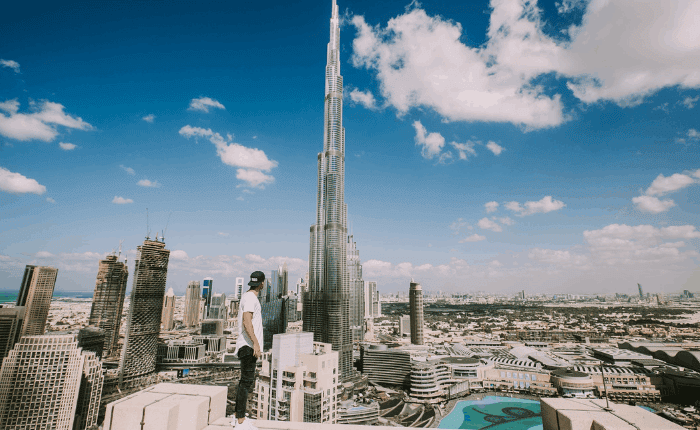
This country prides itself so much on its glitz and glamour that it put a picture of its 7-star hotel on the license plate. Yet, the public toilets in the king-of-bling Gold Souk district are holes in the ground with no toilet paper or soap. Hoses to rinse your nether regions, however, are provided. This results in a mass of water on the floor that you must stand into pee. Try squatting without touching anything and keeping your pants from touching anything either. Oh yeah. It’s 120 degrees in there too.
Handpicked Related Content: 7 Fears Keeping You from Moving Abroad (and How to Beat Them)
6. Modern-Day Slavery
This country encourages businesses to hire people from other poor countries to come here and work. They have them sign contracts that are a decade long and then take their passports. Even though taking passports is supposedly illegal, the government knows it happens and does nothing to enforce the law. These poor people are promised a certain pay, but the companies neglect to tell them they will be deducting their cost of living from their paychecks, leaving them virtually penniless – that is, if they choose to pay them.
Companies hold back paychecks for months at a time. When the workers strike as a result, they are jailed. Protesting is illegal, you see (apparently this law IS enforced). These people will never make enough to buy a ticket home and even if they do, they do not have their passports. They live crammed in portables with tons of others, in highly unsanitary conditions. The kicker: they are building hotels that cost more to stay in for one night than they will make in an entire year. Things are so bad that a number of labourers are willing to throw themselves in front of cars because their death would bring their family affluence in the form of diya, blood money paid to the victim’s family as mandated by the government.
7. Things Are Not Cheaper Here
I’m sick of people saying that. I read the letters to the editor page of the paper and people say to those who complain about the cost of living in Dubai rising here, “Well, it’s cheaper than your home country or you wouldn’t be here.” The only thing cheaper here is labour. Yes, you can have a maid – but a bag of washed lettuce will cost you almost $6.
8. There Are Traffic Cameras Everywhere
I consider this cheating. Where are the damn cops? I drove around this city for weeks before I ever even saw a cop. Trust me, they need traffic cops here. People drive like idiots. It’s perfectly okay to turn left from the far right lane, but speeding even just a couple of kilometres over will get you fined. These cameras are placed strategically as you come down hills, or just as the speed limit changes. Before you know it…BAM! Fined. Forget to pay the bill and your car will be impounded.
9. What The Hell Are You Wearing?
The clothing some of these women wear makes no sense to me. I understand that as part of your religion you are required to dress in a particular way, but a black robe over your jeans and turtleneck and cover your head when it is 120 degrees outside? In the gym, some women wear five layers of clothing…sweatpants and t-shirts over sweaters with headscarves. Yet the men’s clothing makes absolute sense: white, airy, and nothing underneath but their skivvies.
Handpicked Related Content: 9 Great Reasons to Move Abroad
10. People Stare At You
I am sick of being stared at. I’m stared at by men who have never seen a fair-skinned blue-eyed woman before, or who have and think we are all prostitutes so it’s okay to stare. They stare at me when I am fully covered or with my husband, and even follow me around. It’s beyond creepy and has brought me to tears on more than one occasion. The staring is not limited to men, either. I’m stared at angrily by female prostitutes who think I am running in on their territory by having a few drinks with my husband at the bar.
11. Prostitutes in Dubai?
Oh hell yes, there are prostitutes. Tons of them. So, let me get this straight, I can’t look at a naked picture of a person on the Internet in the privacy of my home, but it is okay to go out in public and buy a few for the night?
12. Alcohol Can Only Be Sold In Hotels And a Handful of Private Clubs
A person must own a liquor license to consume in the privacy of their own home. To obtain a liquor license you must get signed approval from your boss, prove a certain level of salary that determines how much you are allowed to buy, and then submit several mug shots (aka passport photos) for approval. Pay the fee and the additional 30% tax on every purchase and you may drink at home. Then again, you can just pick up a few bottles in the airport duty-free on your way into the country, but two is the max. Why not just drive out to Ajman where it’s a free-for-all and load up the SUV? It’s easy enough, but crossing the Emirates with alcohol is illegal – particularly in the dry emirate of Sharjah, which just happens to lie between Dubai and Ajman. Go figure.

13. I Have to Ask Permission For Everything!
Not only do you have to get your boss’s approval to obtain a liquor license, but you must also get the company’s approval to rent property, have a telephone, or get satellite TV.
Handpicked Related Content: Who is a Perpetual Traveler Under the US Tax Code!
14. Back to the Craziness on The Roads…
If I see one more kid standing up and waving to me out the back window while flying down the road at 160 kph…whatever happened to seat belts?
15. When is the Weekend Again?
Let me get this straight: the weekend used to be Thursday and Friday, but no one took off all of Thursday, just a half-day really. Now the government says Friday and Saturday are the weekends, but some people only take off Friday, others still take a half-day on Thursday, but some might just take a half-day on Saturday instead. Any way you slice it, Sundays are workdays and little business can be accomplished Thursday through Saturday.
16. There are a Few Satellite Television Operators
The movie channels play movies that are old and outdated. Many of them went straight to video back in the States. Every sitcom that failed in the US has been purchased and is played here. Old episodes of Knight Rider are advertised like it is the coolest thing since sliced bread. The TV commercials are repeated so often that I am determined NOT to buy anything I see advertised on television here just for the principle of it. When I say repeated often, I mean every commercial break – sometimes more than once.
Handpicked Related Content: Dubai Real Estate – Ten Scams to Avoid When Investing Overseas
17. The Roads are Horribly Designed
Driving ten minutes out of the way to make a U-turn is not uncommon. People are not able to give directions most of the time (remember reason #1), and the maps are little help because most have few road names on them, if any. Where is interchange four? You just have to hope you got on the freeway in the right place and start counting because they are not numbered. Miss it and you’ll likely end up on the other side of town before you are able to turn around and go back.
18. Taxi Drivers are Dangerous and Smell
Taxi drivers work very hard here to earn a living because travel by taxi is still relatively inexpensive, even though the cost of living in Dubai is not (see reason #7). Because of this, you may have a driver who has had little sleep or the opportunity to shower for several days. Many of these drivers have just as much difficulty finding their way around as you do, but add to this a third-world country driving style and extreme exhaustion and, well, remember to buckle up for safety.
19. Speeding is an Emirati sport and Emirates Road is Just an Extension of the Dubai Autodrome
I know I keep mentioning the roads, but really, much of this city’s issues are encompassed by the erratic and irrational behaviour displayed on its streets. Visions of flashing lights on even flashier, limo-tinted SUVs haunt me as I merge on to the highway. Local nationals are somehow able to get the sun-protecting dark window tint denied to us lowly expats and use it to hide their faces as they tailgate you incessantly at unbelievably high speeds, their lights flickering on and off and horn blaring repeatedly. It doesn’t matter that you can’t get over, or if doing so would be particularly dangerous, they will run you off the road to get in front of you. Don’t even think about giving someone the finger; the offence could land you in jail. Tailgating is, unbelievably, legal.
Handpicked Related Content: Benefits of Offshore Banking
20. Dubai is Far From Environmentally Friendly
Ever wonder how much damage those man-made islands are doing to the delicate ocean ecosystem? Coral reefs, seagrasses, and oyster beds that were once part of protected marine lands lie choked under a barrage of dredged up sea sand. Consider the waste that occurs from erecting buildings on top of these sand monsters and from the people that occupy them coupled with the lack of an effective recycling program and you have an environmental disaster on your hands. Add to this more gas-guzzling SUVs than fuel-efficient cars on the road and the need for 24-hour powerful air-conditioning and its evident that the environment is not high on the priority list of the UAE.
Still thinking about living in Dubai?
So while I’m sure there are benefits to living in Dubai, tax breaks, multi-cultural environments, and beautiful buildings aside, reconsider your plans to move here if any of the above-mentioned reasons strikes a chord within you. Dubai is a city caught in an identity crisis. Struggling somewhere between its desire to be a playground for the rich and its adherence to traditional Islamic roots, rests a city that lacks sufficient infrastructure to support its delusions of grandeur. Visit if you must, but leave quickly before you are sucked into its calamitous void.
FAQ: Living in Dubai
What is it like living in Dubai?
Living in Dubai offers a modern, luxurious lifestyle with world-class infrastructure, shopping, and entertainment. However, it also comes with high living costs and a hot desert climate.
What is the cost of living in Dubai?
The cost of living in Dubai varies depending on lifestyle and family size. A single person typically spends around AED 4,000–4,500 ($1,090–$1,230) per month excluding rent, while a family of four may spend AED 14,000–15,000 ($3,800–$4,050) per month. Rent, utilities, groceries, transportation, and schooling are the main expenses, with rent being the largest cost. Dubai offers a tax-free income, which can help offset living costs.
Is Dubai safe to live in?
Day to day, yes. Street crime is low and Dubai Police report falling crime numbers. The bigger risk in 2026 is regional: Iranian strikes hit the UAE from late February, including Dubai airport, and a lasting peace deal is not yet in place. Check your government’s travel advice before you move. (Updated November 2026.)
is living in Dubai expensive
Yes, Living in Dubai can be expensive, especially housing, schooling, and dining out. Budgeting carefully is essential for expats.
What is the weather like in Dubai?
Dubai has a hot desert climate, with extremely high temperatures in summer (up to 45°C / 113°F) and mild winters (20–25°C / 68–77°F).
Do you have to be rich to live in Dubai?
No, but you need a good salary. Average take home pay is about AED 12,872 a month, and a one bedroom flat in the centre costs about AED 8,921. Outside the centre it is closer to AED 5,507. Most people on an average wage share, live further out, or negotiate housing into their job offer (Numbeo, September 2026).
Can Americans live in Dubai without a job?
Yes. The UAE remote work visa lasts one year and needs proof of income of at least US$3,500 a month plus health insurance. Buying property worth at least AED 2 million can qualify you for a Golden Visa instead.
Do you pay tax when you live in Dubai?
There is no personal income tax in the UAE. You do pay 5% VAT on most purchases. US citizens must still file a US tax return each year wherever they live, though foreign earned income rules often reduce what they owe.
Is living in Dubai worth it?
It is worth it if the job pays well, the employer covers housing or a large part of it, and you can live with the heat and the rules. It is not worth it if you are moving for a cheaper life. For many people it works best as a few years of saving, not a forever home.
Contact Author
"*" indicates required fields
Stay Ahead on Every Adventure!
Stay updated with the World News on Escape Artist. Get all the travel news, international destinations, expat living, moving abroad, Lifestyle Tips, and digital nomad opportunities. Your next journey starts here—don’t miss a moment! Subscribe Now !
Checked and current, 10 November 2026. This is a personal account of moving to Dubai, and the story below is left as it was written. Some of what it describes has changed since. This note sets out what is different now, what still holds, and gives a plain answer to the question most readers arrive with.
Is Dubai a good place to live in 2026?
For some people, yes. Dubai suits you if you want to keep your salary free of income tax, live in a clean and well run city, and get a residence visa through a job, property or remote work. It does not suit you if you struggle in heat, need cheap rent, or expect the personal freedoms of home. In 2026 there is a new factor to weigh: Iranian missile and drone strikes hit the UAE from late February, and the region is still tense. The safety row in the table below has the details.
If you'd like to read the full story, simply enter your email to subscribe to our newsletter.
For even more expert insights, unmissable resources, and exclusive invites, explore our premium subscription offers here.
OR
Already a Subscriber? Click here to login
Subscription required
You've reached your limit of free articles. For full access to Escape Artist, and all of our insights on travel, moving abroad, and the digital nomad life, click here to Subscribe.
Already a Subscriber? Log in here