
Introduction
If you’re asking which countries offer retirement visas you’re tapping into a shift that’s gaining real momentum. More retirees than ever leave their home turf not just for a holiday but to relocate long-term, using a dedicated visa designed for life after career. These programmes offer legal residence, often for people with passive income or pension funds, and open doors to new ways of living abroad.
This article walks you through how these visas work, where they are strongest right now, what you’ll need in terms of paperwork, income and lifestyle, and how to pick the country that aligns with your ambitions.
Understanding Retirement Visas: What They Are and Why They Matter
A retirement visa is a legal residence permit created for people who want to relocate abroad and enjoy their later years without seeking local employment. Countries use different terminology such as retirement residence permit, passive income visa for retirees or pensioner programme, yet the concept remains similar: the applicant supports themselves financially through pensions, investments, rental income or other non-employment sources.
These visas emerged as nations began recognizing the value of attracting financially independent newcomers. Retirees contribute to local economies without placing strain on job markets. In return, they gain legal stability in their chosen environment, access to essential services and a framework for long-term settlement.
Their importance extends into areas that matter during retirement planning:
• Healthcare access: Some countries allow retirees to join local healthcare systems after gaining residency, which can significantly reduce out-of-pocket expenses.
• Property rights and financial security: A residence permit can help secure home ownership or long-term leasing arrangements.
• Family reunification: Many programmes allow a spouse or dependents to be included on the same visa.
• Long-term legal protections: Some schemes lead to permanent residence or even citizenship, creating more predictability for the future.
• Cost-of-living advantages: Moving to a country where daily expenses are lower can make a pension stretch further.
• Climate and lifestyle improvements: Warmer weather, access to outdoor activities or coastal living can support health and well-being.
• Tax optimisation strategies: Certain retirement visas work alongside favourable tax frameworks that reduce taxes on pensions or global income.
Read More Like This: Retirement Visas and the Confident Path to Long-Term Living Abroad
Global Trends in Retirement Visa Programmes
Number of countries and key data points
According to the Global Retirement Report 2025, there are 44 distinct passive-income or retirement-visa programmes across 44 countries worldwide. The regional spread shows that the Americas account for roughly 36% of all programmes, Europe about 32%, and Asia-Pacific together with Africa making up the remaining share.
More than 70% of those programmes reported above-average scores in healthcare, environment and overall well-being. About 93% of the countries analysed now offer a clear pathway to citizenship (or legal permanent residence) for retirees.
In effect, what started as a niche idea is becoming more mainstream: retirees relocating abroad are no longer outliers but part of a growing global trend.
Why retirees are opting for relocation
Several interlocking forces are driving this growth in retirement-visa uptake:
- Lifestyle, climate and personal choice: More retirees are saying “I’m done with the status quo.” Warmer climate, different culture, a more laidback life, access to outdoors and community matter.

- Cost-of-living differentials: Retirees on fixed income or pensions can dramatically stretch their funds by relocating to places with lower daily costs. One recent stat: in Portugal a family of four might spend around €2,416/month, compared with €3,621 in the U.S. equivalent.
- Healthcare and infrastructure: Countries with strong public or private health systems are pulling retirees. Europe’s edge in healthcare quality and safety is frequently cited.
- Global mobility and legal certainty: Retirees desire not only a place to live but a place they can stay long-term, include spouses or dependents, and possibly access citizenship or travel-freedom benefits. The 2025 report shows 93% of programmes offer paths to citizenship or equivalent rights.
- Tax- and legacy-planning: For many retirees, it is about more than place. It is about how a new country treats their pension income, foreign assets, inheritance, and long-term legal stability. The 2025 report found 61% of programmes provide defined tax benefits for retirees.
Top Countries Which Offer Retirement Visas
Europe – strong infrastructure and residence stability

Portugal
The D7 Passive Income Visa gives non-EU retirees the right to live in Portugal using pension or passive income. Residents gain access to reliable healthcare, relaxed coastal life or historic inland cities, and eventual eligibility for permanent residence and citizenship.
Best for: Healthcare quality, European mobility, mild climate
Pros: Safe living, strong expat community, Schengen access
Cons: Residence-day requirement must be respected to keep the permit; increasing popularity raises housing prices in certain regions
Spain
Spain’s Non-Lucrative Visa supports retirees who can show stable income and hold comprehensive private health insurance. After five years, permanent resident status may be possible. The country offers everything from Mediterranean towns to cosmopolitan capitals.
Best for: Cultural variety, gastronomy, healthcare access
Pros: Familiar lifestyle comforts, extensive medical network, major airports
Cons: Higher cost of living in major cities; taxes must be understood early
Greece
Greece welcomes retirees with secure passive income. The cost of living often feels lighter than in Western Europe. The programme fits those drawn to culture, history and seafront living.
Best for: Island living, Mediterranean nature, traditional communities
Pros: Lower housing costs outside major hubs, rich cultural heritage
Cons: Bureaucracy can be slow; infrastructure varies between islands
Cyprus
The Category F Residence Permit suits retirees who rely on overseas income. Home ownership can support an application. Its geography offers easy travel to three regions without distance fatigue.
Best for: Quick travel connections, English-friendly environment
Pros: Warm climate all year, reputable medical services
Cons: Smaller market means fewer choices in some lifestyle categories
Asia-Pacific highlights

Thailand
The Non-Immigrant O-A Visa opens doors for retirees aged 50+. A bank deposit or monthly income threshold applies. Beach towns, modern cities and mountain escapes are all options.
Best for: Affordability, outdoor living, warm climate
Pros: Cost-effective lifestyle, strong expat hubs, welcoming culture
Cons: Mandatory insurance costs can rise with age; rules adjust often
Malaysia
The Malaysia My Second Home Programme (MM2H) offers a long runway for retirees with financial stability. Healthcare is respected across Southeast Asia and English is widely spoken.
Best for: Budget-friendly cities and coastal areas, multicultural comfort
Pros: Good infrastructure, low living costs, long-stay visa potential
Cons: Requirements have shifted periodically; careful review is needed
Indonesia
For applicants aged 55+, the Retirement Visa encourages relocation to places like Bali. Better suited to those seeking tropical living and daily affordability. A local sponsor is required.
Best for: Island lifestyle and creative or nature-driven retirement
Pros: Lower living costs, resort-style options, social atmosphere
Cons: Sponsorship required; healthcare quality varies by island
Philippines
The Special Resident Retiree’s Visa (SRRV) offers long-term residence through a time-deposit investment or qualifying pension income. English serves as a common language and the culture places strong value on hospitality.
Best for: Budget-friendly living with straightforward communication
Pros: Low costs, easy integration, permanent residency potential
Cons: Healthcare strongest in major metro areas only
Latin America and Caribbean options
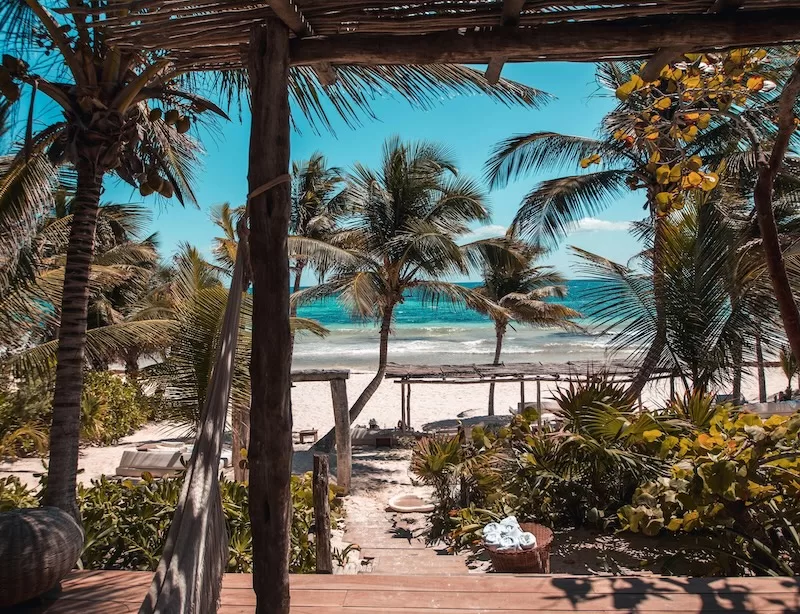
Panama
The Pensionado Programme is one of the most established retirement routes worldwide. Qualifying pension income grants permanent residency and national discounts on services.
Best for: Climate variety, affordability, proximity to North America
Pros: Fast residency process, appealing tax environment
Cons: Cultural shift and humidity may require adjustment
Mexico
The Temporary Resident Visa gives a path to permanence and allows retirees to choose between beach villages, colonial towns or lively cities. Budget options differ widely by region.
Best for: Close links to the U.S. and Canada, diverse living choices
Pros: Accessibility, warm weather, thriving communities
Cons: Safety varies widely by neighborhood; healthcare quality depends on region
Costa Rica
The Pensionado Programme supports those with steady pension income. Sustainability efforts shape daily life and pristine natural environments attract many outdoors-focused retirees.
Best for: Nature lovers and wellness-focused living
Pros: Eco-conscious policies, friendly communities, respected healthcare
Cons: Some imported goods are pricey; taxes evolving
Africa and the Middle East – emerging interest

Mauritius
The Retirement Permit supports those aged 50+ who transfer a minimum monthly income into the country. Coastal scenery, dependable healthcare and English-friendly administration help newcomers settle quickly.
Best for: Island living with stable infrastructure
Pros: Safer lifestyle reputation, warm climate, global connectivity
Cons: Import costs raise everyday prices
South Africa
A financially independent residence route serves those with strong assets or high pensions. Major cities provide international airports, world-class wine regions and ocean access.
Best for: High-value housing, outdoor culture and scenic landscapes
Pros: Competitive real estate prices, large expat groups
Cons: Safety considerations require careful location choice
United Arab Emirates (UAE)
Dubai’s Retirement Visa is open to applicants aged 55+ meeting financial criteria. It appeals to those who want modern urban comfort, warm winters and strong global flight links.
Best for: Luxury amenities, excellent medical facilities, active city life
Pros: No income tax, world-class infrastructure, international community
Cons: Hot summers, higher costs than many retirement destinations
Read More Like This: Top Countries with Retirement Visa Pathways
Retirement Visa Comparison Table
| Country | Min Age | Income / Deposit Requirement | Visa Length & Renewal | Healthcare Access | Path to PR / Citizenship | Best For | Notes & Considerations |
| Portugal | None (pension or passive income needed) | Proof of stable passive income | 1 year then 2-year renewals | Public system access after residence | Yes, PR after 5 years | European mobility and healthcare | Housing costs rising in some areas |
| Spain | None (strong income needed) | Monthly income proof and private insurance | 1 year then 2-year renewals | Private insurance required at first | Yes, PR after 5 years | Culture, travel access, climate zones | Taxes require careful planning |
| Greece | None (passive income focused) | Income threshold + insurance | 2-year renewable residence | Growing access depending on status | Possible over longer term | Island and coastal living | Slower bureaucracy |
| Cyprus | None (foreign income required) | Secured income + property ownership helps | Long-term residence permit | High-quality private healthcare | PR possible | English-friendly environment | Imports can raise costs |
| Thailand | 50+ | Bank deposit or income + medical insurance | 1-year renewable | Private insurance required | No direct path | Budget-friendly, warm climates | Rules reviewed frequently |
| Malaysia (MM2H) | None (financial criteria instead) | Deposit + income proof | Long-stay structure | Excellent private healthcare | Long-term renewals | City and coastal life | Requirements adjusted at times |
| Indonesia | 55+ | Proof of income and sponsor | 1-year renewable | Limited public access | No direct path | Island lifestyle | Healthcare strongest in big cities |
| Philippines (SRRV) | 35+ (varies by category) | Time deposit or pension income | Long-term residence | Private insurance needed | Yes with conditions | Affordable English-speaking life | Best medical care in key metros |
| Panama (Pensionado) | None (must show pension) | Pension income requirement | Permanent residency | Affordable private care | Yes | Close to North America | Humidity and climate adjustment |
| Mexico | None (income-based) | Income or savings threshold | 1–4 years then PR option | Good healthcare in major centers | Yes after 5 years | Accessibility and diverse regions | Neighborhood safety varies |
| Costa Rica (Pensionado) | None (pension-based) | Verified lifetime income | 2-year renewable | Public and private systems strong | PR possible | Nature and community lifestyle | Some goods cost more |
| Mauritius | 50+ | Monthly income to local bank | 10-year permit | Strong private healthcare | Renewable long-term stays | Island comfort with stability | Some items imported at higher cost |
| South Africa | None (funds-based) | High asset or income proof | Multi-year renewable | Good private network | No direct path | Scenic living with value | Location research essential |
| UAE (Dubai) | 55+ | Assets or income threshold | 5-year renewable | Top-tier medical facilities | Renewable but no direct PR | Urban modern lifestyle | Hot summers and higher costs |

Quick Takeaways
- Fastest path to permanent residency: Portugal, Panama, Mexico
- Lowest cost of living: Philippines, Indonesia, Thailand (location dependent)
- Best healthcare access: Spain, Portugal, UAE, Malaysia
- Most flexible eligibility: Mexico, Panama
- Best for year-round warmth: Thailand, Philippines, Costa Rica, Mauritius
- Closest to North America: Mexico, Panama, Costa Rica
Key Eligibility Criteria and Costs
Age, income, health insurance, residence obligations
Retirement-visa programmes generally focus on applicants who have completed their career years, though age limits differ. Many nations set a minimum age of 50 while others simply require proof of pension or passive income. Thailand’s O-A Visa, for example, clearly defines eligibility at age 50+.
Income requirements appear in every programme, though the format varies.
You might be asked to show:
• A guaranteed pension payment each month
• Rental or investment income transferred into a local bank account
• A minimum balance or lump-sum deposit held for the duration of the visa
Mexico’s Temporary Resident Visa, for instance, uses income thresholds rather than age as a primary requirement.
Health-insurance coverage is almost universal. Some countries allow retirees to later join national healthcare systems, while others require long-term private medical insurance. This detail can shape budgeting more than the visa fee itself.
On top of eligibility, residency obligations influence long-term planning. Many countries set minimum days inside the country each year to maintain valid residence or to qualify for permanent residency and eventual citizenship. Others allow more flexibility so retirees can spend long stretches visiting family elsewhere.
Tax and cost-of-living considerations
Securing a retirement visa is only part of the equation. Once you become a legal resident, tax treatment begins to matter just as much as climate or scenery. Many retirees discover that residency may trigger taxation on global income, including pensions, investments, or rental earnings from abroad. Other destinations follow a territorial tax system, where only income earned locally is taxed.
Some countries introduce retiree-friendly frameworks. Examples include pension-specific tax relief, reduced flat tax options or transitional regimes that lower taxes for a set number of years. Understanding these distinctions shapes how long savings last and how comfortably life goes on. A good local tax advisor can prevent surprises and help you structure income efficiently before arrival.
The cost of daily life also determines whether a retirement abroad feels sustainable. Housing, healthcare, groceries and transportation can differ widely from one country to the next. A fixed pension that covers only modest living in Western Europe may comfortably support beachside life in Southeast Asia or Latin America.

Cost planning should include realistic scenarios, not averages. Prices in popular coastal hotspots may look nothing like rural towns just an hour inland. Healthcare needs tend to increase gradually over time, so even countries with low costs may require higher private insurance premiums later in life.
A practical guiding idea: your pension is your stability. The destination you choose will determine how far that stability stretches and how freely you can design the lifestyle you’re after.
How to Choose Your Ideal Retirement Country
Finding the right destination starts long before any paperwork is submitted. A smart decision blends personal comfort, financial foresight and legal certainty. These six steps help shape a move that feels intentional rather than rushed.
- Clarify your priorities
Think of non-negotiables first. Climate, language familiarity, safety, healthcare quality, and cultural atmosphere all influence day-to-day life. Some retirees want coastlines and warm evenings. Others place a higher value on museums, excellent hospitals or direct flights back home. - Build a realistic financial picture
Monthly pension, rental income, savings and investment returns determine eligibility and lifestyle. Outline both recurring costs and one-time fees like visa processing, deposits, property purchase and private insurance. Include currency fluctuation in that calculation, since exchange rates shape buying power over time. - Understand the visa requirements fully
Minimum age, minimum income, security deposits, health-insurance rules and renewals vary widely. So do residence-stay obligations. Confirm exactly how long you must remain in the country each year to keep your visa valid. If your long-term goal includes permanent residence or citizenship, ensure the chosen visa creates a clear pathway. - Match lifestyle with location
Retirement abroad involves more than beaches or low rent. Look at local transport, proximity to hospitals, shopping and community. Some thrive in rural serenity. Others need the reassurance of a familiar expatriate network and quick access to an airport. Visit for an extended stay if possible to see how ordinary days feel.

- Seek legal and tax guidance early
Cross-border rules are intricate. One country might tax global income; another might not. Your home country may still tax pensions even after relocation. A local immigration attorney and a tax advisor with international expertise can prevent unpleasant surprises and protect long-term income. - Plan for the long horizon
Think beyond the first year. Does the visa lead to permanent residency? Can a spouse or dependent be included? Are there restrictions on property ownership? Will future healthcare access change with age? As life evolves, the visa should still support comfort, continuity and security.
Pitfalls and Practical Issues to Watch
Every retirement-visa success story comes with careful preparation. These are the areas that often surprise newcomers if they arrive without full information:
• Policy changes and shifting rules
Governments adjust immigration programmes to match economic priorities. An option available today may look different next year. For instance, several European investment visas have tightened requirements or closed altogether after policy reviews. Staying informed and working with reputable advisors protects long-term plans.
• Costs that appear after arrival
Visa fees are only one line in the budget. Some programmes require a large bank deposit held locally. Private health-insurance premiums can increase annually. There may be translation fees, tax-residency registrations, document certifications and yearly renewal charges. Minimum stay obligations can add travel expenses if a retiree splits their time across borders.
• Unexpected tax obligations
A change in residence can trigger taxation on global income depending on the country. Pension withdrawals may be taxed in your new home even if they were previously exempt. International tax specialists ensure that compliance remains efficient and financially protective.
• Healthcare gaps
Some visas allow eventual access to public systems. Others rely entirely on private insurance. Long-term care needs increase with age, so confirm what is covered beyond standard checkups. A well-priced healthcare system is part of the value proposition.
• Lifestyle or cultural mismatch
Life abroad does not mirror holiday brochures. A calmer pace may feel freeing or frustrating. Language barriers can affect everything from social connection to medical appointments. It helps to take multiple exploratory visits during different seasons before committing fully.
• Exchange-rate volatility
If pension income comes from another currency, fluctuations can alter real monthly spending power. This risk shapes savings strategy and influences destination choice, especially for long retirements.
In essence, the retirement visa is only the doorway. What matters most is the home you build once you step inside. Careful preparation ensures the new chapter stays comfortable, secure and sustainable.

FAQs
Q1: What is the minimum age for retirement visas?
It depends on country. Some require age 50 or older (e.g., Thailand). Others focus on income rather than strict age.
Q2: Can I work on a retirement visa?
Generally no. Retirement visas assume you will not engage in local employment, though rules differ by country.
Q3: Do retirement visas lead to citizenship?
Some do. Others only grant temporary or renewable residence. If citizenship is important, check that pathway.
Q4: What income or assets do I need?
It varies. Some countries ask for proof of pension or passive income. Others set a deposit or investment threshold.
Q5: Is healthcare covered for retirees abroad?
Not always by the host country. You may carry private insurance or ensure you meet local public-health eligibility.
Q6: Will my pension be taxed abroad?
Possibly. Tax depends on your home country, host country and any treaties. Check cross-border tax rules.
Q7: How many days must I stay per year to keep the visa?
Some countries require minimum days; others allow more flexibility. Confirm the residence requirement early.
Q8: What happens if rules change after I move?
Changes occur; sometimes you can renegotiate or switch status, but you might face new costs. Always stay updated.
A Smooth Landing Into What Comes Next
Now you have a solid understanding of which countries offer retirement visas and how these programmes shape real long-term living abroad. The next steps are practical and personal. Narrow the field to one or two places that match your budget, healthcare needs and sense of comfort. Speak with qualified legal and tax professionals who specialize in relocation. Visit your shortlisted destinations for a few weeks at a time to feel the rhythm of daily life and see how far your pension goes in real conditions.
A good retirement-visa fit carries you forward with ease, supports your health, protects your income and expands your sense of possibility. With the right preparation and a clear plan, this next life chapter can feel less like a leap and more like a smooth, well-earned glide into a place that finally feels like home.
If you would like tailored guidance comparing specific destinations or residency routes, subscribe to our newsletter to help you build a brighter and better-designed retirements abroad. Just practical tools, fresh insights, and lived experience guiding every step.


