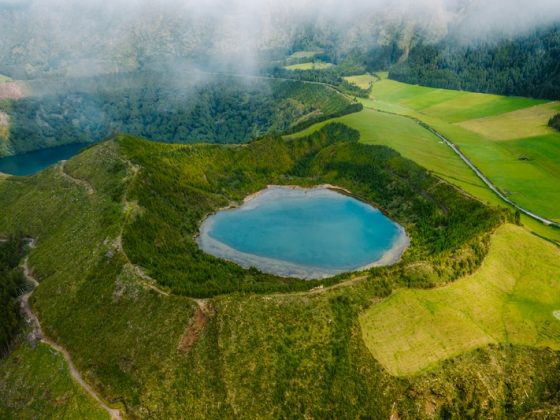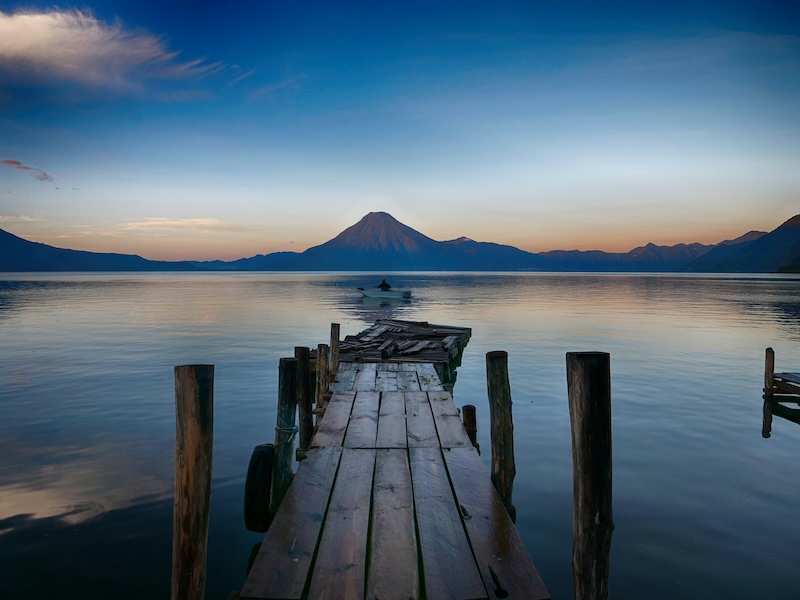
There is a lake in the western highlands of Guatemala that the writer Aldous Huxley once called the most beautiful in the world, and almost a century later the description still holds. Lake Atitlán sits in a collapsed volcanic crater nearly a mile above sea level, ringed by three steep volcanoes and a scattering of small villages that cling to the shoreline between the water and the hills. The light changes by the hour. The mornings are still and mirror-flat, the afternoons bring a wind the locals call the Xocomil, and the whole basin has the kind of scale that makes a person go quiet the first time they see it from the road coming down.
What is remarkable is not that the lake is beautiful. Plenty of places are beautiful. What is remarkable is that it has stayed this undiscovered for this long. While the rest of Latin America’s expat map filled in and priced up, Atitlán remained a word-of-mouth destination, passed between travelers and the people who came for a week and quietly never left. It has an established international community, a cost of living that undercuts almost anywhere comparable, and a sense, increasingly rare, that you are arriving somewhere before the crowd rather than after it.
For anyone whose mental map of Latin American relocation runs through Mexico, Costa Rica, and Panama, Atitlán is a genuinely different proposition. It is worth understanding why.
A Different Proposition From the Usual Three
The established Latin American havens have earned their reputations, but they have also been found. San Miguel de Allende and the Pacific coast of Mexico, the Central Valley of Costa Rica, and Panama City and Boquete are all wonderful places, and all of them are now firmly on the map, with the prices, the development, and the sizable foreign populations that come with being on it. They are settled destinations. You arrive into something that already exists in its finished form, and what you pay reflects that.
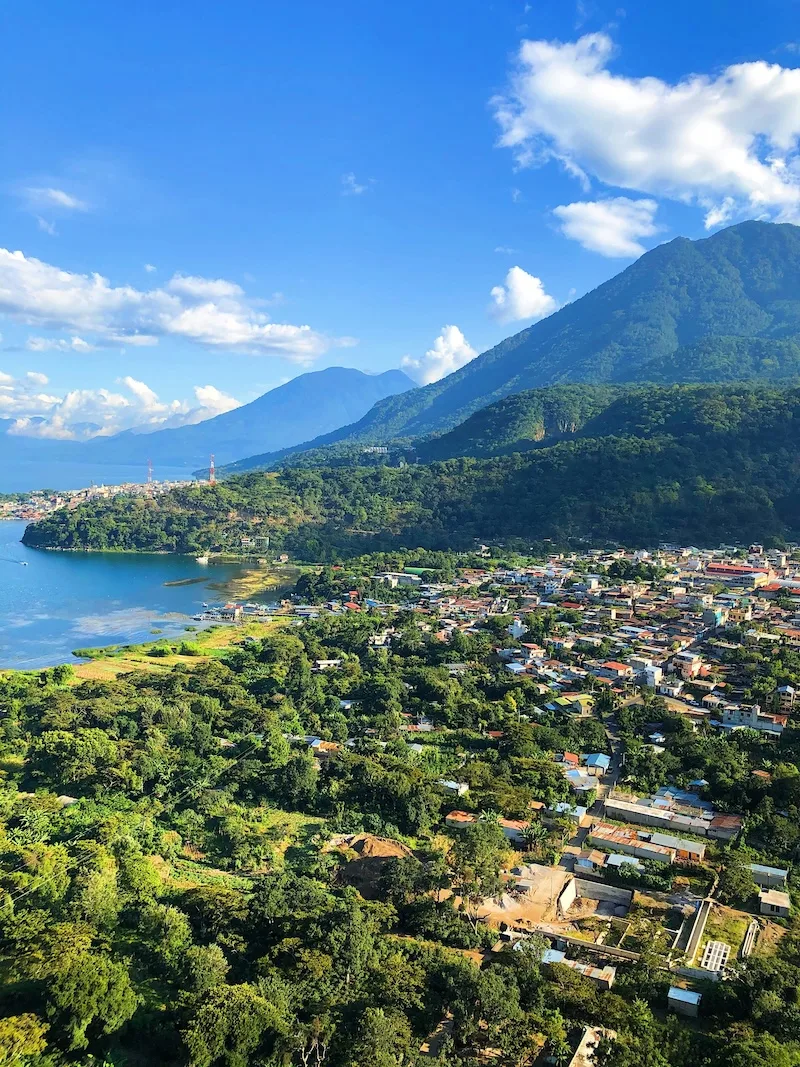
Atitlán is at an earlier point on that curve, and it feels like it. There is no highway of chain stores, no master-planned expat enclave, no sense that the place has been smoothed over for arrival. The villages are still working indigenous towns, Mayan languages are still spoken in the markets, and the rhythm of life still belongs to the people who have lived there for generations rather than to the newcomers. The foreign community exists, and it is real and well established, but it sits lightly on top of something much older and largely intact. That combination, a settled international presence inside a place that has not been remade for foreigners, is exactly what the usual three have mostly grown out of, and it is the heart of what makes Atitlán feel like a discovery rather than a destination.
The Villages, Each Its Own World
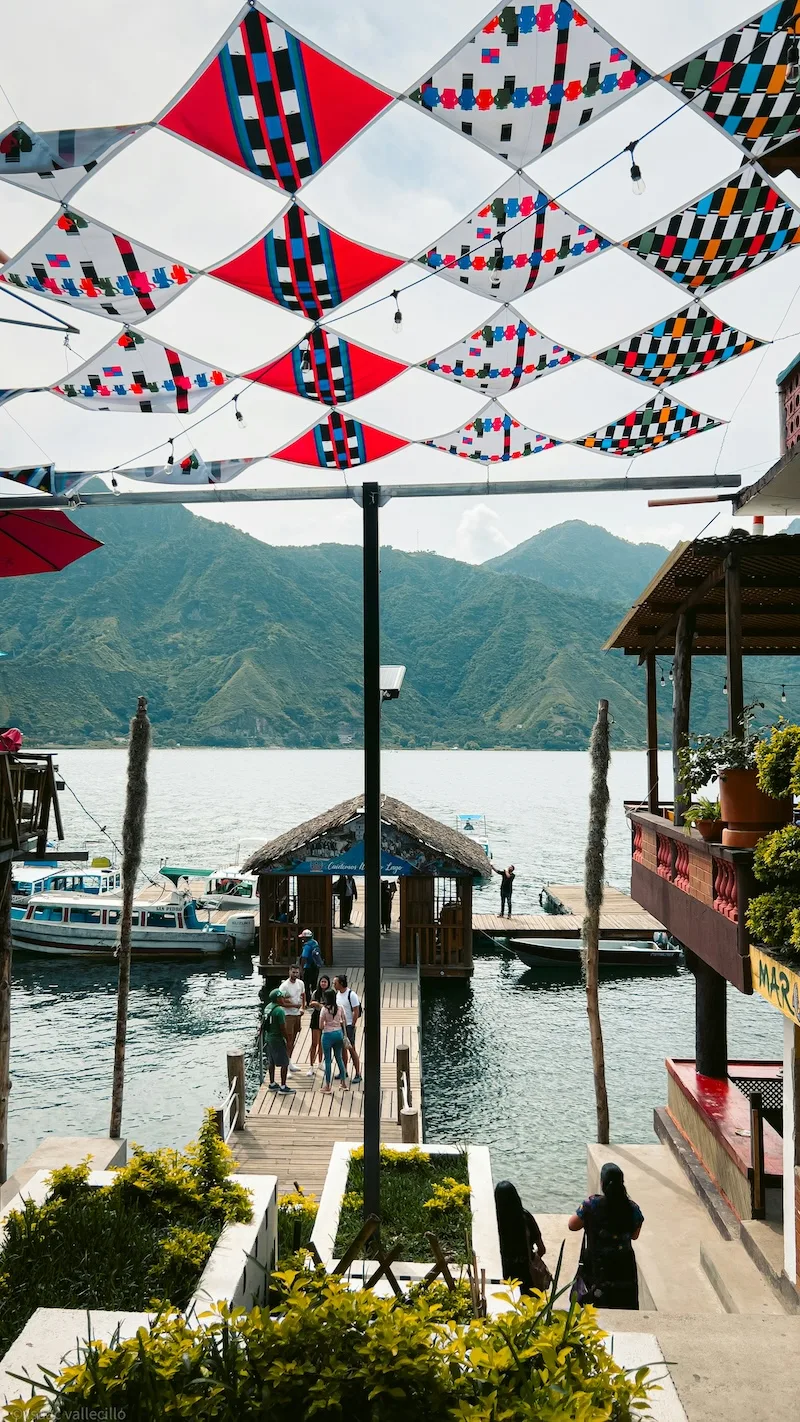
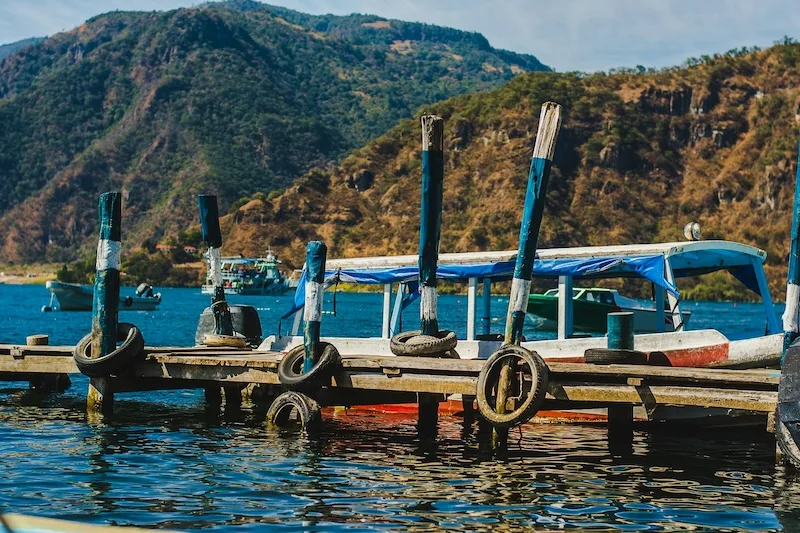
The first thing to understand about living at Atitlán is that there is no single Atitlán. The lake is a ring of distinct villages, most of them reachable only by the small public boats that crisscross the water, and each one has its own character to the point that choosing where to live is really choosing which version of the lake you want. The water is the road here, and the village you pick shapes your days more than almost any other decision.
Panajachel, known to everyone simply as Pana, is the gateway and the practical hub. It has the most infrastructure, the widest choice of restaurants and shops, the banks, the hospital, and the road connection to Guatemala City and Antigua. It is the least tranquil of the villages and the most convenient, the place most people pass through and many choose to base themselves for the sheer ease of it. Across the water, San Marcos La Laguna has become the lake’s wellness and spiritual center, a small, green, famously laid-back village full of yoga studios, meditation retreats, and plant-based cafes, drawing a particular kind of long-term visitor who comes for a retreat and books a longer stay.
San Pedro La Laguna is the budget and backpacker heart, livelier and cheaper, with Spanish schools and a younger crowd. San Juan La Laguna, next door, is quieter and increasingly admired for its textile cooperatives and its galleries, a calmer alternative that has kept its dignity. Santa Cruz La Laguna and the smaller hamlets offer near-total seclusion, steep and roadless and reachable only by boat, for those who want the lake and very little else. Santiago Atitlán, the largest of the lakeside towns, remains the most deeply traditional, a center of Tzʼutujil Maya culture rather than foreign settlement. The point is that you are not choosing a town so much as a way of life, and most people who settle at the lake spend their first months hopping between villages by boat before they know which shore is theirs.
What It Actually Costs
Atitlán is one of the more affordable places an expat can live well anywhere in the Americas, and the numbers bear it out. A single person lives comfortably on somewhere between eight hundred and twelve hundred dollars a month, and a couple on roughly eleven hundred to seventeen hundred, with the budget-minded in the cheaper villages coming in well under that. Rent is the main variable and it swings widely by village. A one-bedroom in San Pedro or San Juan can be found for four hundred to seven hundred dollars a month, while the same money goes less far in Panajachel, and the prestige lakefront around Santa Catarina Palopó climbs well above it.
The day-to-day costs are where the lake really separates itself from the established havens. A meal at a local comedor runs two or three dollars. Groceries for someone cooking at home sit around two hundred dollars a month. A doctor’s visit is twenty-five to sixty-five dollars and medications are a fraction of US prices. Connectivity, the thing that makes the whole proposition viable for remote workers, is better than the setting suggests, with Tigo fiber delivering around 150 Mbps in the connected villages for roughly thirty dollars a month, and Starlink filling the gaps where fiber has not reached.
One honest caveat belongs here. Foreigners at the lake routinely pay a premium of thirty to fifty percent over locals for the same housing and services, the long-standing practice known locally as gringo pricing. It is a real part of the economics and worth building into any budget, though even with the premium the overall cost of living remains strikingly low. The lake is cheap not because it is rough, but because it has not yet been discovered enough to be expensive.
The Community Already in Place
The thing that separates Atitlán from a merely beautiful and cheap place is that the hard part of moving somewhere new, the community, is already there. The lake has drawn foreigners for decades, long enough that the international presence is layered and genuine rather than new and transient. There are retirees who came in the nineties and never left, remote workers who arrived for a season and stayed for years, artists and teachers and small business owners, and a steady current of longer-term travelers passing through. The result is a network you can plug into quickly, with the shared transport, the WhatsApp groups, the regular gatherings, and the informal knowledge about doctors and landlords and paperwork that take years to build from scratch somewhere genuinely remote.
At the same time the community is small enough to still feel like one. This is not the anonymous, sprawling expat scene of a major Latin American city. It is a place where you will recognize faces on the boats within weeks, where newcomers are absorbed rather than lost, and where the sense of a shared, slightly unlikely life by the water is part of the draw. For someone weighing a move, that established-but-intimate community is worth as much as any cost figure, because it is the difference between arriving somewhere and arriving into something.
Staying Longer, and the Residency That Makes It Simple
Guatemala makes the practical side easier than many of its neighbors. Visitors from most Western countries enter visa-free for ninety days, which is enough for a long trial run, and those who decide to stay have an unusually clean residency route. The country’s pensionado visa, for those with a stable foreign pension, and its rentista visa, for those with passive income from investments, rentals, or similar sources, both ask for verified foreign income of around twelve hundred and fifty dollars a month for the main applicant, plus a few hundred more per dependent. That is a modest threshold by the standards of the region.
What sets Guatemala apart is that qualifying applicants file directly for permanent residency rather than climbing a multi-year temporary ladder first. The government fee is a few hundred dollars, and once a complete file is submitted it is often resolved within a matter of weeks, though gathering the apostilles, translations, and background checks beforehand realistically takes longer. After five years of permanent residency, citizenship becomes a possibility through a basic Spanish and civics exam. Neither visa permits paid local work, which suits the retiree or the remote earner precisely, since their income comes from outside the country anyway. For the Plan B purpose, a low income bar and a direct path to permanent status make Atitlán not just a beautiful place to visit but a realistic place to establish yourself.
Who It Is For, and Who It Is Not
Atitlán is not for everyone, and it is worth being honest about who it will frustrate. It is remote. The nearest international airport is a few hours away by road, the villages are connected by boat rather than car, serious medical emergencies mean a trip to Guatemala City, and the rhythms of a highland lake town will test anyone who needs everything fast, polished, and predictable. The gringo premium is real, the infrastructure is good but not flawless, and the rainy season is genuinely wet. This is a place that rewards flexibility and patience, not a turnkey retirement.
But for the person who has looked at the usual Latin American options and felt that something had already been lost, that the places everyone recommends have been found and priced and smoothed into sameness, Atitlán offers the thing that is hardest to find and impossible to manufacture. It is genuinely beautiful, genuinely affordable, and genuinely still itself, with a community already in place to arrive into and a residency route that makes staying straightforward. It is the rare destination that still feels like a discovery, and the people who understand what that is worth tend to understand, too, that it will not feel that way forever.
Living in Lake Atitlán: Common Questions
Which Lake Atitlán village is best to live in?
It depends on the life you want. Panajachel is the practical hub with the most services and the road link to Guatemala City; San Marcos La Laguna is the wellness and yoga village; San Pedro is livelier and cheaper; San Juan is quieter, known for textile cooperatives; Santa Cruz offers boat-only seclusion; Santiago Atitlán is the most traditional. Most newcomers try several by boat before choosing.
What income do you need for residency in Guatemala?
For the pensionado and rentista routes, Guatemala’s residency regulation (Acuerdo IGM-016-2025, Article 33) requires US$1,250 a month in foreign income, plus US$300 for each dependent. Both routes lead directly to permanent residence. Neither allows paid local work.
How long can you stay as a visitor?
Most Western passport holders get 90 days visa-free, but that period is shared across Guatemala, El Salvador, Honduras and Nicaragua under the CA-4 agreement, so time spent in the neighboring countries counts against it.
How much does it cost to live at Lake Atitlán?
A single person can live comfortably on roughly $800 to $1,200 a month and a couple on $1,100 to $1,700, with rent the biggest variable by village. Expect foreigners to pay more than locals for housing and services.
Contact Author
"*" indicates required fields
Stay Ahead on Every Adventure!
Stay updated with the World News on Escape Artist. Get all the travel news, international destinations, expat living, moving abroad, Lifestyle Tips, and digital nomad opportunities. Your next journey starts here—don’t miss a moment! Subscribe Now !
There is a lake in the western highlands of Guatemala that the writer Aldous Huxley once called the most beautiful in the world, and almost a century later the description still holds. Lake Atitlán sits in a collapsed volcanic crater nearly a mile above sea level, ringed by three steep volcanoes and a scattering of small villages that cling to the shoreline between the water and the hills. The light changes by the hour. The mornings are still and mirror-flat, the afternoons bring a wind the locals call the Xocomil, and the whole basin has the kind of scale that makes a person go quiet the first time they see it from the road coming down.
What is remarkable is not that the lake is beautiful. Plenty of places are beautiful. What is remarkable is that it has stayed this undiscovered for this long. While the rest of Latin America’s expat map filled in and priced up, Atitlán remained a word-of-mouth destination, passed between travelers and the people who came for a week and quietly never left. It has an established international community, a cost of living that undercuts almost anywhere comparable, and a sense, increasingly rare, that you are arriving somewhere before the crowd rather than after it.
For anyone whose mental map of Latin American relocation runs through Mexico, Costa Rica, and Panama, Atitlán is a genuinely different proposition. It is worth understanding why.
If you'd like to read the full story, simply enter your email to subscribe to our newsletter.
For even more expert insights, unmissable resources, and exclusive invites, explore our premium subscription offers here.
OR
Already a Subscriber? Click here to login
Subscription required
You've reached your limit of free articles. For full access to Escape Artist, and all of our insights on travel, moving abroad, and the digital nomad life, click here to Subscribe.
Already a Subscriber? Log in here