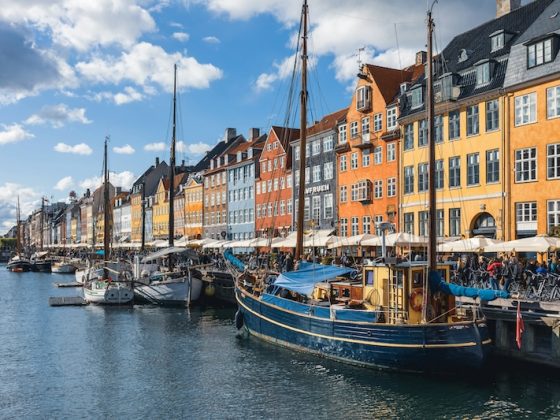
Italy sits near the top of almost every American wish list. Food, history, landscapes, and a pace of life that feels like the opposite of a US work week. The number of US citizens officially living there keeps rising: 17,650 on 1 January 2025, up from 15,582 two years earlier, according to ISTAT figures compiled by Tuttitalia. The real number is higher, because Americans who also hold Italian citizenship are counted as Italians.
But 2025 and 2026 brought real changes. The rules on citizenship by descent were tightened. Public healthcare now carries a minimum yearly fee for many newcomers. And the heat and earthquake news from the south has made some buyers think twice.
This guide sets out the honest pros and cons of living in Italy, with current figures and sources. For the practical side of the move, start with our guide to living in Italy as an American.
The pros of living in Italy
1. People live long, healthy lives
Life expectancy in Italy reached a record 83.7 years in 2025, according to the ISTAT BES 2026 report. Women live to 85.7 on average and men to 81.7. That is one of the highest figures in the world.
For anyone planning a long retirement, that number is hard to ignore.
2. There is a real retirement visa
Italy’s Elective Residence visa is built for people who live on passive income, such as a pension, Social Security, rental income or investments. The Italian Embassy in Washington says the income needed is “typically around €31,000 per person” a year.
For couples, the figure depends on the consulate. The Houston consulate lists €62,000. Other guidance puts a couple at around €38,000, The Local reports. Check with the consulate that covers your state before you plan around a number.
Two rules matter. You cannot work in Italy on this visa, and income from a job does not count towards the minimum. You also need health insurance for the visa application.
3. A 7% tax deal in the south
Italy offers a flat 7% tax on all foreign income to pensioners who move to a small town in the south. It lasts for the year you move and the next nine years, according to Italy’s tax agency.
The qualifying regions are Sicily, Calabria, Sardinia, Campania, Basilicata, Abruzzo, Molise and Puglia, plus some earthquake hit towns in central Italy. In April 2026, the limit was raised from towns of 20,000 people to towns of 30,000, Il Fatto Quotidiano reports. That opens up many more places. Many older articles still quote the 20,000 limit.
One catch for Americans: the US taxes its citizens wherever they live. The 7% deal keeps your Italian tax low, but you still file and may still owe US tax. Get advice from someone who knows both systems.
4. Homes outside the big cities are cheap
In October 2026, the average asking price for a resale home in Italy was €2,012 per square meter, according to idealista. In Milan it was €5,650. In Caltanissetta, in Sicily, it was just €623.
Rents follow the same pattern. The national average asking rent was €14.6 per square meter in October 2026, idealista reports. Milan was €22.5, Florence €21.4 and Rome €19.2. Turin, at €13.5, was the cheapest big city with published figures.
Italy has also become known for its one euro homes. They are real, but they usually need a lot of work. Read our look at Italy’s €1 house experiment before you get excited.
5. Remote workers have a visa too
Since April 2024, Italy has had a digital nomad visa for highly skilled remote workers. Official consulate guidance puts the income needed at about €27,000 a year. Law firm K&L Gates calculates it closer to €25,000. You also need a degree or senior experience, at least six months in your remote role, and health insurance.
To compare it with other countries, see our digital nomad visas compared.
6. It is safer than the US by most measures
Italy ranks 35th of 163 countries in the 2026 Global Peace Index. The US ranks 134th, according to the Institute for Economics and Peace.
The US State Department rates Italy at Level 2, “Exercise Increased Caution”, mainly because of the general risk of terrorism. It also warns about pickpockets in tourist areas, the US Embassy in Italy says.
7. Easy flights and no double Social Security tax
In 2026 there are nonstop flights to Italy from at least ten US metro areas, including New York, Boston, Philadelphia, Chicago, Charlotte, Dallas, Miami, Houston and Seattle. New routes this year include Newark to Bari and Palermo, Houston to Rome and Boston to Milan, The Local reports.
The US and Italy have had a totalization agreement since 1 November 1978, the Social Security Administration confirms. It stops you paying into both social security systems for the same work.
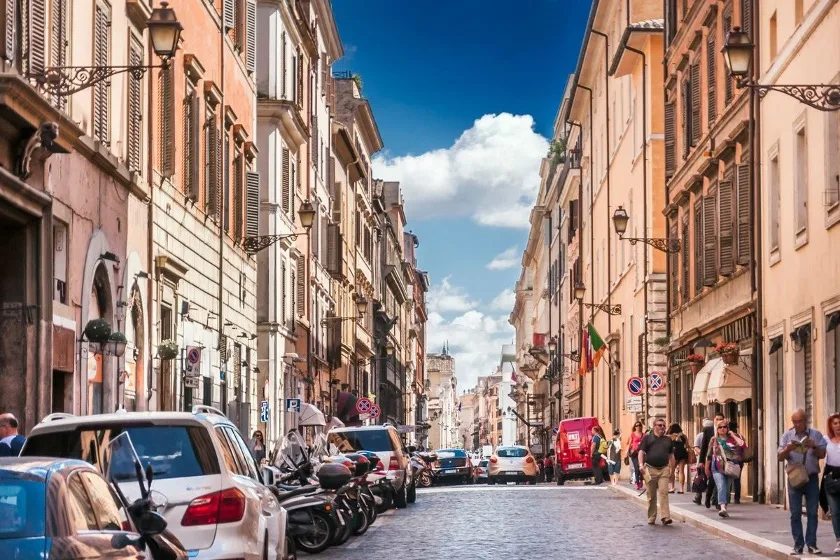
The cons of living in Italy
1. Citizenship by descent is much harder now
For years, many Americans with an Italian great grandparent could claim citizenship by descent. That changed in March 2025.
Under Decree Law 36/2025, made law in May 2025, people born abroad with another citizenship now usually qualify only if a parent or grandparent held only Italian citizenship, or if an Italian parent lived in Italy for two years before the child was born, the Italian consulate in Edinburgh explains. Applications made before 27 March 2025 are protected.
Italy’s Constitutional Court upheld the law on 30 April 2026, according to the court. In July 2026, it sent a separate question on EU law to the European Court of Justice, CNN reported. The law stays in force while that case runs.
What this means for you: if your Italian link is a great grandparent, do not plan your move around an Italian passport.
2. Citizenship by residence takes ten years
If you move without an Italian ancestor, you need ten years of legal residence to apply for citizenship. A June 2025 referendum to cut that to five years failed because only 30.6% of voters took part, below the 50% needed, the University of Padua’s human rights centre reports.
For countries where the wait is shorter, see our guide to citizenship by residence.
3. Bureaucracy is slow and in person
After you arrive, you must apply for your residence permit, the permesso di soggiorno, within eight days, Poste Italiane confirms. Then comes fingerprinting at the police office, the Questura, and a wait.
Waits of 30 to 90 days are common, and often longer in Milan, Rome and Turin, Portale Migranti reports. In early 2025, people in Rome and Milan were queuing overnight outside police offices, Open Migration found.

What to plan for: keep copies of everything, allow for repeat visits, and budget for a local helper if your Italian is basic.
4. Public healthcare now has a price, and a queue
Many newcomers, including Elective Residence visa holders, must register with the national health service, the SSN, as voluntary members. Since 2024 the minimum fee is €2,000 a year per person, the Sassari health authority explains. It is charged per calendar year and is not reduced if you arrive late in the year.
Then there is the wait. In 2025, 9.6% of people in Italy, over 5.6 million, gave up care they needed, ISTAT reports. Long waiting lists were the most common reason, Quotidiano Sanità notes.
Medicare does not help. It usually does not cover care outside the US, Medicare.gov says. Most Americans keep private insurance as well.
5. Pay is low and good jobs are scarce
The average gross wage in Italy was €36,594 in 2025, OECD data reported by Euronews shows. That is well below most of Western Europe.
Unemployment was 6.3% in September 2026, and 19.9% for people aged 15 to 24, according to ISTAT. Italy works best for people who bring their income with them.

6. You will need Italian
Italy ranked 59th in the 2025 EF English Proficiency Index, the lowest in the EU, The Local reports. Outside Rome, Milan, Florence and the tourist towns, expect to do most things in Italian, from the doctor to the electricity company.
7. Your dollar buys less than it did
On 30 October 2026, one euro cost 1.1172 US dollars, according to the European Central Bank. On 2 January 2025, it cost 1.0321 dollars. So a euro now costs about 8% more in dollars than at the start of 2025.
If your pension or Social Security is paid in dollars, that gap comes straight out of your Italian budget.
8. Heat and earthquakes are real risks
Summer 2026 was the hottest in Italy since records in this series began in 1950, about 3.2°C above the 1991 to 2020 average, according to Copernicus data reported by 3BMeteo. In August 2025, parts of Sicily reached 45.7°C, 3BMeteo reported from national research council data.
Near Naples, the Campi Flegrei area recorded its strongest earthquake on instruments, magnitude 4.7, on 31 July 2026. About 700 people in Pozzuoli were displaced, Geopop reports, citing the national geophysics institute.
What to plan for: check air conditioning, insulation and the seismic rating of any home before you buy or sign a lease.

Who Italy suits, and who should look elsewhere
Italy is a strong fit if you:
- have a pension or passive income comfortably above €31,000 a year
- are happy in a smaller town, especially in the south
- want culture, food and long, healthy lives around you
- will learn Italian and accept slow paperwork
You may be happier elsewhere if you:
- were counting on citizenship through a great grandparent
- need to work for an Italian employer to cover your costs
- want fast, free public healthcare
- want a second passport within five years
For a full monthly budget, see our guide to the cost of living in Italy. For life in the countryside, read what it is really like to live in Tuscany. And if you like this honest format, see our pros and cons of living in Portugal, the other European country many Americans weigh against Italy.

FAQs
What are the biggest pros and cons of living in Italy?
The biggest pros are long life expectancy, a retirement visa, a 7% tax rate for pensioners in southern towns, cheap homes outside the big cities and easy flights to the US. The biggest cons are tighter citizenship by descent rules, a ten year wait for citizenship by residence, slow bureaucracy, a €2,000 minimum yearly fee for public healthcare, low wages, little English outside cities and rising heat.
How much income do I need to retire in Italy?
For the Elective Residence visa, the Italian Embassy in Washington says around €31,000 a year per person, from passive income such as pensions or investments. For couples, consulates ask for between about €38,000 and €62,000. Work income does not count.
Can I still get Italian citizenship by descent?
Only in narrower cases. Since March 2025, people born abroad with another citizenship usually need a parent or grandparent who held only Italian citizenship, or an Italian parent who lived in Italy for two years before their birth. Italy’s Constitutional Court upheld the law in April 2026.
Is healthcare free for Americans in Italy?
No. Many newcomers, including Elective Residence visa holders, pay at least €2,000 a year to join the national health service. Medicare does not usually cover care in Italy, so most Americans also keep private insurance.
Is Italy safe for Americans?
Yes, by most measures. Italy ranks 35th of 163 in the 2026 Global Peace Index, far ahead of the US. The US State Department advises increased caution because of the general risk of terrorism, and pickpocketing is common in tourist areas.
Sources
| Source | What it supports |
| Tuttitalia, ISTAT data | 17,650 US citizens resident on 1 Jan 2025 |
| ISTAT, BES 2026 | Life expectancy 83.7 years, 9.6% gave up care |
| Embassy of Italy, Washington | Elective Residence income of about €31,000, no work |
| Consulate of Italy, Houston | €62,000 for a married couple |
| The Local, Sept 2025 | €38,000 couple figure at some consulates |
| Agenzia delle Entrate | 7% pensioner regime, regions, ten years |
| Il Fatto Quotidiano, May 2026 | Town limit raised to 30,000 residents |
| idealista, 4 Nov 2026 | October 2026 house prices |
| idealista, 3 Nov 2026 | October 2026 rents |
| Consulate of Italy, Moscow, July 2026 | Digital nomad visa income of about €27,000 |
| K&L Gates, May 2024 | Digital nomad visa rules |
| Institute for Economics and Peace, 2026 | Italy 35th, US 134th |
| US Embassy in Italy, Sept 2026 | Level 2 advisory |
| The Local, Jan 2026 | New US to Italy routes in 2026 |
| Social Security Administration | Totalization agreement since 1 Nov 1978 |
| Consulate of Italy, Edinburgh | 2025 citizenship by descent rules |
| Constitutional Court, 30 Apr 2026 | Law upheld |
| CNN via CP24, July 2026 | Referral to the European Court of Justice |
| University of Padua, June 2025 | Referendum failed on 30.6% turnout |
| Poste Italiane | Permit request within eight days |
| Portale Migranti, April 2026 | Permit waits of 30 to 90 days |
| Open Migration, Feb 2025 | Overnight queues in Rome and Milan |
| ASL 1 Sassari | €2,000 minimum SSN fee |
| Quotidiano Sanità, Oct 2026 | Waiting lists as the main reason for giving up care |
| Medicare.gov | Medicare does not usually cover care abroad |
| Euronews on OECD data, May 2026 | Average wage of €36,594 |
| ISTAT, Oct 2026 | Unemployment 6.3%, youth 19.9% |
| The Local, Nov 2025 | 59th in the EF English Proficiency Index |
| European Central Bank | Euro at 1.1172 dollars on 30 Oct 2026, 1.0321 on 2 Jan 2025 |
| 3BMeteo, Sept 2026 | Summer 2026 hottest since 1950 |
| 3BMeteo, Sept 2025 | 45.7°C in Sicily, August 2025 |
| Geopop, Aug 2026 | Campi Flegrei magnitude 4.7, about 700 displaced |
About the Author
Contact Author
"*" indicates required fields
Stay Ahead on Every Adventure!
Stay updated with the World News on Escape Artist. Get all the travel news, international destinations, expat living, moving abroad, Lifestyle Tips, and digital nomad opportunities. Your next journey starts here—don’t miss a moment! Subscribe Now !
Italy sits near the top of almost every American wish list. Food, history, landscapes, and a pace of life that feels like the opposite of a US work week. The number of US citizens officially living there keeps rising: 17,650 on 1 January 2025, up from 15,582 two years earlier, according to ISTAT figures compiled by Tuttitalia. The real number is higher, because Americans who also hold Italian citizenship are counted as Italians.
But 2025 and 2026 brought real changes. The rules on citizenship by descent were tightened. Public healthcare now carries a minimum yearly fee for many newcomers. And the heat and earthquake news from the south has made some buyers think twice.
This guide sets out the honest pros and cons of living in Italy, with current figures and sources. For the practical side of the move, start with our guide to living in Italy as an American.
If you'd like to read the full story, simply enter your email to subscribe to our newsletter.
For even more expert insights, unmissable resources, and exclusive invites, explore our premium subscription offers here.
OR
Already a Subscriber? Click here to login
Subscription required
You've reached your limit of free articles. For full access to Escape Artist, and all of our insights on travel, moving abroad, and the digital nomad life, click here to Subscribe.
Already a Subscriber? Log in here