
When folks talk about their money going further abroad, they usually have a specific mental image: a three-course dinner for the price of a Starbucks latte or a sprawling villa that costs less than a windowless studio in Seattle. But if you’ve spent any real time on the ground lately, you know that the true lifestyle arbitrage is more about systemic affordability than about the ultimately blinkered analysis of just a price tag.
When you move to a country where housing, healthcare, and transit are built for local salaries and not inflated by a speculative tech bubble, your dollar gains both leverage and peace of mind. You’re paying less while opting into an infrastructure that costs less to operate.
This distinction is vital. Many “cheap” digital nomad hubs have become victims of their own success, draining your energy and cash through fragmented services, unreliable utilities, or expat taxes hidden in plain sight. That’s the main reason why the smartest moves right now are toward destinations where the markets are still local, healthcare is reasonable, services are dependable, and housing hasn’t been entirely swallowed by short-term Airbnbs.
As the US dollar maintains its stubborn strength, the strongest value destinations are those that reward you for living with the grain of the country. For those earning in dollars, the reward is access to a version of daily life that is fundamentally more manageable and calmer, not just something at a discount.
In this article, we break down the specific corners of the map where you get more bang for your buck, allowing you to bypass the tourist-priced facade and trade up for a genuinely higher quality of life. From the revitalized historic centers of the Mediterranean to the tech-forward hubs of Southeast Asia, we’re looking at the spots where the math actually adds up.
The Countries Where Your Dollar Goes Furthest
What we mean by “your dollar goes furthest”
For anyone eyeing the exit, the phrase the dollar goes further is the ultimate siren song. It suggests a simple, almost mechanical magic: convert your USD, watch the zeros multiply, and suddenly trade your commute for a coastline. In practice, however, this trope hides as much as it reveals.
At the macro level, economists track this using Purchasing Power Parity (PPP): a calculation designed to strip away the noise of the global market and reveal what a currency is actually worth when the rubber meets the road. Think of it as a great equalizer: it measures the cost of a standardized basket of goods and services, everything from your morning espresso and monthly rent to the local cost of building a bridge or fixing a tooth. By pricing out this same basket in every country and comparing it to the US dollar, we get a clear-eyed view of where price levels are suppressed and where they are inflated. It tells you exactly how much local life you can buy with a single greenback once you stop looking at the flickering numbers on a currency exchange screen.
One of the most reliable tell-tales is the World Bank’s price level ratio. If a country has a ratio of 0.30, like Vietnam regularly does, it means that, on average, your dollar buys three times as much there as it does in a mid-sized American city. Compare that to Mexico, which typically hovers around 0.60, or Western Europe, where you’re lucky to see anything below 0.90.
That gap is the difference between a $2,500 monthly budget feeling like a survival exercise or a victory lap. But PPP is merely the cover charge for the conversation. Real affordability is shaped by the DNA of the local economy: where prices come from and which version of the country you choose to inhabit.
Purchasing power vs. cost of living
Standard cost-of-living charts tend to flatten reality into a single, deceptive number. They miss the fact that prices don’t move in unison. In the 2026 economy, the real win for dollar-earners isn’t in buying electronics or designer but in labor-intensive services.
When an entire national system is calibrated to local wages rather than Silicon Valley stock options, the price of time becomes your greatest asset. We’re talking about the handcrafted lifestyle: a five-star meal prepared by a chef who isn’t paying a Manhattan mortgage, a custom-tailored suit that would cost four figures on Savile Row, or high-end dental work performed in a clinic that looks like a spaceship but charges like a hobby shop. This is where your leverage hits its peak: when you are paying for the mastery of a person’s time and skill and not the overhead of imported raw materials.
However, every major expat hub hides a trap. It’s the gilded bubble designed specifically for people who want to leave their country without leaving their habits. If you insist on enrolling your kids in an American-curriculum school, living in a glass-and-steel condo designed by a starchitect, and insisting that your dinner be paired with a specific vintage from Napa Valley, you’re merely a premium subscriber to elite prices.

A destination can look cheap on paper while punishing anyone who refuses to eat, shop, or live like a local.
The exchange rate mirage
A strong dollar can temporarily magnify purchasing power, but exchange rates are volatile. A 10% dip in the Euro or the Peso feels like a raise, but exchange rates are the most unstable part of the equation. In fact, sharp currency weakness is often a canary in the coal mine, signaling structural rot, runaway inflation, or looming capital controls that could make your life complicated very quickly.
The places where the dollar truly goes furthest over the long haul share a more stable trait: Local Price Formation. You want to be in markets where prices are anchored by domestic demand and local production, not by a speculative fever of foreign investment.
When you live in a place where the locals can still afford to buy bread and pay the rent, you’re buying into a stable social fabric. That distinction matters far more than the exchange rate on any given day.
The Geography of Value
Some of the most affordable places to live in 2026 are not the ones dominating your social media feed or topping digital nomad lists. In fact, many times, popularity is the enemy of value. The smartest movers are looking for less performative markets where prices remain tethered to local life instead of to international speculation.
The anchor of local wages
When you find a country where the vast majority of residents both earn and spend in the local currency, you’ve found a sanctuary of stable pricing. In these economies, the food systems are domestic (meaning your dinner didn’t have to clear three international borders and a customs brokerage) and the housing supply hasn’t been financialized into a high-yield asset for short-term rental investors.
According to the World Bank’s 2025–2026 country income classifications (updated annually based on gross national income per capita) a substantial group of upper-middle-income nations sit between lower-income thresholds and high-income status, combining stronger infrastructure with local cost dynamics that can make a U.S. dollar stretch further in everyday life. This dynamic is why secondary cities are the real winners of the mid-2020s. While a capital city might be drowning in tourist inflation, a provincial hub (like a regional capital with its own universities and government functions) offers the same infrastructure without the speculative fever.
Places insulated from global tourist inflation
There is a massive difference between being off the grid and being off the radar. You don’t need to move to a remote mountain pass to find value; you simply need to find places that are slightly inconvenient or, better yet, unmarketed.
Tourism has a peculiar way of warping a city’s price psychology. Once a local economy realizes that a visiting Californian is willing to drop $18 on a cocktail without blinking, the price of the local lager begins to drift upward in a sort of aspirational sympathy.
This is known as the Airbnb Effect. A landmark study published on Regional Science and Urban Economics from 2021 highlighted that in high-pressure tourist zones, house prices rose by over 24% to 32% relative to pre-Airbnb levels. The OECD further notes that housing costs are the single largest driver of regional cost-of-living divergence and spill over into prices for local services and goods, particularly in urban areas. In practice, once housing prices are pushed upward by short-term rental demand, they act as a cost anchor that pulls wages, services, and daily expenses up with them. The barber, the baker, and the barista all have to pay that new, financialized rent, and you, the consumer, ultimately foot the bill.
If you choose a destination that attracts fewer weekend warriors, you are effectively buying insurance against price drift. These places preserve a rational cost structure because they are still built for the people who live there, not the people who are just passing through. In 2026, a little bit of friction in your itinerary is the best way to protect your purchasing power.
Where the Dollar Buys a Proper Life
Southeast Asia beyond the neon
Southeast Asia remains the heavyweight champion of dollar leverage. The secret is officially out in the major hubs; if you’re trying to live a dollar-denominated life in the center of Singapore or a high-rise in Bangkok’s Sukhumvit, you’ll find your arbitrage vanishing into the air conditioning vents.
The real wins are currently found in Vietnam, which consistently sits near the bottom of the World Bank’s price-level index with a ratio of around 0.30. In cities like Da Nang, you can find a beach-adjacent lifestyle where high-speed fiber and specialty coffee coexist with local markets that haven’t been financialized.

The math is compelling: a monthly budget of $1,200 to $1,500 covers a modern apartment, regular dining out, and private healthcare that (while medical inflation in APAC is hitting roughly 14% this year) remains a fraction of U.S. premiums.
The trick is living with the grain. In Malaysia (specifically Kuala Lumpur or Penang) and the Philippines, the moment you step out of the expat bubble (those gated communities and international malls where a box of imported cereal costs $12) you capture the full benefit of a system priced for local professionals.
Latin America’s second-tier cities and interior regions
Latin America offers a unique psychological arbitrage: it has the proximity and time-zone alignment of a home base with the price structure of a developing frontier. Mexico is the perennial favorite, but in 2026, the savvy move is away from the Oaxacalifornia vibes of the coast and toward the interior.
While the Super Peso has fluctuated, cities like Mérida or Querétaro offer a stable version of Mexico where your dollar still goes a long way. In Colombia, particularly in cities like Medellín and the emerging tech hub of Pereira, it is possible to maintain a comfortable lifestyle that includes private health insurance (for roughly $60 to $100 a month) within a healthcare system long recognized by the World Health Organization and the World Bank as one of the strongest in Latin America relative to income level.
If you’re looking for the frontier side of that arbitrage, Nicaragua remains one of the most compelling value plays in the hemisphere. While it lacks the high-gloss infrastructure of Mexico’s interior, it compensates with a cost of living that is roughly 40% lower than its neighbor, Costa Rica. In colonial gems like Granada or the Pacific enclave of San Juan del Sur, the dollar still buys a level of old-world scale (with sprawling courtyards and domestic help) that has been priced out of almost everywhere else in the Americas. It is the destination for those who value raw purchasing power over the comforts of a highly manicured expat trail. Plus, you’ll still be in a world where an ocean-view home still fits into a normal budget, and a sunset dinner doesn’t require a loan. It is the destination for the escape artist who wants the Pacific breeze and the tranquil pace of life without the Pura Vida premium.

However, a word of caution for the uninitiated: affordability here is uneven. The Airbnb Effect has hit cities like Medellín hard, with rents in trendy neighborhoods like El Poblado occasionally spiking 20% to 30% above historical norms. To find the value, look for the Laureles of the world. neighborhoods built for the local upper-middle class, not the short-term tourist.
Read More Like This: Bridging the Gap: The Path to Affordable Luxury Living in Central America
Eastern Europe outside the Schengen spotlight
If Western Europe is a museum you can’t afford to live in, Eastern Europe and the Balkans are the vibrant workshops where the lights are on, and the rent is still rational. With Bulgaria and Romania officially integrated into the Schengen Area as of 2025, the convenience has gone up without the prices immediately following suit.
Countries like Albania, Bulgaria, Serbia, and Bosnia and Herzegovina remain the last bastions of Old-World affordability. In a city like Belgrade, you are doing more than discovering cheaper beer; you are buying into a dense, walkable urban infrastructure that works in your favor.

Data from 2026 shows that while housing inflation is bubbling in capitals like Sofia (where average nightly Airbnb rates have climbed to around $65) long-term rents in secondary cities like Plovdiv or Brașov remain accessible. You can live a high-culture European life (opera houses, historical architecture, cobblestone streets, and reliable trains) on a budget that wouldn’t cover a parking spot in London. It’s the ultimate move: trading a suburban sprawl for a historic center without the seven-figure price tag.
Read More Like This: The Most Affordable European Cities to Live in 2026
The Anatomy of a High-Value Haven
If you want to effectively save money without living like a 19th-century pioneer, look for these three characteristics:
- Public Utility Stability: Look for countries that have invested in hard infrastructure over the last decade. Places like Lithuania or Vietnam now offer fiber-optic speeds and 5G coverage that put many U.S. suburbs to shame, often for less than the cost of a movie ticket.
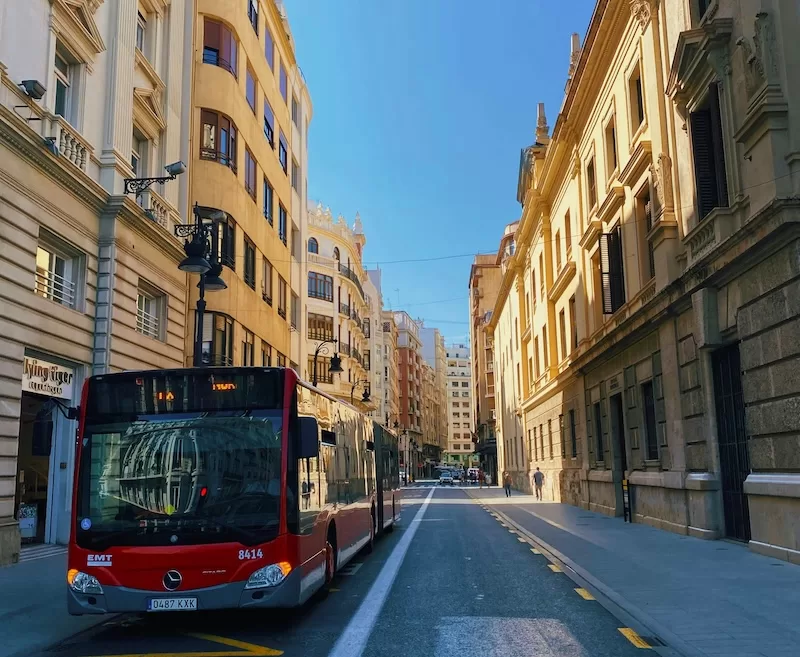
- The “Resident-First” Transit Model: High value is found in cities designed for pedestrians and trams, not just cars. When a city like Sofia or Valencia makes a car an optional luxury and not a survival requirement, you instantly reclaim hundreds of dollars a month in insurance, fuel, and maintenance.
- Institutional Legibility: The best destinations have transparent systems. You want a place where private healthcare isn’t a shadowy workaround, but a formalized, affordable network with clear pricing, like the Vinmec system in Vietnam or the private clinics in Costa Rica, where a specialist consultation still costs less than a week’s worth of groceries.
If you choose a country that offers these boring facilities, you stop spending your energy (and cash) on fixing the environment around you. That is how you stop getting by and start saving up for real.
When Cheap Stops Being Affordable
There is a specific, sinking feeling that occurs when you realize your budget paradise is actually a high-maintenance nightmare. It’s the moment the power cuts out during a Zoom call, or when the five-minute Uber ride becomes a forty-minute negotiation with a gridlocked city built for small cars but populated by SUVs. This is where the difference between low cost and high value becomes painfully clear.
Infrastructure gaps that raise daily costs
In the 2026 relocation market, “cheap” usually means making a down payment on future headaches. Low prices are a poor consolation prize for unreliable electricity, dial-up-era internet, or a healthcare system where urgent care is a polite suggestion. When the local infrastructure fails, you don’t just rough it. You pay a private tax to fix it.
According to the World Economic Forum’s Global Competitiveness Index, countries with weaker infrastructure (including transport, logistics, utilities, and connectivity) face higher friction costs for residents and businesses. Economic analyses from the OECD and World Bank suggest these gaps increase everyday expenses by driving up compensatory spending on private transport, backup power, telecom workarounds, and other services that would otherwise be covered by public infrastructure, making it significantly more expensive to live and work in underdeveloped hubs.
You end up shelling out for high-capacity power banks, private drivers to bypass nonexistent transit, and concierge medical services because the public clinics are overwhelmed. In places like certain Caribbean outposts or remote Southeast Asian islands, you can find yourself forced to reallocate your money from rent to survival logistics.
This is why to truly win the game of arbitrage, you have to find the sweet spot: places that have escaped the low-cost/low-reliability trap. These are destinations where the infrastructure is invisible because it works, but the prices remain tethered to reality.
The expat premium effect in popular zones
Once a neighborhood achieves expat enclave status, price discovery takes on a life of its own. This is a market response. Landlords aren’t necessarily greedy for benchmarking rent against a San Francisco salary, but they’re definitely paying attention.
This is the Gringo Tax codified into the local economy. In hubs like Lisbon, Mexico City, or Bali, we’ve seen lifestyle creep where restaurant menus pivot from local staples to $14 avocado toast and craft lattes. Data from Eurostat’s Comparative Price Levels of Consumer Goods and Services show wide variation in costs for goods and services across Europe. For example, in 2024, overall consumer price levels in Denmark were 41% above the EU average, while in Bulgaria they were 39% below. These kinds of differences (driven in part by housing, local services, and tourism demand) demonstrate how highly internationalized or high-demand zones can decouple sharply from national-average price structures.
The only viable defense is a geographical pivot. The savvy expat lives three subway stops away from the English-language menus. Choosing neighborhoods designed for local professionals ensures that the prices you pay are anchored to reality, not to the fleeting whims of the global nomad circuit.
Lifestyle Math That Changes Everything
In the big picture, the small stuff (the price of a movie ticket or a domestic beer) is mostly noise. If you want to understand where your wealth compounds, you have to look at the Big Three: housing, healthcare, and food. This is the bedrock of your burn rate.
The Healthcare Arbitrage
For most long-term residents, healthcare is the ultimate hidden multiplier. In the U.S., you’re often one bad x-ray away from a financial tailspin. Conversely, countries with mature private healthcare systems allow you to trade risk for predictability.
Take Thailand or Vietnam. While medical inflation in the Asia-Pacific region is projected to hit 14% in 2026, the baseline is so low that the math still leans heavily in your favor. A comprehensive private insurance plan that covers you in world-class facilities might cost $1,500 to $2,500 annually, roughly what a mid-tier American family pays per month in premiums. If you move your health offshore, you’re deleting a major source of existential anxiety from your balance sheet.
The Sovereignty of the Plate
Food costs in 2026 are no longer dictated by a country’s GDP, but by the length of its supply chain. As global trade barriers rise and shipping costs fluctuate, the real value is found in agri-independent nations.
According to the 2022 Global Food Security Index by Economist Impact, countries like Bulgaria and Vietnam all register moderate overall scores in food security —a function of resilience across affordability, availability (including domestic food production capacity), and quality and safety measures — highlighting how stronger agricultural availability contributes to national food system performance.
When your dinner is grown in the valley next door and not flown across an ocean, you are insulated from the supply chain taxes that are currently bloating grocery bills in places like the UK or the UAE. A strong local market culture (where you shop at the mercado or chợ instead of a gleaming imported supermarket) is the most effective hedge against inflation you can buy.

From Renting to Winning
Housing is the heaviest weight on any budget, and it behaves differently than almost any other asset. In the West, we’ve grown accustomed to housing being financialized, treated like a high-yield stock instead of a place to sleep. In much of the world where your dollar goes furthest, housing still functions as a social utility.
While rent in an average one-bedroom in a mid-tier American city now dances around $1,700, a modern, well-appointed apartment in Da Nang or Hanoi hovers between $350 and $500. Even in the sleek expat enclaves of Ho Chi Minh City, like District 7, you’re looking at roughly $700 to $1,000 for a three-bedroom layout that would cost five times as much in Miami.
But the real lifestyle math isn’t exclusively about the lower number; it’s about the Price-to-Income Ratio. In countries where housing isn’t yet a plaything for global private equity firms, you can secure a long-term lease that represents less than 15% of a dollar-based income. Compare that to the rent-burdened reality in the U.S. or the main cities in Portugal, where the OECD reports that housing costs often swallow more than 40% of a household’s take-home pay. That gap is the seed money for your freedom. It’s the difference between getting by and getting ahead.
The Hidden Car Tax
The most underestimated drain on an expat’s budget isn’t the rent; it’s the car. Car-dependent locations (looking at you, suburban Mexico or coastal Costa Rica) force you into a cycle of insurance, fuel, maintenance, and the time tax of traffic.
In contrast, choosing a walkable, transit-rich city in Southern Asia or Eastern Europe can save you an average of $6,000 to $9,000 a year in transportation overhead. When you live in a city where your own two feet are your primary mode of transport, you’ve successfully opted out of one of the most expensive requirements of modern Western life.

Who These Countries Work Best For
Not every passport holder finds paradise in the same set of coordinates. In 2026, the global map is less of a one-size-fits-all bargain bin and more of a bespoke boutique. To actually win at this lifestyle, you have to match your specific financial engine to the right national terrain.
The Remote Earner and the Dollar-Based Retiree
If you’re collecting a salary or a pension in USD, you are the primary beneficiary of these purchasing power gaps. For you, the advantage is direct and visceral. A stable monthly check from a U.S. employer or the Social Security Administration converts into a lifestyle leverage.
In countries with robust service economies, this leverage allows you to outsource the friction of existence (cleaning, cooking, laundry, and home maintenance) for a price that would be laughable in a Western suburb. However, for this group, the math only works if two non-monetary variables are solved: Healthcare access and Visa clarity.
The most successful retirees are, of course, looking beyond the price of a meal. They’re looking at Plan B residency permits and the density of JCI-accredited hospitals. If a country offers a Digital Nomad visa or a Pensionado program with a clear path to long-term stays, it’s worth paying a slight premium over a cheaper country that keeps you on a perpetual, anxiety-inducing tourist-visa run.
The Entrepreneurs and the Runway Builders
For those trying to build the next big thing (or even a very comfortable small thing), these high-value countries offer something better than a discount: they offer time. Lower operating costs provide a longer runway for experimentation. When your burn rate is $1,500 instead of $6,000, you have the luxury of failing four times before you have to succeed once.
However, a word to the wise: cheap is a terrible foundation for a business. The most affordable countries on paper frequently have the most labyrinthine bureaucracies, opaque banking systems, and flexible interpretations of contract law.
The smartest expats are gravitating toward productive, affordable places like Vietnam, Mexico, or Bulgaria, and looking beyond the most popular tourist hubs. These aren’t necessarily the rock-bottom cheapest spots on the map, but they offer the infrastructure that matters: reliable high-speed fiber, emerging tech ecosystems, and a clear legal framework. In these hubs, your dollar buys you a seat at the table, not just a cheaper meal.
Key Takeaways
Q1. Which countries offer the best quality of life for a fixed U.S. dollar income?
Countries where the dollar stretches furthest tend to combine low overall price levels with functional infrastructure. For those seeking the ultimate lifestyle leverage, the winners are still the likes of Vietnam (with its 0.30 PPP ratio) and Mexico’s interior. The trick doesn’t boil down to low prices only: it’s finding a place where you can access world-class amenities (like high-speed fiber or private specialist care) on a local budget.
Q2. Does a strong dollar automatically make living abroad affordable?
Hardly. A strong dollar is a temporary tailwind, but it can’t outrun structural inflation. If you’re living in an expat bubble (spending in districts where rents are benchmarked to San Francisco) you’re basically living in a dollar-denominated colony. Real affordability is found where prices are formed by local demand. If the locals can’t afford the bread, you’re in a speculative bubble that’s one currency fluctuation away from popping.
Q3. What are the biggest hidden costs when moving to a cheaper country?
Housing inflation in expat-heavy neighborhoods is one of the most common surprises. Healthcare access can also raise costs if quality providers are limited to private systems. Other hidden expenses include visa renewals, international schooling, imported goods, backup power or internet solutions, and transportation in car-dependent cities. These costs often matter more than the price of meals or daily services.
Q4. Are countries that are cheap today likely to stay affordable long-term?
It depends on whether affordability is structural or driven by temporary conditions. Countries with strong local supply chains, domestic demand, and diversified economies tend to maintain stable price levels over time. Places that rely heavily on tourism or foreign capital can experience rapid price increases as demand shifts. Affordability is more durable in cities that serve local residents first and visitors second.
Q5. How much money do you need per month to live comfortably abroad?
There is no universal number, but in many high-value countries, a single person can live comfortably on significantly less than in the U.S. if they adopt a local lifestyle. Housing choice is the largest variable. Once rent, healthcare, and transportation are set, other costs fall into place. Comfort comes less from spending power and more from system efficiency.
Q6. Is it cheaper to live abroad as a retiree or as a remote worker?
Both can benefit, but in different ways. Retirees usually gain the most from affordable healthcare and lower daily expenses, especially in countries with strong private medical systems. Remote workers benefit from lower living costs while maintaining foreign income, but may face higher housing costs in popular digital nomad areas. In both cases, visa rules and healthcare access are more important than raw cost comparisons.
Don’t Just Move. Trade Up.
Ultimately, the phrase your dollar goes furthest is a diagnostic.
World Bank PPP data and currency indices are useful barometers, but they are cold, macroeconomic instruments. They can tell you which countries are structurally capable of being affordable relative to the U.S. based on a hypothetical basket of goods, but they can’t tell you if the local fiber-optic internet is capable of supporting a Zoom call or if the affordable healthcare requires a three-hour drive.
In the 2026 landscape, real value is something you capture, not something you simply inherit by crossing a border. It is a prize won through surgical city choice, a disciplined housing strategy, and a stubborn willingness to live inside a local economy.
The destinations where your dollar truly goes far are rarely the ones shouting the loudest on social media. They are the less flashy corners where prices reflect the local pattern of life and not the speculative heat of global attention. For the serious future expat, that distinction is the difference between a temporary currency discount and a permanent, high-fidelity upgrade in personal liberty.
If you’re tired of watching your purchasing power evaporate and want the deep-dive intelligence on where the next frontier is opening up, you need to be on the inside. Subscribe to the Escape Artist Newsletter: we don’t just track the data; we live the detail. Get the wisdom and the boots-on-the-ground intel delivered straight to your inbox so you can stop dreaming about a better life and start actually mapping it out.
Contact Author
"*" indicates required fields
Stay Ahead on Every Adventure!
Stay updated with the World News on Escape Artist. Get all the travel news, international destinations, expat living, moving abroad, Lifestyle Tips, and digital nomad opportunities. Your next journey starts here—don’t miss a moment! Subscribe Now!


