
Moving abroad used to be a romantic exercise in selective arithmetic. We calculated the cost of a seaside villa and the distance from our home country, usually concluding that a lower cost of living was a birthright of the adventurous.
But as we cruise into 2026, the headlines are painting a different picture, though perhaps a lazier one than reality suggests. It isn’t that international living has suddenly become an elite-only sport; it’s that the gap between “here” and “there” is narrowing in unexpected ways. Global headline inflation is projected to settle around 3.1% in 2026, down from its peak, but the stickiness of prices remains. According to the IMF’s World Economic Outlook, we are seeing a significant divergence: while the Euro area is flirting with a 2.0% target, other expat magnets like Turkey are still wrestling with rates well above 30%.
The task for the modern expat is no longer to find the cheapest pin on the map and assume it stays that way. It’s about understanding how local inflation behaves, whether it’s a temporary spike in energy or a fundamental shift in the service economy. This is far from being the end of affordable international living; it’s just the end of the set it and forget it budget. We are entering a more nuanced chapter where flexibility is the only true currency.
In this article, we’ll look at how these shifts are playing out on the ground, identify which costs are the first to betray your budget, and see how seasoned expats are pivoting their plans without packing their bags.
The Great Global Decoupling
For years, the logic behind moving abroad was a fairly linear equation: lower costs plus better climate equals a superior quality of life. We treated inflation like something that happened in emerging markets or during isolated currency crises, but certainly not something that would touch our personal bottom line.
But the reality of 2026 is that the cheap abroad assumption has been replaced by something different: a patchwork of local realities. We are no longer seeing prices rise in a synchronized global march. Instead, we’re seeing a decoupling. While the IMF projects global headline inflation to settle around 3.1% this year, the experience on the ground is contrasting. Moving to a hub like Lisbon or Mexico City now requires different math than it did five years ago, as rent and service costs in these magnet cities have begun to behave more like London or New York than their provincial neighbors.

For the modern expat, the surprise isn’t that prices rise: it’s that the familiar buffers are shifting. Rent often adjusts faster than a remote worker’s salary, and imported goods can spike with the sensitivity of a high-frequency trading algorithm. Even the expat essentials are under pressure: global private medical insurance costs are seeing a projected increase of nearly 10% for 2026, driven by a surge in demand and evolving healthcare technologies.
This shift doesn’t mean you should cancel your movers and unpack your boxes. Of course not. It simply means your due diligence needs a promotion. It’s no longer enough to ask “Is it cheap?” The better questions are: Which costs are structural? Which are optional? And most importantly, how much flexibility have I built into my plan?
Inflation Is Not Global, It’s Local
One of the most expensive mistakes a prospective expat can make is looking at a country’s national inflation rate and assuming it applies to their morning latte. It almost never does. While a government report might celebrate a stable 3% CPI, your personal reality in an expat-friendly enclave could be staring down a double-digit hike.
This discrepancy exists because inflation is rarely a democratic process. It’s highly discriminatory based on what you consume. Expats tend to live in a premium basket of goods and services that operate on a different gravity than the local staples. We’re talking about the holy trinity of expat overhead: housing in the most coveted zip codes, international schooling, and private healthcare.
On the ground, inflation is frequently uneven by design. A government might subsidize the price of tortillas or heating oil for its citizens, but those protections rarely extend to the lifestyle expenses of a digital nomad. While a local family might see stable prices for subsidized staples, the expat sees the price of imported olive oil or high-speed fiber internet spike because those services are pegged to global markets or fluctuating exchange rates.
This is how you end up with two people living in the same city having entirely different financial experiences. One is shielded by local subsidies and domestic habits; the other is exposed to the raw volatility of the international service economy. Understanding this lived inflation is the difference between a sustainable move and a hasty retreat.
Read More Like This: Inflation is Here: Start Hedging Your Bets!
The Difference Between Tourist Inflation and Resident Inflation
If you’re basing your financial future on social media travel hacks or the indignant tweets of someone who paid $18 for a mediocre taco in Tulum, you’re looking at Tourist Inflation. It’s the loudest, most obnoxious guest at the party. It’s the short-term rental that reprices based on the owner’s whim and the restaurant menu that feels like it’s being updated in real-time by a day trader. This is the stuff that fuels “Destination X is Ruined” think-pieces, but for a resident, it’s mostly background static.

Resident Inflation is the more subtle cousin. It doesn’t care about the price of a rooftop mojito; it cares about the sudden spike in your lease renewal, the creeping cost of insurance premiums, the shifting price of utilities, and the reality of your local doctor upgrading their waiting room on your dime. While tourists are busy getting fleeced by dynamic pricing, residents are navigating structural costs. For instance, while short-term rentals in Lisbon are basically a blood sport, the 2026 rent adjustment coefficient (the legal cap for existing long-term contracts) has been officially set at 2.24%. That figure provides a legislated limit that stands in stark contrast to the double-digit spikes seen in the AirBnB-o-sphere, shielding those who hold a long-term key to the front door from the full brunt of the speculative market.
The trap for the new expat is moving to a cheap country but continuing to live like a permanent tourist. If you insist on staying in a digital nomad hub and eating at places with English-only menus, you will feel the full, unfiltered brunt of inflation. But the math changes when you switch to local gears. Even though global private medical insurance is projected to climb close to 10% (because getting older is the one thing we can’t outsource), that’s a predictable line item compared to the surprise bill at a clinic that caters specifically to people with passports and panic.
The takeaway? Living cheaply is a vacation strategy; living sustainably is a resident strategy. If you’re still paying tourist tax three years into your move, the problem may not be the local economy. It might be your lifestyle.
How Inflation Abroad Is Changing Expat Decision-Making
The most obvious shift in 2026 isn’t where people are moving, but the tempo at which they’re doing it. The era of burning the boats (selling the house, rehoming the cat, and committing to a single destination based on a spreadsheet from 2022) might be over.
Inflation has turned long-term assumptions into expensive gambles. As a result, expat plans have become modular. Instead of a permanent move, we’re seeing the rise of phased intelligence. Three months to test the grocery prices; six months to see how many times the local utility company sends a market adjustment bill; a year to see if that digital nomad visa (which now requires a cool €3,680 income per month in Portugal) really feels like a bargain once you’ve paid the foreigner tax on a rental.
It turns out that a city looking affordable on a YouTube top-ten list is very different from a city that is affordable when you’re paying for a private pediatric consultation at 2 AM. Governments are recalibrating too; we’ve seen financial thresholds for visas creep upward to keep pace with local costs.
This new slow-madism is mostly about a surplus of pragmatism. The goal is no longer to find a permanent paradise, but to build a lifestyle that can be disassembled and moved if the local economy decides to go on a joyride. In 2026, the ultimate expat luxury is optionality, not an ocean view.
Budget Shock and the Cost-of-Living Mirage
One of the most common experiences reported by recent expats is budget shock. This is the cold-water-to-the-face realization that while you moved for a lifestyle upgrade, your daily expenses have begun to mirror your home country with haunting accuracy, while your income definitely has not.
This mirage is usually created by online cost-of-living indexes that flatten global complexity into a single, seductive number. These sites are the filtered Instagram photos of economic data. They might tell you that a city is 40% cheaper than Chicago, but they often fail to account for the internationalization tax. In popular hubs like Mexico City or Lisbon, prices for expat-standard goods (high-spec housing, imported comforts, etc.) respond to foreign demand at lightning speed, faster than local infrastructure can adjust. According to the 2025 Mercer Cost of Living City Ranking, the gap is widening; in magnet cities, the cost of living for international residents has jumped nearly 50 places in the global rankings in just two years.
From Arbitrage to Resilience
When local inflation in your value destination hits 15% while your home currency devalues by 5%, the math starts raising questions.
In 2026, the goal has shifted from maximizing savings to stabilizing life. We’re seeing a move away from arbitrage and toward resilience. Smart expats are increasingly prioritizing destinations where costs are anchored locally, not globally. They are looking for deep value: places with robust local food production, energy independence, localized supply chains that resist global shocks, and healthcare systems that scale reasonably without charging sky-high prices.

The modern expat success story has evolved into the art of finding a destination where the floor doesn’t drop out the moment the global economy catches a cold. Securing a life that won’t liquefy during a market hiccup is the ultimate flex in 2026; resilience is the new luxury.
The New Pressure Points Expats Are Feeling First
Inflation picks the locks on specific categories first. If you’re trying to spot the canary in the coal mine for your budget, keep an eye on these three sectors.
Housing: The Primary Budget Killer
In every popular expat hub, rent is a primary driver of geographic reconsiderations. As short-term rental platforms swallow up inventory, long-term lease terms are shortening, and renewals are jumping by double digits. Even in regulated markets, the pressure is palpable. For instance, while Portugal has famously protective laws, the 2026 rent adjustment coefficient was officially set at 2.24%, a somewhat moderate number that nonetheless signals inflationary pressure in the housing sector. In less regulated nomad hotspots, the jump can be far more aggressive, often pushing prices well beyond what local wages (or even mid-range expat salaries) can comfortably absorb.
Healthcare: The International Price Tag
If housing is the budget killer, healthcare is the silent escalator. Private healthcare systems used by expats are spectacularly indifferent to local bread prices. These entities are tethered to global market fluctuations, the eye-watering cost of medical tech, the rising overhead of specialized pharmaceuticals, and the competitive salaries required to keep top-tier specialists from fleeing to more lucrative pastures. According to the 2026 Global Medical Trend Rates Report, the global average medical trend rate is projected at 9.8%, but for those on specific international (expatriate) plans, that number hits a stubborn 10.9%. Effectively, your health tax is rising at nearly three times the rate of general global inflation.
Food: The Habit Tax
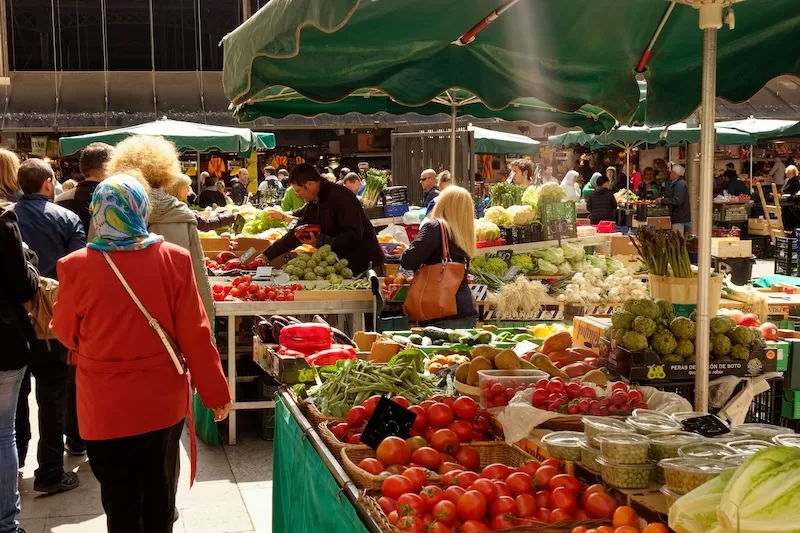
Food inflation tells a story of two different baskets. In countries with strong local agriculture (Mexico, Vietnam, or Greece, for example) the price of locally grown staples has a gravity that keeps them relatively affordable for residents, even as labor costs rise.
The real divergence happens when you try to maintain a home diet. Imported goods are currently being squeezed by a cocktail of high container shipping costs and increased trade friction. While global commodity prices (like sugar and oils) have cooled slightly in 2026, the retail price for that imported jar of almond butter or specific brand of cereal is often double or triple the local alternative.
This creates a clear fork in the road for the expat:
- The Adaptation Strategy: Shifting your palate to what grows within 100 miles. It’s not immune to inflation, but it’s shielded from the volatility of the global supply chain.
- The Nostalgia Premium: Insisting on the Standard International Diet. This is where you’ll feel the full brunt of inflation.
Shifting your palate toward what grows within a hundred-mile radius has evolved into a strategic hedge against a global supply chain that seems to treat predictability as an historical concept. Relying on local harvests provides a much-needed buffer against a world that is becoming increasingly expensive to traverse, ensuring your dinner plans aren’t held hostage by a shipping logjam or a sudden spike in aviation fuel.
Read More Like This: Navigating High Inflation
Destinations Respond Differently to Inflation
In the old expat playbook, we chose destinations based on the postcard factor: white sand, rolling vineyards, diverse nature, blue skies, or colonial charm. But in 2026, the savvy mover is looking past the sunset and straight at the power grid. Inflation exerts its pressure unevenly, finding the specific structural cracks in a nation’s foundation. The way a country is built—its reliance on imports, its energy policy, its legislative protections—ultimately dictates how much of that economic pain is passed on to the person trying to pay their rent.
The Deep Value Fortresses
Places with diversified, self-sustaining economies are becoming the new gold standard for stability. If a country produces its own food and generates its own energy, it has a built-in shock absorber. Nations like Norway and Iceland continue to rank at the top of the 2026 Quality of Life indices specifically because their energy independence (hello, renewables) shields residents from the fossil fuel roller coaster. Of course, the entry price for this level of security is steep; these aren’t destinations for the budget-conscious expat looking to arbitrage their way to wealth. Instead, they represent a high-premium insurance policy for your lifestyle, offering a predictable environment where the social safety net is as robust as the geothermal grid.
On the other end of the spectrum, countries with massive domestic agriculture (like Vietnam or Mexico) provide a different kind of resilience. They allow you to eat within a hundred-mile radius and bypass the trade friction costs currently plaguing imported goods.
The conclusion is your best move is to bet on a system that can feed and power itself if the global supply chain decides to take a day off.
The Import Trap
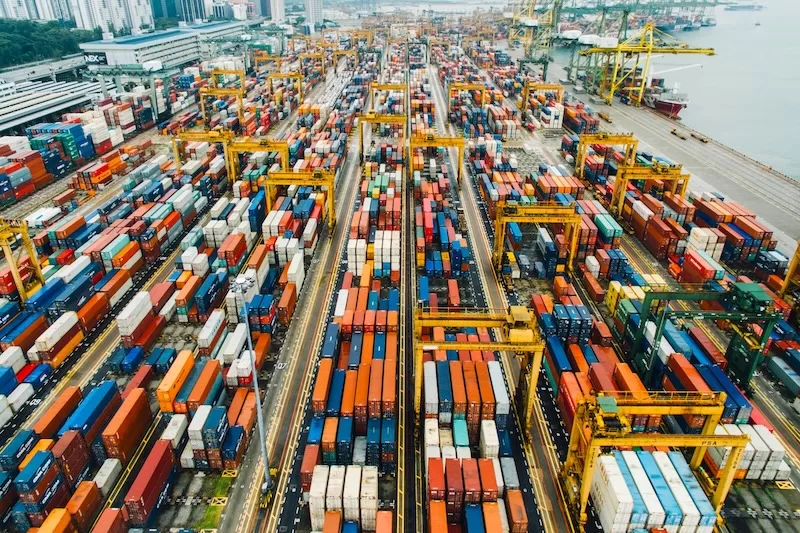
On the flip side, island nations and import-heavy economies are feeling the heat. When your lifestyle is 90% container-shipped, the price of the item is just the starting point. You’re also subsidizing the global fossil fuel market, the rising overhead of maritime labor, the tangled mess of port logistics, and the constant gamble of currency fluctuations. It’s a bill that grows longer every time a ship gets stuck or a central bank has a bad day. These regions are seeing compounding inflation, where every link in the supply chain adds a new layer of cost.
Infrastructure as an Inflation Buffer
Perhaps the most overlooked budget hack is high-quality public infrastructure. Reliable public transport, functional public healthcare, and stable utilities act as a massive subsidy for your life. In a city with a world-class metro, you don’t need to worry about soaring gas prices or car insurance. In a country with a scaling public health system, your 10.5% medical inflation on private premiums becomes a choice, not a life-or-death necessity.
Expats who once prioritized scenery are now realizing that a beautiful view is a lot less romantic when the power goes out or the only way to get groceries is a $30 Uber ride. In 2026, systems are the new scenery.
Inflation Abroad and Long-Term Residency Planning
In 2026, the biggest threat to your forever home abroad is a change in the consumer price index. Inflation has introduced a sneaky new layer of complexity to residency planning: the gap between being legally eligible and practically affordable.
The Retiree’s Eroding Edge
For retirees and those on fixed incomes, inflation is a silent predator. The comfortable permanent vacation budget of 2021 can morph into a joyless allowance by 2026 as purchasing power erodes in real-time. If you settled in a country where your pension initially funded a king’s lifestyle, a steady 5% local inflation rate effectively deletes over 21% of your spending power within five years. That math eventually forces an uncomfortable lifestyle audit, as the nest egg remains the same size while the actual nest continues to shrink around you.
The Remote Worker’s Reverse Arbitrage
Working expats are facing a more volatile calculus. If you’re earning in Dollars or Euros while living in a magnet city, you are at the mercy of currency de-coupling. As global inflation dynamics diverge (with US inflation projected to stay above 3% in 2026 while parts of Europe and Asia cool down) your strong currency can suddenly lose its muscle. The math is unforgiving. If your income remains flat while the local cost of a flat spikes due to regional demand, your geographic arbitrage reverses. You end up in the unenviable position of paying global north prices with a currency that’s being outpaced by the developing economy you moved to for the savings. It turns the dream of a cheaper life into an expensive lesson in macroeconomics, proving that a high-end paycheck is only as good as the local purchasing power it commands.
The Visa Threshold Creep
Perhaps the most overlooked pressure point is that visa requirements are rarely indexed in real-time. Until they are, and then they jump. We are seeing a global trend of financial threshold creep. In 2026, several popular routes have adjusted their bars to keep pace with rising costs. For instance, Portugal’s D8 Digital Nomad Visa now requires a minimum income of roughly €3,680 per month, reflecting the new 2026 minimum wage. Meanwhile, the minimum salary for “highly skilled” migrants in Belgium has climbed to over €3,700.
From Forecasting to Scenario Thinking
Long-term residency now requires scenario thinking. It’s no longer about asking, “What will inflation be?” (because nobody actually knows). It’s about asking:
- “What is my local currency exposure?” (Do I earn what I spend?)
- “How indexed is my residency?” (If the government raises the ‘proof of means’ bar by 20% tomorrow, am I still in?)
- “Is my lifestyle modular?” (Can I downshift my ‘Habit Tax’ without losing my mind?)
The goal is no longer to predict the future, but to build a residency plan that doesn’t collapse the moment a head of lettuce hits $5.
How Experienced Expats Are Adapting
The most seasoned expats are pivoting. While the new arrivals are busy flooding Facebook groups with indignance over the price of imported avocados, the veterans are executing a more sophisticated playbook. In 2026, we are seeing the rise of the strategic pragmatist, someone who realizes that a beautiful sunset is a poor hedge against a 15% jump in service costs.
This shift frequently begins with geographical diversification. The old all-in move is being replaced by a multi-hub strategy where expats split their time between regions with different cost structures. By spending the high-inflation summer months in a stable system fortress and shifting to a higher-value, lower-cost environment for the winter, they are geographic hedging. By not tying 100% of their life to one economy, they dilute their exposure to any single country’s inflationary spike.
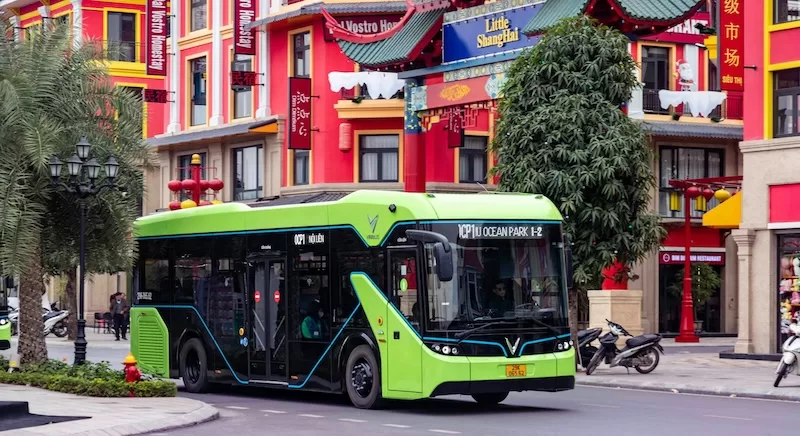
Parallel to this is the trend of lifestyle deflation, an intentional downshift to reclaim autonomy. It manifests as a local-first diet that drops the $12 imported cereal for market staples, or an infrastructure shift where expats swap a $400 monthly car payment for a city with a robust €50 transit pass.
Even housing is being optimized, with a new preference for smaller, energy-efficient lock-and-leave apartments in walkable neighborhoods over high-utility villas.
We are also seeing a resurgence in community-based living. This is resource sharing as a financial defense. In expat-heavy zones, neighbors are increasingly sharing everything from bulk-buy grocery runs to private security and even learning pods for children. This community structure acts as a vital buffer; when the price of a single private tutor spikes by nearly 6% this year, a shared pod keeps the education budget reasonable.
The definition of winning at expat life has fundamentally shifted. It’s no longer a contest of who can live on the smallest number of dollars. In an era of global volatility, the new status symbol isn’t a low cost of living; it’s a predictable one. Successful expats today measure their success by the total absence of financial surprises.
Inflation Abroad as a Filter, Not a Dealbreaker
It would be tempting to frame inflation as a giant “Keep Out” sign for the globally mobile, but that misses the real story. Inflation is a filter, not a deal breaker. It has a brutal but necessary way of revealing which destinations were built on fragile assumptions and which ones rest on durable foundations.
This economic pressure is separating the tourist traps (places that cater to short-term visitors with flashy, superficial affordability) from the resident strongholds, which sustain long-term lives through robust infrastructure and local resilience. For some, the rising tide of costs has forced a necessary exit. For others, it has simply clarified priorities. We are seeing fewer illusions and better questions. The “Where is the cheapest place to live?” query has been replaced by “Where is the most stable place to thrive?”
In this sense, inflation is maturing the expat dream. We’ve moved past the adolescent phase of chasing the lowest price tag and entered a more sophisticated era of realistic planning. Moving abroad these days requires more research and better math, but the result is a lifestyle that is less likely to collapse at the first sign of a market correction.
What to Watch Next
The next phase of the expat journey will not be a uniform experience. We are moving away from a world of synchronized shifts and into an era of regional divergence. As we look toward the future, the gap between those who muddle through and those who thrive will be defined by their ability to navigate three specific frontiers.
First, currency volatility is reclaiming its role as the ultimate budget architect. The era of broad U.S. dollar dominance is softening, with the Euro and Yen showing signs of a stabilization rally as central bank policies decouple. According to recent FX outlooks for 2026, the narrowing of interest rate spreads between the Fed and the ECB could push the Euro toward the 1.18–1.20 range. For those earning in USD but living in the Eurozone, that’s an automatic 10% pay cut on your local purchasing power. The lesson? Don’t just track inflation; track the real price of your income.
Second, expect a significant policy lag. Governments are famously slow to adjust visa income thresholds and tax brackets to the lived reality of 2026 prices. This creates tension where you might be legally compliant on paper but financially squeezed on the ground. We’re already seeing this in hubs like Mexico and parts of Southeast Asia, where nomad-driven inflation is outpacing the official CPI used to set visa requirements.
Finally, we must accept that the era of simplistic cost comparisons is not as useful anymore. What should replace it is a more grounded, systems-first approach. Moving abroad has always been a major economic decision, even when we tried to dress it up as a purely lifestyle one. Shifting the focus from “how much can I save?” to ” where am I least vulnerable?” allows the modern expat to build a life that might not necessarily be much cheaper, but fundamentally more sustainable.
Key Takeaways
Q1. How does inflation abroad affect day-to-day expat life differently than at home?
Inflation in a foreign country is less of a straight line and more of a zigzag. Back home, you probably have an intuitive sense of when the price of milk or electricity is about to jump. Abroad, those patterns are foreign until they hit your bank account.
For many expats, the biggest difference is not the size of price increases, but where they appear. Essentials like local food, public transport, or utilities may remain stable, while housing in popular neighborhoods or English-speaking gym memberships rise faster. That unevenness can feel more disruptive until people learn how costs are structured locally.
Over time, most expats adjust by shifting habits and understanding which expenses are flexible and which are not. The learning curve is steeper, but it usually levels out.
Q2. Which costs tend to rise first for expats living overseas?
Housing is almost always the first domino to fall, especially in popular expat areas. Private healthcare, insurance, and imported products often follow, while locally produced food and public services tend to change more slowly.
Q3. How can expats evaluate affordability beyond online cost-of-living indexes?
Cost-of-living indexes are the filtered selfies of the economic world: they look great but hide the blemishes. To get the truth, you need to look at structure, not just numbers. A better approach is to track “Fixed vs. Flex” costs during a three-month trial. Talk to long-term residents about their last three lease renewals and check the price of a private pediatric visit versus a local one. Affordability is less about finding the lowest prices and more about understanding which costs are predictable over time.
Q4. What types of destinations handle inflation better for long-term residents?
Destinations with strong local food systems, diversified economies, and reliable infrastructure tend to absorb inflation more smoothly. When essentials are produced locally and services are not fully tied to international pricing, daily life remains more stable. These systems help keep essential costs predictable over time.
Q5. How should inflation factor into long-term residency or retirement planning?
Inflation should be treated as a planning variable, not a deterrent. For retirees and fixed-income residents, conservative budgeting and choosing destinations where essential costs are locally anchored can help preserve purchasing power over time.
Planning With Eyes Open
Inflation hasn’t changed the fundamental appeal of international living; it has simply raised the bar for entry. The romantic notion of chasing cheap has been replaced by the strategic necessity of building resilience. Moving overseas nowadays shouldn’t be about a lower price tag, but about building a life that remains rewarding and sustainable even when global markets decide to throw a tantrum.
For those willing to look past the clickbait headlines and the flat averages of online indexes, a high quality of life is still very much on the table. The difference in this new era is that success depends less on lucky assumptions and more on a deep understanding of local systems. It’s about knowing how a city’s infrastructure acts as a buffer, how food production handles supply shocks, how the local currency tracks against your income, and exactly how much flexibility you’ve built into your own lifestyle to handle a sudden shift in the wind.
That kind of clarity doesn’t come from a viral video or a glossy ranking. It comes from the unglamorous work of staying informed and tracking how global forces play out in the specific corner of the world you want to call home.
If you want to maintain that edge, subscribe to the Escape Artist newsletter. This is where we go beyond the surface to share even more real-world insights on international mobility, finance, expat living, and destinations that you won’t find anywhere else. Our contributors have lived the math and navigated the visas, providing you with a perspective that is as grounded as it is informed.
Contact Author
"*" indicates required fields
Stay Ahead on Every Adventure!
Stay updated with the World News on Escape Artist. Get all the travel news, international destinations, expat living, moving abroad, Lifestyle Tips, and digital nomad opportunities. Your next journey starts here—don’t miss a moment! Subscribe Now!


