Here is a question that quietly separates the people who understand second residencies from the people who are still shopping for a holiday. If someone offered you legal residency in a country you had no intention of ever living in, would you take it? Most people instinctively say no, because they are picturing a place to move to. The ones who say yes are picturing something entirely different, and they tend to be the ones who end up with the strongest position.
The mistake almost everyone makes when they start thinking about a second residency is to treat it as a decision about where to live. They picture the beaches, the cafes, the weather, and they judge each option by whether they would enjoy waking up there. That is the right way to choose a home. It is completely the wrong way to choose a residency, because a residency and a home are not the same thing, and confusing the two leads people to overlook some of the most valuable options available.
A second residency is a legal tool. Its job is to give you options, a tax position, a fallback, a foothold in another jurisdiction, a step toward a second passport. Whether the country happens to be somewhere you would want to retire is very often beside the point, and in some of the best cases it is precisely the countries you would never choose to live in that make the smartest strategic sense.
The Case for Paraguay Residency
Paraguay is the perfect illustration, because almost nobody dreams of retiring there. It is landlocked, low-profile, and rarely appears on a single lifestyle wish list. Ask a hundred people planning a move abroad where they picture themselves and not one of them says Asunción. And yet, for a specific and growing group of internationally minded people, Paraguay has quietly become one of the most useful residencies in the world.
The reason is a combination that is genuinely hard to find anywhere else. Paraguay runs a pure territorial tax system, meaning it taxes only income earned inside the country. Foreign pensions, foreign dividends, foreign business profits, and foreign capital gains fall entirely outside its tax net. The residency itself is among the cheapest available, with packages starting in the low thousands of dollars rather than the six-figure sums that European programs demand, and crucially it requires you to be physically present only once a year to maintain it.
Read that again, because it is the whole point. You can hold a legitimate, tax-advantaged residency in Paraguay while spending almost no time there, and it puts you on a path to citizenship in as little as three years. Nobody is suggesting you build a life in Asunción. The value is that you do not have to. Paraguay is not competing to be your home. It is competing to be the most efficient legal foothold you can hold while your actual life happens somewhere else entirely.
The people who have quietly figured this out are a revealing crowd. Online entrepreneurs, remote workers, and minimum-footprint expats have made Paraguay a favorite precisely because it lacks the marketing budget and the crowds of Panama, Portugal, or the UAE. There is a certain irony in it. The very obscurity that keeps Paraguay off the wish lists is part of what keeps it cheap, uncrowded, and efficient, and the people who benefit most are the ones who were never looking for a postcard in the first place.
The Difference Between a Residency and a Home
Once you see the Paraguay example clearly, the whole category starts to make sense. The features that make a country a wonderful place to retire, a beautiful coastline, a rich culture, a vibrant social scene, have almost nothing to do with the features that make a residency strategically valuable. Those are entirely different qualities: a favorable tax treatment of foreign income, a low cost of entry, a minimal physical presence requirement, a stable legal system, and a clear path to something more permanent.
A country can score brilliantly on the first set and poorly on the second. Italy is a glorious place to live and a genuinely painful place to hold residency for tax purposes. A country can also score poorly on the first and brilliantly on the second, which is exactly the situation with Paraguay, and it is why the people who think strategically end up in places the lifestyle crowd never considers.
This is not an argument against beautiful places. It is an argument for knowing which question you are answering. If you want a home, choose for lifestyle. If you want a legal and financial tool, choose for the tool. And if you want both, the smartest move is often to separate them, holding your strategic residency in one country while actually living, entirely legally, somewhere you love.
The Other Countries That Prove the Rule
Paraguay is the clearest case, but it is far from the only one. The United Arab Emirates is a striking example at the opposite end of the cost spectrum. Plenty of people would happily live in Dubai, but plenty more would not, put off by the heat, the pace, or the distance from home, and yet the UAE residency is one of the most sought-after in the world purely for what it does. Zero personal income tax, a stable and safe environment, and a Golden Visa that now extends to professionals, freelancers, and remote workers make it a base worth holding whether or not you ever intend to spend a full summer there.
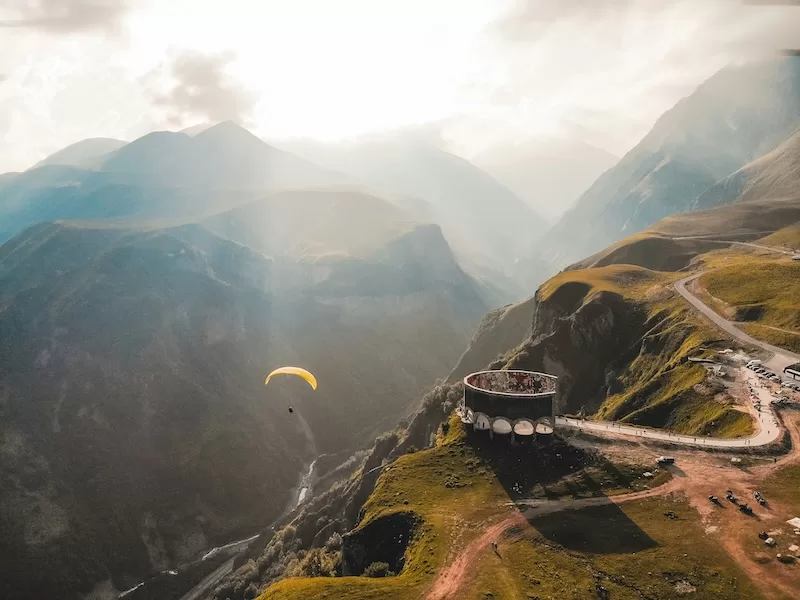
Georgia belongs in the same conversation. Few people move to Tbilisi for the romance of it, but the country offers visa-free entry for a full year to most nationalities, a territorial tax system, and a 1% tax regime for small businesses that has made it a magnet for location-independent entrepreneurs. It is a foothold that costs almost nothing to establish and asks almost nothing of you, which is precisely what a good strategic residency should do.
Even Panama, which many people genuinely would enjoy living in, is most often used as a tool rather than a home. Its territorial tax system and its established residency programs mean that a great many of the people who hold Panamanian residency spend most of their year elsewhere, using it as the tax-efficient anchor of a life lived across several countries. In each of these cases the residency earns its place not because the country is the dream, but because the residency does a specific job exceptionally well.
How to Think About It for Yourself
The practical shift this requires is small but powerful. Instead of asking where you would like to live, which is a lifestyle question, start by asking what you want the residency to actually achieve. Are you looking to reduce tax on foreign income? To secure a fallback in case things change at home? To start a clock ticking toward a second passport? To diversify your legal footing across more than one country? Each of those goals points toward different jurisdictions, and very few of them point toward the places that top the retirement lists.

The other liberating realization is that you are not limited to one. Many internationally minded people hold two or even three residencies at once, combining, for example, a strategic territorial residency in Paraguay or Panama with a lifestyle base somewhere they genuinely love. The key is to manage tax residency deliberately, since the country where you spend more than 183 days a year is usually the one that has first claim on taxing you, but within that rule there is enormous room to separate the place that gives you the paperwork from the place that gives you the life.
This is also where qualified advice earns its keep. The rules on physical presence, tax residency, and the interaction between your home country and your new one are specific and unforgiving, and the difference between a structure that works and one that quietly creates problems is almost always in the details. A good cross-border adviser will not ask you where you want to live. They will ask what you want the residency to do, and then point you toward the jurisdictions that do it best, wish list or not.

The Bottom Line
The best second residency for you is not necessarily anywhere you would ever want to live, and letting go of the assumption that it should be is the single most useful adjustment you can make when you start planning. The countries that photograph well and the countries that function well as legal tools are two overlapping but genuinely different lists, and the people who get the most out of their planning are the ones who stop conflating them.
A residency in a country you would never retire to is not a compromise or a consolation prize. It is often the sharpest instrument in the toolkit, chosen not despite the fact that you would never live there but because living there was never the point. The home is a separate decision, and a far more enjoyable one, made freely once the strategic foundation is already in place.
So the next time a list tells you the best places to move, it is worth remembering that the best place to hold a residency and the best place to build a life are answering two different questions. Get clear on which one you are asking, and a whole set of options that most people overlook suddenly comes into view, quietly waiting in the countries nobody puts on a wish list.
Common Questions About Strategic Residencies
Do you have to live in Paraguay to keep its residency?
No. Under the current rules, temporary residents need to enter the country at least once a year, and permanent residents once every three years, with any single entry resetting the clock. There is no minimum number of days to spend in the country.
What is a territorial tax system?
A system that taxes only income earned inside the country’s borders. Foreign pensions, dividends, business profits, and capital gains fall outside the net. Paraguay, Georgia, and Panama all work this way, which is why they anchor so many Plan B structures.
Can you hold residencies in more than one country?
Yes, and many internationally minded people hold two or three. The constraint to manage is tax residency: the country where you spend more than 183 days a year usually has first claim on taxing you, so the structure needs deliberate planning with a cross-border adviser.
Is a Paraguay residency the same as a second passport?
No. Residency is the right to live in a country; a passport is citizenship. Residency is the usual first step, and in Paraguay’s case three years of permanent residency is the statutory minimum before applying for naturalization, provided you can show genuine ties to the country.
Contact Author
"*" indicates required fields
Stay Ahead on Every Adventure!
Stay updated with the World News on Escape Artist. Get all the travel news, international destinations, expat living, moving abroad, Lifestyle Tips, and digital nomad opportunities. Your next journey starts here—don’t miss a moment! Subscribe Now !
Here is a question that quietly separates the people who understand second residencies from the people who are still shopping for a holiday. If someone offered you legal residency in a country you had no intention of ever living in, would you take it? Most people instinctively say no, because they are picturing a place to move to. The ones who say yes are picturing something entirely different, and they tend to be the ones who end up with the strongest position.
The mistake almost everyone makes when they start thinking about a second residency is to treat it as a decision about where to live. They picture the beaches, the cafes, the weather, and they judge each option by whether they would enjoy waking up there. That is the right way to choose a home. It is completely the wrong way to choose a residency, because a residency and a home are not the same thing, and confusing the two leads people to overlook some of the most valuable options available.
A second residency is a legal tool. Its job is to give you options, a tax position, a fallback, a foothold in another jurisdiction, a step toward a second passport. Whether the country happens to be somewhere you would want to retire is very often beside the point, and in some of the best cases it is precisely the countries you would never choose to live in that make the smartest strategic sense.
If you'd like to read the full story, simply enter your email to subscribe to our newsletter.
For even more expert insights, unmissable resources, and exclusive invites, explore our premium subscription offers here.
OR
Already a Subscriber? Click here to login
Subscription required
You've reached your limit of free articles. For full access to Escape Artist, and all of our insights on travel, moving abroad, and the digital nomad life, click here to Subscribe.
Already a Subscriber? Log in here