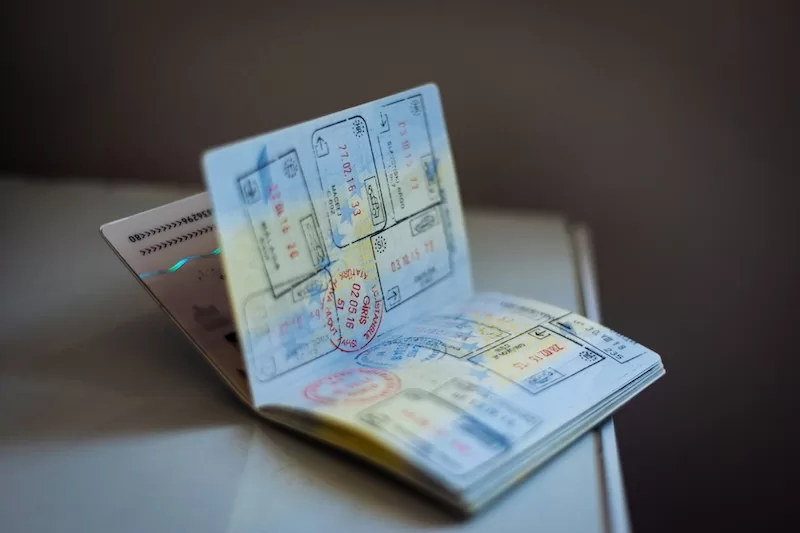
For a British expat, the passport most likely to cause trouble is the one already in a drawer at home: the burgundy book that expired last year or was damaged in a move. Others were issued so long ago they predate the current design. If you are British and live abroad, that document is your only lawful way across most borders, and letting it lapse creates a bigger problem than most people expect. Escape Artist readers spend a lot of energy acquiring a second or a new passport. Far fewer think about keeping the British one they already hold in working order, which is the document that actually gets stamped at the gate.
An expired or damaged British passport is a hard stop at the border
Airlines and border officers do not treat an out-of-date passport as a formality. Most countries require at least six months of validity beyond your entry date, so a British passport can fail the test months before its printed expiry. A washing-machine cycle or a tear along the laminate is enough for a carrier to refuse boarding, because a damaged passport reads to them as a compromised one. Passports issued before 2002 sit in their own category: they predate later security and machine-readable standards, and very old books often need extra identity checks before HM Passport Office will replace them.
Lost and stolen passports carry a second cost that catches people out. Once you report one, it is cancelled permanently, so a passport that later turns up in a coat pocket is dead paper. In every one of these cases the remedy is identical: a new, current British passport.
What HM Passport Office asks of an overseas applicant
You apply through GOV.UK from wherever you live, pay the fee, upload your photo, and send your existing passport to HM Passport Office for cancellation and return. There is no Post Office Check and Send service outside the UK, and the in-person fast-track options offered at home are not available overseas. Since 2014, HM Passport Office has processed every overseas application from within the United Kingdom rather than at local embassies or consulates, so there is no counter in your city where a person checks your forms and hands the passport back the same week. Processing does not begin until your old passport physically arrives, which is where the calendar starts working against you.
The application itself is strict on detail. Your digital photo has to meet exact rules on background, lighting, head position and expression, and a rejected photo restarts the clock. If your name has changed since your last passport, you need the certificate that proves it, a marriage certificate or deed poll, and the details have to line up exactly. First adult passports and applications for children add identity and consent requirements on top.
Renewing your UK passport from overseas
Because British and Irish citizens cannot obtain a UK Electronic Travel Authorisation, a British expat with an expired or damaged passport, or one issued before 2002, has no shortcut at the border: the only fix is a current British passport, still issued by HM Passport Office. Applying from abroad is where it stalls, on rejected photos, unclear old passport histories, name mismatches after a marriage or divorce, and courier delays as the document moves across borders. That gap between what the standard overseas process offers and what a hard travel deadline needs is where a handful of specialist agents now operate: ASAP Passports, for example, is a registered UK passport agent that manages the whole application through HM Passport Office so you never have to fly home to sort it. The passport is still issued by the Passport Office. The agent pre-checks the application pack and arranges DHL Express collection and secure return. Eligible adult renewals complete in two weeks or less.
Timing the renewal before you have to travel
The cheapest route is the standard GOV.UK service, and if you have several clear months before any trip, it is usually all you need. Pressure appears when a booked flight or a residence visa tied to your passport number collapses the timeline. A family emergency does the same. Overseas return mail is unpredictable, and a single rejected photo or a queried old passport can push a routine renewal past the date you were counting on.

Two habits remove most of the risk. Check your expiry against the six-month rule the moment you start planning any travel, not the week before, and do not book non-refundable flights until the new passport is physically in your hand. If a deadline is already close, that is the point to weigh a specialist agent against the standard service and decide which one actually fits the date you are working toward. The document you already hold is the one that moves you across borders, and it is worth treating with the same care you gave the second passport you worked to acquire.
Contact Author
"*" indicates required fields
Stay Ahead on Every Adventure!
Stay updated with the World News on Escape Artist. Get all the travel news, international destinations, expat living, moving abroad, Lifestyle Tips, and digital nomad opportunities. Your next journey starts here—don’t miss a moment! Subscribe Now !
For a British expat, the passport most likely to cause trouble is the one already in a drawer at home: the burgundy book that expired last year or was damaged in a move. Others were issued so long ago they predate the current design. If you are British and live abroad, that document is your only lawful way across most borders, and letting it lapse creates a bigger problem than most people expect. Escape Artist readers spend a lot of energy acquiring a second or a new passport. Far fewer think about keeping the British one they already hold in working order, which is the document that actually gets stamped at the gate.
An expired or damaged British passport is a hard stop at the border
Airlines and border officers do not treat an out-of-date passport as a formality. Most countries require at least six months of validity beyond your entry date, so a British passport can fail the test months before its printed expiry. A washing-machine cycle or a tear along the laminate is enough for a carrier to refuse boarding, because a damaged passport reads to them as a compromised one. Passports issued before 2002 sit in their own category: they predate later security and machine-readable standards, and very old books often need extra identity checks before HM Passport Office will replace them.
If you'd like to read the full story, simply enter your email to subscribe to our newsletter.
For even more expert insights, unmissable resources, and exclusive invites, explore our premium subscription offers here.
OR
Already a Subscriber? Click here to login
Subscription required
You've reached your limit of free articles. For full access to Escape Artist, and all of our insights on travel, moving abroad, and the digital nomad life, click here to Subscribe.
Already a Subscriber? Log in here