
Picture this: You’re in one of the many co-working spaces that Bali has to offer, the afternoon sun cutting through bamboo slats. You log into your business bank to wire a payment, switch tabs to QuickBooks to reconcile last month, and then — because the Wi-Fi here lags — tether your phone and fire off a dozen client emails from a café.
Tonight you’ll do it all again from a Mexico City Airbnb. Tomorrow? Airport lounge Wi-Fi. The business runs like clockwork, borders dissolving as you tap from one screen to the next.
Now ask yourself: is the digital door wide open?
Expat entrepreneurs and digital nomads are obsessive about tax efficiency, multi‑currency banking, and residency compliance. They build offshore LLCs, structure their lives across jurisdictions, and treat financial privacy like a religion.
Yet the access points to all that clever architecture — the laptop in a café, the phone on hotel Wi‑Fi, the single set of credentials logging into Stripe from three continents in one week — those points are left completely exposed. That’s the gap.
While the globally mobile business community has mastered financial decentralization, it has largely ignored network decentralization, and that oversight is now the most expensive mistake a borderless business can make.
Most founders pour energy into building a decentralized income stream as an expat, but the goal is that “no single point of failure” can derail your financial wellbeing.
The irony? Digital security gaps create exactly that kind of single point of failure — one compromised laptop on one dodgy network can unravel years of borderless independence.
The Illusion: Why the “Smart Money” Crowd Feels Safe
It’s easy to feel invincible when the paperwork is perfect. Your LLC sits in Wyoming, your bank accounts span Singapore and other global financial hubs, and your tax advisor has a folder full of double‑taxation treaties with your name on them. That confidence, though, is an illusion. Financial privacy isn’t total security.
Scale makes the blind spot bigger. The worldwide digital nomad population exceeded 40 million in 2025, with projections pointing toward 60 million by 2030, and the US alone accounts for 18.1 million, a 147% increase since 2019, according to SpeakWise’s 2026 statistics.
Another 69 countries now offer digital nomad visas, creating a legal framework for people to work across borders with income thresholds between $1,500 and $5,000 a month. Mainstream cross‑border work is here, and with it, millions of business owners are replicating the same mistake: they protect the structure but forget the signal.
Every balance check, every invoice upload, every client contract signed digitally funnels through one laptop, one set of credentials, and one entirely untrusted network connection at a time. That’s the crack in the armor — a single point of failure dressed up as a “flexible workspace.”
The Network: Why “Just Use the Wi‑Fi” Is the Most Expensive Phrase in a Borderless Business
The daily life of a location‑independent business is a chain of public networks: co‑working spaces, hotel lobbies, airport lounges, café routers with sticky notes displaying the password. Each login is a fresh threat surface.
The numbers don’t sugarcoat it: 89% of Wi‑Fi networks tested contain vulnerabilities that allow attackers to bypass even WPA2 and WPA3 encryption, and many employees regularly use hotel or airport Wi-Fi for work tasks, as found by The Network Installers.
If that feels abstract, consider this: 43% of public Wi‑Fi users have experienced data breaches, with man‑in‑the‑middle (MITM) attacks and packet sniffing as the most common threats. In an MITM attack, someone on the same network quietly intercepts everything you send — passwords, session tokens, client data — without you ever noticing. These attacks account for 19% of all successful cyberattacks.
Crossing borders multiplies the danger. Every new jurisdiction means unfamiliar infrastructure, no trusted IT environment, and often a home router — the very thing you’d never think twice about — representing over 50% of the most exploitable devices in the remote work ecosystem, according to DeepStrike’s 2025 analysis.
You wouldn’t conduct a banking call with a stranger at the next table. So why transfer sensitive business files over a network where that stranger is sitting, virtually, between you and the internet?
The Numbers: What a Breach Actually Costs a Small Borderless Business
Headlines love the multi‑million‑dollar enterprise breach. The global average cost of a data breach hit $4.44 million in 2025, slightly down from the 2024 record of $4.88 million, according to Varonis. But for the borderless entrepreneur, those figures are a decoy. The real reckoning lives in the small‑business numbers.
The average data breach for a business with fewer than 500 employees costs $3.31 million, StationX reports, while recovery costs alone average $120,000 and downtime costs $53,000 per hour.
Even a relatively modest attack can crush a lean operation: 40% of SMBs say a cyberattack costing $100,000 or less could put them out of business, and 75% say they couldn’t continue operating if hit with ransomware.
And yes, the threat is disproportionately on their doorstep — 43% of all cyberattacks target small businesses, 61% of SMBs experienced a breach in the past year, and a staggering 88% of those breaches included a ransomware component, compared to just 39% at larger organizations.
Remote work inflames the damage. Varonis shares that data breaches cost an average of $131,000 more when remote work was a contributing factor. For the US-incorporated nomad or any business with American ties, the sting is even sharper: the average data breach in the United States costs almost double the global average.
The real question isn’t if a location‑independent business will face an attack. It’s how exposed the business is when an attacker finally decides to squeeze.
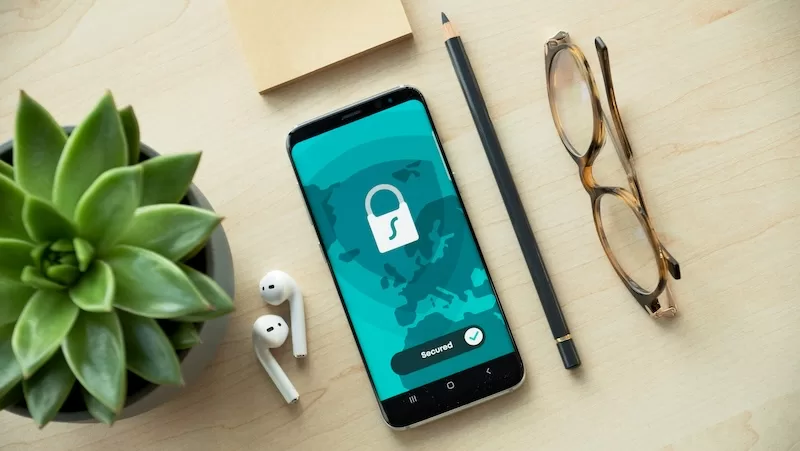
The People Problem: Insider Threats, BYOD, and the Human Attack Surface
When your team of three people spans four time zones, the weakest link might be the very person sending late‑night invoices from a shared Airbnb.
Insider threats climbed 58% with remote work adoption; 63% of businesses suffered breaches due to remote work, and 70% of organizations now express deep concern about insider risks, per InsiderRisk.io’s 2025 research.
Worse, these aren’t disgruntled saboteurs — they’re well‑meaning teammates rushing through a login page on unsecured devices.
Remote workers are three times more likely to expose data unintentionally than office‑based colleagues, and 48% of organizations suffered breaches linked to personal (BYOD) devices in the past year — even though 95% of those organizations allow their use.
In a borderless business, BYOD isn’t a policy loophole; it’s the entire operating model. The average cost to resolve insider threat incidents reached $17.4 million per organization globally, taking 81 days to detect and contain.
Human error is the root of it all. StationX notes that 95% of cybersecurity incidents trace back to human error, and 68% of SMB phishing breaches start with a single untrained staff member. The silver lining: employees who get consistent simulation‑based training are seven times less likely to fall for phishing.
Then there’s the sprawl nobody talks about: shadow IT. The average company has 975 unknown cloud services versus only 108 tracked ones, InsiderRisk.io reveals. Two‑thirds of Fortune 1000 employees use unauthorized apps, and shadow IT accounts for 42% of all company applications.

When your “company” runs on a mix of personal Google Workspace accounts, a shared Notion board, and a WhatsApp group, that blindspot isn’t a side note — it’s the entire attack surface.
The VPN Paradox: Why the Obvious Fix Isn’t Fixing the Problem
VPN adoption is shockingly low where it matters most. Only 36% of UK businesses use a VPN for remote staff, the UK Government’s 2025/2026 Cyber Security Breaches Survey shows. Fifty-six percent of organizations experienced one or more VPN-related cyberattacks in the past year (2025).
Even when a VPN is available, human behavior sabotages it: 70% of remote workers skip the VPN entirely when connecting to company systems, according to Security.org’s 2025 research.
Understanding why working abroad means raising your cybersecurity standards is the first step to closing the gap between feeling safe and actually being protected.
The Data Elephant in the Room: Cross‑Border Privacy Compliance
There’s a secondary nightmare that most locations‑independent businesses sleepwalk into. The World Economic Forum’s 2025 guidance stresses that regulations like GDPR and a wave of region‑specific laws now demand real‑time visibility into what data is collected, where it’s stored, how it moves, and who accesses it.
Imagine: your contractor in Thailand processes client data stored on servers in Germany for a business incorporated in Delaware. Each country has its own data sovereignty rules, and the business owner is responsible for all of them.
Yet, in the UK, 14% of businesses hold personal data unprotected by anonymisation or encryption, the 2025/2026 survey found, and for those operating outside clear regulatory scrutiny, the encryption gap is almost certainly wider.
A data breach in this context doesn’t just trigger fines; it destroys client trust across every market at once. There’s no “home market” left to retreat to.
The Protection‑Is‑Cheaper‑Than‑Reality Argument
If the stats above feel suffocating, the cost of prevention is a sharp exhale. StationX’s 2026 analysis puts annual cybersecurity prevention for a typical small business at $5,000–$15,000, while a single ransomware incident averages $120,000 in recovery and can climb to $1.6 million. That’s 50–60 times cheaper to prevent than to fix.
Yet 47% of businesses with fewer than 50 employees allocate zero budget to cybersecurity, and 51% have no security measures at all. The gap between awareness and action is staggering, especially because the threat doesn’t pause: 43% of UK businesses experienced a breach in the last 12 months, phishing led 38% of them, and cybercrime cost businesses an estimated $10.5 trillion globally in 2025, with projections reaching $15.63 trillion by 2029, VikingCloud reports.
In 2026, 75% of SMB owners name cybercrime as their #1 operational threat — above inflation, supply chain disruption, and natural disaster. The concern is there. The spending isn’t. That’s the gap we need to close, fast.
What “Fixing the Gap” Actually Looks Like
No single tool saves you, but a few principles can harden a borderless business without requiring an enterprise security team.
1. Encrypt everything, everywhere. All business traffic should be encrypted regardless of the network. Given that 89% of Wi‑Fi networks test vulnerable, no public hotspot should ever be trusted without encryption. A properly enforced business VPN is table stakes.
2. Adopt zero‑trust architecture. Move beyond castle‑and‑moat thinking. Every access request gets authenticated and authorized individually. For a team spread across continents, this mirrors your distributed reality.
3. Secure the endpoint. With BYOD usage at 95% and nearly half of breaches linked to personal devices, endpoint protection — device encryption, remote wipe, enforced updates — becomes non‑negotiable.
4. Build a human‑layer defense. Since 95% of incidents stem from human error and phishing leads the attack pack, simulation‑based training should be a recurring investment, not a one‑time onboarding video. Trained teams are seven times less phishing‑prone.
5. Map your data and control access. You can’t protect what you can’t see. Audit where business data lives, who accesses it, and from which jurisdictions. With 975 shadow cloud services lurking on average, awareness alone closes a massive vulnerability.
6. Design an incident response plan that spans time zones. A breach at 3am for you could be midday for your contractor. Have a plan that accounts for distributed teams and the legal obligations of every jurisdiction where you operate.
Caveats & Counterpoints
Let’s be realistic: a solo founder running a micro‑business cannot build enterprise‑grade zero‑trust overnight. The minimum viable security posture — encrypted connections, multi‑factor authentication, device encryption, and phishing awareness — gets you layered protection without bankrupting you.
Tools alone breed complacency. The fact that 70% of remote workers skip the business VPN anyway both scream the same warning: even installed security fails if it’s not used consistently.
Many location‑independent owners also assume that a “digital nomad‑friendly” jurisdiction with attractive tax treatment has lax data‑privacy enforcement. GDPR’s extraterritorial reach — and the mushrooming of similar laws worldwide — makes that a dangerous bet.
Conclusion
This article isn’t a product guide or a technical manual. It’s a gap analysis — a spotlight on the structural vulnerability that your spreadsheet‑perfect offshore plan doesn’t address. Use it as the starting line for a professional security assessment tailored to your specific setup.
Because when your business can run from anywhere, the question isn’t whether you’re protected at home. It’s whether you’re protected everywhere else.
Contact Author
"*" indicates required fields
Stay Ahead on Every Adventure!
Stay updated with the World News on Escape Artist. Get all the travel news, international destinations, expat living, moving abroad, Lifestyle Tips, and digital nomad opportunities. Your next journey starts here—don’t miss a moment! Subscribe Now !
Picture this: You’re in one of the many co-working spaces that Bali has to offer, the afternoon sun cutting through bamboo slats. You log into your business bank to wire a payment, switch tabs to QuickBooks to reconcile last month, and then — because the Wi-Fi here lags — tether your phone and fire off a dozen client emails from a café.
Tonight you’ll do it all again from a Mexico City Airbnb. Tomorrow? Airport lounge Wi-Fi. The business runs like clockwork, borders dissolving as you tap from one screen to the next.
Now ask yourself: is the digital door wide open?
If you'd like to read the full story, simply enter your email to subscribe to our newsletter.
For even more expert insights, unmissable resources, and exclusive invites, explore our premium subscription offers here.
OR
Already a Subscriber? Click here to login
Subscription required
You've reached your limit of free articles. For full access to Escape Artist, and all of our insights on travel, moving abroad, and the digital nomad life, click here to Subscribe.
Already a Subscriber? Log in here