
There are two questions worth asking about a digital nomad visa. The first is whether you earn enough to get one. Every guide answers that. The second is whether the years count for anything, and almost nobody answers that at all.
The second question is the one that costs money to get wrong. A year on the wrong permit is a year you cannot get back. If you are quietly building toward a second residency or a passport, a visa whose years do not count is a year spent standing still. If you never intend to stay, a visa that builds toward permanence is a cost you did not need to pay.
So we went and checked. Eight countries, eight sets of rules, read against the government source rather than the last guide that copied the guide before it. Four things per country: what the income test actually is, whether the time counts toward permanent residence, what happens to your foreign income, and whether the visa is open today.
Three findings came out of it that we did not expect.
Three of the eight have no digital nomad visa at all. Honduras, Nicaragua and Vietnam appear in search results for digital nomad visas and rank for them. None of them has one. What they have are older residency routes that work well for remote workers, and those routes are genuinely useful. But they are not nomad visas, and the difference matters when you are planning around a rule that does not exist.
Only one of the eight builds toward permanent residence, and it is the one nobody writes about. Guatemala. Not Croatia, which effectively does not. Not Georgia, whose famous programme is no longer running.
One exists in law but you cannot apply for it. The Philippines signed its digital nomad visa into being in April 2025. Seventeen months later there are still no implementing rules, no list of qualifying countries, and no application route.
The table
Everything below was checked on 29 September 2026. Where a figure moves with a published statistic, we have said which statistic and when it was last set. Where a country has not published a figure, we have said so rather than repeating a number we could not trace.
| Country | Income requirement | Counts toward permanent residence | Your foreign income | Status |
| Guatemala | USD 2,000 a month on the foreign-employer route, USD 3,000 with dependents. The self-employed route sets no figure. | Yes. Five years of temporary residence, with no carve-out for this category. | Territorial. Only Guatemalan-source income is taxed. Passing 183 days does not change that. | Live since 8 October 2025 |
| Romania | Three times the average gross monthly wage, for each of the last six months and for the visa period. On July 2026 data that is 29,127 lei, about EUR 5,525. Renewal asks the same three times, not less. | Not settled. Digital nomads are neither excluded from the five-year clock nor named as qualifying. | Exempt from income tax and both social contributions while you stay at or under 183 days in any rolling twelve months. Above that, the flat 10 percent applies. | Live since 2022 |
| Croatia | 2.5 times the previous year’s average net monthly wage. On the 2025 figure of EUR 1,449 that is EUR 3,622.50 a month, or savings of EUR 43,470 for a year. | Effectively no. Not a written exclusion, but the 18-month cap plus a compulsory six-month gap makes the five-year unbroken test unreachable. | Exempt. Foreign employment income from a non-Croatian employer is excluded by statute, and the exemption does not break at 183 days. | Live. Extended to 18 months on 15 March 2025 |
| Philippines | Not published. The order asks for sufficient income generated outside the Philippines and names no amount. | Not addressed. Created as a non-immigrant visa with no conversion route. | The order says nothing about tax. Under the general code, foreign income of any alien sits outside the Philippine net anyway. | In law, not open. Signed 24 April 2025, no implementing rules yet |
| Georgia | None for the 365-day visa-free stay. The residence permit route asks USD 25,000 a year. | No. Permanent residence needs ten years on a temporary residence permit. Visa-free days are not a permit, so they do not count. | Territorial, but narrower than it looks. Work you perform while sitting in Georgia is Georgian-source even if every client and payment is abroad. | No nomad visa. The 2020 programme is no longer running |
| Vietnam | No nomad visa. The 90-day e-visa has no income test. | No. Permanent residence is granted by category, not by years served. | Worldwide income once you are resident, at rates up to 35 percent. Residence starts at 183 days. | No nomad visa, and none in the July 2026 reforms |
| Honduras | No nomad visa. Rentista asks USD 2,500 a month, Pensionado USD 1,500. | Yes, by the older routes. Five consecutive years for permanent residence. | Territorial, Honduran-source only. But tax residence starts at more than 90 days, not 183. | No nomad visa |
| Nicaragua | No nomad visa. Rentista asks USD 750 a month, Pensionado USD 600, plus USD 150 a month per family member. | Yes, immediately. The Ley 694 status is permanent from the start. | Territorial, Nicaraguan-source only. Residence starts above 180 days. | No nomad visa |
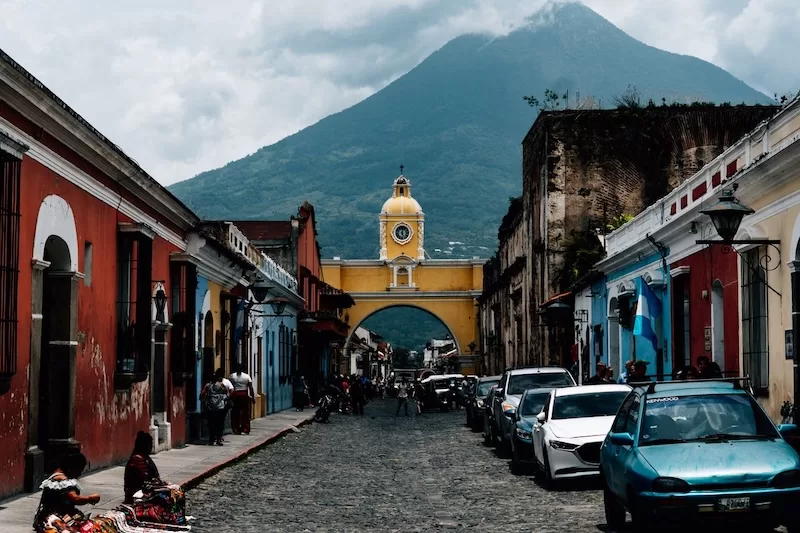
Guatemala: the one that counts
Guatemala’s route is the most useful thing in this comparison and it is barely written about, partly because it does not have the name people search for. The government does not call it a digital nomad visa. There is no Residencia Nomada Digital in the regulation, whatever the press wrote. Article 11 of the residency regulation that came into force on 8 October 2025 creates two sub-types: a migrant worker paid by an employer abroad, and a self-employed worker.
The foreign-employer route asks for at least USD 2,000 a month, or USD 3,000 if you bring dependents. The self-employed route asks for no figure at all. Instead you make a sworn declaration and register with the tax authority.
What makes it worth the paperwork is Article 27. Anyone who has held temporary residence for five years or more may apply for permanent residence, and there is no exclusion for this category. Past five years you are in fact required to apply. That is the opposite of how Croatia is built, and it is why Guatemala belongs at the top of a list it never appears on.
The residence itself runs from one to five years depending on what you apply for, not one year renewed annually as several guides state.
It is being issued. The head of residencies at the immigration institute told Prensa Libre on 24 September 2026 that 112 self-employed applications had come in with 54 approved, plus 13 on the foreign-employer route with 8 approved, and that none had been refused.
Tax is territorial. Guatemala taxes Guatemalan-source income only, so passing the 183-day residence threshold does not pull your foreign earnings into the net.
Romania: the biggest number, and an open question
Romania asks the most of the eight and gives the least clarity about what you get.
The income test is three times the average gross monthly wage in Romania, proved for each of the last six months and for the period you are applying for. It is written in the law as a multiple, never as a fixed euro amount, which is why every guide quoting a euro figure is out of date within months. On the July 2026 statistic, the most recent published, three times the average is 29,127 lei, or roughly EUR 5,525. It was about EUR 5,430 in January 2026. Europe keeps raising its income bars, and Romania’s will keep climbing with the wage data.
One correction to a claim that circulates widely: the requirement does not drop on renewal. Extension asks for the same three times the average wage for the period applied for, and from the second extension you also need an income certificate from the tax authority. No source we could find supports the idea that renewal is cheaper.
The tax position is better than the income test. A 2023 amendment exempts digital nomad visa holders from Romanian income tax and from both social contributions, provided your presence does not exceed 183 days in any rolling twelve-month period. Cross that line and the ordinary flat 10 percent applies. The exemption covers salary and salary-assimilated income, so if you invoice as a freelancer rather than draw a salary, check whether you are inside it before you rely on it.
Which leaves the question this article was built to answer, and Romania is the one country where we cannot answer it. Long-term residence needs five years of continuous stay. The immigration inspectorate publishes a list of stay categories that do not count, and digital nomads are not on it. It does not name them as qualifying either. Study counts at half. Seasonal work, au pair placements, short stays and diplomatic postings are excluded outright. Digital nomads sit in neither column, in both the Romanian and English versions of the page, and there was no 2026 update that settled it.
We are not going to guess. If you are choosing Romania for the residency clock rather than for the country, get it in writing from the inspectorate before you file.

Croatia: a good year that leads nowhere
Croatia changed in March 2025 and most guides have not caught up.
The permit used to run for one year with no extension. Since 15 March 2025 it runs for up to 18 months, and if you were granted less than 18 you can apply once to extend, 60 days before expiry, up to that same ceiling. Eighteen months is the hard total, not 18 plus 6. Anything you read about three years is wrong, and at least one relocation firm is publishing exactly that.
The income requirement is 2.5 times the average net monthly wage paid in Croatia the previous year. The 2025 average was announced on 4 March 2026 as EUR 1,449, which puts the current figure at EUR 3,622.50 a month. You can prove savings instead: EUR 43,470 for a twelve-month stay, EUR 65,205 for eighteen. Any figure you see in kuna is at least two revisions stale, and the interior ministry’s own pages carry the current one.
The tax treatment is the cleanest of the eight and the most widely misdescribed. A specific provision of the income tax act excludes receipts earned from employment or self-employment for an employer not registered in Croatia, on the basis of digital nomad status. It is a receipts-level exclusion tied to the status, not to non-residence. So passing 183 days and becoming a Croatian tax resident does not break it. Your foreign employment income stays exempt. What it never covered is rent, dividends, interest, capital gains, or anything paid to you by a Croatian resident, and those do come into the net once you are resident.
Now the part to be careful about. The received wisdom is that the law explicitly says digital nomad time does not count toward permanent residence. We could not find that statement on any current Croatian government page, and the interior ministry’s own list of excluded categories does not contain digital nomads. It names seasonal workers, service providers, posted workers, stays granted for other purposes, and secondary school study.
The answer is still no, but for a structural reason rather than a written one. Long-term residence needs five years of continuous approved temporary stay, where continuous means you were not out of the country for more than ten months in total or six months at once. The permit caps at 18 months, and you cannot apply again until six months after the last one expired. Every cycle therefore inserts a mandatory six-month hole with no permit at all. Five unbroken years is arithmetically unreachable on this ground.
That is a better answer than the law says no, and it is the honest one. If Croatia ever removes the six-month gap, the obstacle disappears with it.
The Philippines: real in law, closed in practice
Executive Order 86 was signed on 24 April 2025 and created a digital nomad visa. It set eight conditions, including that you be a national of a country that grants the same to Filipinos and where the Philippines maintains a foreign service post. It made the foreign affairs department, not the immigration bureau, the issuing authority. It required implementing guidelines within 30 days.
Those guidelines have not appeared. As of 29 September 2026 the foreign affairs e-visa portal lists nine categories of temporary visitor visa and visa-free entry, and no digital nomad category. A Philippine law firm noted in July 2026 that the department had still not published the list of qualifying countries, which means nobody can currently work out whether they are eligible even in principle. That is arguably the real blocker.
Several sites say applications are open and quote an income requirement of USD 24,000 a year. We could not trace that figure to any Philippine government publication, and the order itself asks only for sufficient income generated outside the Philippines with no amount. Three separate 2026 sources, including a Philippine law firm, say the same thing. Treat the number as unverified.
The same goes for the tax exemption you will see attributed to the order. The order says nothing about tax. It names the revenue bureau as a co-signatory to the implementing guidelines, which suggests tax is meant to be settled there. The practical outcome does not change much either way: the Philippines taxes only resident citizens on worldwide income, and every category of alien on Philippine-source income only. Your foreign earnings sit outside the net because of the general tax code, not because of the visa.
Duration, when it opens, is one year renewable for one more. The order provides no route to permanent residence and does not mention conversion to any other visa class. In the meantime, a full guide to the country sets out what remote workers are actually using there now.

Georgia: the programme everyone still cites is gone
Georgia is where stale content does the most damage, because the headline is genuinely attractive and the specifics have all moved.
Start with what is true. Nationals of more than ninety countries can enter Georgia and stay for a full year without a visa. That is not a discretionary concession, it sits in the law on the legal status of aliens and is implemented by a government ordinance that was last amended in February 2026. There is no income requirement attached to it. It is one of the most generous entry rules anywhere.
Now what is not true. Remotely from Georgia, the programme launched in August 2020 with its USD 2,000 a month requirement, is not operating. The portal named in the launch announcement no longer carries it. The foreign ministry news item that announced it returns nothing. Georgian expat and legal sources describe it as obsolete. We found no repeal notice, so we will not claim a date it was abolished, but nobody should be planning around it, and any 2026 page presenting that USD 2,000 as a live requirement is recycling a five-year-old press release.
What replaced it is a permit, not a programme. From 1 March 2026 Georgia introduced an IT residence permit, open to a registered immigrant worker or to a foreigner registered as a small-business sole trader, who has received at least the lari equivalent of USD 25,000 over the previous year. It grants work rights for up to three years, renewable in three-year cycles. The Public Service Development Agency publishes the current conditions, and the route is new enough that most comparisons do not carry it.
Two other 2026 changes catch people out. Since 1 January 2026 every tourist entering Georgia must hold health and accident insurance of at least 30,000 lari covering the whole stay. And since 1 March 2026 there is a formal work authorisation regime, with fines of 2,000 lari per person for unauthorised work. Whether a remote worker on visa-free stay serving only foreign clients needs authorisation under it is genuinely unresolved. One Georgian firm suggests such people may fall outside the scope, pending clarification. A Big Four alert on the regime does not state any exemption. This is the single biggest live uncertainty for anyone planning a year in Georgia, and we would rather say so than pick a side.
On residency, the answer is clear and it is no. Permanent residence requires ten years on a temporary residence permit. It was six until May 2021, and an outdated English translation on the government’s own legislative portal still says six, which is how the wrong number keeps spreading. Visa-free stay is not a residence permit, so the clock never starts. Years held on a study permit do not count either.
Tax deserves more care than it usually gets. Georgia is territorial and a resident’s foreign-source income is exempt, confirmed by Big Four guidance as recently as September 2026. But Georgia decides source by where the provider is, not where the client is. If you perform the work while sitting in Tbilisi, that is Georgian-source service income even when the client is French and the money arrives from abroad. The place you are paid is expressly irrelevant. What is genuinely exempt is passive foreign income: dividends, interest, royalties and capital gains. It is worth understanding how territorial tax systems actually work before you rely on one.
The regime nomads actually use is Small Business Status, which charges 1 percent of turnover up to 500,000 lari, rising to 3 percent above it. It is open to registered sole traders, not companies. Consulting is on the excluded list, and practitioners warn that an IT service can be reclassified as IT consulting under the general anti-avoidance rule, which would void the 1 percent. Do not build a plan on it without local advice.
Vietnam, Honduras and Nicaragua: no nomad visa, and that is fine
These three rank for the search and have nothing to match it. What they have instead is sometimes better.
Vietnam has no digital nomad visa, none has been enacted, and none appears in the immigration law amendment taking effect on 1 July 2026. The new UD1 and UD2 visas created for the International Financial Centre run up to ten years but require employment with an organisation registered there, and they explicitly do not reach remote workers, freelancers or the self-employed. The ten-year golden visa reported in 2025 was a tourism advisory board proposal. We found no instrument enacting it, so ignore any page that says it launched.
What remote workers use is the 90-day e-visa, single or multiple entry, available to citizens of every country since August 2023 and usable at 83 ports of entry through the national e-visa portal. There is no income test. Nationals of twelve countries get 45 days visa-free for any purpose until March 2028, and a further twelve get 45 days for tourism until August 2028. Note that the e-visa does not authorise work, and no official source addresses whether working for foreign clients from Vietnam falls inside that prohibition. It is a grey area, not a permission.
Vietnam is also the only country here that taxes worldwide income. Once you are resident, and residence starts at 183 days in a calendar year or in any rolling twelve months from arrival, your foreign earnings are in the Vietnamese base at rates rising to 35 percent. There is also a residence limb based on a registered address or a definite-term lease. Of the eight countries in this comparison, Vietnam is the one where staying too long is genuinely expensive.
Permanent residence is granted by category rather than by time. The categories are a state decoration, a ministerially nominated scientist or expert, sponsorship by a Vietnamese-citizen parent, spouse or child, or stateless residence dating to 2000 or earlier. The three-year rule people quote attaches only to the family category. Since the e-visa caps at 90 days and is not extendable from inside the country, no amount of e-visa time builds toward anything.
Honduras has no nomad visa and nothing in the special economic zones either, since that framework was repealed in 2022 and recognised as abolished in 2023. Ignore anything describing a Roatan or Prospera arrangement as a visa.
The routes that exist are older and solid. Rentista asks for permanent, lawful, stable income of at least USD 2,500 a month. Pensionado asks for a foreign pension of at least USD 1,500. Both cost USD 300 to process. Both build: permanent residence as an inmigrado after five consecutive years, and constitutional eligibility for naturalisation after more than three consecutive years of residence for most foreigners, one year for Central Americans and two for Spaniards and Ibero-Americans. Two clocks, and eligibility is not the same as a grant.
Casual visits run on the CA-4 arrangement: 90 days shared across Honduras, Guatemala, El Salvador and Nicaragua, with extensions of up to 30 days at a time at immigration’s discretion. The regulation sets no total cap, so treat the 120-day figure you will see online as somebody’s assumption.
The figure to correct is tax residence. Honduras is territorial and taxes Honduran-source income only, so your foreign earnings are outside the net. But you become a tax resident after more than 90 days in a fiscal year, not 183. Almost nobody writes that down. And published guidance does not address how work physically performed in Honduras for a foreign payer is sourced, so do not read territoriality as a guarantee of zero.
Nicaragua has no nomad visa either. Its pensioner and rentista law is the route, and it is unusually generous. Rentista asks for at least USD 750 a month from distributions, rent or similar lawful business, not the USD 1,250 that circulates online. Pensionado asks for a USD 600 monthly pension. Either way you add USD 150 a month for each family member. The status is permanent from the start, so there is no three-year wait, and the card renews every five years. The law also carries import and VAT exemptions on household goods, a vehicle every four years and construction materials, and it obliges you to be physically present six months a year. Applications go through the tourism institute or a consulate, not immigration.
Tax is territorial, Nicaraguan-source only, with residence starting above 180 days in a calendar year. The same caveat as Honduras applies: published guidance is silent on remote work performed in-country for a foreign payer.
One entry change worth knowing. A disposition issued on 13 February 2026, in force from 16 February, re-issued Nicaragua’s visa categories for the first full time since 2015. Sixty-nine nationalities enter visa-free. One hundred and twenty-eight now need a consulted visa with prior approval from immigration, applied for online. Check which side you are on before booking.
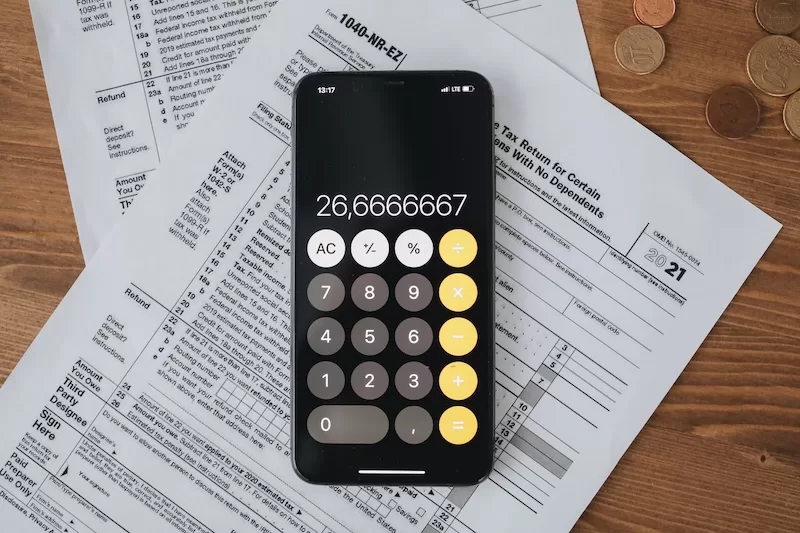
If you hold a US passport, the table above is only half the answer
The United States taxes its citizens on worldwide income wherever they live. A territorial country does not switch that off. This is the most expensive misunderstanding in the whole subject, and it lands hardest on exactly the people these visas are designed for.
The relief is real. For the 2026 tax year the foreign earned income exclusion is USD 132,900, up from USD 130,000 for 2025. To claim it you pass either the physical presence test, which needs 330 full days abroad in a twelve-month period, or the bona fide residence test. Below that ceiling the exclusion can wipe out most of a federal income tax bill on earned income. Above it, the foreign tax credit offsets US tax with tax already paid abroad, which is why a flat-rate country can work in an American’s favour. We have set out what Americans abroad actually owe in more detail separately.
Then there is the part the exclusion does not touch. It applies to income tax, not to the 15.3 percent self-employment tax that funds Social Security and Medicare. An American freelancer in a territorial country can exclude every dollar from federal income tax and still owe self-employment tax on all of it. The only way out is a totalization agreement, which decides which country’s social security system you pay into. The United States maintains those with 31 countries. Romania was the most recent to join, on 1 September 2026.
Here is the finding that matters for this particular list. Of the eight countries in this comparison, Romania is the only one on that list. Not Guatemala, not Croatia, not Georgia, not Vietnam, not the Philippines, not Honduras, not Nicaragua.
Read that against the table. Guatemala has the best residency outcome here and no totalization agreement. Croatia has the cleanest tax exemption here and no agreement either. For a salaried remote employee that changes little. For a self-employed American it means the headline no local tax is followed by a 15.3 percent bill from home, and no structuring inside those countries removes it.
Romania, the country with the highest income bar and the least clear residency answer, is the only one where that question has a treaty answer. That is not a recommendation. It is the kind of trade-off that only shows up when you put the two columns next to each other.
What to check before you commit
Start with the second question, not the first. Decide whether you want the years to count. If you do, the field here narrows to Guatemala immediately, with Honduras and Nicaragua as the non-nomad alternatives that also build, and there are other countries offering a path to citizenship that sit outside this eight. If you do not, Croatia’s 18 months and Georgia’s visa-free year are both excellent and neither leads anywhere.
Then check the date on every number you are relying on. Three of the figures in this article move on their own: Romania’s with the national wage statistic, Croatia’s with the previous year’s average salary, and Georgia’s entry rules with an ordinance amended as recently as February 2026. A guide written last year is not wrong because the writer was careless. It is wrong because the number moved.
Then read the tax rule rather than the tax headline. Territorial does not mean tax-free. Georgia will treat work you perform in Tbilisi as Georgian-source no matter where the client sits. Croatia’s exemption survives 183 days but never covered rent or dividends. Vietnam taxes worldwide income and will not warn you at day 184.
And if you are American, price the self-employment tax before you price the apartment.
Three answers here are genuinely unsettled rather than simply unreported, and it is worth knowing which. Whether Romanian nomad time counts toward long-term residence. Whether a remote worker on visa-free stay in Georgia needs work authorisation under the March 2026 regime. And what the Philippine income requirement will be when the implementing rules appear. If any of the three decides your move, get it confirmed in writing by the authority itself.
The visa that is right for a salaried employee on USD 90,000 is often the wrong one for a freelancer earning exactly the same, because of how self-employment tax and totalization interact. The visa that suits someone sampling a country for a year is the wrong one for someone building toward a passport. There is no best digital nomad visa. There is the one that fits how you earn, how long you mean to stay, and what you want to be holding when it expires.
Sources and dates
Everything above was checked on 29 September 2026.
| What | Source | Date of source |
| Guatemala residency categories, income and the five-year route to permanent residence | Reglamento de Residencias Guatemaltecas, Acuerdo IGM-016-2025, Articles 7, 11 and 27 | In force 8 October 2025 |
| Guatemala applications and approvals to date | Prensa Libre, quoting the head of residencies at the Instituto Guatemalteco de Migracion | 24 September 2026 |
| Guatemala tax residence and territoriality | PwC Worldwide Tax Summaries, Guatemala | Reviewed 9 June 2026 |
| Romania income requirement, initial and on renewal | General Inspectorate for Immigration; Law 22/2022 amending OUG 194/2002 | Checked 29 September 2026 |
| Romania average gross wage used for the calculation | National Institute of Statistics, July 2026 data | Published 11 September 2026 |
| Romania tax and social contribution exemption | Law 69/2023, amending Fiscal Code Articles 136, 153 and 228 | Monitorul Oficial, 30 March 2023 |
| Romania long-term residence categories | General Inspectorate for Immigration, long-term residence | Checked 29 September 2026 |
| Croatia permit length and extension | Aliens Act as amended, NN 40/2025, Article 12 | In force 15 March 2025 |
| Croatia income requirement and savings alternative | Ministry of the Interior, applying the 2025 average net wage of EUR 1,449 | Wage figure announced 4 March 2026 |
| Croatia tax exemption on foreign employment income | Income Tax Act, Article 9(1)(26) | Version effective 1 January 2025 |
| Croatia long-term residence and the continuity test | Ministry of the Interior and gov.hr | Checked 29 September 2026 |
| Croatia tax residence test | PwC Worldwide Tax Summaries, Croatia | Reviewed 27 August 2026 |
| Philippines digital nomad visa, conditions and duration | Executive Order No. 86, s. 2025 | Signed 24 April 2025 |
| Philippines visa categories currently available | Department of Foreign Affairs e-Visa portal | Checked 29 September 2026 |
| Philippines qualifying-country list still unpublished | DivinaLaw, published in the Daily Tribune | 20 July 2026 |
| Philippines taxation of aliens | PwC Worldwide Tax Summaries and KPMG Taxation of International Executives | Reviewed 2 July 2026 and March 2026 |
| Georgia 365-day visa-free stay | Law on the Legal Status of Aliens, Article 10(3); Government Ordinance No. 255 | Ordinance last amended 24 February 2026 |
| Georgia IT residence permit and the USD 25,000 income test | Public Service Development Agency | Framework effective 1 March 2026 |
| Georgia tourist insurance requirement | Decree No. 602, reported by the US Embassy in Tbilisi | Effective 1 January 2026 |
| Georgia work authorisation regime | Law on Labour Migration as amended 26 June 2025; KPMG Flash Alert | Effective 1 March 2026 |
| Georgia ten-year permanent residence rule | Law on the Legal Status of Aliens, Article 15(g); Public Service Development Agency | Law last amended 25 June 2026 |
| Georgia territorial tax, source rule and residence threshold | PwC Worldwide Tax Summaries, Georgia; Tax Code of Georgia, Articles 34 and 104 | Reviewed 2 September 2026 |
| Georgia small business status | PwC Worldwide Tax Summaries, Georgia; Tax Code Article 90 | Reviewed 2 September 2026 |
| Vietnam visa categories | Law on Entry, Exit, Transit and Residence of Foreigners 47/2014/QH13, Articles 8 and 9 | Effective 1 January 2015 |
| Vietnam 90-day e-visa for all nationalities | Resolution 127/NQ-CP | Effective 15 August 2023 |
| Vietnam UD1 and UD2 visas, and why they exclude remote workers | Decree 327/2025/ND-CP; KPMG Flash Alert | Decree effective 17 January 2026 |
| Vietnam permanent residence categories | Law 47/2014/QH13, Articles 39 and 40 | Effective 1 January 2015 |
| Vietnam tax residence and worldwide taxation | PwC Worldwide Tax Summaries, Vietnam | Reviewed 23 September 2026 |
| Honduras residency categories, income and five-year permanent residence | Reglamento de la Ley de Migracion y Extranjeria, Articles 23, 25, 39 and 84 | 3 May 2004, as amended |
| Honduras naturalisation timelines | Constitution of Honduras, Article 24 | 1982, as amended |
| Honduras territorial tax and the 90-day residence test | PwC Worldwide Tax Summaries, Honduras | Reviewed 10 August 2026 |
| Honduras special economic zone framework abolished | EY Global Tax Alert | 19 January 2023 |
| Nicaragua rentista and pensionado income, per-dependent uplift, renewal | Ley 694, Articles 3, 4, 5, 7 and 13 | La Gaceta No. 151, 12 August 2009 |
| Nicaragua general permanent residence route | Ley 761, Article 30(7) | 2011 |
| Nicaragua visa category re-issue | Disposicion No. 002-2026, Direccion General de Migracion y Extranjeria | Issued 13 February 2026, in force 16 February 2026 |
| Nicaragua territorial tax and the 180-day residence test | PwC Worldwide Tax Summaries, Nicaragua | Reviewed 4 August 2026 |
| US foreign earned income exclusion for 2026 | Internal Revenue Service, Revenue Procedure 2025-32 | Released 9 October 2025 |
| US totalization agreements in force | Social Security Administration, International Programs; POMS GN 01701.005 | 31 agreements. Romania in force 1 September 2026. Checked 6 October 2026 |
About the Author
Contact Author
"*" indicates required fields
Stay Ahead on Every Adventure!
Stay updated with the World News on Escape Artist. Get all the travel news, international destinations, expat living, moving abroad, Lifestyle Tips, and digital nomad opportunities. Your next journey starts here—don’t miss a moment! Subscribe Now !
There are two questions worth asking about a digital nomad visa. The first is whether you earn enough to get one. Every guide answers that. The second is whether the years count for anything, and almost nobody answers that at all.
The second question is the one that costs money to get wrong. A year on the wrong permit is a year you cannot get back. If you are quietly building toward a second residency or a passport, a visa whose years do not count is a year spent standing still. If you never intend to stay, a visa that builds toward permanence is a cost you did not need to pay.
So we went and checked. Eight countries, eight sets of rules, read against the government source rather than the last guide that copied the guide before it. Four things per country: what the income test actually is, whether the time counts toward permanent residence, what happens to your foreign income, and whether the visa is open today.
If you'd like to read the full story, simply enter your email to subscribe to our newsletter.
For even more expert insights, unmissable resources, and exclusive invites, explore our premium subscription offers here.
OR
Already a Subscriber? Click here to login
Subscription required
You've reached your limit of free articles. For full access to Escape Artist, and all of our insights on travel, moving abroad, and the digital nomad life, click here to Subscribe.
Already a Subscriber? Log in here