Checked and current, 10 September 2026. Two of the numbers below need correcting and one comparison is simply the wrong way round.
- The new capital is not “nearly twice the size of Singapore”. It is slightly smaller. The city covers about 700 square kilometres. Singapore covers about 744. The area figure itself is right; the comparison attached to it is not.
- The $58 billion cost figure has no published source. A full cost for the project has never been released. Treat any total you see, including that one, as an estimate rather than a number Egypt has confirmed.
- The planned population is usually given as about 6.5 million, and sometimes as high as seven, rather than the six quoted.
What is right. The site is 45 kilometres east of Cairo and covers roughly 700 square kilometres, both exactly as stated. The capital was formally inaugurated in April 2024, and government ministries began relocating from 2023. The second phase has been pushed to 2026.
On the $20,000 small apartment. That looks low against measured Cairo pricing, where buying runs about $79.50 a square foot outside the centre and about $124 in it. At those rates $20,000 buys roughly 250 square feet outside the centre. For scale, a one-bedroom rents for about $335 to $356 a month in Cairo and average take-home pay is about $344 a month, which is the number that makes Egyptian property look cheap to a foreign buyer and impossible to a local one.
Cairo figures are crowd-sourced from residents, 2,057 submissions by 251 contributors, via Numbeo, last updated 7 September 2026. Egyptian prices have moved fast with the currency, so treat conversions to dollars as a snapshot.
If you drive east out of Cairo, you will come across possibly the world’s largest construction site. It is a meticulously planned, ultra-modern high-rise city in the Egyptian desert.
This is Egypt’s New Administrative Capital. The Egyptian government says this new city will solve Cairo’s overcrowding and drag Egypt into a new, high-tech future. It is one of the biggest urban projects in the world and, depending on who you ask, it’s either a smart solution or a costly distraction.
Why Egypt Is Building a New Capital
Egypt’s New Administrative Capital is under construction and partially operational, but its long-term success is uncertain. While the project aims to ease Cairo’s overcrowding and modernize the country, critics question affordability, sustainability, and whether it will become a thriving city or an underutilized mega-development.
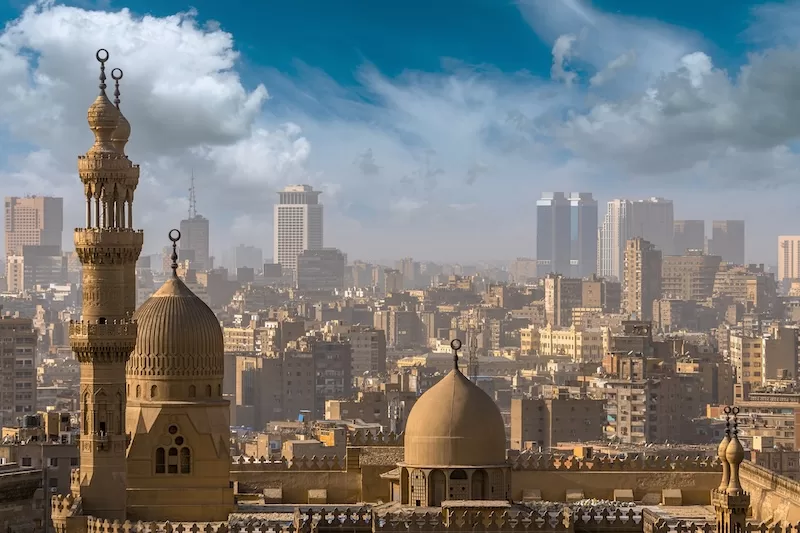
Egypt’s current capital city is Cairo. Cairo has been inhabited for over 3,000 years, making it one of the most ancient cities in the world. It is a place of stunning beauty and attracts millions of tourists every year.
It is also one of the most chaotic and crowded cities on earth. With a population of over 20 million people, it has become as associated with bad traffic, pollution, and a lack of housing supply as it is with its ancient pyramids. The government of Egypt, led by Abdel Fattah El-Sisi, decided in 2015 as a way to tackle this that they would build a brand new capital city 45 kilometers east of Cairo and move the state’s administrative core there.
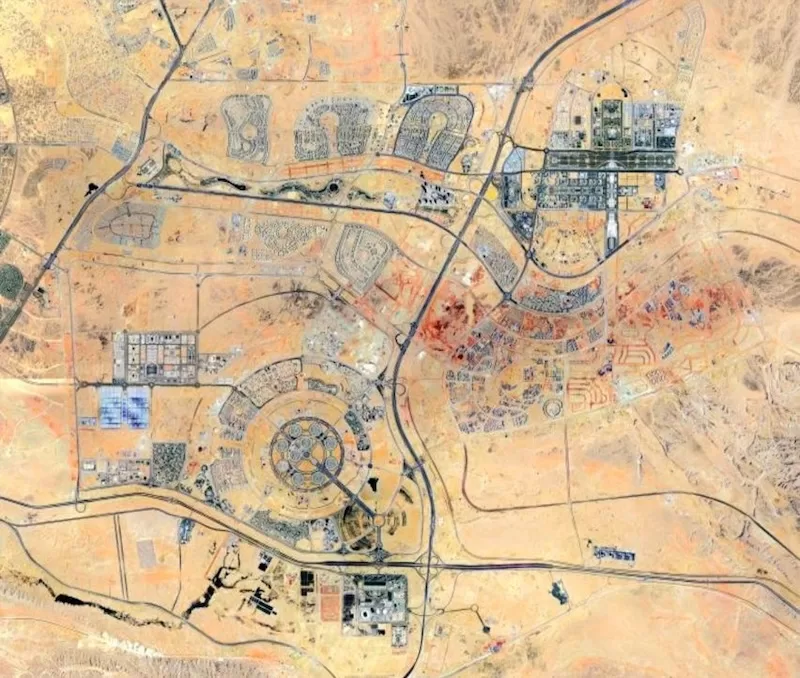
The quite boringly named New Administrative Capital covers more than 700 square kilometers, making it nearly twice the size of Singapore. It is designed to have a population of around 6 million people and to eventually play host to most Egyptian government ministries. Many have already begun moving over.
Whilst the official reason given by the state is to take some of the strain off Cairo, there is also a more political angle to moving the seat of governmental power away from Cairo.
Egypt went through a tumultuous period during the early 2010s, particularly during 2011 when Egyptian citizens revolted against the government. Many feel as if the building of the NAC is a sinister attempt at moving the nation’s seats of power out of harm’s way should another revolution happen.
The Plan on Paper
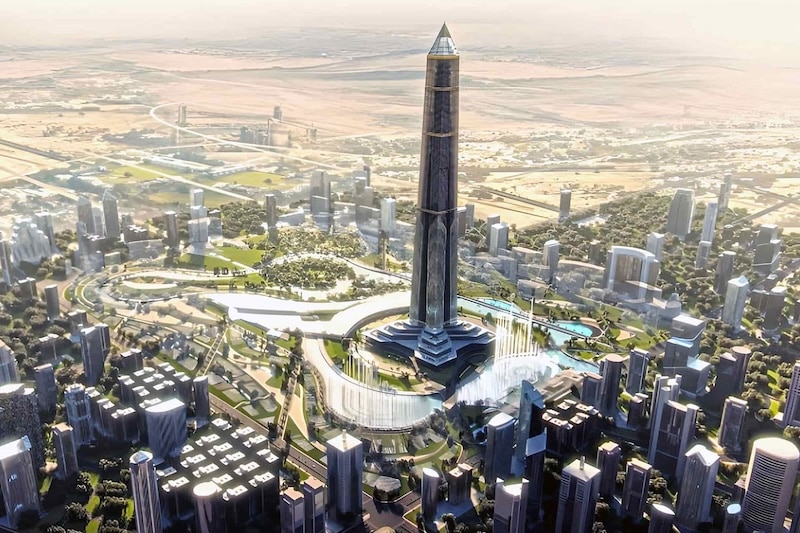
The vision of the NAC is ambitious. Multiple ministries have already begun relocating to the new city. The NAC will include a business hub, residential zones, diplomatic areas, and plans for what will be Africa’s tallest skyscraper. It has been marketed as a “smart city” with modern utilities and reliable infrastructure. These are unfortunately amenities that many of Cairo’s residents can only dream about.
The NAC is also meant to showcase to the world that Egypt can build something modern and efficient akin to cities like Dubai and Doha. The president has called it a symbol of “the new republic.” Whether it becomes a functioning city or a showpiece is still up for debate.
What It Could Mean for New Arrivals to Egypt
For expats and digital professionals, the NAC could be an interesting option. It’s designed with space, security, and connectivity in mind, a big contrast to the old capital. There are already housing estates, international schools, and coworking offices being marketed to foreign residents and wealthier Egyptians.
In theory, it should offer more stable internet, less pollution, and fewer daily hassles than Cairo. If you’re used to the unpredictability of Cairo’s power cuts or traffic jams, that’s appealing.
But it’s worth keeping expectations in check. The city is still very much under construction, and most of the life that makes Cairo interesting, such as the cafés, culture, and nightlife, hasn’t really moved there yet. These types of development projects raise questions about what a city really is and whether you can artificially manufacture a place that has real culture and community. For many, Cairo will always remain the preferable option.
The Controversy
Critics of the project claim that the NAC highlights and deepens Egypt’s inequality more than it fixes it. Apartment prices there are far beyond the reach of the average Egyptian, and much of the development has been managed by military-linked companies. Spending transparency has been very limited as well.
There is, of course, a huge environmental issue. Building a mega-city in the middle of a desert requires huge energy use and will use massive amounts of water in a country that is already dealing with rising temperatures and water scarcity. Public resources are being pushed into this shiny new city for the elite, whilst communities in Cairo may ultimately be left behind and possibly be even worse off.
Many urban planners have argued that the project will not ease Cairo’s problems but rather make them worse. If resources keep moving east, Cairo is unlikely to see any great improvements to its collapsing infrastructure anytime soon.
How It’s Changing Cairo
The vast majority of people in Cairo will not move to the new capital, but Cairo will still feel the effects. Government offices are relocating, which could mean thousands of workers will disappear from the city center. Certain neighborhoods which depended on bureaucratic traffic may be completely reshaped or possibly decimated.
Real estate dynamics are also shifting. Developers are betting on the east, while some of Cairo’s older districts risk stagnation. For residents, it could mean fewer jobs and declining services in the core city or, optimistically, less congestion and more breathing room.
Culturally, though, it’s hard to imagine Cairo without its energy. For many Egyptians, it’s not just a city, it’s the heartbeat of the country. It encapsulates the chaos and intensity of Egypt. The NAC might offer order and efficiency, but it won’t easily replace Cairo’s history and character.
What Expats Should Watch
The NAC will be on the radar of many new arrivals to Egypt. Property prices are quite high by Egyptian standards but much lower than other global capital cities. realestate.eg claims that the average price for a small apartment is about $20,000.
As a potentially growing capital city, this might be very attractive to some people. Property prices are likely to climb as the city becomes more built up and established, though many feel that it is a place that will remain culturally and socially isolated from the rest of Egypt.
A Work in Progress
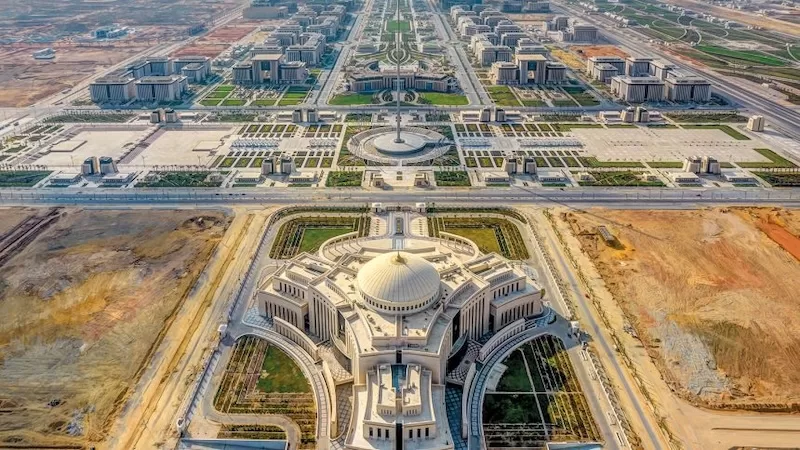
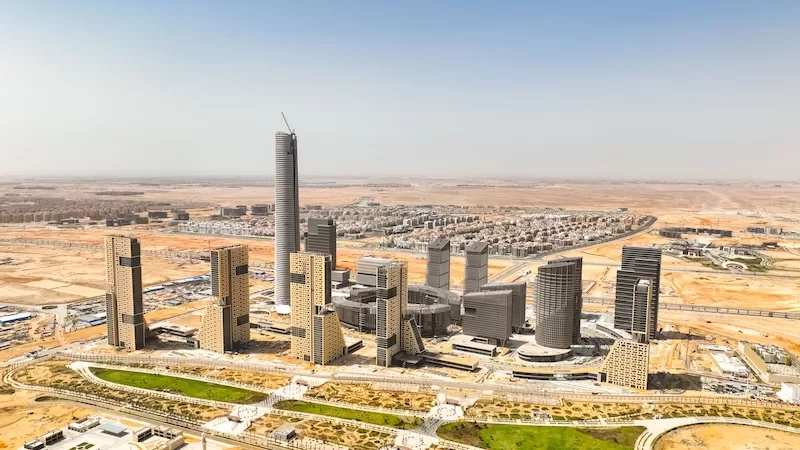
Right now the capital feels half-finished. There are completed and operational government buildings next to empty dusty lots waiting for development. Life is up and running in some districts, whilst others remain construction sites.

Whether this project becomes a success story or a cautionary tale will depend on how inclusive it turns out to be. If it’s only for the elite, it risks becoming a shiny, underpopulated monument. If it manages to attract a mix of residents and real economic activity, it could reshape how Egypt works and lives.
For now, it’s too early to tell. The cranes keep moving, the sand keeps blowing, and Egypt keeps trying to reinvent itself.
The New Administrative Capital is a bold project. It’s Egypt’s attempt to build a future from scratch.
It might one day offer a cleaner, calmer way to live in Egypt. But Cairo isn’t going anywhere. Its chaos and warmth will always pull people back. The question is whether Egypt’s new city can create its own identity that’s more than just a government project in the desert.
KEY TAKEAWAYS
What is Egypt’s New Administrative Capital?
It is a newly built city east of Cairo designed to house government ministries, businesses, and millions of residents as part of Egypt’s modernization strategy.
Why is Egypt building a new capital?
The government aims to reduce congestion in Cairo and create a modern, efficient administrative hub, though political and strategic motivations are also debated.
Can expats live in Egypt’s new capital?
Yes, the city is being designed with expats in mind, offering modern housing, infrastructure, and business opportunities, though it is still under development.
Is the New Administrative Capital affordable?
While prices are lower than global cities, property costs are high relative to average Egyptian incomes, making it more accessible to wealthier buyers and investors.
Will the new capital replace Cairo?
No, Cairo is expected to remain Egypt’s cultural and economic center, while the new capital serves administrative and governmental functions.
Is the project controversial?
Yes, critics highlight concerns about inequality, environmental impact, and whether the project will truly solve Cairo’s issues.
Is Egypt’s new capital a good investment?
It has potential due to growth and government backing, but risks remain due to uncertainty about long-term demand and livability.
About the Author
Ethan Rooney is an Irish journalist covering global communities, culture, and niche movements. You can find more of his work here.
Contact Author
"*" indicates required fields
Stay Ahead on Every Adventure!
Stay updated with the World News on Escape Artist. Get all the travel news, international destinations, expat living, moving abroad, Lifestyle Tips, and digital nomad opportunities. Your next journey starts here—don’t miss a moment! Subscribe Now !
Checked and current, 10 September 2026. Two of the numbers below need correcting and one comparison is simply the wrong way round.
- The new capital is not “nearly twice the size of Singapore”. It is slightly smaller. The city covers about 700 square kilometres. Singapore covers about 744. The area figure itself is right; the comparison attached to it is not.
- The $58 billion cost figure has no published source. A full cost for the project has never been released. Treat any total you see, including that one, as an estimate rather than a number Egypt has confirmed.
- The planned population is usually given as about 6.5 million, and sometimes as high as seven, rather than the six quoted.
What is right. The site is 45 kilometres east of Cairo and covers roughly 700 square kilometres, both exactly as stated. The capital was formally inaugurated in April 2024, and government ministries began relocating from 2023. The second phase has been pushed to 2026.
If you'd like to read the full story, simply enter your email to subscribe to our newsletter.
For even more expert insights, unmissable resources, and exclusive invites, explore our premium subscription offers here.
OR
Already a Subscriber? Click here to login
Subscription required
You've reached your limit of free articles. For full access to Escape Artist, and all of our insights on travel, moving abroad, and the digital nomad life, click here to Subscribe.
Already a Subscriber? Log in here