Escape Artist
  • Features
    • Interview
    • Expat News
    • Field Notes
    • Trending
  • Your Plan B
    • Finance
    • Real Estate
    • Second Citizenship
    • Digital Nomad
    • Healthcare
  • Destinations
    • Europe
      • France
      • Germany
      • Italy
      • Portugal
      • Scandinavia
      • Spain
      • United Kingdom
      • Rest of Europe
    • Central America
      • Belize
      • Costa Rica
      • El Salvador
      • Guatemala
      • Honduras
      • Nicaragua
      • Panama
    • Others
      • Africa
      • Asia
      • Australia
      • North America
      • South America
      • Middle East
      • Rest of the World
  • Travel Tips
    • Know Before You Go
    • Packing List
    • Food + Culture
    • Health + Wellness
  • Subscribe
Escape Artist
  • Features
    • Interview
    • Expat News
    • Field Notes
    • Trending
  • Your Plan B
    • Finance
    • Real Estate
    • Second Citizenship
    • Digital Nomad
    • Healthcare
  • Destinations
    • Europe
      • France
      • Germany
      • Italy
      • Portugal
      • Scandinavia
      • Spain
      • United Kingdom
      • Rest of Europe
    • Central America
      • Belize
      • Costa Rica
      • El Salvador
      • Guatemala
      • Honduras
      • Nicaragua
      • Panama
    • Others
      • Africa
      • Asia
      • Australia
      • North America
      • South America
      • Middle East
      • Rest of the World
  • Travel Tips
    • Know Before You Go
    • Packing List
    • Food + Culture
    • Health + Wellness
  • Subscribe
👤

THE NUMBER ONE SOURCE FOR BUILDING A LIFE ABROAD

This field is for validation purposes and should be left unchanged.
  • Nicaragua

On My Plate in Nicaragua: School Lunch, Upgraded

  • BY Roma Panganiban
  • October 3, 2016
Total
0
Shares
0
0
0

I work in a pretty standard office setting in Managua, the capital city of Nicaragua; as in so many offices around the world, we sit at desks all day long, getting up only for coffee, water, bathroom breaks, and lunch. While I’m no stranger to the wisdom of brown-bagging a lunch instead of going out to eat every weekday at noon, after four hours in an air-conditioned office with five more to go after lunch, I’m more than willing to pay a little extra for an excuse to go outside. Luckily, this indulgence doesn’t cost as much here as it would at home, thanks to Nicaragua’s lower cost of living and a little lunch spot half a block away from the office called Papa Gordo’s.

The word “cafeteria” doesn’t exactly inspire confidence in the culinary skill of the people in the kitchen, wearing hairnets and joylessly stirring metal vats of unidentifiable brown slop. I still have flashbacks to school lunch in my elementary school cafeteria, where we carried white Styrofoam trays of cardboard pizza squares, globs of soggy mac ‘n cheese, and soggy milk cartons down a stainless steel track toward the cashier; needless to say, I don’t have great associations with food served institution-style. In plainest terms, Papa Gordo’s is a cafeteria, where office workers in their business-casual attire line up in front of a clear plastic sneeze guard to be served their lunch with maximum speed and minimum fuss, but it deviates from the standard formula in all the ways that matter.

Every day, two efficient but pleasant women at the restaurant start each diner’s transaction by asking whether they want their food to stay or to go, pulling a plain white ceramic plate or a Styrofoam takeout box from the towering stacks behind them based on the answer they get. Because this is Latin America, every meal starts with a heaping scoop of rice, unadorned but for a sprinkling of green pepper slices across the top. The crucial moment of choice comes next: chicken or beef? Roast pork or stewed pork? The fish looks good, but is it better than whatever that roasted meat is? Do I want that because I want it, or because it’s oozing melted cheese and I have trouble saying no to that? Fortunately, I think it’s impossible to choose poorly from the options provided – at least, I haven’t had any regrets yet.
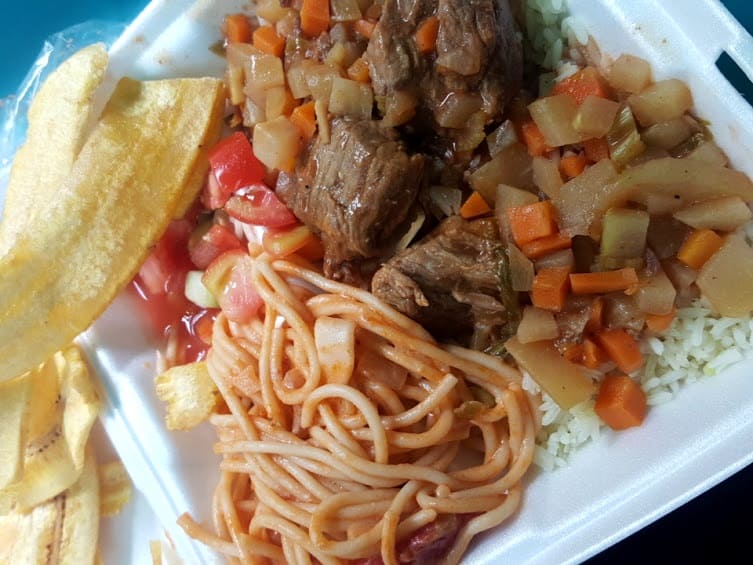
image02

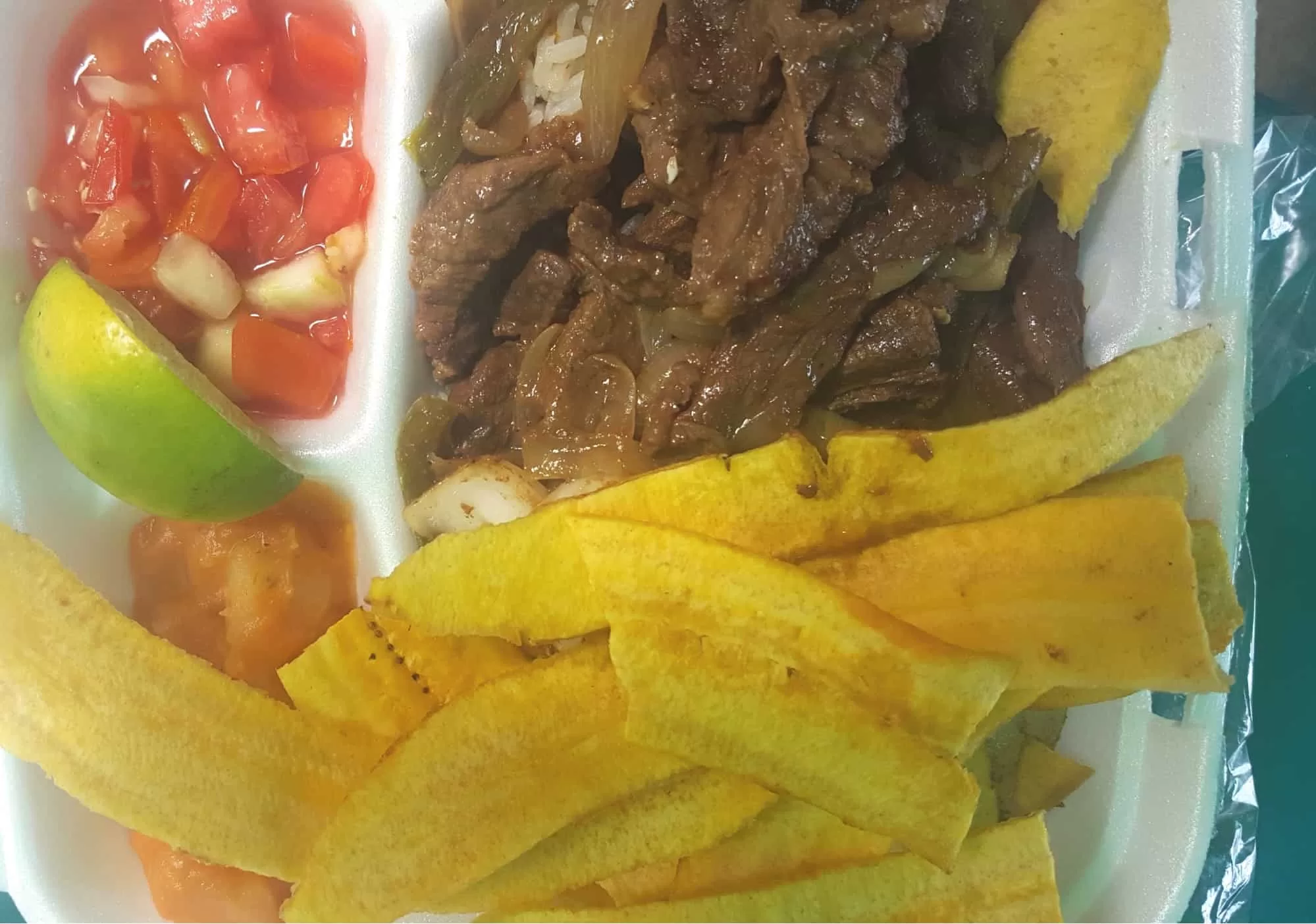
While the rice and meat together form the centerpiece of a lunch at Papa Gordo’s, there are plenty of side dishes that accent the main event. There’s usually some type of pasta salad, served room temperature, in an unidentifiable sauce that is at least partially tomatoes and cream. There are always beans, the most natural accompaniment to rice in this region, and caramelized plantains for the same reason. My favorite finishing touch is the fresh pico de gallo, served in its own little pocket of the Styrofoam takeout box. I’ve grown so used to spooning it over the rest of my food that I will mourn its absence when I go back home and have to suffer through a lunch without it. The fried green plantain chips come in a close second, piled on top of everything else until it’s tricky to close the box while keeping them all contained.

Even on my first day eating there, I could figure out what most of the restaurant’s sides were simply by sight. There is, however, one mystery that endures to this day: the boiled green vegetable, always mixed with carrots, that is the only bland option Papa Gordo’s offers (not coincidentally, also surely its lowest-calorie item). Its tastelessness is not the mystery so much as what, exactly, it is. My usual methods of Googling a few relevant keywords (“Nicaragua green vegetable”) turned up no useful results, so we turned to the lunch ladies themselves. When we finally asked one day, “Cual es esa verdura?” (“What is this vegetable?”), we got a puzzled look in response, followed by a shrug: “Es verdura.” (“It’s vegetable.”) The mystery lives on.
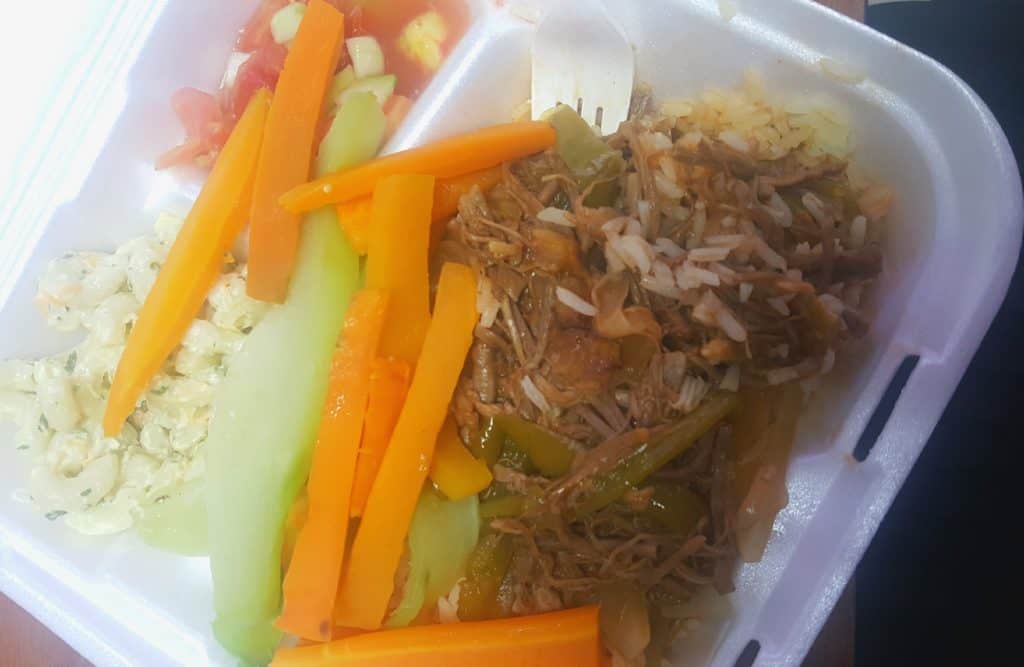
image01

After choosing sides, there are still a few more steps before the lunch ordering process is complete. Depending either on what entrée you’ve chosen or simply based on a whim that day (I still haven’t quite figured out which one it is), the lunch lady holding my container will toss in a tiny, tied-up bag of chilero, a vinegar-based salsa packed with chopped carrots and onions. Then it’s time to choose a drink from a rotating assortment that, so far, has included mandarin, chia, lime, and dragon fruit. Those eating at the restaurant get theirs poured directly into a plastic cup, but those taking food back to the office get handed a plastic sandwich bag pulled from a cooler, knotted at the top. Confession: the first time I bit the corner off mine and tried to pour it into a cup, I spilled limeade all over the table.
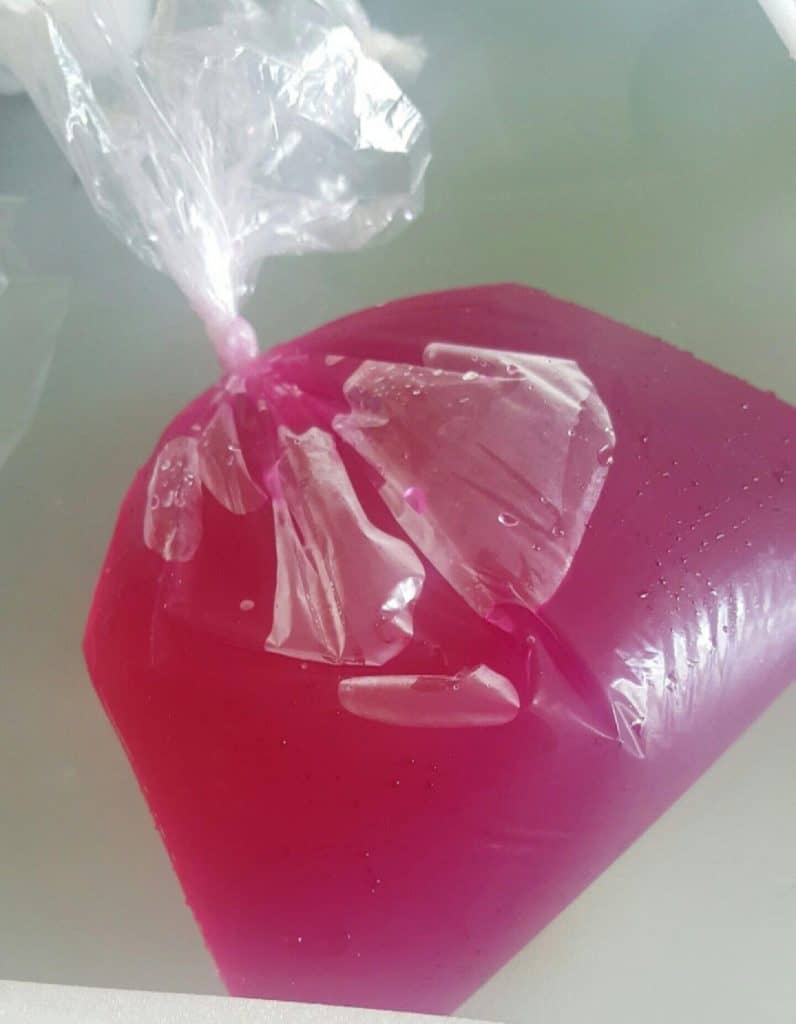
image04

On some days, there’s a break in the usual lunch routine. One afternoon, without explanation, the woman at the register handed me my receipt, my credit card, and a lollipop. I felt like a little kid at the bank or a doctor’s appointment, aware that getting a lollipop wasn’t necessarily special treatment if nearly everyone got one too, but still feeling like I must have been very good somehow to deserve a treat. The next week, it happened again; this time, however, the lollipop was heart-shaped. Both times I headed back to the office feeling like that day was a little more special than the others that week.

Even more exciting than lollipop days was the afternoon when one of the lunch ladies, the only one who ever wore a hairnet, gave me the options for the day: they had just run out of chicken, so I had the option of either a breaded pork cutlet or “baho.” Despite my limited Spanish covering quite a range of food-related words, I didn’t know what she meant and asked my housemate (who had just opted for the baho himself) to clarify. He explained that it was similar to vigorón, a regional specialty that I had enjoyed for the first time in Granada just two days ago, and that was enough to sell me on it. My foam box came out already closed, with a few shreds of pickled cabbage poking out the side that the second lunch lady wiped away while I paid. With that hint at the delicious messiness that awaited me within, I walked back to the office with the container firmly sealed and my curiosity piqued.
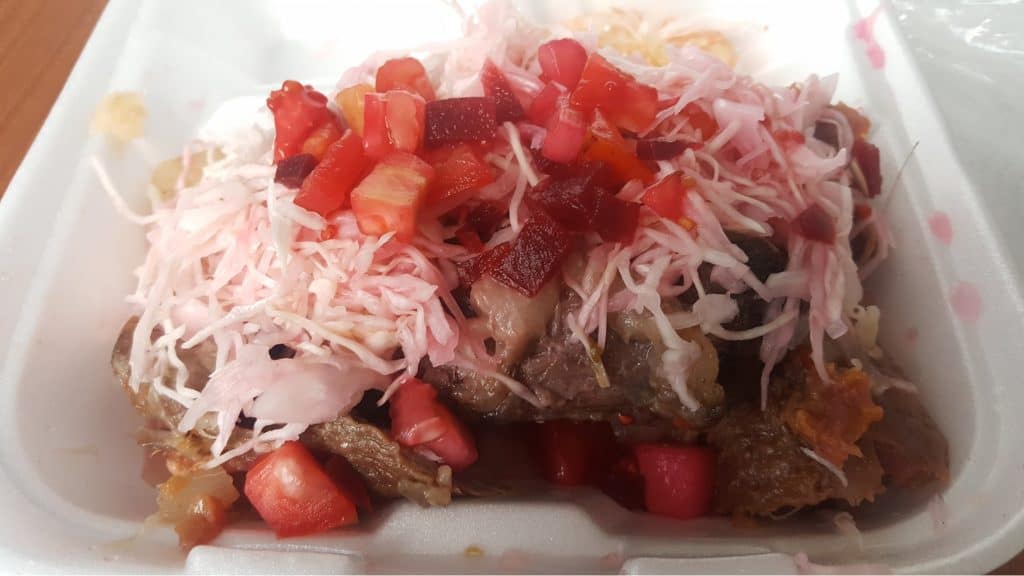
image03

Upon lifting the lid, I noticed two things right away about my lunch: the strong citrus smell and the telltale bright pink of beet juice. In addition to the tiny sachet of vinegar salsa tucked into one of the takeout container sections, the baho exuded a definitively sour aroma that promised an invigorating first bite. Beneath the pile of curtido, or pickled cabbage salad, I found a few soft plantains and a pile of braised beef atop a bed of boiled cassava, a potato-like root vegetable known in Spanish as “yuca” (not to be confused with yucca, a totally different plant). All together, the experience was like a good roast dinner, the meat’s richness complemented by the acidity of the lime-soaked cabbage and rounded out by the sweet plantains and bland, but comforting heft of the cassava. It made sense, then, why the woman at the lunch counter had said, “Hay baho” to the man behind me in line with such a conspiratorial, almost-wink in her expression. I felt like I’d been let in on a secret that afternoon, and it was a delicious one.

Contact Author

"*" indicates required fields

This field is for validation purposes and should be left unchanged.
Name*
Please let us know what's on your mind. Have a question for us? Ask away.

Stay Ahead on Every Adventure! 

Stay updated with the World News on Escape Artist. Get all the travel news, international destinations, expat living, moving abroad, Lifestyle Tips, and digital nomad opportunities. Your next journey starts here—don’t miss a moment! Subscribe Now!

I work in a pretty standard office setting in Managua, the capital city of Nicaragua; as in so many offices around the world, we sit at desks all day long, getting up only for coffee, water, bathroom breaks, and lunch. While I’m no stranger to the wisdom of brown-bagging a lunch instead of going out to eat every weekday at noon, after four hours in an air-conditioned office with five more to go after lunch, I’m more than willing to pay a little extra for an excuse to go outside. Luckily, this indulgence doesn’t cost as much here as it would at home, thanks to Nicaragua’s lower cost of living and a little lunch spot half a block away from the office called Papa Gordo’s.

The word “cafeteria” doesn’t exactly inspire confidence in the culinary skill of the people in the kitchen, wearing hairnets and joylessly stirring metal vats of unidentifiable brown slop. I still have flashbacks to school lunch in my elementary school cafeteria, where we carried white Styrofoam trays of cardboard pizza squares, globs of soggy mac ‘n cheese, and soggy milk cartons down a stainless steel track toward the cashier; needless to say, I don’t have great associations with food served institution-style. In plainest terms, Papa Gordo’s is a cafeteria, where office workers in their business-casual attire line up in front of a clear plastic sneeze guard to be served their lunch with maximum speed and minimum fuss, but it deviates from the standard formula in all the ways that matter.

Every day, two efficient but pleasant women at the restaurant start each diner’s transaction by asking whether they want their food to stay or to go, pulling a plain white ceramic plate or a Styrofoam takeout box from the towering stacks behind them based on the answer they get. Because this is Latin America, every meal starts with a heaping scoop of rice, unadorned but for a sprinkling of green pepper slices across the top. The crucial moment of choice comes next: chicken or beef? Roast pork or stewed pork? The fish looks good, but is it better than whatever that roasted meat is? Do I want that because I want it, or because it’s oozing melted cheese and I have trouble saying no to that? Fortunately, I think it’s impossible to choose poorly from the options provided – at least, I haven’t had any regrets yet.

While the rice and meat together form the centerpiece of a lunch at Papa Gordo’s, there are plenty of side dishes that accent the main event. There’s usually some type of pasta salad, served room temperature, in an unidentifiable sauce that is at least partially tomatoes and cream. There are always beans, the most natural accompaniment to rice in this region, and caramelized plantains for the same reason. My favorite finishing touch is the fresh pico de gallo, served in its own little pocket of the Styrofoam takeout box. I’ve grown so used to spooning it over the rest of my food that I will mourn its absence when I go back home and have to suffer through a lunch without it. The fried green plantain chips come in a close second, piled on top of everything else until it’s tricky to close the box while keeping them all contained.

Even on my first day eating there, I could figure out what most of the restaurant’s sides were simply by sight. There is, however, one mystery that endures to this day: the boiled green vegetable, always mixed with carrots, that is the only bland option Papa Gordo’s offers (not coincidentally, also surely its lowest-calorie item). Its tastelessness is not the mystery so much as what, exactly, it is. My usual methods of Googling a few relevant keywords (“Nicaragua green vegetable”) turned up no useful results, so we turned to the lunch ladies themselves. When we finally asked one day, “Cual es esa verdura?” (“What is this vegetable?”), we got a puzzled look in response, followed by a shrug: “Es verdura.” (“It’s vegetable.”) The mystery lives on.

After choosing sides, there are still a few more steps before the lunch ordering process is complete. Depending either on what entrée you’ve chosen or simply based on a whim that day (I still haven’t quite figured out which one it is), the lunch lady holding my container will toss in a tiny, tied-up bag of chilero, a vinegar-based salsa packed with chopped carrots and onions. Then it’s time to choose a drink from a rotating assortment that, so far, has included mandarin, chia, lime, and dragon fruit. Those eating at the restaurant get theirs poured directly into a plastic cup, but those taking food back to the office get handed a plastic sandwich bag pulled from a cooler, knotted at the top. Confession: the first time I bit the corner off mine and tried to pour it into a cup, I spilled limeade all over the table.

On some days, there’s a break in the usual lunch routine. One afternoon, without explanation, the woman at the register handed me my receipt, my credit card, and a lollipop. I felt like a little kid at the bank or a doctor’s appointment, aware that getting a lollipop wasn’t necessarily special treatment if nearly everyone got one too, but still feeling like I must have been very good somehow to deserve a treat. The next week, it happened again; this time, however, the lollipop was heart-shaped. Both times I headed back to the office feeling like that day was a little more special than the others that week.

Even more exciting than lollipop days was the afternoon when one of the lunch ladies, the only one who ever wore a hairnet, gave me the options for the day: they had just run out of chicken, so I had the option of either a breaded pork cutlet or “baho.” Despite my limited Spanish covering quite a range of food-related words, I didn’t know what she meant and asked my housemate (who had just opted for the baho himself) to clarify. He explained that it was similar to vigorón, a regional specialty that I had enjoyed for the first time in Granada just two days ago, and that was enough to sell me on it. My foam box came out already closed, with a few shreds of pickled cabbage poking out the side that the second lunch lady wiped away while I paid. With that hint at the delicious messiness that awaited me within, I walked back to the office with the container firmly sealed and my curiosity piqued.

Upon lifting the lid, I noticed two things right away about my lunch: the strong citrus smell and the telltale bright pink of beet juice. In addition to the tiny sachet of vinegar salsa tucked into one of the takeout container sections, the baho exuded a definitively sour aroma that promised an invigorating first bite. Beneath the pile of curtido, or pickled cabbage salad, I found a few soft plantains and a pile of braised beef atop a bed of boiled cassava, a potato-like root vegetable known in Spanish as “yuca” (not to be confused with yucca, a totally different plant). All together, the experience was like a good roast dinner, the meat’s richness complemented by the acidity of the lime-soaked cabbage and rounded out by the sweet plantains and bland, but comforting heft of the cassava. It made sense, then, why the woman at the lunch counter had said, “Hay baho” to the man behind me in line with such a conspiratorial, almost-wink in her expression. I felt like I’d been let in on a secret that afternoon, and it was a delicious one.

Contact Author

"*" indicates required fields

If you'd like to read the full story, simply enter your email to subscribe to our newsletter.

For even more expert insights, unmissable resources, and exclusive invites, explore our premium subscription offers here.

This field is for validation purposes and should be left unchanged.


OR

Subscribe Now

Already a Subscriber? Click here to login

Subscription required

You've reached your limit of free articles. For full access to Escape Artist, and all of our insights on travel, moving abroad, and the digital nomad life, click here to Subscribe.

Already a Subscriber? Log in here
Total
0
Shares
Share 0
Tweet 0
Pin it 0
Previous Article
  • Your Plan B

Navigating a Country Where the Streets Have No Name

  • BY Roma Panganiban
  • October 3, 2016
View Post
Next Article
  • Your Plan B

About Us – NuView Self Directed IRA

  • BY Adam McGeehan
  • October 3, 2016
View Post
You May Also Like
View Post
  • Nicaragua
An Ideal Landing Pad in Nicaragua
  • BY Lisa Richards
  • May 27, 2024
View Post
  • Honduras
Crime Hotspots of 2023: The Seven Countries Consistently Ranked Highest in Global Crime Rates
  • BY Dan Macharia
  • October 18, 2023
View Post
  • Honduras
Questions to Ask Before Financing Your Overseas Property
  • BY Dan Macharia
  • October 4, 2023
View Post
  • Nicaragua
Tropical Dreams: 9 Ways to Get Your Spouse Excited About Moving Overseas
  • BY Dan Macharia
  • August 8, 2023
View Post
  • Digital Nomad
ECI Development: A Wealth of Experience in Latin America
  • BY Lisa Richards
  • August 6, 2023
View Post
  • Central America
The Hidden Gem of Central America: Luxury Beachfront Homes in Nicaragua
  • BY Dan Macharia
  • July 4, 2023
View Post
  • Nicaragua
Why I chose to invest in Nicaraguan teak for my Plan B
  • BY Lisa Richards
  • June 3, 2023
View Post
  • Nicaragua
Nicaragua – An Unexpected Haven
  • BY Lisa Richards
  • May 14, 2023
Trending Posts
  • Sunlit view of Valencia, Spain, featuring ornate historic buildings along a palm-lined street, with pedestrians and light traffic under a clear blue sky. 1
    • Spain
    Why Valencia Is on Everyone’s Radar
    • April 7, 2026
  • Happy asian family that enjoys beach activities during the summer holidays. parent and children enjoy the sunset sea on beach.Holiday travel concept, Summer vacations. 2
    • Relocation
    Why Families Are No Longer Raising Children in One Place
    • April 3, 2026
  • Evening street scene in Dubai with illuminated digital billboards, pedestrians, and modern skyscrapers rising in the background 3
    • Plan B
    Geopolitical Risk and the Shift Beyond the Gulf
    • April 8, 2026
  • Woman walking barefoot along a beach in the Philippines with boats, waterfront buildings, and lush limestone hills in the background 4
    • Digital Nomad
    A Digital Nomad’s Complete Guide to the Philippines
    • April 10, 2026
  • Woman walking down a narrow street in Havana lined with weathered pastel buildings beneath a bright blue sky 5
    • Cuba
    The Reality Behind Cuba’s Romance
    • April 13, 2026
Advertise
Know Before You Go
  • Two people sitting on a beach at sunset with waves rolling in and rocky coastline silhouetted against the golden sky 1
    • Costa Rica
    Why Some Expats Leave Costa Rica (and Others Stay Forever)
    • April 17, 2026
  • Woman walking barefoot along a beach in the Philippines with boats, waterfront buildings, and lush limestone hills in the background 2
    • Digital Nomad
    A Digital Nomad’s Complete Guide to the Philippines
    • April 10, 2026
  • Sunlit view of Valencia, Spain, featuring ornate historic buildings along a palm-lined street, with pedestrians and light traffic under a clear blue sky. 3
    • Spain
    Why Valencia Is on Everyone’s Radar
    • April 7, 2026
  • Satellite view of Egypt’s New Administrative Capital urban layout in desert 4
    • Real Estate
    Egypt Is Building an Ultra-Modern Capital Outside Cairo: Will It Work?
    • March 30, 2026
  • Female traveler standing in Bali rice paddies during golden hour 5
    • Costa Rica
    Costa Rica or Bali? A Tale Between Two Paradises
    • March 27, 2026
Learn More
  • About Us
  • Contact
  • Advertise
  • Subscribe
  • Shop
Why Subscribe

The newly imagined Escape Artist brings you fresh content with a global focus, and sharp, up-to-the-minute coverage of the joys, challenges, and opportunities of life abroad.

For a limited time, we’re offering a special discount on all subscription deals, so be sure to lock-in these incredible savings and start receiving top-notch travel and expat content today!

Sign up for the EA Newsletter

Get important news delivered directly to your inbox and stay connected!

This field is for validation purposes and should be left unchanged.
Escape Artist
  • Terms & Conditions
  • Privacy Policy
  • Cookies Policy
  • Disclaimer

Input your search keywords and press Enter.

Escape Artist

The Newsletter for a
Life Beyond Borders

Practical insights and real stories for those building a life abroad, trusted by 75,000 readers worldwide.

This field is for validation purposes and should be left unchanged.

Before you go, want $50 off your Summit registration?

Subscribe, and get $50 discount code for Plan B Summit registration.

Download Your Free Guide

Fill out the form below to get instant access to your guide + receive a $50 discount code for Plan B Summit 2026!

Download Your Free Guide

Fill out the form below to get instant access to your guide + receive a $50 discount code for Plan B Summit 2026!

Download Your Free Guide

Fill out the form below to get instant access to your guide + receive a $50 discount code for Plan B Summit 2026!

Newsletter Subscription