![]() |
..![]()
EU nationals intending to immigrate to Ireland will experience few problems entering, living, and working in the country, and no residence permit or work permit need be applied for. Nationals of certain other non-EU countries (for example Australia, the US, and Canada) will not need a residence permit, but may find that they will need a work permit in order to seek employment. For all other groups, both a work and residence permit are required in order to reside in Ireland. Work permits are issued readily to employees who occupy a key role, and are being transferred by an international company who have, or intend to establish a presence in the country. However, the rules have recently been relaxed for certain types of foreign national, for example the spouses of EU nationals, inter-company transferees, and those with a child born in Ireland, and usually in these cases, a letter from both the foreign and prospective employers is enough to secure residence for a year (although you would be advised to check the situation before proceeding). Irish law does not allow for the granting of permanent residence as such, but if an individual has been granted a visa, and intends to stay in Ireland for longer than three months, they can apply to the police in their area of residence for a Certificate of Registration, or Green Book. This may need to be done if you are:
Ireland is one of the few countries where the concept of domicile still comes into play in calculating tax liability. Domicile is taken to mean the country in which an individual has his permanent place of residence, and feels that he belongs; it is usually acquired by having an Irish domiciled father, and for this reason, most resident foreign nationals are not Irish domiciled. However, an individual is assumed to be resident if he/she is present in the country for more than half of the tax year, or 280 days over two consecutive tax years. An individual both domiciled and resident in Ireland is taxed on world-wide income, whereas an individual resident but not domiciled is liable to pay taxes on their foreign income only if remitted to Ireland. As one might expect, Ireland possesses a well-developed telecommunications and e-commerce industry. Both English and Gaelic are spoken widely, and daily English language newspapers are available, including the Irish Times, the Evening Herald, and the Irish Independent. The religious community in Ireland is predominantly Roman Catholic, with Protestants representing only 5% of the population, and this, alongside political tensions, has undermined Irish political stability greatly, and for a prolonged period. However, aside from incidents arising from these political and religious tensions, Ireland as a whole has a very low rate of violent crime. The climate is temperate (albeit slightly moist!), and as a result, pursuits such as horse riding, cycling, fishing, and golf are very popular. The nightlife is also said to be of a high standard in Ireland, due to a combination of general friendliness, and lively venues.
The immigration procedure in the Isle of Man bears great similarities to that of the United Kingdom, and due to the special relationship between the two countries, a UK or Irish resident will not need to contact the immigration department in order to become resident. The recent development of the island's offshore capabilities has meant that at present, skilled foreign workers (in carefully targeted areas, which are in keeping with the Manx community as a whole,) are encouraged to relocate there, and to buy property. There has, however, been parliamentary discussion of imposing measures which would give the administration powers to impose immigration controls on non-Manx individuals, as certain sectors of the indigenous population have been disadvantaged by the rapid growth of the island's offshore sector, for example in terms of employment and rising property prices. Residence in terms of taxation applies to those who are present for six months in any given tax year, or are present for more than an average of three months each year for four or more consecutive years. There is, however, a concession which allows property owners to be resident on the island for up to four months in any two consecutive years without becoming liable for Manx income tax of 15-20%. The Isle of Man, as the Channel Islands, is a self governing crown dependency, with a parliamentary system set up by the Vikings, and a near perfect history of political stability. The financial sector, which has always attracted HNWI, experienced rapid growth in the 1980's, and since then has become one of the best regulated offshore financial centres. Key services provided there of interest to individual investors and expats are:
In terms of immigration and residence, Jersey, in common with the other Channel Islands, is in an unusual position. Due to the limited space, resources, and employment on the island, and also the desire to maintain the comfortable standard of living which has become synonymous with Jersey, immigration for the purposes of long term or permanent residence has been virtually phased out. Very occasional exceptions are made for individuals who own, or are willing to purchase substantial luxury property in Jersey, or who are likely to contribute a great deal to the local economy in taxes or resources. Residence for taxation purposes, however, is a different matter. There is a distinction made between residence, ordinary residence (implying a more continuous residential lifestyle), and non-residence. An individual who is both resident and ordinarily resident is taxed on world-wide income, whereas someone that is resident but not ordinarily resident will only be taxed on income arising in Jersey, or foreign income remitted there. There are no great concessions made for expatriate executives in terms of residence or taxation, and no distinction is made between employees of resident and non-resident companies; it is all a question of your individual situation and residence status, as in Jersey there is no longer the room for generalisations. Jersey is a politically stable crown dependency, with favourable taxation, although it has been criticised as being somewhat expensive compared to other jurisdictions. The island has traditionally been a favourite for High Net Worth Individuals, but an increasingly large and active financial sector now provides services for both individuals and corporations. Of especial interest to individual expats and investors may be the range of financial services provided in this jurisdiction, and the well-established offshore trust and company sector. Jersey already has a well-developed communications infrastructure, and the government has gone a long way to putting an effective e-commerce structure into place, investing millions a year in the telecommunications industry. English and French
are both in use on the island, although the former is more often used for
business purposes, and the two main newspapers in circulation are the Jersey
Evening Post, and the Jersey Weekly Post. The island is predominantly Christian,
and the mild and sunny climate makes golf the most popular pursuit, for
residents and expatriate workers alike.
Nationals of OECD member countries are not required to obtain a visa before entering Mauritius, and will usually be granted entry for 6 months on arrival; nationals of other countries will require a visa, which is free, but can take up to a month to process. A work permit is necessary for all non-Mauritians seeking employment, and these are granted by the Prime Minister’s Office, in association with the Ministry of Human Resource Development, and on the recommendation of the Mauritius Offshore Business Activities Authority (MOBAA). Although this sounds like a complicated process, in practice, all that it is necessary for the expatriate worker to do is to present the application forms (and relevant documentation, including a letter of sponsorship from the prospective employer) to the MOBAA, and they will complete the process on the expat’s behalf. This organisation also deals with applications for residence permits, and in the majority of cases, the two can be processed concurrently. Work permits are issued for between six months and three years. An individual is presumed to be tax resident in Mauritius if he/she is present for more than 183 days in any one tax year, or 270 days in total over three years, and as such is taxed on world-wide income (although foreign income only if remitted to Mauritius). There are some tax privileges open to expatriate employees of offshore operations, for example:
Mauritius has developed, and maintains a good communications infrastructure, and the official language is English, although many others, including French, Creole, Hindi, Urdu and Chinese are also spoken. There are six daily newspapers in circulation, with L’Express and Le Mauricien having the highest circulation, and the dominant religion is Hindu (Approx 51% of the population), with Christians accounting for 31%, and Muslims for the remaining 17% of the population. The climate is warm, with very little
seasonal variation, and water sports and golf have become increasingly
popular with both the indigenous and expatriate population. There have,
in the recent past been social tensions in Mauritius, which led to violent
demonstrations, although there have been no similar incidents since May
of 1999. There is a reasonably lively nightlife available for those so
inclined in the towns, (with gamblers lavishly catered for!) although petty
crime is something of a problem, so expatriates are advised to take adequate
precautions to ensure the safety of their person and property.
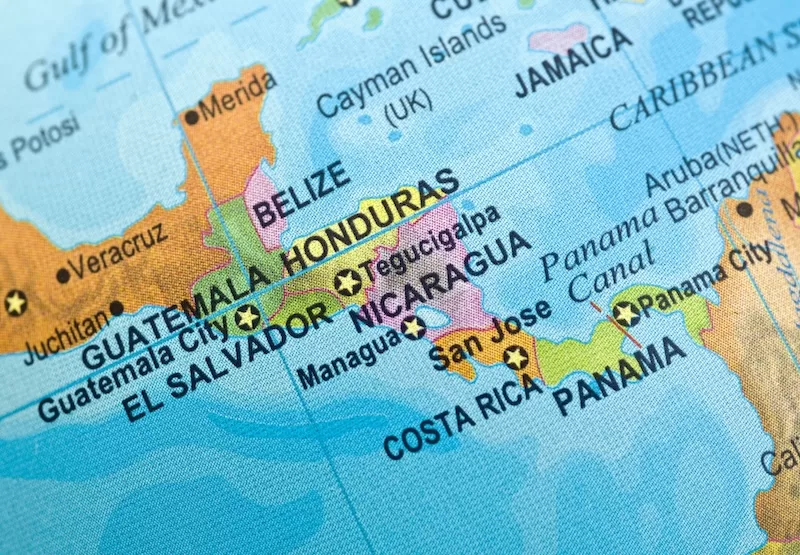
There are no statutory rules regarding residence in Panama as such, although residence must be officially recognised by the government. There are several ways in which both short and long term (i.e. longer than 3 months) residence can be obtained, and briefly, these are:
In order for a foreign national to obtain employment in Panama, a work permit must be obtained from the Ministry of Labour and Social Welfare, and this must be renewed annually. (It is worth knowing that in Panama, there are restrictions placed on the number of non-Panamanian citizens that a company is permitted to employ, with 5% being the usual quota. Foreign companies, however, are allowed to fill the senior positions with expatriates, up to a maximum of 12% of the workforce.) As previously stated, for taxation purposes there are no statutory rules regarding residence, but it is generally accepted that an individual is resident if he/she spends more than 180 days in the country in any one tax year. However, residence or non-residence is not an issue in terms of taxation, as in Panama, taxes are levied on a territorial basis, i.e. only on Panamanian sourced income. Panama has an interest in becoming the telecommunications hub for the Central American region, and initiatives have been undertaken in both the telecommunications and e-commerce sectors to help achieve this goal, for example the recent establishment of the City of Knowledge Tecnopark, which has attracted the interest and custom of many industry players. The official language of the business world is Spanish, although English is also widely spoken, but the daily newspapers attracting the widest circulations are all Spanish, for example: La Prensa, El Panama America, and Critica. The majority
of the population (85%) are Roman Catholic, and the climate is tropical
maritime, with generally high temperatures throughout the year, and a rainy
season between May and November. Despite this, the most popular activities
take place outdoors, and these include water sports, fishing, and golf.
The options for entertainment available in Panama are many and varied,
particularly in Panama City, and the other main cities, although the crime
rates in these cities are rising, so care is advised. It may also be necessary
to exercise caution when travelling (particularly without a guide) in some
parts of Panama (for example near the Colombian borders), and there have
been manifestations of anti-American sentiment by some political groups,
so US citizens should endeavour to avoid political demonstrations and gatherings
where possible.
|