Introduction
Thinking about living in Bulgaria? Curiosity gets the better of you, and you start a quick search that promises low prices and a European address. Soon you’re enamored by photos of tram-lined streets in Sofia, Black Sea beaches brushed by warm evenings, and market stalls crowded with tomatoes that really smell like tomatoes. Bulgaria stands at the crossroads of tradition and modern life, a place where medieval fortresses share skylines with coworking hubs and metro stations.
Costs are often kinder than what people expect in the European Union. Internet speeds surprise newcomers. Mountains appear on the horizon even from busy cafés. But the real test of living in Bulgaria arrives when the first apartment viewing reveals thin insulation or when you try to explain a minor bureaucratic issue without local language. The country rewards patience and preparation.
To understand what this move really means, you need more than broad promises. You need to know how a monthly budget behaves in different cities, how residency rules play out, and how various neighbourhoods feel once the sun sets.
This guide explores those realities and gives a grounded view of life in Bulgaria, so you can make a confident decision long before your plane touches down.
Why Move to Bulgaria?
Bulgaria does not try to impress you with theatrics. Its appeal grows slowly, through practical wins and everyday moments: a bill that arrives lower than expected, a friendly conversation at the corner bakery, a Saturday train that leads to an archaeological site older than most countries. Experiencing Bulgaria, truly living Bulgaria, means hearing church bells echo off hillside neighborhoods at sunrise, buying tomatoes that still smell like the sun, taking a spontaneous bus ride to a beach or a mountain trail, discovering ancient ruins during an afternoon errand, and enjoying a life where your budget gives you room to breathe instead of just more rules to follow.
Affordability without giving up a European base
The cost advantages mean choice. A nicer apartment, a night at a seaside guesthouse, or simply breathing space in your budget each month. Rents remain achievable. Groceries, transport, and leisure evenings do not feel like luxury decisions. It is the serenity that comes from not doing mental math every time you open your wallet.
Days that feel lived rather than scheduled
People linger at cafés. Public gardens fill with retired chess players and children on scooters. Days rarely feel rushed. Even Sofia, the capital, leaves room for spontaneous detours: a pastry stop, a walk past mineral-spring fountains, a visit to a bookstore tucked under old apartment blocks.
Diversely fascinating geography
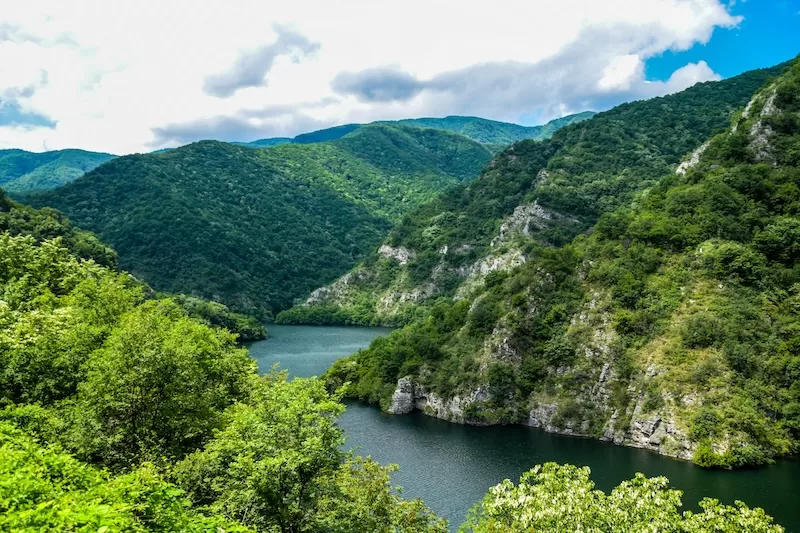
Mountains to the west. The Black Sea to the east. Vineyards, ski resorts, small spa towns with steaming outdoor mineral pools. Bulgaria lets you spend winter weekends skiing and summer mornings by the water without ever crossing a border. Roads and buses reach most places easily, and distances stay manageable.
Deep history that isn’t locked behind museum glass
Centuries reveal themselves everywhere:
• Roman amphitheaters sitting below modern streets
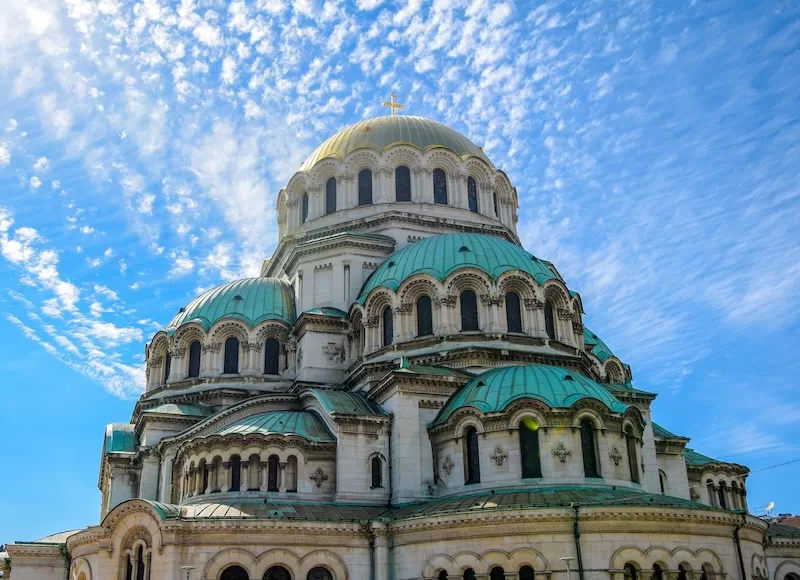
• Orthodox churches filled with candlelight and frescoes
• Stone villages that look untouched by time
You feel connected to something older and bigger than daily responsibilities.
EU membership without EU-level expense
Bulgaria belongs to the European Union, which means greater mobility, trade, and investment advantages. Yet the price of a meal or a haircut often feels closer to Southeast Europe than Central capitals like Vienna or Berlin. For many expats and remote workers, that mix is a major draw.
A growing remote-work scene
Cafés with fast Wi-Fi. Coworking spaces in historic buildings. Young professionals mixing English and Bulgarian at after-work meetups. Internet speeds rank impressively high in Europe. The country understands digital work is not a trend but a foundation of future growth.
Read More Like This: 10 Places to Explore in Bulgaria
Cost of Living in Bulgaria
Budgets stretch farther here than in many European destinations, but what makes the experience of truly living Bulgaria attractive isn’t just the numbers. It is the feeling of sitting down at a café on a weekday and not worrying about a €6 cappuccino. It is the ease of picking up fresh produce at a neighborhood market and noticing it tastes like it came from fresh, fertile soil, not storage.
Housing and rent markets
Housing prices vary dramatically by district and building age. Expect older apartment blocks with character next to sleek new builds with rooftop views.
In Sofia:
• A one-bedroom apartment in a convenient district: €600 to €900 per month
• New builds around business hubs cost more, especially near Paradise Mall or Lozenets
• Heating type matters, as winters get cold and central heating rates differ by building
Outside the capital, the picture softens. A comparable apartment in Plovdiv, Varna, or Burgas may fall €200 or more below Sofia prices, freeing up budget for weekend travel or better furnishings.
Rural options stretch value even further. A cottage in wine country or near a mineral spa town can cost less per month than a downtown parking space in other European capitals.
Food, transport, utilities and everyday expenses
Urban life stays affordable. Even in central areas:
• Fresh pastries from a neighborhood bakery run less than €1
• A lunch menu with soup and entrée might hover below €10
• Local cheese and olives quickly become regular additions to the fridge
• Wine from Thracian vineyards costs less than bottled water in some restaurants
Markets add a layer of pleasure to routine errands. Stalls offer tomatoes grown nearby, peaches that drip sweetness, and honey sold by the person who harvested it. These small purchases add up to a monthly grocery bill that rarely shocks newcomers.
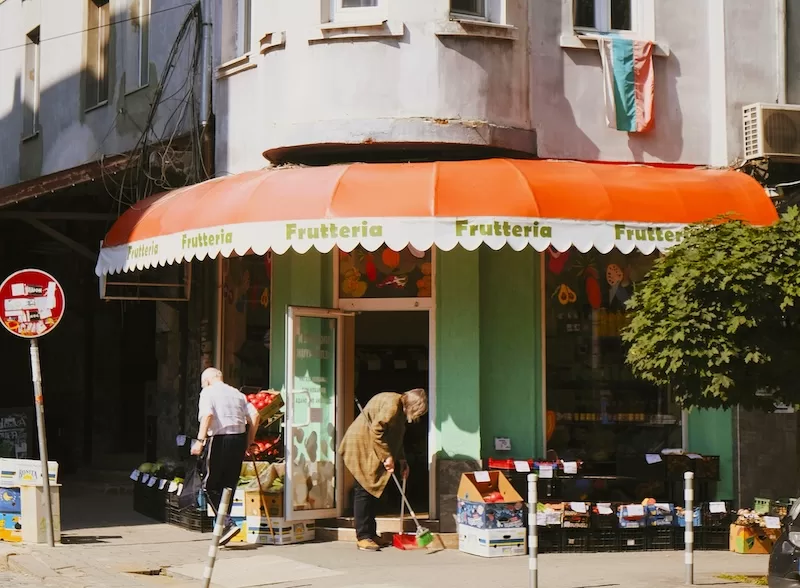
Public transport requires a bit of navigation at first, but buses, metros, and trams cover most needs at minimal cost. Taxis remain inexpensive. It is common to hop between errands without tracking minutes like a ride-hailing meter.
Utilities, especially in winter, deserve planning. Heating costs depend on building style, insulation, and system type. Older concrete block apartments can lose warmth quickly, nudging up energy usage. Internet, on the other hand, is a pleasant surprise: fast and reliably priced lower than many Western alternatives.
Sample Monthly Budget: One Person Living Comfortably in Sofia
| Expense | Estimated Monthly Cost | Notes |
| Rent (1-bedroom in a good district) | €750 | Lozenets or similar well-located area |
| Utilities (heat, electricity, water, trash) | €120 winter / €70 summer | Older buildings may run higher in cold months |
| High-speed internet + mobile plan | €40 | Fiber internet + a generous mobile data/voice plan |
| Groceries and household items | €220 | Mix of supermarkets and local markets |
| Eating out + cafés | €250 | Regular café visits + dinners out a few times a week |
| Public transport pass | €25 | Metro + trams + buses in Sofia |
| Health insurance (supplemental private plan) | €45 | Enhances comfort and service access |
| Fitness, entertainment, hobbies | €120 | Weekly movies or concerts + gym membership |
| Occasional travel or weekend outings | €150 | Day trips, train rides, seaside or mountain weekends |
Estimated Total: €1,700 per month
Employment, Income and Tax Context
Working life in Bulgaria depends heavily on how money reaches your account. Remote workers and entrepreneurs often settle in quickly because foreign income stretches farther. Those who rely on local salaries may need to build a new rhythm around cost-saving choices.
Salary levels and the job market
Local wages vary by industry. International companies hire for IT, finance, and customer support roles in Sofia and Plovdiv, creating pockets of strong income. Tech hubs offer modern office buildings and a growing network of English-speaking teams.
Service jobs pay less. An entry-level role in retail or hospitality might feel limited, even when combined with careful budgeting. You will notice the contrast as soon as you chat with a Bulgarian colleague about income expectations. It explains why many locals live with family longer or purchase apartments through multi-generational support.
For remote earners, Bulgaria feels liberating. A salary from abroad that once vanished into rent can now cover bills, personal savings, and weekend trips to the mountains. It is the difference between surviving and breathing freely.
A tax system that attracts entrepreneurs
Bulgaria’s flat income tax of 10% is one of the most competitive rates in the European Union. Corporate tax is also 10%, which appeals to freelancers registering a company or startups considering a European base. Registering a business can be straightforward if you work with someone who understands the bureaucracy. Once completed, day-to-day operations feel smooth. Invoices get issued. Clients get paid. You enjoy the rare pleasure of low taxes combined with modern banking and good international connectivity.
Work culture and career pace
The professional pace moves with intention, not grind. Colleagues take time for lunch. People respect weekends. Managers encourage holidays without raised eyebrows. The emphasis leans toward getting things done, then going home to family or out into the city. Still, flexibility is crucial. English fills many office spaces, but paperwork, repairs, and phone calls may require Bulgarian or help from someone who speaks it well. Expect to be resourceful when arranging utilities or solving small admin puzzles.
Remote-work infrastructure
Fast fiber connections give digital workers confidence. Coworking spaces pop up in repurposed warehouses, quiet lofts, and even seaside towns In Sofia alone there are dozens of coworking spaces, from 24-hour hubs like GoNetworking.space to terrace-rich setups such as Biz Hub. In Plovdiv Gathr Cowork shows that remote-work culture extends beyond the capital and is creeping into smaller cities. And through large coworking chains like Networking Premium you even find options in ski-towns or coastal bases, meaning a laptop, strong Wi-Fi and a terrace in the late afternoon sun become part of the lifestyle. For freelance creatives, startup founders, and hybrid professionals, Bulgaria feels ideal for a life that balances productivity with space to live.

Residency, Visa and Legal status
Becoming a long-term resident in Bulgaria is achievable, but the process has fine print. The smoothest moves happen when someone understands paperwork, timing, and the small rituals that make everything official. Expect stamps, signatures, and a few office visits that feel like side quests.
EU citizens: straightforward, but still a process
EU and EEA citizens can arrive freely and settle with far fewer hurdles. After 90 days, registration becomes necessary. Bring:
• Proof of address
• Proof of health insurance
• Sufficient financial means or a local job contract
The process often requires visiting the Migration Directorate and the municipality to register your address. Offices get busy on Mondays and right after holidays, so timing matters. Walk in with patience and a folder that contains every paper someone might ask for.
Once approved, you receive a residency certificate and ID card. From that moment, daily logistics become easier: bank accounts, utilities, phone plans, even gym memberships open up without extra explanation.
Non-EU citizens: more pathways than people expect
If you are coming from outside the EU, Bulgaria provides several routes to long-term stay. Each offers a slightly different lifestyle picture.
- Work permits: secure a Bulgarian employer first, then follow their instructions. Tech companies and international service centers often handle the bulk of the process. A job offer unlocks structure.
- Business registration: entrepreneurs can create a local company and apply for residency as a managing director. It is a path for freelancers and remote workers who want Europe as a base of operations.
- Study programs: enrollment in an accredited Bulgarian university grants residency tied to the academic timeline. It appeals to those seeking language immersion or a career shift.
- Family reunification: linking with a spouse or parent already living in Bulgaria makes the move more human and less administrative but expect documentation to prove the relationship.
These categories require budgeting for translations, apostilles, and application fees. Many expats hire a migration consultant for guidance, especially when time pressures loom.
The digital-nomad wave has arrived
Remote professionals working for companies abroad now have a tailored entry point. The digital-nomad visa introduced in 2025 simplifies legal stay for those earning independently of local companies. It recognizes how work has changed and allows Bulgaria to welcome people who contribute economically without competing for local jobs. Coworking spaces near Sofia Tech Park or in Plovdiv’s creative districts become a community hub, not just a workplace.
Investment for permanent footing
For those seeking stability from day one, Bulgaria’s investment-residency route grants long-term status in exchange for approved financial contributions. It smooths the journey into EU living but requires serious capital. It also suits investors drawn to Bulgaria’s developing industries and real estate opportunities.
Top 5 Best Cities in Bulgaria for Expats
Sofia
Best for: Career opportunities, coworking culture, international amenities
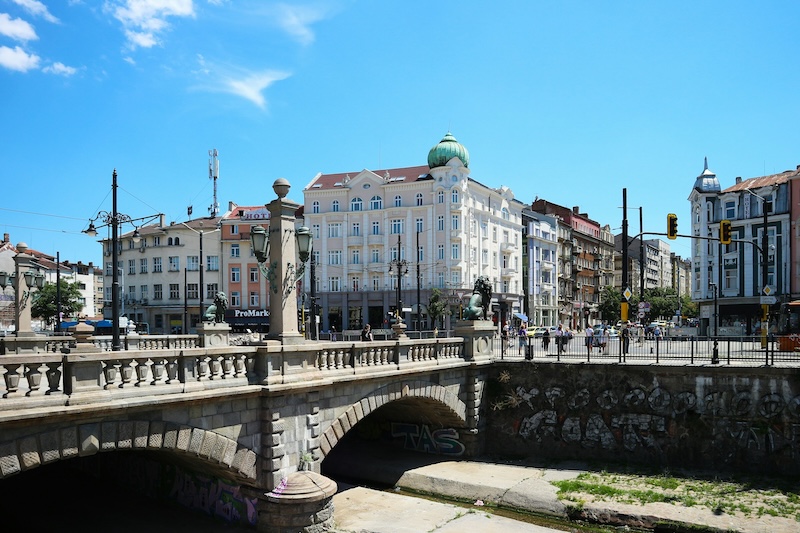
Sofia feels like a city balancing two worlds. You can stand on Vitosha Boulevard, surrounded by buildings with grand facades, then turn a corner and find glassy tech offices in which young professionals spill out for late coffees. After work, locals drift toward Borisova Gradina, the city’s green heart, with joggers tracing looping paths and older couples strolling under tall chestnut trees. Even in December, people sit outside on heated patios, ordering small glasses of rakia that warm the hands before warming anything else.
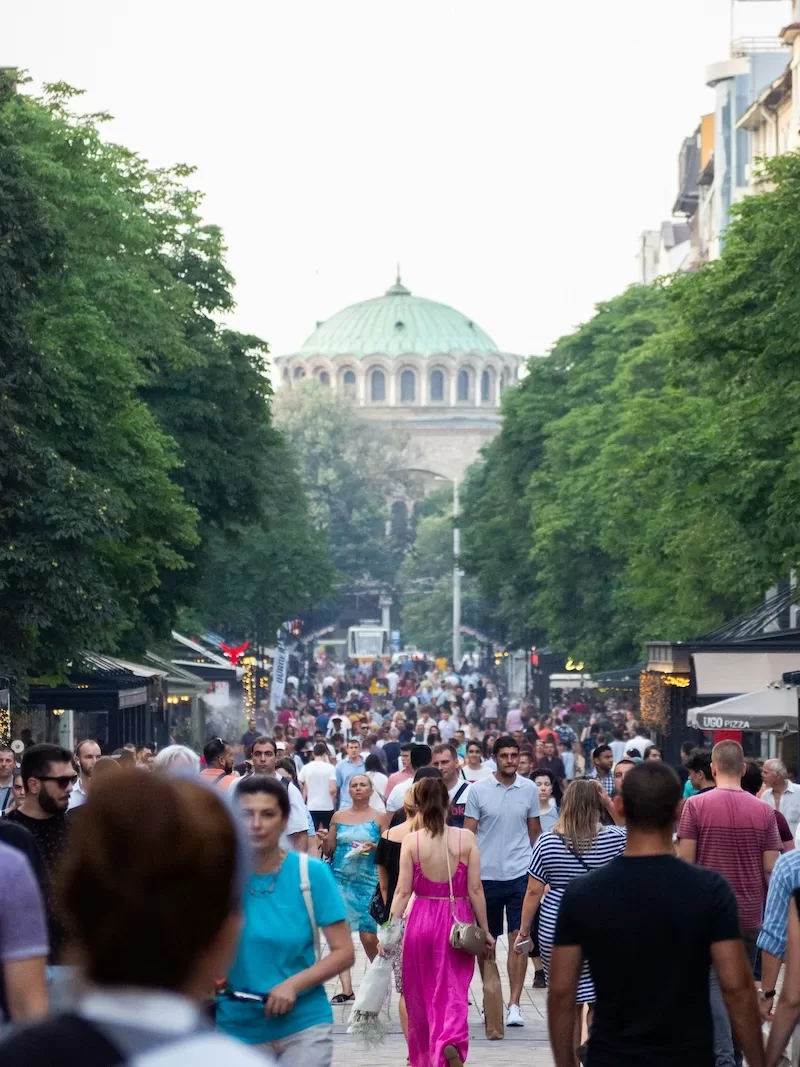
Where you choose to live shapes your version of Sofia. Lozenets draws people who want calmer residential streets with quick metro access and cafés that turn into favorite corners of everyday life. Studentski Grad, further south, never seems to sleep, thanks to buzzing bars and a huge student population; rents stay low there, but Friday nights echo through the courtyards. On the edge of the city, the Vitosha district trades walkability for breathing room, with newer apartment blocks and glimpses of the mountain at sunrise.
Daily essentials remain friendly on the wallet if you shop like a local and learn which bakeries bring out the fresh banitsa first thing in the morning. Most workers rely on lunch menus where soup and a hearty main dish cost far less than you would expect in a European capital. Winters ask for thick coats, good boots, and acceptance that the air might feel heavy on some days. But the reward for staying here comes when the weekend arrives. A short bus ride and a cable-car later, Sofia shrinks into a quiet toy city below you while snow softens the mountain trail ahead.
Sofia thrives on contrasts. That is its charm. It feels modern and old at once, energizing without overwhelming, compact yet always revealing new corners for those who explore on foot.
Trade-offs: Highest rents in Bulgaria. More bureaucracy than coastal towns. Commuting can sap energy if you live far from the metro.
Plovdiv
Best for: Creative professionals, people who value history and community connections
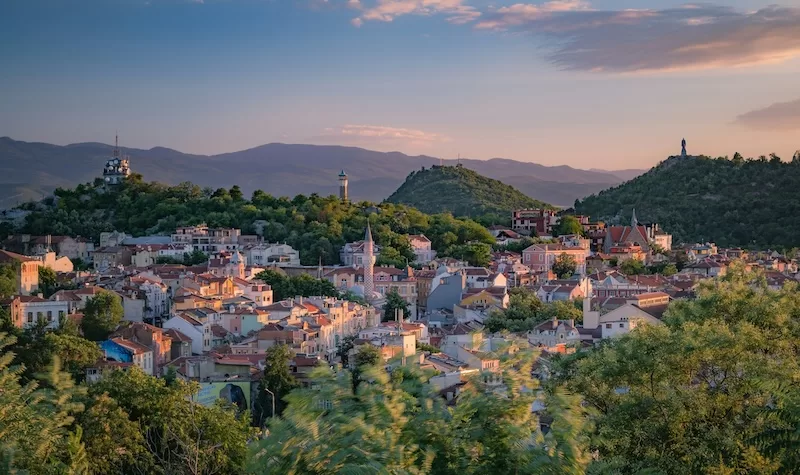
In Plovdiv, days begin with sunlight sliding across the Seven Hills and end with music drifting through narrow streets. Art galleries appear inside restored townhouses, and Roman ruins sit quietly below modern sidewalks as if the past never left, it just shifted down a level. People linger in cafés without checking the time. Conversations stretch. Evening arrives gently.
Each district paints a different version of life. Kapana, the creative heart, feels like a festival whatever the day of the week. Tables scatter through cobblestone lanes, and chalkboards announce craft beer from small Bulgarian breweries. Artists hang prints from balconies, DJs set up in hidden courtyards, and stumbling into a poetry reading or pop-up market becomes a delightful accident. A short walk away, Kamenitsa welcomes those who want community with less performance. Local bakeries remember your order and neighbors stop to talk while picking up groceries. Trakia, farther out, offers modern apartment blocks, wide green spaces, and rent that leaves space in the budget for weekend trips or a better bottle of wine.
The city’s amphitheater reminds you that the crowds cheering concerts today sit in the same stone seats shaped by Roman hands. Summer heat presses down in July, though most people adapt by shifting life outdoors: café umbrellas, shaded gardens, late dinners that stretch into the cool hours of the night. Winters are milder here than in the capital, and when snow falls, it dusts the Old Town like powdered sugar before melting into cobblestone grooves.
Plovdiv makes you part of its history without effort. It invites slow breakfasts, wandering detours, and friendships that start easily because everyone seems open to a conversation. For many expats, it becomes the city where the idea of moving abroad transforms into a life that feels rich, relaxed, and entirely enjoyable.
Trade-offs: Limited high-paying jobs without remote income. July heat encourages indoor afternoons.
Varna
Best for: Sea lovers, families wanting beaches + modern infrastructure
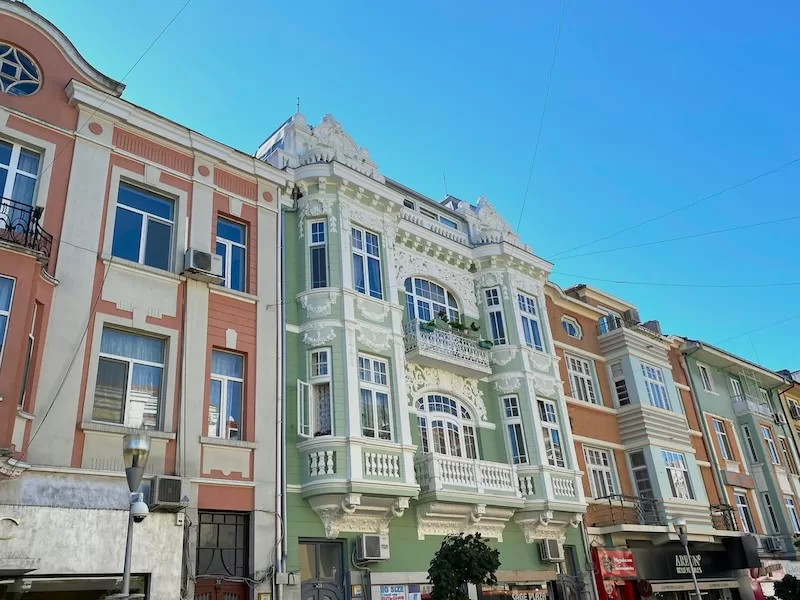
Varna wakes up to the sea. Morning light bounces off the Black Sea and into apartment windows, and people wander the Sea Garden before the city fully stirs. This enormous waterfront park functions like an outdoor living room: children on scooters, joggers tracing the coastline, retirees reading newspapers under the shade of tall trees that smell faintly of salt and resin. Cafés open early, serving strong coffee and pastries that travelers always remember later.
The beach is never far. The city center is lined with restaurants, coworking spaces, galleries, and summer events that gather crowds well past midnight. Even mundane errands feel gentler when a sea breeze follows you from shop to shop. English appears frequently on menus, in schools, and among people who work in tourism or tech. Local seafood becomes part of the regular grocery list rather than a splurge.
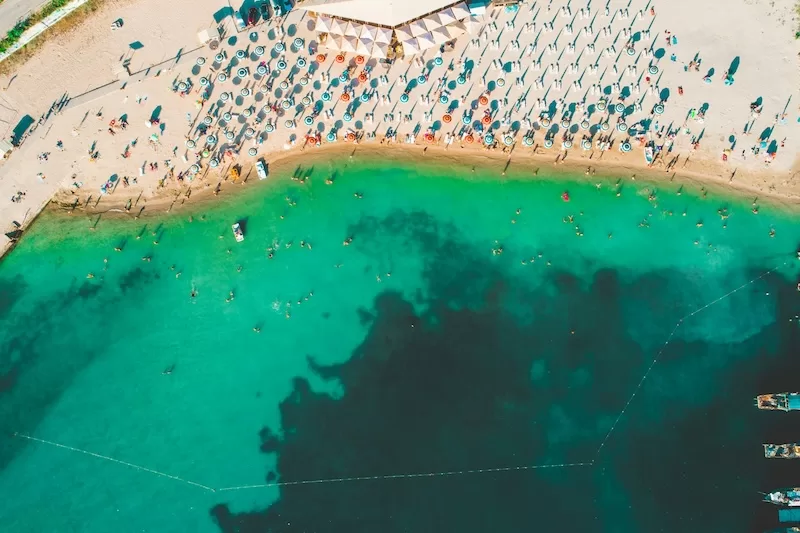
Neighborhoods, of course, shape what your life is going to look like. Chayka appeals to those who want the Sea Garden as a backyard, where evening walks become a habit without needing a plan. Central Varna gives immediate access to the marina, boutiques, cinemas, and bars that fill quickly on warm nights. Across the long bridge, Asparuhovo offers quieter coastal living at lower prices, with beaches that feel more like a local secret.
Tourist season makes the city louder, livelier, and occasionally chaotic. Crowds pack the beach, music carries late, and restaurant menus rapidly change to summer mode. When autumn comes, Varna exhales. Locals reclaim the promenade. The water darkens into deep blues. Life softens into a routine that feels purely coastal.
Varna suits people who want the benefits of a real city but refuse to live far from the water. Even workdays end with salty air and open views. The sea becomes a constant companion, shaping seasons, weekends, and mood in a way no inland location can replicate.
Trade-offs: Tourist season pushes crowds and noise. Winters turn calm and grey, and some venues close until spring.
Burgas
Best for: Expats prioritizing nature access, affordability and serene coastal living
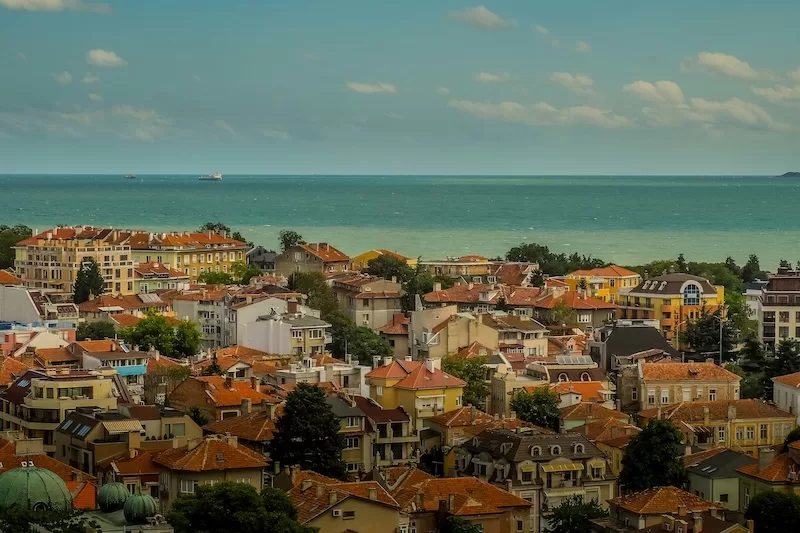
Burgas is Varna’s quieter sibling: practical, friendly, and closer to green spaces. The city reveals itself through small pleasures: a morning espresso overlooking the pier, a path through the Sea Garden lined with tall trees and sudden ocean views, the pleasure of knowing the beach is always close.
The center has everything you need within a walk or a short bus ride: bakeries with warm banitsa pulled straight from the oven, pharmacies that open early, casual restaurants where grilled fish appears without fanfare. People greet each other often, less rushed than in larger cities. In the evenings, locals stroll down Aleksandrovska Street, picking up ice cream or stopping to chat under the streetlights before heading into the park.
Each area offers its own texture. Lazur is the sweet spot for many expats, close to the Sea Garden with cafés and shops nearby. The streets feel lived-in but tidy. Slaveykov stretches farther inland but brings newer housing and plenty of conveniences like sports centers and large supermarkets. Meden Rudnik, farther still, draws people who want space and low monthly costs, trading travel time for breathing room.
Nature wraps itself around the city. Lakes spread out just beyond the buildings, attracting flocks of migrating birds and quiet watchers with binoculars. Day trips are simple: south toward coves and fishing villages, north toward bigger beaches and rocky cliffs. Even on a busy weekday, you can reach water and open sky before the sun dips.
Burgas does not try to entertain you every second. It rewards those who enjoy simpler routines and outdoor habits. Summer brings music and visitors, but the city never feels like it loses its balance. When the high season ends, everyday life continues steadily. For many who move here, the appeal is exactly that. It is a place where the sea stays close, costs stay manageable, and community grows naturally over time.
Trade-offs: Smaller international presence. Nightlife is mild. Winter flights become limited and expensive.
Veliko Tarnovo
Best for: Retirees, remote workers and creatives wanting quiet inspiration
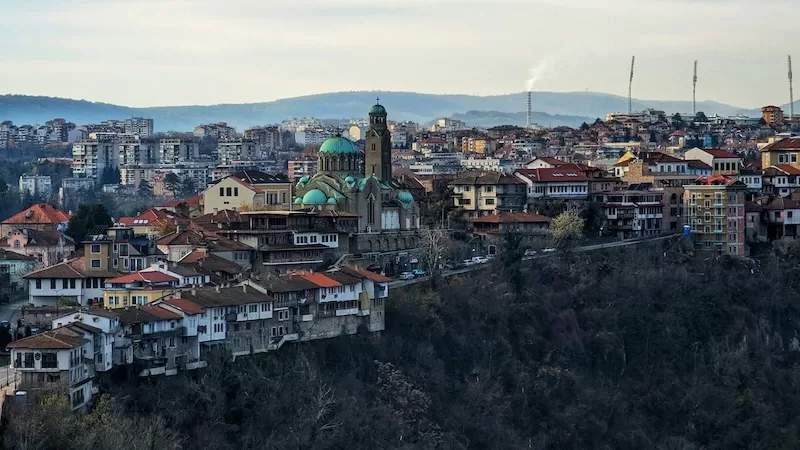
Veliko Tarnovo rises like a storybook illustration above the Yantra River. Houses cling to the hillsides, stacked in colorful layers above the Yantra River, so that windows seem to float over air and rooftops cascade down the slopes like terraces. History is never a backdrop. It rises from the stones beneath your feet and towers above you in the silhouette of Tsarevets Fortress, on which spotlights illuminate the walls each night as if reminding everyone that centuries still watch.
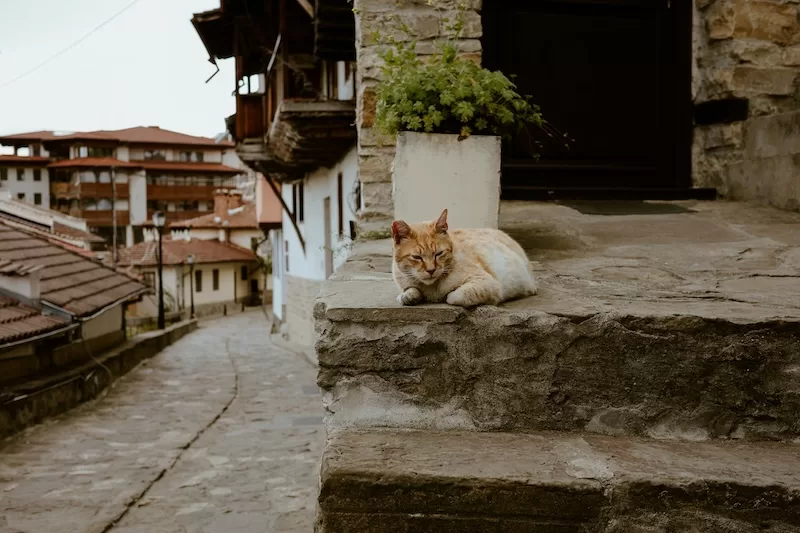
Daily life moves quietly and without hurry. In the mornings you might hear church bells echoing off the canyon before anyone opens shop. Later, students and artists fill the cafés along Gurko Street, trading ideas under frames of hanging vines. The blend of locals, university life, and a longstanding expat presence creates easy conversation. People greet you not because you stand out, but because this is a place where knowing who lives nearby still matters.
Choosing a neighborhood shapes the view from your balcony as much as your routine. The Old Town offers cobblestone lanes and postcard moments at every turn, though stairs are part of the deal and parking can feel like a contact sport. Kartala, farther from the tourist flow, brings peaceful residential streets and newer apartments ideal for long stays. Asenov hugs the river and keeps nature close enough for morning walks among cliffs and water.
Groceries come from small shops that recognize customers after a few visits. Fresh produce markets pop up even in colder months, and bakeries produce loaves with crusts that crackle loudly when cut. Nights may be quiet, but when the city hosts performances or folklore evenings on open-air stages, you feel the energy of hundreds gathered under an ancient fortress sky.
Winter mornings appear misty and dreamlike, with fog rising from the river and rolling over the rooftops. Summer afternoons open into wide hours of sunlight that stretch across balconies and terraces. Every season feels cinematic for reasons that have nothing to do with tourism.
Veliko Tarnovo suits those who enjoy rural calm with just enough city spirit. It invites creativity, slow mornings, long walks, and the sense that you are never far from a story. For remote workers, retirees, and anyone drawn to places with soul instead of flash, this hilltop city becomes the chapter they did not know they were ready to write.
Trade-offs: Careers must be remote or flexible. Long-distance travel needs planning. English appears less frequently in smaller shops.
Quick comparison snapshot
| City | Daily Feel | Top Neighborhood Picks | Best For | You Should Love |
| Sofia | Fast, modern energy | Lozenets, Center, Vitosha | Careers, networking | Big-city rhythms |
| Plovdiv | Creative + historical | Kapana, Kamenitsa | Culture-driven relocators | Arts and festivals |
| Varna | Urban beach life | Chayka, Center | Families + sea lovers | Summer atmosphere |
| Burgas | Calm coast + nature | Lazur, Slaveykov | Budget-conscious expats | Simplicity + outdoor life |
| Veliko Tarnovo | Charming + slow | Old Town, Kartala | Retirees + writers | Scenic quiet days |
Read More Like This: Where are Expats Living in Bulgaria?
Practical considerations and pitfalls
Healthcare and well-being
Bulgaria has a functioning public healthcare system supported by mandatory social health insurance contributions. If you are employed locally, a portion of your salary goes to the National Health Insurance Fund, and that grants access to public doctors, emergency care, and hospitals with NHIF contracts. EU nationals holding a European Health Insurance Card can also receive medically necessary treatment in these facilities, sometimes with small co-payments.
Public hospitals cover the essentials but often involve longer waiting times and less English spoken among staff. Because of this, many expats rely partly on private hospitals for better communication, shorter queues, and more modern equipment. Private healthcare does not replace the public system but complements it, providing faster appointments and more specialist availability when needed.
Sofia and Plovdiv offer the strongest healthcare infrastructure. In Sofia, options like Acibadem City Clinic Tokuda Hospital treat hundreds of thousands of patients each year and set the benchmark for international-standard medical care. Private facilities such as VITA Hospital also provide extensive specialty services across multiple locations in the capital. In Plovdiv, UMHAT St. George operates as the main emergency center and is well known regionally for frontline treatment.
For newcomers, private insurance becomes a practical bridge while getting settled. It ensures access to English-friendly care and reduces the stress of navigating public bureaucracy immediately.
Pharmacies remain a comforting presence on nearly every corner in major cities; many pharmacists make an effort to clarify dosage and explain unfamiliar brands through simple English and gestures when needed.
Housing quality, winter realities, and utilities
Apartment hunting in Bulgaria teaches you quickly that looks can deceive. A block that appears drab from the street might hide a warm, sturdy home behind its concrete walls. Another place with gleaming tiles and fresh paint could turn into a nightly battle against drafts. Insulation becomes something you notice not with your eyes but the moment wind whistles through a window frame. Winters bring that lesson fast.
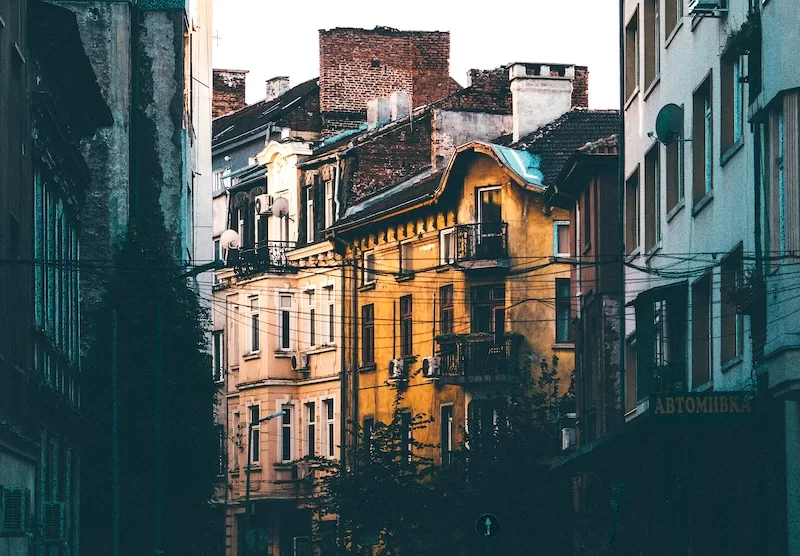
Heating systems vary by building and matter more than any design feature. Some older flats rely on district heating that keeps every room consistently warm, even when snow piles outside. Others use electric radiators or air-conditioning units that nibble at your wallet during the coldest months. When touring apartments, you start asking new questions: how long does the water boiler take to heat, how thick are the window frames, which direction does the living room face when the sun is low?
Utilities are generally affordable, but the season shifts the numbers. Winter electricity bills cause a brief pause before being paid, especially in less insulated homes. In summer, costs ease as windows open and the need for heating disappears.
Choosing the right place becomes a mix of intuition, observation, and advice from someone who has lived through a Bulgarian winter. Comfort is more than about what you see; it’s about what you feel when temperatures drop and how happily you return home at the end of the day.
Infrastructure and getting around
Public transport in Sofia feels reliable and becomes an easy part of your daily routine rather than a chore. The metro network is clean and simple to navigate, especially once you learn a few stop names. A single trip ticket costs 1.60 BGN (≈ €0.82) and allows transfers within about 30 minutes.
Want to go unlimited for a day? A 24-hour pass is available at 6 BGN (≈ €3.06) which includes all modes: metro, buses, trams.
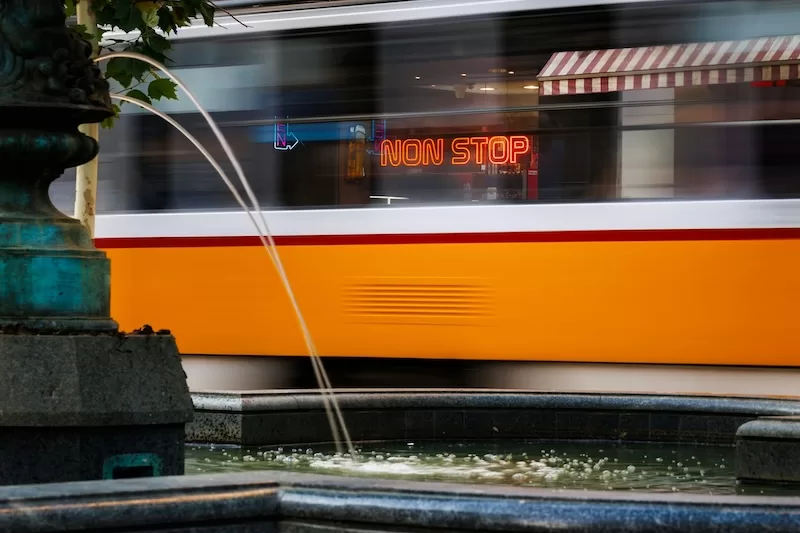
Trams and buses fill in the routes beyond the metro corridor and help you explore the city’s character: creaking heritage trams through older neighborhoods, night buses on certain routes after midnight. In smaller cities, public transport shifts to primarily buses and shared taxis (marshrutka). It works, but you’ll realize that schedules are less rigid and English signage is often limited.
Trains are scenic; you’ll watch villages and sunflower-filled fields glide past rather than the countryside blur by in a rush. For example, a second-class ticket from Sofia to Plovdiv might cost around €5-€8 and take about 2h25 m. Good bargain, but it also means you’ll want patience and a flexible mindset. Driving gives independence: you choose the playlist and the route, but you’ll need alertness for highways with sudden dips, potholes, or rural extensions that still bear the scars of old winters.
Overall, transport is a strong plus: affordable, accessible, and part of daily life. With a city pass in Sofia, you move easily; with a regional train, you see Bulgaria unfold rather than just bypass it.
Bureaucracy
Administrative life moves according to its own rules. Opening a bank account, signing a rental contract, or applying for residency can sometimes feel like a scavenger hunt for the correct paper stamped in the correct office at the correct time. The best strategy is simply preparing for more than what is requested. Extra photocopies can turn into small victories.
Language and integration
English allows comfortable movement through Sofia’s city center, Varna’s waterfront districts, and many younger workplaces. Outside these spheres, Bulgarian becomes important quickly. Even a modest vocabulary changes interactions in warm, unexpected ways. A friendly greeting in the local language can turn a perfunctory purchase into a pleasant exchange. Joining a hiking group, attending language exchanges, or signing up for a dance class can create the kind of friendships that make Bulgaria feel like home. The country rewards people who participate in it rather than stand at arm’s length. Learning continues through daily errands rather than textbooks alone.
Daily customs and expectations
Shops close earlier than in major Western European capitals, and Sundays lean toward rest rather than consumerism. Weekdays move with intention but not frantic energy. Parks and squares collect people in every season. The practical benefit of this pace are fewer rushed evenings, more time for yourself.
Inflation and financial planning
Prices have risen in recent years, particularly for groceries and utilities, and locals discuss the increase often. Even so, everyday costs rarely bite hard into income for those earning abroad or working in Bulgaria’s growing tech sector. The ability to enjoy life without constant budgeting remains one of the strongest arguments for living here.
FAQs
Q1. Is it expensive to live in Bulgaria compared to other EU countries?
No. Bulgaria remains one of the most affordable EU members. A single person can cover daily living costs, groceries, and transport comfortably without constant budgeting anxiety. Housing varies by city, but in many neighborhoods rent stays significantly below Western European prices. Rising energy bills and imported goods are the main exceptions, so planning for winter expenses is wise.
Q2. How easy is it to find English speakers in Bulgaria?
It depends where you go. In Sofia and Varna, English appears often in cafés, coworking hubs, and government offices that work with internationals. Elsewhere you will rely more on gestures, basic Bulgarian, and friendly improvisation. People appreciate the effort and often help bridge the language gap. Over time, everyday interactions become language lessons.
Q3. Can foreigners buy property in Bulgaria?
Yes. Foreigners can freely purchase apartments and other buildings. Buying land requires a residency structure or forming a company, which many expats do with legal assistance. Property prices are still moderate compared to other European destinations, which is why retirees and remote workers consider owning instead of renting long-term.
Q4. How safe is Bulgaria for expats?
Generally safe, especially in urban areas and popular regions. Petty theft can happen in crowded transport or around nightlife zones, so keeping common sense habits helps. The risk of violent crime stays low. Night walks through central districts often feel comfortable, though some poorly lit residential blocks may feel less inviting. As in most countries, each neighborhood has its own mood.
Q5. What is the job market like for foreigners?
Local salaries can feel low unless you join the tech, finance, or multilingual service sectors where international companies pay competitively. Many expats rely on remote income or freelance work registered through Bulgarian companies. If you want a career without remote earnings, Sofia offers the strongest prospects, followed by Plovdiv and Varna.
Q6. How difficult is it to navigate Bulgarian bureaucracy?
It can take patience. Residency applications, address registrations, and even bank accounts sometimes require multiple office visits. Instructions are not always clearly posted in English. Success comes from preparing more documents than you think you need and accepting the system’s slower rhythm. Most long-term expats say the learning curve becomes easier after a few victories.
Q7. What about healthcare quality?
Basic care and emergencies are well handled, especially in larger cities. Private hospitals offer faster access, more English, and clearer processes, which is why many foreigners add private insurance. Elderly medical needs or specialized long-term care may require careful research before settling permanently in rural areas.
Q8. How is the climate?
Bulgaria experiences real seasons. Snow touches even the cities in winter, and mountain areas enjoy long ski periods. Summers are warm everywhere and become very hot inland during July and August. Spring and autumn often feel like the reward seasons: comfortable temperatures, long daylight, and weekend trips to the countryside.
Q9. Will I feel isolated if I move outside major expat hubs?
It depends on how you build your routine. Smaller towns may offer peace and charm but fewer social options in English. Joining clubs, sports groups, or cultural classes helps a lot. Cities like Sofia, Plovdiv, and Varna give new arrivals a head start socially.
Q10. Can Bulgaria work as a long-term base for digital nomads?
Very much so. Fast internet, affordable housing, and a recently introduced digital-nomad visa create a welcoming setup for remote work. You can spend weekdays in coworking spaces and weekends skiing or by the water without leaving the country. Those who stay long-term also appreciate Bulgaria’s position as a travel hub to the rest of Europe.
Ready for your Bulgarian chapter?
Choosing a new home is never only about prices or paperwork. It is about how your days might feel once routine settles in. Bulgaria offers space to breathe and a mix of environments that let you shape a life as social or as peaceful as you want. You can step out your door into café chatter in Sofia, end the workday with a walk along the water in Varna, or wake up to birdsong in a quiet hillside town.
This guide has shown what life on the ground looks like. Now the next step is simply staying informed. If you want updates on city comparisons, housing insights, regional lifestyles, and upcoming opportunities across the world, join our newsletter. It is built for curious explorers ready to turn research into reality.
A move begins with one choice. Let that choice be learning more. Subscribe today and keep your future in motion.
Contact Author
"*" indicates required fields
Stay Ahead on Every Adventure!
Stay updated with the World News on Escape Artist. Get all the travel news, international destinations, expat living, moving abroad, Lifestyle Tips, and digital nomad opportunities. Your next journey starts here—don’t miss a moment! Subscribe Now!