
The Single Point of Failure: Why One Residency is No Longer Enough
For decades, the conventional wisdom among globally mobile individuals was to secure a single, high-value second residency or citizenship in a Western nation. A European golden visa in Portugal or Greece, or perhaps a Caribbean passport, was considered the ultimate insurance policy—a singular ‘Plan B’ that could be activated in a crisis. But as we move through 2026, that strategy looks increasingly fragile. The geopolitical landscape is too volatile, the regulatory environment too aggressive, and the ‘Golden Visa‘ programs of the West too prone to sudden, drastic changes in cost or criteria to rely on a single jurisdictional basket.
In this high-stakes environment, a single residency is not a plan; it is a single point of failure. A quieter and arguably more resilient strategy has taken root among the most forward-thinking expats: the Regional Residency Hedge. Rather than spending hundreds of thousands of dollars on one expensive entry point, they are building a portfolio of low-cost residencies across a single, interconnected region. And the region leading this revolution is Southeast Asia. This isn’t just about saving money; it’s about sovereign risk management. When you hold residencies in three or four different nations within the same geographic neighborhood, you aren’t just an expat—you are a diversified global citizen with an adaptable safety net that no single-country solution can match.

The Philosophy: Choosing Resilience over Pure Optimization
Most relocation advice focuses on optimization: find the lowest tax rate, the cheapest rent, or the best weather. While these factors are important, the Regional Residency Hedge prioritizes resilience. In a world of ‘polycrisis’—where health, political, and economic shocks can happen simultaneously—resilience means having options that can be activated instantly. Southeast Asia’s geography is its greatest strategic asset. A flight from Bangkok to Kuala Lumpur or Ho Chi Minh City to Manila takes roughly two hours. This accessibility transforms the hedge from a theoretical insurance policy into a practical, everyday lifestyle.
By building a portfolio within a single region, you create a life that is ‘modular.’ You can rotate between bases with the ease of a domestic commuter, allowing you to stay ahead of weather patterns, political shifts, or simply the psychological fatigue of staying in one place for too long. In 2026, the truly free person is not the one with the most expensive passport, but the one with the most ways to leave and a clear, legal path to arrive somewhere else.

The Epicenter: Why Southeast Asia is the Perfect Portfolio Base
Southeast Asia’s appeal for this strategy is the product of several converging factors. First, the cost of living across much of the region remains dramatically lower than in Europe or North America. This means that maintaining multiple residencies—including rental costs, visa renewals, and local obligations—is financially viable for a much broader range of individuals. In 2026, the ‘carrying cost’ of a Southeast Asian portfolio is often less than the property taxes on a mid-sized home in a Western suburb.
Second, the region’s governments have become increasingly competitive. Countries like Thailand, Malaysia, Indonesia, and the Philippines have entered a race to attract foreign talent and investment. This competition has driven down entry barriers and driven up the quality of residency programs. We are currently in a ‘buyer’s market’ for residency options, where governments are actively reforming their long-term visa programs to outdo their neighbors. Finally, the infrastructure across the region—from high-speed internet to world-class private healthcare—has reached a level where it no longer feels like a compromise for those coming from developed Western economies.
The Anchor: Thailand’s LTR and the New Tax Paradigm
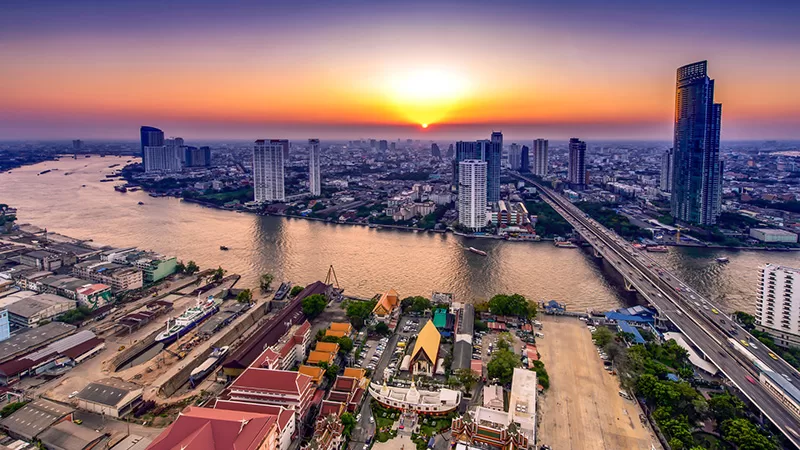
Thailand remains the cornerstone for many portfolios. The Long-Term Resident (LTR) visa, introduced in 2022 and refined over the following years, offers a renewable ten-year stay for wealthy individuals, retirees, and remote workers. But the real draw is the tax paradigm. The LTR visa comes with significant benefits, including a reduced personal income tax rate of 17% for certain categories and, crucially, an exemption from the requirement to file taxes on foreign-sourced income—provided that income is not brought into the country in the same year it is earned. This makes Thailand one of the most tax-efficient bases in the world for those with global income streams.
Beyond the paperwork, Thailand offers an infrastructure that is difficult to beat. From the world-class private hospitals in Bangkok (like Bumrungrad) to the digital nomad hubs of Chiang Mai and the lifestyle havens of the southern islands, it provides a high-tier lifestyle at a low-tier price point. For the strategic expat, Thailand is the high-functioning base that provides the stability and connectivity needed to manage a global life.

The Infrastructure Play: Malaysia’s Civilized Complement
Malaysia provides a compelling complement to Thailand. While the Malaysia My Second Home (MM2H) program has seen its share of bureaucratic shifts, it remains a pillar for those who value an English-speaking environment and a sophisticated financial system. Kuala Lumpur is a modern, cosmopolitan city with infrastructure that rivals Singapore but at a significantly lower cost. For families, Malaysia’s network of international schools is among the best in the region, and its banking system is one of the most robust and accessible for foreigners.
Malaysia’s strength in a regional hedge is its stability. It serves as an excellent ‘civilized’ base for accessing the broader ASEAN market. For entrepreneurs and investors, the ease of doing business and the relatively transparent legal system make it a safe harbor within the portfolio. Holding a Malaysian residency alongside a Thai one gives you two distinct legal and financial environments within a short flight of each other.

The Lifestyle Niche: Bali’s Creative and Wellness Magnetism
Indonesia, particularly Bali, has carved out a unique niche in the regional hedge. The ‘Second Home’ visa and specialized ‘Digital Nomad’ pathways have made it easier than ever to establish a legal presence on the island. While Indonesia’s bureaucracy can be more complex and opaque than its neighbors, the sheer quality of life in Bali makes it worth the effort for many. It is a hub for wellness, creative entrepreneurship, and adventure.
For the expat building a portfolio, Bali represents the ‘wellness and lifestyle’ component. It is the place where work-life balance isn’t just a buzzword but a daily reality. The thriving community of entrepreneurs and remote workers provides a social network that is global in scope but local in feel, making it an essential emotional and creative anchor for many regional portfolios.
The Emerging Contender: Vietnam’s High-Growth Upside
Vietnam is the dark horse in the Southeast Asian equation. Its economy is one of the fastest-growing in the world, and while its long-term visa options are currently less structured than Thailand’s, the trajectory is clear. The government is making increasingly loud signals about wanting to attract high-tier foreign talent and investment. Cities like Ho Chi Minh City and Hanoi are dynamic, young, and rapidly modernizing, offering a level of energy that is hard to find elsewhere.
For the strategic expat, Vietnam offers the potential for significant upside. Whether through real estate investment or business ventures, having a legal foothold in Vietnam is a bet on the future of the region. It is the ‘growth’ asset in your residency portfolio—a place that is slightly more challenging to navigate but offers rewards that more established markets can no longer provide. It adds a layer of economic diversification to the lifestyle and safety benefits of the hedge.
The Accessible Entry: The Philippines’ Ease of Integration
The Philippines rounds out the portfolio for many due to its sheer accessibility. The Special Resident Retiree’s Visa (SRRV) has long been one of the most reachable programs in the region, open to individuals as young as thirty-five with a modest bank deposit. The widespread English fluency and the warm, welcoming culture make it one of the easiest places in Asia to integrate and build a local support network.
In a regional hedge, the Philippines serves as an affordable and enjoyable base with access to some of the world’s most beautiful natural landscapes. It is a relaxed alternative to the high-energy hubs of Bangkok or Kuala Lumpur, providing a diversity of environment that is crucial for long-term satisfaction. It is often the easiest ‘first step’ for those beginning to build their regional portfolio.
The Logistics of Multi-Residency: Banking, Tax, and Health
Executing a regional hedge requires a new approach to logistics. For banking, the smartest move in 2026 is to decouple your primary wealth from your primary residency. Many regional expats maintain their main investment accounts in global hubs like Singapore or Hong Kong while using local banks in Thailand or Malaysia for daily expenses. This setup ensures that your capital is protected by a robust legal system while remaining accessible across the region.
Healthcare is equally critical. While the quality of care in Bangkok and Kuala Lumpur is world-class, it is less consistent elsewhere. A comprehensive international health insurance policy that covers you across all ASEAN nations (and ideally globally) is essential. This allows you to seek the best care in the region regardless of which country you are currently in. Finally, tax optimization requires careful day-counting. By leveraging territorial tax systems and ensuring you don’t stay long enough in any one place to trigger full tax residency (unless it is to your advantage), you can create a highly efficient global tax footprint.
Conclusion: The Era of the Modular Life
The decision to move abroad is no longer just about picking a new home; it is about building a system. The Regional Residency Hedge in Southeast Asia is the ultimate manifestation of that systemic thinking. By diversifying your legal rights to live and work across multiple jurisdictions, you move from being a guest of a single nation to being a sovereign individual with a portfolio of options. It is a strategy for the uncertain world of 2026, where the only true security is the freedom to choose your location at a moment’s notice.
PEOPLE ALSO ASK
Q: What is a regional residency hedge?
A: It is the strategy of securing legal residency in multiple countries within a single geographic region to create a flexible, resilient safety net that is more affordable than a single expensive Golden Visa.
Q: Why is Southeast Asia the best place for this?
A: It offers a unique combination of low living costs, competitive and improving visa programs, world-class healthcare hubs, and close geographic proximity between major nations.
Q: Is it expensive to maintain multiple residencies?
A: Surprisingly, no. The combined ‘carrying cost’ of several Southeast Asian residencies is often lower than the taxes and maintenance of a single property in a Western metropolitan area.
Q: How do you handle taxes with multiple residencies?
A: By leveraging territorial tax systems and carefully managing the number of days spent in each jurisdiction, many expats can legally minimize their global tax burden. Professional advice is essential for this.
Read More Like This: The Countries Where Your Dollar Goes Furthest


