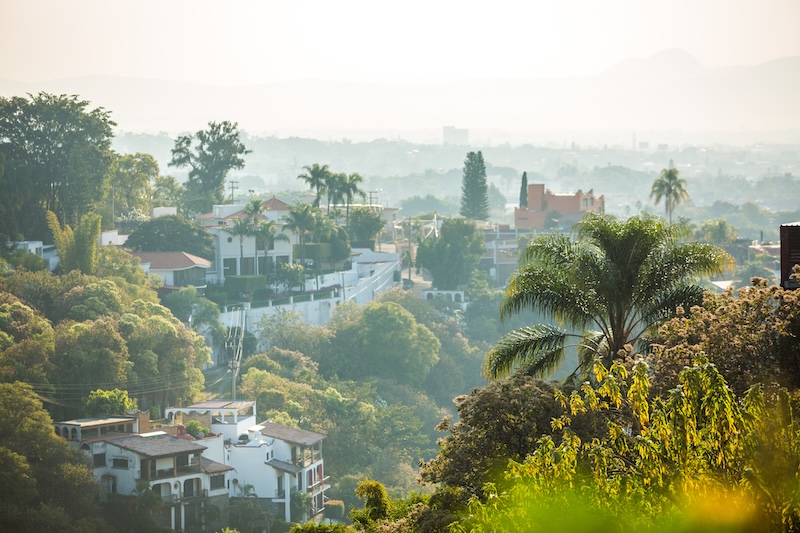
If you’re looking for a Mexican town that combines historical richness, accessible culture, and proximity to Mexico City, look just south of the capital to Cuernavaca, “City of Eternal Spring.” Long known as a retreat for residents of CDMX, Cuernavaca offers a unique blend of mild climate, manageable size, and gentle pace that will appeal to expats seeking an escape from the country’s hectic urban center.
Despite its closeness to the capital and its long history as a weekend destination, Cuernavaca remains reasonably priced and straightforward to navigate for newcomers who want a balance of convenience and affordability.
Arrival in the Valley
Reaching Cuernavaca is simple. Most travelers arrive via Mexico City’s Benito Juárez International Airport and continue directly by shuttle, first-class bus, or private transfer. Depending on traffic conditions, the route typically takes 90 minutes and descends from Mexico City’s high plateau into Morelos’ warmer, more temperate valley.
Rideshares are also easy to arrange, with many residents noting how accessible the city feels despite being outside the metropolitan area. Its location in the central highlands also makes it a convenient base for exploring the surrounding state’s attractions: rolling hills, botanical gardens, and nearby Pueblo Mágico towns like Tepoztlán are all within easy afternoon reach.
A City Shaped by History
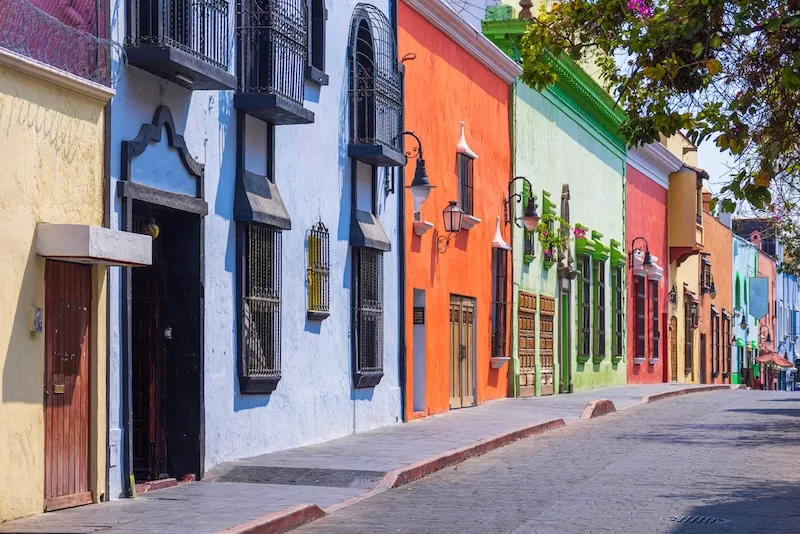
Cuernavaca’s history stretches back to pre-Hispanic times, but its colonial era is most visible in landmarks like the Palacio de Cortés, a 16th-century fortress built on the orders of Hernán Cortés that now houses the Museo Regional de los Pueblos de Morelos. Here, visitors can encounter artifacts and exhibits that trace local history from indigenous cultures through the Spanish colonial period.
Beyond its historical architecture, the region is deeply connected to the life of Emiliano Zapata, who was born nearby in Anenecuilco. His association with agrarian reform and the rallying cry “Tierra y Libertad” remains central to the identity of Morelos. Small local museums, community history projects, and regional monuments show how Zapata’s legacy continues to influence the cultural landscape.
Growing Arts Scene
Cuernavaca has long attracted artists and intellectuals, and that legacy is still visible today. La Tallera, once the workshop of muralist David Alfaro Siqueiros, now functions as an important contemporary art space with rotating exhibitions and events. The Robert Brady Museum, housed in a former monastery, displays an eclectic art collection that mixes Mexican and international pieces. Smaller independent galleries and studios have been appearing in neighborhoods such as Acapantzingo and Las Palmas, drawing creatives who find Mexico City increasingly expensive.
Another important space is the Museo Morelense de Arte Contemporáneo (MMAC) Juan Soriano, named after the influential Mexican painter and sculptor. MMAC maintains a permanent collection alongside temporary shows by emerging and mid-career artists, often engaging issues at the intersection of tradition and urban life.
The city’s cultural activity is modest compared to CDMX but continues to expand. The Centro Cultural Teopanzolco schedules regular concerts, theater productions, and dance performances. Weekend design markets, ceramics fairs, and small-scale festivals further add to the city’s cultural life, contributing to a growing sense of creative momentum.
Eating and Living Well
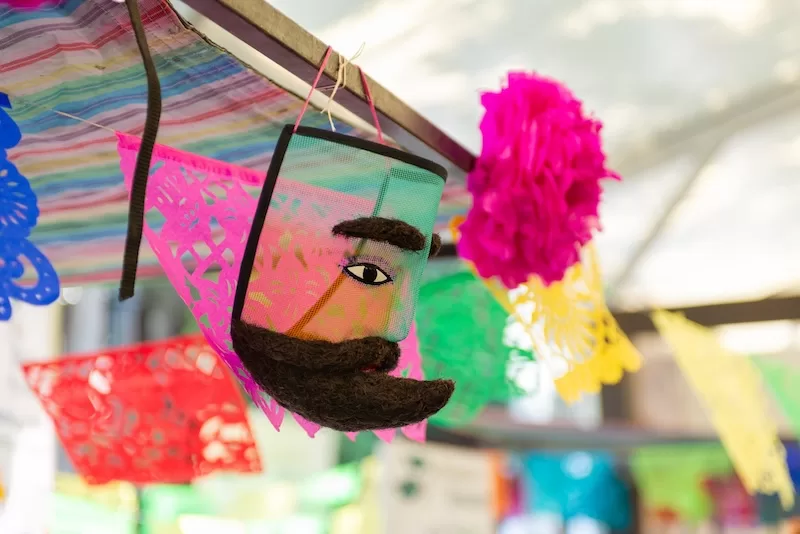
Cuernavaca benefits from fresh produce grown throughout Morelos, giving the city’s markets and restaurants access to quality ingredients at fair prices. Traditional dishes coexist with newer cafés and modern restaurants, and the local food scene has become more diverse in recent years. Coffee shops, bakeries, and small eateries are easy to find throughout the central neighborhoods.
The cost of living is another major draw. A one-bedroom apartment typically rents for $350 to $600 USD, while larger homes, often with gardens common to the region, range from $700 to $1,200 USD. Utilities tend to be modest because the climate doesn’t require heating or air conditioning. Healthcare is accessible and affordable, with private clinics offering consultations in the $25 to $45 USD range and several reputable hospitals in the city.
Connected, Calm, and Convenient
Cuernavaca’s nearness to Mexico City sets it apart from many other appealing Mexican cities. Residents can easily travel to the capital for work, appointments, or cultural events, and then return home to a quieter retreat. Internet service is reliable, making the city a practical base for remote workers.
Neighborhoods reflect Cuernavaca’s diversity, from the calm, leafy areas of Vista Hermosa and Rancho Cortés to the walkable historic center, allowing newcomers to choose a setting that fits their lifestyle. Because Cuernavaca is not a major tourist destination, daily life feels local, manageable, and community-oriented. Local festivals, language exchanges, and neighborhood gatherings make it easier for newcomers to integrate with long-time residents and build social connections beyond expat circles.
Beyond the City
Cuernavaca provides easy access to the wider region of Morelos. The nearby town of Tepoztlán, known for its distinctive mountain landscape and weekend markets, is about 25 minutes away and popular for day trips. The archaeological site of Xochicalco, a UNESCO World Heritage Site, offers panoramic views and well-preserved pre-Hispanic structures. Hot springs, spas, botanical gardens, and walking paths give residents plenty of options for weekend activities without long travel times.
The landscape changes quickly as you leave the city, offering mountain views, agricultural valleys, and small towns that retain strong local traditions.
Final Thoughts
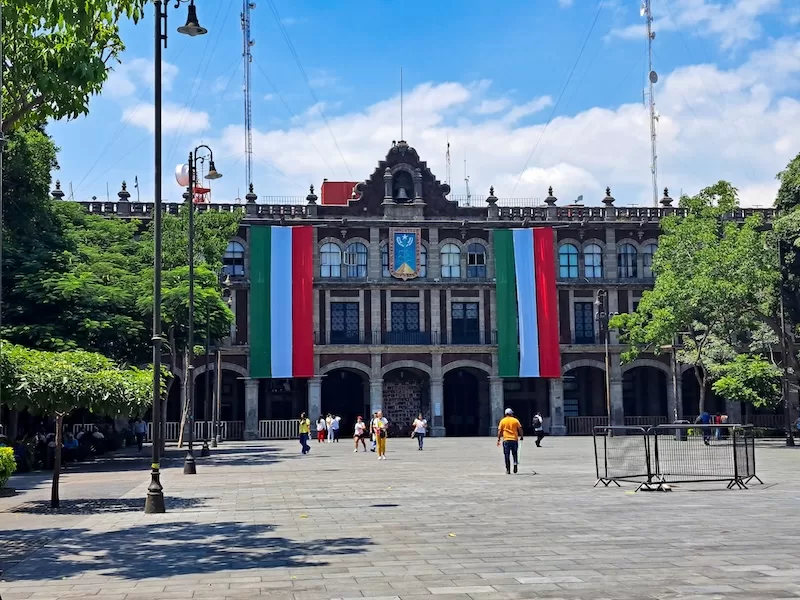
Cuernavaca offers a combination of weather, affordability, cultural access, and convenience that is difficult to match. Near enough to Mexico City to benefit from the capital’s energy and infrastructure, Morelos’ largest city maintains its own pace and character. For expats, retirees, and remote workers looking for a comfortable, culturally grounded place to live, Cuernavaca provides a practical and enjoyable alternative to Mexico’s larger and more crowded urban hubs.
Cuernavaca is not a destination built around spectacle, but a city meant to be lived in and appreciated over time.
Key Takeaways
Why is Cuernavaca called the “City of Eternal Spring”?
Cuernavaca is known as the “City of Eternal Spring” because of its mild, temperate climate that remains pleasant year-round. Its location in the central highlands of Morelos provides a warmer and more consistent temperature than nearby Mexico City, making it an ideal retreat for those seeking a balanced climate without the need for heating or air conditioning.
How accessible is Cuernavaca from Mexico City?
Cuernavaca is highly accessible from Mexico City, typically taking about 90 minutes by shuttle, first-class bus, or private transfer from Benito Juárez International Airport. Its proximity to the capital allows residents to easily commute for work, appointments, or cultural events while enjoying a quieter, more affordable lifestyle in Morelos.
What is the cost of living in Cuernavaca for expats?
The cost of living in Cuernavaca is significantly lower than in Mexico City. A one-bedroom apartment typically rents for $350 to $600 USD, while larger homes with gardens range from $700 to $1,200 USD. Healthcare is also affordable, with private clinic consultations costing between $25 and $45 USD, and utilities are modest due to the temperate climate.
What cultural and historical attractions does Cuernavaca offer?
Cuernavaca boasts a rich historical and cultural landscape, including the 16th-century Palacio de Cortés and the Robert Brady Museum. The city also has a growing contemporary arts scene, with spaces like La Tallera (Siqueiros’ former workshop) and the Museo Morelense de Arte Contemporáneo (MMAC) Juan Soriano hosting regular exhibitions and events.
Is Cuernavaca a good base for exploring the surrounding region?
Yes, Cuernavaca is an excellent base for exploring the state of Morelos. Nearby attractions include the Pueblo Mágico town of Tepoztlán, the UNESCO World Heritage Site of Xochicalco, and various hot springs, botanical gardens, and agricultural valleys, all within easy reach for day trips or weekend activities.
What makes Cuernavaca a practical choice for remote workers?
Cuernavaca is a practical base for remote workers due to its reliable internet service, affordable cost of living, and proximity to Mexico City’s infrastructure. The city offers a variety of neighborhoods, from calm, leafy areas to a walkable historic center, providing a community-oriented environment that is less crowded than major urban hubs.
About the Author
Ulrich Baer is an author, freelance writer, and experienced traveler. His work focuses on the myriad ways history manifests itself in contemporary culture and architecture. After completing his MFA in Literary Arts at Brown University, he began exploring different regions of the world and currently calls Mexico home.
Contact Author
"*" indicates required fields
Stay Ahead on Every Adventure!
Stay updated with the World News on Escape Artist. Get all the travel news, international destinations, expat living, moving abroad, Lifestyle Tips, and digital nomad opportunities. Your next journey starts here—don’t miss a moment! Subscribe Now!


