Escape Artist
  • Features
    • Interview
    • News
    • Field Notes
    • Trending
  • Your Plan B
    • Finance
    • Real Estate
    • Second Citizenship
    • Digital Nomad
    • Plan B Summit
    • Webinars
  • Destinations
    • Europe
      • France
      • Germany
      • Italy
      • Portugal
      • Scandinavia
      • Spain
      • United Kingdom
      • Rest of Europe
    • Central America
      • Belize
      • Costa Rica
      • El Salvador
      • Guatemala
      • Honduras
      • Nicaragua
      • Panama
    • Others
      • Africa
      • Asia
      • Australia
      • North America
      • South America
      • Middle East
      • Rest of the World
  • Travel Tips
    • Know Before You Go
    • Packing List
    • Food + Culture
    • Health + Wellness
  • Subscribe
Escape Artist
  • Features
    • Interview
    • News
    • Field Notes
    • Trending
  • Your Plan B
    • Finance
    • Real Estate
    • Second Citizenship
    • Digital Nomad
    • Plan B Summit
    • Webinars
  • Destinations
    • Europe
      • France
      • Germany
      • Italy
      • Portugal
      • Scandinavia
      • Spain
      • United Kingdom
      • Rest of Europe
    • Central America
      • Belize
      • Costa Rica
      • El Salvador
      • Guatemala
      • Honduras
      • Nicaragua
      • Panama
    • Others
      • Africa
      • Asia
      • Australia
      • North America
      • South America
      • Middle East
      • Rest of the World
  • Travel Tips
    • Know Before You Go
    • Packing List
    • Food + Culture
    • Health + Wellness
  • Subscribe
👤

THE NUMBER ONE SOURCE FOR EXPATS, DIGITAL NOMADS, AND DREAMERS.

This field is for validation purposes and should be left unchanged.
  • Your Plan B

1920 and 2020—Drawing the Parallels Between the Precursors of the Worst Recessions in Human Hist

  • BY Mikkel Thorup
  • June 1, 2021
Total
0
Shares
0
0
0

1920 and 2020—Drawing the Parallels Between the Precursors of the Worst Recessions in Human History

I think I might be entering the conversation a little later than I intended considering the purpose of this piece. Despite its tardiness, I think, this article is no less important because the purpose is to provide some perspective on how we should look at the economic events unfolding in light of the coronavirus pandemic. The IMF has already forecasted a global recession that will be worse than the great depression of the 1920s. The global economy is going to shrink by 3% throughout the year, with no clear indication for when recovery will set in.  

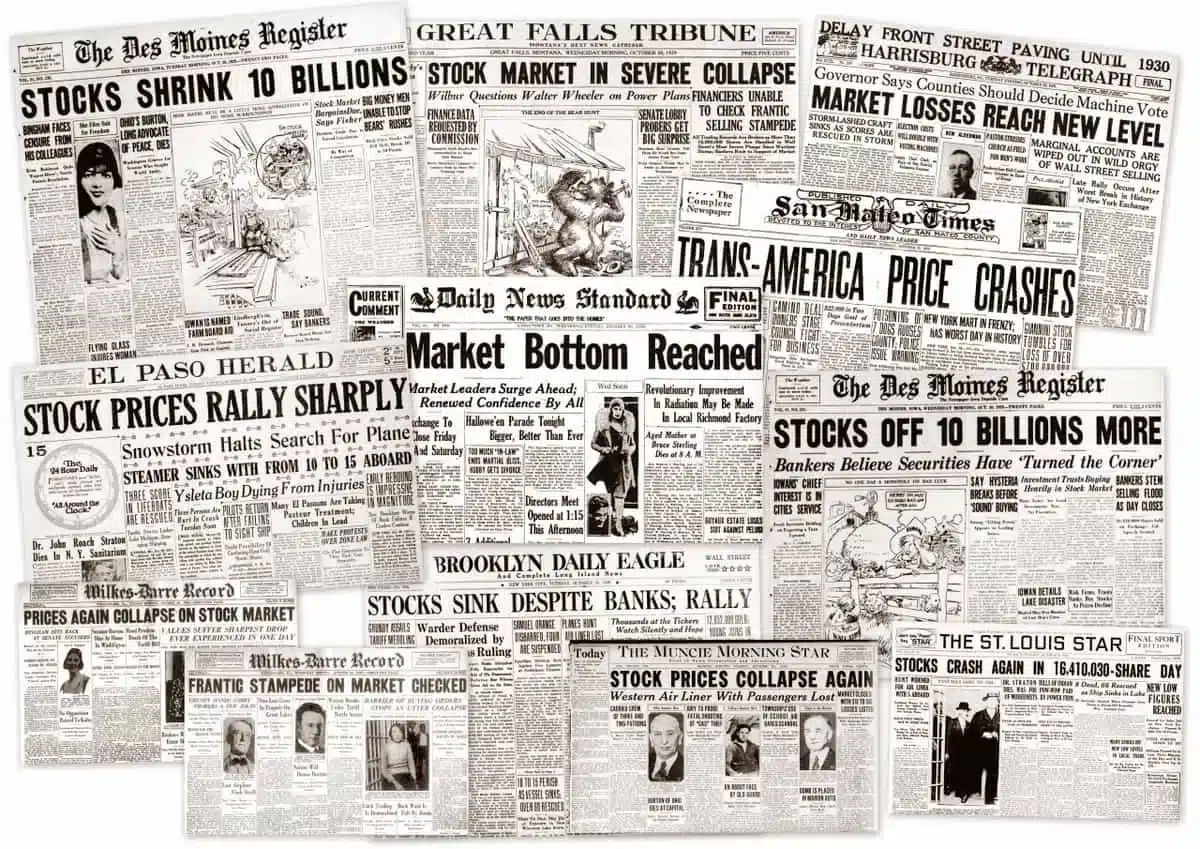
In many ways, this recession is going to be far worse than the one we hit in 2008 and the great depression of 1920. During the 2007 GFC, the global economy shrank by 2.7% and during the great depression, it shrunk by 0.1%—making this recession one of the worst in recent history. None of this is really surprising considering the economic dynamics that we have seen so far. 80% of the world’s workforce has been impacted in some way by the pandemic, unemployment in the US is at its highest in history and global trade has come to a stock-still. There is no economic sector that is currently spiraling, the stock markets having finally given up their 10-year bull rise to lose trillions within weeks and the fiscal stimuli introduced by central banks around the world have yet to take effect.

While this chain of events seems quite similar to the ones we saw in previous recessions, we still need to look at this particular recession in a different light. This recession was not caused by bad lending practices or housing crashes or stock market crashes alone—this time we had an exogenous trigger that has had persistent effects for as long as the recent crash has lasted. It is also because of the persistence of this exogenous trigger (the coronavirus) that the recovery from this recession might take longer and we might need to use different methods to overcome it. 

Most of these questions should be addressed by the economic policy makers who have so far failed to come up with a solid strategy on how to cope with the economic effects of Covid-19. I’m not really surprised at their lack of direction, but I am concerned about what this means for individual investors who’re trying to stay safe during this uncertain time.


What is a Recession and How is it Caused?

The concept of a recession isn’t very difficult to understand—mathematically, it’s an economic period where the GDP shrinks rather than growing. When an economy is going through a recession, you’ll witness lower economic activity, falling profit, higher unemployment, crashing stock markets—basically everything that you see that is happening in the global economy right now. We should do well to remember that events like unemployment, deflation, lower demand and falling stock markets do not cause a recession but rather they are the symptoms of one. The reason why people worry about recessions is that they are usually caused by exogenous factors that lie outside the control of economic policy. Thus, economic policy cannot guarantee overcoming the recession. 

This idea is particularly important while we try to analyze the recession brought on by the coronavirus.  See, when I think of the 2007 GFC or the great depression—I see problems originating within the structure of the economy that led to an economic crash. Unsustainable lending practices led to the crash in 2007 and something similar happened to the economy in the 1920’s—there exists a certain degree of overlap between economic practices and the crash. However in either situation, in the past the exogenous factor that led to a recession was that there wasn’t enough money in the economy to account for the debt generated in it. It was possible to fix those problems through shrewd economic policy that allowed stakeholders in the market to contain the situation.

This recession cannot be fixed through any economic policy or law-making because it is fundamentally a non-economic issue that has disrupted economic activity. This thought can be summarized in the following way—what economic policy is supposed to eliminate the coronavirus which is actually causing all of the supply chain and production hold-ups? While governments around the world can keep injecting cash into the economy, buy up bonds, send out unemployment checks to keep demand up—there is no way for them to fix the production side problems which are the root cause this recession.


Similarities Between 1920 and 2020

I find it particularly interesting, from an intellectual standpoint at least, that even though the causes of recessions are different—the symptoms seem quite uniform. At this moment, both the 1920s and the 2020s show similar macroeconomic indication—high unemployment, crashing stock markets, trade has slowed down, currency is devaluing and people are investing heavily in gold. 

Based on these economic events, everything indicates that a recession is due and it’s going to be pretty bad. The unemployment will persist, producer profits will continue to decline, incomes will fall and this will introduce deflationary pressures on the economy and we will continue facing these circumstances for a while. However, these similarities only extend insofar as the symptoms of the recession are concerned. I keep repeating this because I am wondering if the economic policy makers recognize the need of the hour—I doubt they will recognize it since, so far at least, their response has been to keep the economy afloat without realizing that the recovery this time is not guaranteed until a vaccine is found.

See, in the past, governments kept the economy afloat because the business cycle could be relied on to bring the cycle round to improve the economy. This required proper supply chains and uninterrupted production that could support economic activity—this covid-19 recession has basically destroyed the supply chain and thus the support for economic activity. The question for us is, can the global economic order keep the market afloat through artificial capital injections for long enough until a cure for the coronavirus is found? Until then, the structural impact of the coronavirus will require us to resume economic activity in a drastically different environment than the one we had before the epidemic—a situation that no one flesh out for now.


Conclusion

The Covid-19 pandemic is a scary time for everyone, but its also a very interesting one for anyone looking to learn from it. This is a once-in-a-lifetime event that can teach us a lot of lessons on how we ought to view the world economy, politics and manage our personal finances. How this whole episode in human history will turn out is really anyone’s guess—but one thing is for certain—it has changed the way we practice economics and finance forever, possibly for the worst. 


I hope you got value from this article: 1920 and 2020—Drawing the Parallels Between the Precursors of the Worst Recessions in Human History.  For additional information on moving overseas, please contact our office HERE.  

Also, I’ve added some great articles for you to read, I know you’ll love them!

Always Have a Plan B: You’re Never Safe from State-Sanctioned Encroachment

What Does the Coronavirus Epidemic Tell Us About The Failures of Modern Government?

The Modern Virtuous Man—The Scottish Enlightenment and Why Capitalism is the Best Thing to Happen to Human Society

Quantitative Easing Around The World—The Impacts On Currency Values And Alternative Investments


Contact Author

"*" indicates required fields

Name*
Please let us know what's on your mind. Have a question for us? Ask away.

Stay Ahead on Every Adventure! 

Stay updated with the World News on Escape Artist. Get all the travel news, international destinations, expat living, moving abroad, Lifestyle Tips, and digital nomad opportunities. Your next journey starts here—don’t miss a moment! Subscribe Now!

Total
0
Shares
Share 0
Tweet 0
Pin it 0
Related Topics
  • Coronavirus
  • Covid-19
  • Great Depression
  • recession
Previous Article
  • Your Plan B

Entering a Post-Corona World—What Will Global Economics Look like in the Future?

  • BY Mikkel Thorup
  • June 1, 2021
View Post
Next Article
  • Your Plan B

5 Reasons Why You Need to Play Online Casinos 2020

  • BY EA Editors
  • June 1, 2021
View Post
You May Also Like
A woman with long dark hair looks out over a calm river toward a modern city skyline with tall glass skyscrapers under a bright blue sky with soft white clouds.
View Post
  • Plan B
Tax-Friendly Destinations Around the World
  • BY EA Editorial Staff
  • February 3, 2026
Your 2025-2026 Guide to Which Countries Offer Retirement Visas
View Post
  • Plan B
Your 2025-2026 Guide to Which Countries Offer Retirement Visas
  • BY Isha Sesay
  • February 3, 2026
A young family stands on a white stone staircase in Santorini, Greece, with iconic blue-domed churches and the sparkling Aegean Sea in the background.
View Post
  • Interview
Leaving the U.S. to Build a New Life in Greece
  • BY Isha Sesay
  • February 2, 2026
Global travel routes illustrating visa programs that lead to permanent residency
View Post
  • Second Residency
Which Visas Actually Lead to Permanent Residency
  • BY Isha Sesay
  • January 28, 2026
The Financial Advantages of Becoming an Expat
View Post
  • Finance
The Financial Case for Living Abroad
  • BY EA Editorial Staff
  • January 20, 2026
A stunning sunset over the ancient, terracotta-roofed town of Volterra, Italy, a dream location for those considering the country's €1 house experiment.
View Post
  • Property Development
Italy’s €1 House Experiment
  • BY Ethan Rooney
  • January 19, 2026
Remote worker with laptop and tablet at outdoor garden desk showing digital nomad lifestyle and location independence for global professionals seeking residency
View Post
  • Second Citizenship
From Visa to Resident: 10 Digital Nomad Havens Offering a Path to Citizenship
  • BY EA Editorial Staff
  • January 13, 2026
Brown leather travel bag with passport and boarding pass at airport check-in counter showing international travel and global mobility for expats planning relocation
View Post
  • Second Citizenship
The World’s Most Powerful Passports Are Changing
  • BY EA Editorial Staff
  • January 12, 2026
Trending Posts
  • Global travel routes illustrating visa programs that lead to permanent residency 1
    • Second Residency
    Which Visas Actually Lead to Permanent Residency
    • January 28, 2026
  • A colorful street in Oaxaca, Mexico, with a mountain in the background, representing an authentic travel experience beyond the resort. 2
    • Culture
    Life Beyond the Resort
    • January 26, 2026
  • A woman with long dark hair looks out over a calm river toward a modern city skyline with tall glass skyscrapers under a bright blue sky with soft white clouds. 3
    • Plan B
    Tax-Friendly Destinations Around the World
    • February 3, 2026
  • A small squirrel monkey with a white face and orange fur clings to a vibrant green palm frond, illustrating the daily presence of wildlife in Costa Rica. 4
    • Costa Rica
    Top 10 Culture Shocks You’ll Notice When You Move to Costa Rica
    • January 30, 2026
  • A young family stands on a white stone staircase in Santorini, Greece, with iconic blue-domed churches and the sparkling Aegean Sea in the background. 5
    • Interview
    Leaving the U.S. to Build a New Life in Greece
    • February 2, 2026
Subscribe
Know Before You Go
  • A small squirrel monkey with a white face and orange fur clings to a vibrant green palm frond, illustrating the daily presence of wildlife in Costa Rica. 1
    • Costa Rica
    Top 10 Culture Shocks You’ll Notice When You Move to Costa Rica
    • January 30, 2026
  • The bright yellow clock tower of the Xalapa Cathedral against a blue sky, representing the city's rich culture and history for potential expats. 2
    • Mexico
    Could Xalapa Be Mexico’s Best-Kept Cultural Secret?
    • January 23, 2026
  • Welsh Patagonia 3
    • South America
    A Welsh Homeland at the Edge of Argentina
    • January 9, 2026
  • Colorful cliffside village of Positano Italy with pink and white buildings overlooking Mediterranean Sea showing Mediterranean charm for expats relocating 4
    • Plan B
    The Countries That Make Starting Over Feel Possible
    • December 26, 2025
  • Families and children playing soccer and enjoying beach activities together in Costa Rica, demonstrating community bonding and social connection 5
    • Costa Rica
    Building Community in Costa Rica
    • December 19, 2025
Learn More
  • About us
  • Contact
  • Advertise
  • Subscribe
  • Shop
Why Subscribe

The newly imagined Escape Artist brings you fresh content with a global focus, and sharp, up-to-the-minute coverage of the joys, challenges, and opportunities of life abroad.

For a limited time, we’re offering a special discount on all subscription deals, so be sure to lock-in these incredible savings and start receiving top-notch travel and expat content today!

Sign up for the EA Newsletter

Get important news delivered directly to your inbox and stay connected!

This field is for validation purposes and should be left unchanged.
Escape Artist
  • Terms & Conditions
  • Privacy Policy
  • Cookies Policy
  • Disclaimer

Input your search keywords and press Enter.

Before you go, want $50 off your Summit registration?

Subscribe, and get $50 discount code for Plan B Summit registration.

Download Your Free Guide

Fill out the form below to get instant access to your guide + receive a $50 discount code for Plan B Summit 2026!

Download Your Free Guide

Fill out the form below to get instant access to your guide + receive a $50 discount code for Plan B Summit 2026!

Download Your Free Guide

Fill out the form below to get instant access to your guide + receive a $50 discount code for Plan B Summit 2026!

Newsletter Subscription