“Easy” gets used loosely when people talk about moving abroad. A country can be beautiful, cheap and welcoming and still make you wait two years for a residence card. So this guide ranks countries on the things that decide whether you actually get to stay: how much income you must prove, whether you can start the process from the US, how long the first permit lasts and how quickly you reach permanent residency.
Every figure below comes from the country’s own immigration authority or consulate where one was published, and from named immigration lawyers where it was not. All of it was checked in November 2026. Rules change, and consulates update their numbers, so treat this as your shortlist, then confirm with the consulate before you book anything.
The quick answer
- You have a pension of US$1,000 a month or more: Panama and Costa Rica are the easiest doors in the Americas.
- Your pension or passive income is around US$1,500 a month: Ecuador and Colombia, both with online applications.
- You want Europe on a modest income: Portugal’s D7 visa asks for the least money of any Western European residency.
- You have solid income or savings and want to be able to drive home: Mexico.
- You want no fixed income number at all: Uruguay.
The scorecard
| Country | Main route for Americans | Income test, single applicant | Start from the US? | Path to permanent residency |
| Panama | Pensionado | US$1,000/month lifetime pension | No, filed in Panama | Permit is indefinite from day one |
| Ecuador | Jubilado (retiree) | US$1,446/month | Yes, online | After 21 months |
| Costa Rica | Pensionado / Rentista | US$1,000 pension or US$2,500 income | Filed with Costa Rica’s immigration office | After 3 years |
| Colombia | M visa, pensioner | COP 5,252,715/month (about US$1,600) | Yes, online | Resident visa after 5 years |
| Mexico | Temporary resident | About US$4,000/month (varies by consulate) | Yes, at a Mexican consulate | After 4 years |
| Uruguay | Legal residency | No fixed minimum | No, filed in Uruguay | Apply for permanent residency directly |
| Portugal | D7 passive income | €920/month | Yes, at the consulate | After 5 years |
| Spain | Non-lucrative visa | €2,400/month | Yes, at the consulate | After 5 years |
| Belize | QRP retirement program | US$2,000/month, age 40+ | Applied for through Belize’s tourism board | QRP is not permanent residency |
| Paraguay | Temporary residency | Proof of real income | No, filed in Paraguay | Tightened in 2026 |
US$ conversions are approximate and move with exchange rates. Panama uses the US dollar and Ecuador uses it as its official currency, so those two figures never move.
1. Panama: the easiest if you have a pension
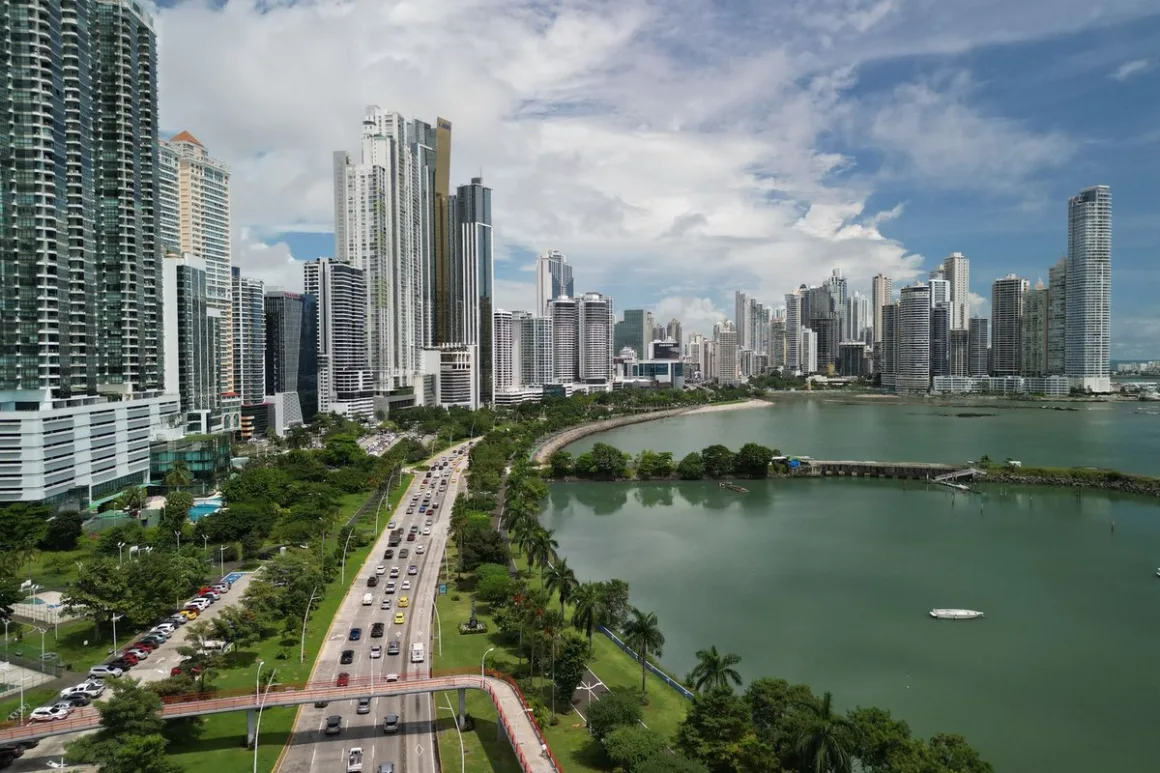
Panama’s Pensionado program is still the benchmark. Panama’s immigration service says the pension must be at least US$1,000 a month and paid for life. If you buy property in Panama worth more than US$100,000, the minimum drops to US$750. A couple can combine two pensions to reach the threshold, and each dependant needs another US$250 a month.
What makes it easy is what happens next. Panama’s immigration service describes the permit as indefinite, with no renewal needed. You do not spend years on temporary status first.
The catch: you file in Panama, through a Panamanian lawyer, so budget for legal fees and a trip. The pension must be a real lifetime pension, such as Social Security or a company pension. Investment income does not count.
Panama’s other famous route, the Friendly Nations visa, is no longer the easy option it was. It now needs a job in Panama or a large investment, so most Americans who qualify for Pensionado use that instead.
2. Ecuador: the lowest income test you can apply for online
Ecuador’s retiree visa (visa de residencia temporal de jubilado) asks for a pension from abroad worth at least three times the country’s basic salary. The basic salary for 2026 is US$482 a month, so the test is US$1,446 a month. Each dependant adds US$250.
Ecuador’s Ministry of Foreign Affairs takes applications online through its e-VISAS system. The fees are US$50 to apply and US$270 when the visa is granted, with 50% off for applicants aged 65 and over. You need health insurance that covers you in Ecuador for the life of the visa. The visa lasts two years, and after 21 months you can apply for permanent residency.
There is a matching route for people living on investment or rental income: the rentista visa, with the same three times the basic salary test.
The catch: the basic salary rises most years, so the income test rises with it. Check the current figure in January.

3. Costa Rica: several doors, one clear path
Costa Rica gives Americans more routes than almost anywhere in Latin America:
- Pensionado: at least US$1,000 a month from a permanent pension.
- Rentista: at least US$2,500 a month of guaranteed income for at least two years, certified by a recognized financial institution.
- Inversionista: an investment of at least US$150,000, which can be a home.
- Digital nomad stay: US$3,000 a month, or US$4,000 with family. This is a stay of up to two years, not residency, but it lets remote workers try the country first.
Under Costa Rica’s immigration law, the immigration office (DGME) has three months to decide a complete application. After three years of temporary residency you can apply for permanent residency, with no further income test.
The catch: pensionado and rentista residents cannot work for Costa Rican employers. The dollar also buys less than it did, a point we covered in Costa Rica Got More Expensive for Americans.
4. Colombia: online, and the threshold is tied to the minimum wage
Colombia’s pensioner visa (M visa, pensionado) asks for a pension of at least three times the monthly minimum wage. The minimum wage for 2026 is COP 1,750,905, so the test is COP 5,252,715 a month, about US$1,600 to US$1,700 at 2026 exchange rates. Applications are made online through Colombia’s foreign ministry.
The visa runs for up to three years, and the income test is applied again when you renew. After five years on the M visa, you can apply for the resident (R) visa.
The catch: Colombia raised its minimum wage by 23% for 2026, so the pension test rose by the same amount. It is tied to a number that can move sharply, and renewals are tested against the new figure.
5. Mexico: easy to reach, but the money test is higher than people think
Mexico is the most popular choice for Americans, and the process starts at home: you apply in person at a Mexican consulate in the US, then exchange the visa for a resident card at Mexico’s immigration institute (INM) within your first 30 days in the country.
The income test is where people get surprised. Each consulate publishes its own figures. The two 2026 checklists we read:
- San Diego consulate: US$4,049 a month in income or pension for the last six months, or an average balance of US$68,241 over the last 12 months.
- Washington, DC consulate: MXN 83,640 a month after tax for the last six months, or a monthly balance of MXN 1,394,000 over the last 12 months.
Retirees can apply for permanent residency straight away, but the bar is much higher. San Diego asks for a pension of US$7,560 a month, or a balance of US$303,880. Everyone else reaches permanent residency after four years as a temporary resident. The consular fee is US$56.
The catch: the thresholds are set in pesos and tied to Mexico’s minimum wage, which has risen sharply, so the dollar figure keeps climbing. Check your own consulate’s current checklist, not a figure from a blog post.

6. Uruguay: no fixed income number
Uruguay is unusual. Its government says any foreigner who intends to live there permanently can apply for permanent legal residency, and there is no published minimum income. You prove you have enough to live on, with a notary’s certificate for a pension or an accountant’s certificate for other income.
You file with Uruguay’s national immigration office (DNM), starting online and finishing at an in-person appointment. Uruguay’s constitution allows citizenship after three years of residency for people with a family there, and five years for single people.
The catch: you file in Uruguay, and no processing time is published, so plan to be there while it runs. Leave for more than six months while it is pending and you need a fresh criminal record check from the country you visited.
7. Portugal: Europe’s lowest income test
Portugal’s D7 visa is for people living on pensions, rents, dividends or other passive income. The test is Portugal’s minimum wage: €920 a month in 2026. A spouse adds 50% (€460) and each child adds 30% (€276). Most consulates also want to see 12 months of that income, €11,040 for one person, often held in a Portuguese bank account.

You apply at the Portuguese consulate, which issues a 120 day visa. In Portugal you then attend an appointment with AIMA, the immigration agency, for a two year residence permit, renewed for three years. Permanent residency comes after five years. We covered daily life in Pros and Cons of Living in Portugal.
The catch: the slow part is AIMA, not the consulate. Appointments in Lisbon and Porto can take months. Portugal has also voted to lengthen the wait for citizenship to 10 years for most nationalities. The implementing rules were approved in October 2026 but were not yet in force at the time of writing.
8. Spain: more money, simpler rules
Spain’s non-lucrative visa asks for 400% of IPREM, an index Spain uses to set benefit levels. With IPREM at €600 a month, that is €2,400 a month or €28,800 a year for the main applicant, plus €600 a month for each dependant.
You apply at the Spanish consulate that covers your US state. The first permit lasts one year, renewals last two years, and long-term residency comes after five years. Spain’s 2025 immigration regulation now explicitly accepts dividends and rental income, and lets family join after one year.
The catch: you cannot work in Spain on this visa, and citizenship takes 10 years for Americans.
9. Belize: English speaking, but not a path to permanent residency
Belize’s Qualified Retired Persons (QRP) program is open from age 40. You need at least US$2,000 a month (US$24,000 a year) of retirement income from outside Belize. Fees include a US$150 program fee and a US$1,000 applicant fee, and you must spend at least 30 consecutive days a year in Belize.
The catch: QRP is a special status with tax and import benefits. It is not permanent residency, and it does not count toward citizenship.
10. Paraguay: the easy route just got harder
Paraguay was long the cheapest residency in South America. In 2026 its immigration office (DNM) issued Resolution 407/2026, which changed what you must show for permanent residency. A bank balance on its own no longer settles it. You now need proof of real, ongoing income, such as registered employment or tax filings in Paraguay. Temporary residency is not affected. We explained the background in Paraguay Residency: The Plan B.
The catch: if you were counting on Paraguay as a paper-only Plan B, read the new rules carefully before you go.
What none of these countries will do for you
A residence card does not change your US obligations. The US taxes its citizens wherever they live, so you still file every year. Social Security can follow you to all of these countries, but there are rules that can stop payments, which we set out in Collecting Social Security Abroad in 2027. Medicare does not pay for care outside the US in most situations, so plan your health cover before you plan your move.
Before you apply: a short checklist
- Get your FBI background check early. Almost every country here asks for one, usually issued within the last three to six months, and many need an apostille.
- Apostille your key documents: birth certificate, marriage certificate and pension letter.
- Find your consulate’s current checklist. Mexico’s numbers alone vary by consulate.
- Line up health insurance that names the country you are moving to.
- Decide which date matters. Income tests usually look back six or twelve months, so start saving bank statements now.
For the paperwork most people miss, see The Documents Nobody Warns You About Before You Move Abroad. If you are retired, compare this list with our older guide, Easiest Countries to Retire In. If a second home base is the goal rather than a full move, read Why a Second Residency May Be the Most Important Plan B You Ever Make.
FAQ
What is the easiest country to move to from the US?
For retirees with a pension of US$1,000 a month or more, Panama is the easiest: the Pensionado permit is indefinite from day one. For people without a pension, Uruguay has no fixed income test, and Ecuador’s income test is the lowest of any country here that takes online applications.
What is the easiest European country to move to from the US?
Portugal, on income alone. The D7 visa asks for €920 a month, the lowest test in Western Europe. Spain’s non-lucrative visa asks for €2,400 a month.
Can I move abroad on Social Security alone?
Yes, in several countries. An average Social Security retirement benefit clears the income test for Panama’s Pensionado, Costa Rica’s Pensionado and Ecuador’s retiree visa. It does not clear Mexico’s test at most consulates.
Do I need a lawyer to move abroad?
In Panama you do, because applications are filed through a Panamanian lawyer. In Ecuador, Colombia, Portugal and Spain many people apply on their own. A local lawyer still helps in any country where you file once you are already there.
Which countries let me apply before I leave the US?
Mexico, Portugal and Spain through their consulates, and Ecuador and Colombia online. Panama, Uruguay and Paraguay are filed in the country.
Sources
- Consulate General of Mexico in San Diego, Temporary Resident Visa (Economic Solvency) and Permanent Resident Visa (Retirement), 2026 checklists.
- Embassy of Mexico in Washington, DC, Temporary Resident visa checklist, 2026.
- Servicio Nacional de Migración de Panamá, Permiso de Residente Permanente como Jubilado o Pensionado (Decreto Ejecutivo 26 de 2009).
- Ministerio de Relaciones Exteriores y Movilidad Humana del Ecuador (gob.ec), Concesión de visa de residencia temporal jubilado; Concesión de visa de residencia temporal rentista.
- Ecuador Ministry of Labour, 2026 basic salary of US$482, as reported by El Universo, 15 December 2025.
- Colombia, Decreto 1469 de 2025 and Decreto 0159 de 2026 (2026 minimum wage of COP 1,750,905).
- Nexo Legal, Colombia Retirement Visa Requirements 2026 (29 September 2026).
- CRIE, Costa Rica Residency Requirements: The Complete 2026 Guide; Visit Costa Rica, Digital Nomads requirements.
- Gub.uy, Residencia legal permanente (updated 19 February 2026) and Residencia legal temporaria (updated 20 October 2026); Constitution of Uruguay, Article 75.
- Global Citizen Solutions, Portugal D7 Visa (updated 20 November 2026); Portugalist, D7 Visa Requirements (checked 4 November 2026).
- CostaLuz Lawyers, IPREM 2026 for Spain’s Non-Lucrative Visa (October 2026) and FAQ on the 2025 Immigration Regulation.
- Belize Tourism Board, Qualified Retired Persons Program.
- IMI Daily, Paraguay Ties Long-Term Residency to Active Income, Unless You Invest (updated 18 November 2026); The Rio Times, Paraguay residency changes (13 August 2026).
About the Author
Contact Author
"*" indicates required fields
Stay Ahead on Every Adventure!
Stay updated with the World News on Escape Artist. Get all the travel news, international destinations, expat living, moving abroad, Lifestyle Tips, and digital nomad opportunities. Your next journey starts here—don’t miss a moment! Subscribe Now !
“Easy” gets used loosely when people talk about moving abroad. A country can be beautiful, cheap and welcoming and still make you wait two years for a residence card. So this guide ranks countries on the things that decide whether you actually get to stay: how much income you must prove, whether you can start the process from the US, how long the first permit lasts and how quickly you reach permanent residency.
Every figure below comes from the country’s own immigration authority or consulate where one was published, and from named immigration lawyers where it was not. All of it was checked in November 2026. Rules change, and consulates update their numbers, so treat this as your shortlist, then confirm with the consulate before you book anything.
The quick answer
If you'd like to read the full story, simply enter your email to subscribe to our newsletter.
For even more expert insights, unmissable resources, and exclusive invites, explore our premium subscription offers here.
OR
Already a Subscriber? Click here to login
Subscription required
You've reached your limit of free articles. For full access to Escape Artist, and all of our insights on travel, moving abroad, and the digital nomad life, click here to Subscribe.
Already a Subscriber? Log in here