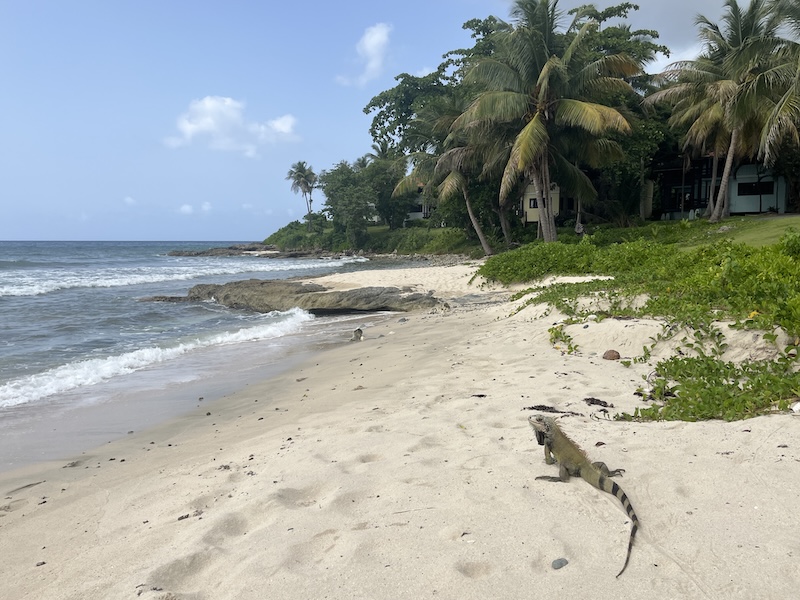
The first time a tiny lizard appeared inside my rental condo and got stuck in an empty water glass, I did what any reasonable mainland U.S. newcomer would do: I froze and stared, unsure of how to handle this predicament. The lizard stared back curiously, almost judgmentally through the glass, pressing his tiny feet against it, probably hoping I’d come to his aid. I quickly obliged and helped him find his way back outdoors. Still, lizards entered the house often enough that I started to wonder if I had joined their household instead of the other way around. Nobody warns you about that part of moving to St. Croix.
That was early in my move from the mainland. After years of living and working in the entertainment industry in Hollywood, California, at a pace of perpetual urgency, I moved to St. Croix, the largest of the U.S. Virgin Islands.
Of course, moving to St. Croix wasn’t technically moving abroad. My passport didn’t get any new stamps and as an American citizen, I didn’t even need one to relocate here. But daily life began to feel different in ways I hadn’t expected.
Beyond familiar quirks, like driving on the left side of the road, the differences between life in the USVI and the mainland can be stark. Much of that comes from the territory’s legacy of layered and distinct colonial history and culture. On St. Croix, seven nations have flown their flags over the island: Spain, England, the Netherlands, France, the Knights of Malta, Denmark, and now the United States.
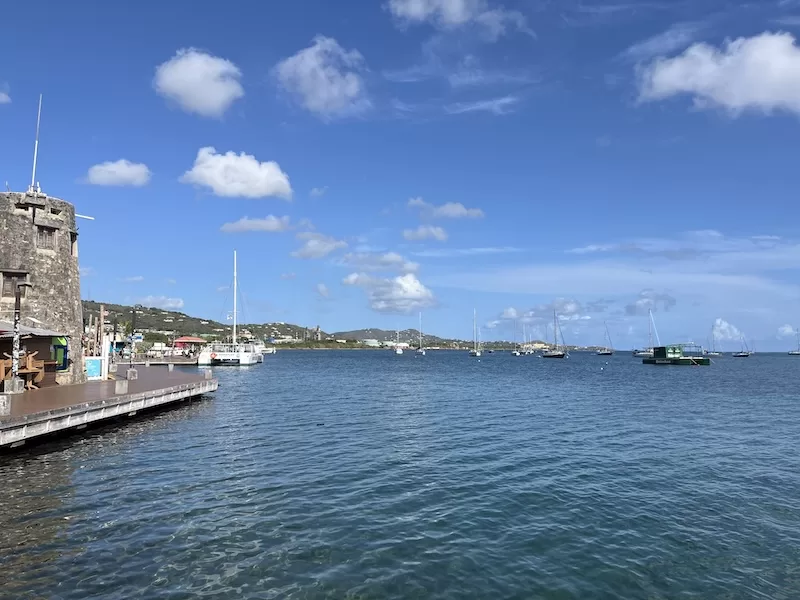
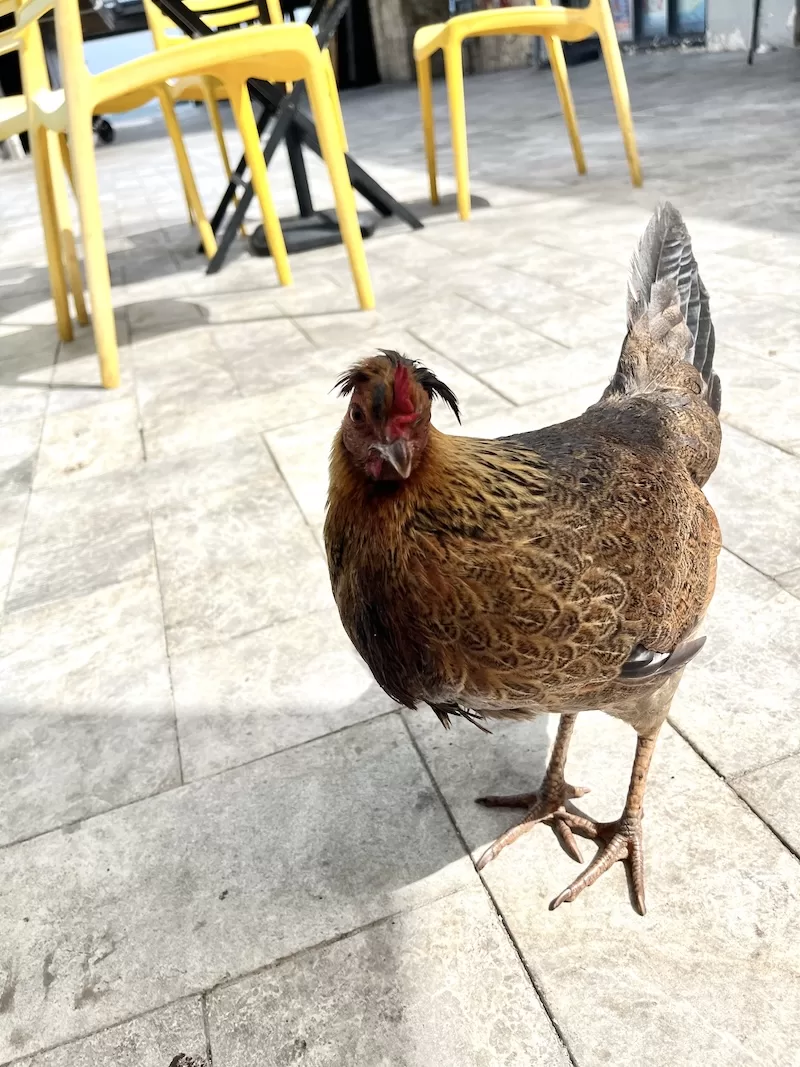
St. Croix is also an island where nature leads. Animals and wildlife move where they want, and tropical flora grows wherever it can. Small green anoles are everywhere, doing tiny push-ups partly to exert dominance. Larger iguanas walk with calm confidence. Wild roosters announce morning long before your phone does.
And the ocean isn’t only a pretty backdrop; it’s a major factor of island life. It can shift your plans of having a “quick swim or snorkel” into a hard “no” due to the approach of a powerful ocean swell or a storm. A severe threat like a hurricane will immediately remind you that you’re living on a tiny patch of land in the middle of the Caribbean Sea where the environment and weather have true authority.
Somewhere in this island experience, my priorities quietly rearranged themselves. Many mainland conveniences began to feel less essential, sometimes even chaotic, especially the culture of constant hurry and Southern California freeway traffic.
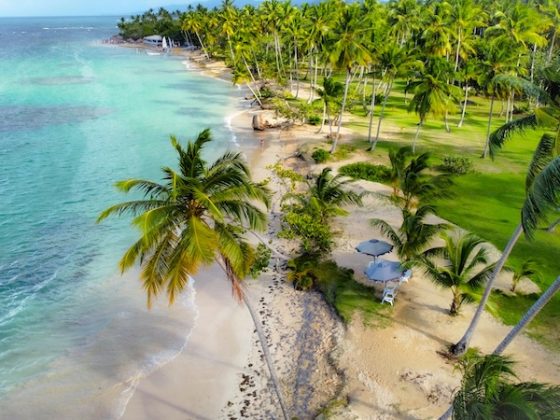
I’ve learned to appreciate living in the moment and not rushing through everything. The people who strike up conversations with strangers, the wildlife, the landscape, and the coconut palms surround me like a warm hug. Since moving here, it’s been easier to stay present, and I’m often reminded how fortunate I am to have this experience.
We even bought a plot of land with the intent of building a tiny home, partly to learn off-grid living. That made the lesson unmistakable: energy is a budget, and having “enough” becomes a real number instead of a vague idea.
I’ve also seen firsthand that water isn’t something you use indiscriminately. It’s something you think about, store in cisterns, monitor, and even celebrate when rain arrives. I’ve learned the importance of leaving a smaller carbon footprint.
I also leaned into work I love and find useful here. Drawing on my previous experience in the entertainment industry as an actor, on-camera personality, and freelance writer, I went back to school to earn a Certificate in Weather Forecasting from Pennsylvania State University, pursuing a lifelong passion. I’m a writer and weather reporter for a local news network, and on an island, the forecast isn’t small talk. It’s safety, ocean conditions, flooding risk, travel plans, and sometimes the difference between an easy day and a complicated one.
While island life can feel like paradise, none of this is to suggest it’s easy. Full-time life in the USVI is very different from a vacation. Infrastructure can be fragile. Healthcare often requires more planning than people expect. And the territory’s government operates within its own realities, priorities, and constraints that don’t always mirror the mainland. (Surprisingly to some, residents of the USVI cannot vote for President in U.S. elections, for example.)
Could a U.S. Territory Be a Trial Run for Abroad or a New Home Altogether?
There are several U.S. territories around the world where Americans can relatively easily visit or even relocate permanently. While moving to a U.S. territory is certainly different from moving to a completely separate country, many aspects of life can still feel very different from the U.S. mainland.
There are major cultural differences from mainland life, shaped by island identity and unique history. Neighboring Puerto Rico is another example. It can feel almost like being transported to a different country, and Spanish is the dominant language.
For readers of Escape Artist, the idea of staying “within the United States” may not resolve all the problems we experience on the mainland, including healthcare challenges, political upheaval, and escalating cost of living. Still, I would argue that moving to a territory can be a practical way to enjoy a different environment and culture.
Using a U.S. territory as a base can also make regional travel much easier. The U.S. Virgin Islands are positioned in the Lesser Antilles, an island chain within reach of roughly 15 independent Caribbean countries, along with territories linked to France, the United Kingdom, and the Netherlands. It is often easy and affordable to fly between islands or even sail, for those drawn to boating life. The Caribbean region is also close to Central and South America.
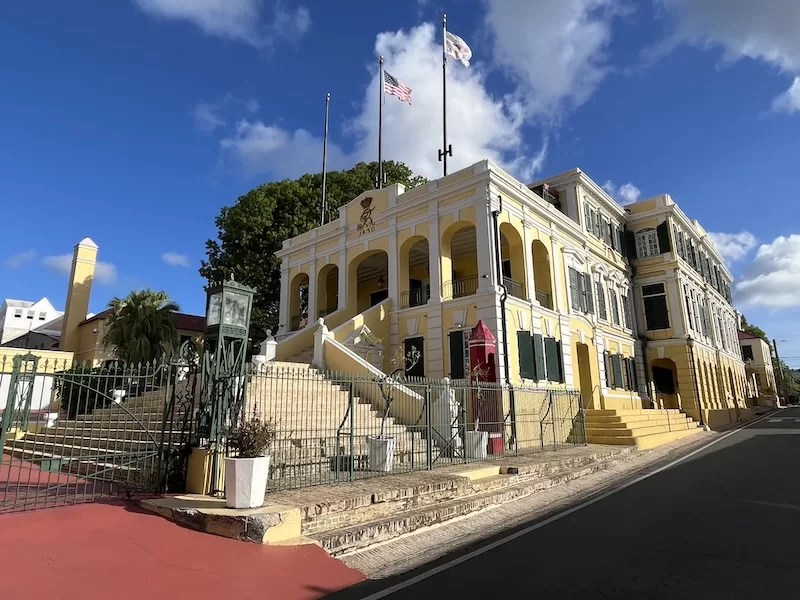
One advantage is that you can remain a U.S. citizen living under the U.S. system, without immediately having to navigate the complexity of international citizenship, visas, or residency permits. Personally, while working toward obtaining Irish citizenship and South African permanent residency, I’ve found living in a U.S. territory to be a rewarding “somewhat abroad” experience and much simpler than living under strict 90-day visa timelines in many countries. As a U.S. citizen, I can stay in a U.S. territory indefinitely.
Of course, if your goal is to fully disconnect from the U.S., a territory may not be the right long-term fit, since territories are still connected to U.S. governance. But as a temporary transition or a trial run before moving abroad, it can be incredibly valuable.
A territory experience can expose you to many realities of life abroad in certain countries:
- infrastructure that may be less reliable than on the U.S. mainland,
- adapting to another primary language (such as Spanish in Puerto Rico), and
- learning to navigate and embrace a culture that may feel very different from mainland America.
The history of U.S. territories is also complex and worth understanding, especially for people seriously considering a move away from the mainland.
Additionally, if you are not yet retired or working remotely and need income, it can be possible in the Virgin Islands to find work in certain sectors, especially tourism. A major disclaimer, however, is cost of living: it can be very high. It’s important to visit first, do your research, and decide whether this path is a good fit for your goals and budget.
Yes, We Do Have Hurricanes!
The weather is a significant consideration prior to relocating to a tropical region that experiences extreme weather events, including hurricanes.

Shortly after my initial arrival on St. Croix, the wind started howling after the sun had set, just as I turned on the stove to cook what I hoped would be one last hot meal before the storm hit. Then the lights flickered. Once, twice, and then everything went dark.
While power outages are common here, this one felt different. Tropical Storm Ernesto was approaching, flirting with hurricane strength. The radar image on my phone showed a massive swirl of color aimed directly at this small 84 square miles of rock in the Caribbean Sea.
As a weather reporter, I’m used to watching storms from a distance. This time, I found myself directly inside the forecast cone. Everything felt smaller: my apartment, the island, and my sense of control.
I won’t pretend there wasn’t fear. In 2017, two ferocious Category 5 hurricanes tore through these islands, and years later, recovery efforts continue. Tropical Storm Ernesto was far less intense than those storms, but when the wind and rain pummeled, I was quickly reminded that being so far from the U.S. mainland means help and recovery take time. When things break here, you may be waiting a while for them to be fixed.
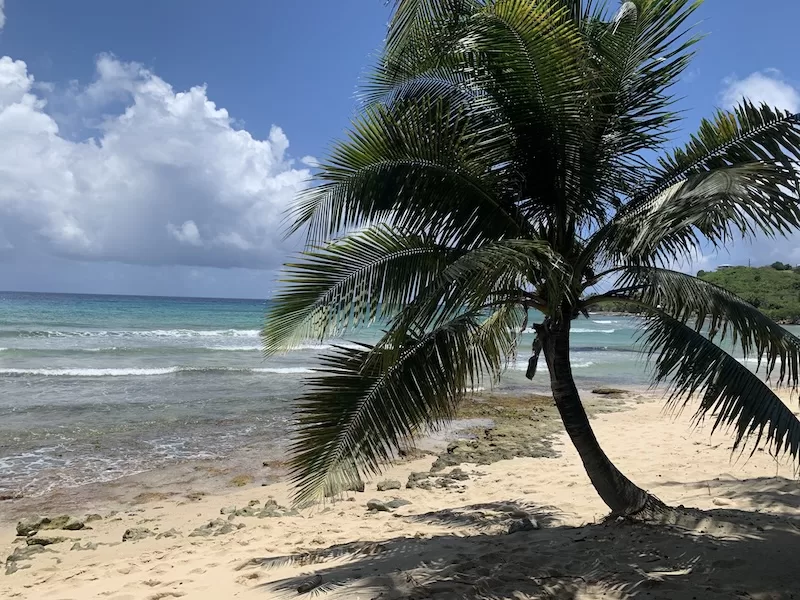
I stepped outside for a brief moment and heard generators roaring to life across the neighborhood. I saw floodlights, powered by those generators, illuminating a row of coconut trees bending nearly sideways in the wind. Palm fronds snapped in the gusts, and the wind and rain went on for hours.
When the winds finally eased near dawn, the morning light allowed me to see that Ernesto had caused less damage than initially feared. Trees were down and there were flooded areas, but it could have been much worse.
Still, the electricity didn’t return for days. Without air conditioning, running water, reliable internet, or the usual noise of daily life, the neighborhood grew quiet, apart from the hum of generators and frogs across the island. Neighbors emerged to survey the fallen branches and flooded patches and quickly came together to support one another and aid in the slow post-storm cleanup.
I didn’t expect that one of my first real lessons after moving to St. Croix would come from a tropical storm: a reminder that on a small island in the middle of the ocean, life operates very differently than on the U.S. mainland. Self-sufficiency isn’t a lifestyle choice. It’s a necessity. And community isn’t optional. It’s how we live together minute to minute, how we get through the messy days after a storm, and how we survive the long nights when the lights go out and the tropical winds blow.
“Island Time” is the Great Escape From the Gerbil Wheel
Throughout my experience on St. Croix overall, living here has taught me what’s meaningful. The endless hurry-up-and-wait and relentless scrambling of life in Hollywood dissolved after I took the freeway off-ramp onto these islands. Island time is often a source of impatience to visitors accustomed to immediate gratification. But it’s a healing, spiritual lifestyle. A gentle smile.
When fewer things are guaranteed, you get better at recognizing what truly matters: the ocean, the peace, the people, and the moment you’re lucky enough to be in. Even the little lizard and his friends still come and go as they please. Some have names based on their whimsical behaviors or peculiar anatomies. Wirey, Junko, and Stumpy have taught me that maybe I did join their household after all.
Moving to St. Croix: Common Questions
Can Americans move to the U.S. Virgin Islands without a visa?
Yes. U.S. citizens can relocate to the U.S. Virgin Islands without obtaining a visa or residency permit, making the territory a relatively easy way to experience a very different lifestyle without moving abroad.
Can living in a U.S. territory feel like living abroad?
In many ways, yes. The U.S. Virgin Islands have their own distinct history, culture, traditions, and rhythm of life, and everyday experiences can feel very different from life on the U.S. mainland.
What should you know before moving to the U.S. Virgin Islands?
Island life comes with tradeoffs. The cost of living can be high, infrastructure and utilities can be less reliable, healthcare may require additional planning, and residents need to prepare for hurricanes and other tropical weather.
Can moving to a U.S. territory be a trial run for moving abroad?
It can be. Living in a territory offers the experience of adapting to a different culture, environment, and way of life while allowing U.S. citizens to remain within the U.S. system and avoid foreign visa or residency requirements. Local laws, government structures, and entry requirements can vary by territory.
About the Author
Jesse Daley is an actor, on-camera personality, and writer who spent years working in Hollywood, California, before relocating to St. Croix in the U.S. Virgin Islands. He now works as a local weather reporter and enjoys the island’s sunshine, palm trees, and laid-back Caribbean lifestyle. Jesse looks forward to continuing to explore destinations and cultures around the world.
Contact Author
"*" indicates required fields
Stay Ahead on Every Adventure!
Stay updated with the World News on Escape Artist. Get all the travel news, international destinations, expat living, moving abroad, Lifestyle Tips, and digital nomad opportunities. Your next journey starts here—don’t miss a moment! Subscribe Now !
The first time a tiny lizard appeared inside my rental condo and got stuck in an empty water glass, I did what any reasonable mainland U.S. newcomer would do: I froze and stared, unsure of how to handle this predicament. The lizard stared back curiously, almost judgmentally through the glass, pressing his tiny feet against it, probably hoping I’d come to his aid. I quickly obliged and helped him find his way back outdoors. Still, lizards entered the house often enough that I started to wonder if I had joined their household instead of the other way around. Nobody warns you about that part of moving to St. Croix.
That was early in my move from the mainland. After years of living and working in the entertainment industry in Hollywood, California, at a pace of perpetual urgency, I moved to St. Croix, the largest of the U.S. Virgin Islands.
Of course, moving to St. Croix wasn’t technically moving abroad. My passport didn’t get any new stamps and as an American citizen, I didn’t even need one to relocate here. But daily life began to feel different in ways I hadn’t expected.
If you'd like to read the full story, simply enter your email to subscribe to our newsletter.
For even more expert insights, unmissable resources, and exclusive invites, explore our premium subscription offers here.
OR
Already a Subscriber? Click here to login
Subscription required
You've reached your limit of free articles. For full access to Escape Artist, and all of our insights on travel, moving abroad, and the digital nomad life, click here to Subscribe.
Already a Subscriber? Log in here