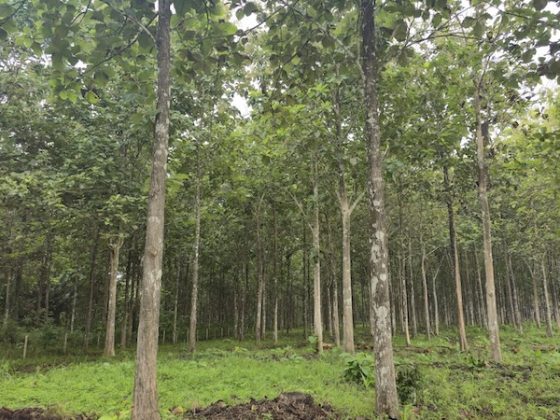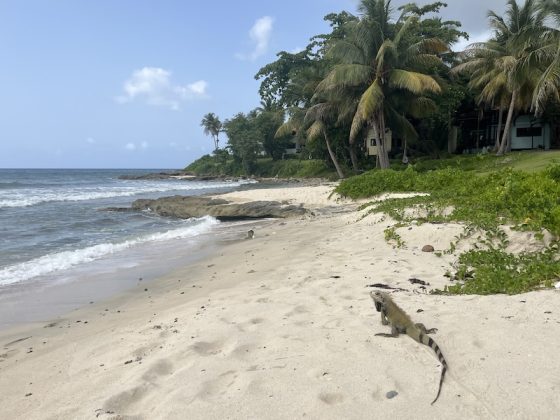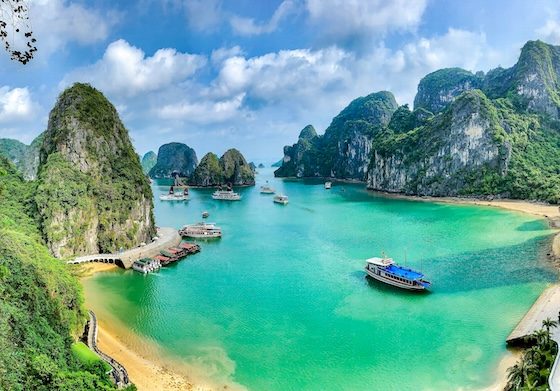
For most of the past two decades, the story of long life has been told through a handful of postcard villages. A grandmother tending olive trees in Sardinia. A fisherman on a Greek island who still swims every morning at ninety-four. A Costa Rican farmer in his hundreds, credited to clean air and strong family ties. The idea took hold that longevity was something rural, slow, and Mediterranean or tropical, a reward for having escaped the modern world rather than mastered it.
The actual data tells a different story, and it is a far more interesting one. The places where people live longest today are not villages that time forgot. They are among the densest, richest, and most administratively modern territories on the planet, and the mechanism behind their longevity has far less to do with olive oil or sea air than with how well a healthcare system is built and who it actually reaches.

The Real Top of the Table
Monaco currently holds the highest life expectancy in the world, at roughly 86.7 years. San Marino follows close behind at just over 86. Hong Kong sits in third place at around 85.2 years, ahead of Liechtenstein and French Polynesia. Switzerland, Japan, Andorra, Spain, and Italy round out the rest of the top ten. Singapore, at 84.1 years, is not far behind any of them.
Look closely at that list and a pattern emerges immediately. These are small, wealthy, densely built territories and city-states, not agrarian retreats. Monaco is roughly two square kilometres of high-rise apartments and private banking. San Marino is a landlocked microstate wrapped entirely inside Italy. Hong Kong is one of the most crowded urban environments on Earth.
Hong Kong is perhaps the most instructive case, precisely because it should not work. Its residents work some of the longest hours in the developed world. Income inequality there is among the highest of any advanced economy. Housing is famously cramped, some of it subdivided into spaces smaller than a parking bay. By the usual logic of longevity writing, none of that should add up to a long life. Yet Hong Kong has held one of the top two or three spots globally for years, and researchers who have studied the city keep landing on the same explanations: universal healthcare with minimal financial barriers to seeing a doctor, a dense urban design that keeps older residents walking and outdoors rather than isolated at home, and one of the lowest infant mortality rates anywhere, which is one of the most reliable signals that a healthcare system is working consistently across an entire population, not just for those who can pay for it.

Read More Like This: Building a Life Abroad That Lasts
The Twist Inside the Twist: Healthspan, Not Just Lifespan
Here is where the story gets more interesting still, and where the popular version of the longevity conversation tends to leave people with the wrong idea entirely. Living longer and living well for longer are not the same measurement, and the gap between them, what researchers call healthy life expectancy, or HALE, matters enormously to anyone actually planning where to spend their later years.
Life expectancy counts total years alive. HALE counts years lived in full health, before the onset of significant chronic illness or disability. Globally, the gap between the two averages nine to ten years, meaning the average person on Earth spends roughly a decade of their life in meaningfully poor health before they die. That gap varies enormously by country, and it does not always track with raw life expectancy rankings in the way you would expect.
Singapore, for instance, tops the global HALE rankings at 73.6 years, ahead of both Japan and South Korea, even though Japan’s raw life expectancy is slightly higher. The explanation is that Singapore’s population carries a lower burden of disability and chronic illness relative to its overall lifespan, meaning the years people live there are, on balance, healthier years. The United States, by contrast, ranks a distant twenty-ninth in HALE, behind every major Western European country, with a gap of 12.5 years between life expectancy and healthy life expectancy, one of the widest in the world. Americans are not just dying earlier than their wealth would predict. They are spending an unusually long stretch of life in poor health before they do.
The lesson for anyone thinking seriously about longevity as a reason to relocate is that the headline life expectancy number is not the number that matters most. The number that matters is how many of those years you can expect to spend in genuinely good health, and that number tracks closely with access to preventive care, chronic disease management, and a healthcare system that catches problems early rather than treating them once they have become expensive.

Read More Like This: The Most Underrated Countries to Visit
The Blue Zone the Myth Left Out
The “Blue Zones,” the five regions, Okinawa in Japan, Sardinia in Italy, Ikaria in Greece, the Nicoya Peninsula in Costa Rica, and Loma Linda in California, that built the popular longevity narrative starting in the mid-2000s, have come under serious and sustained academic scrutiny in recent years.
A demographer at University College London named Saul Newman spent years auditing the actual age records behind the Blue Zones claims, region by region, rather than accepting the reported statistics at face value. His conclusion, which won him an Ig Nobel Prize in 2024, was that much of the apparent concentration of centenarians in these regions could be explained by missing birth certificates, clerical errors, and, in some cases, outright pension fraud, places where a direct financial incentive existed to keep a deceased relative listed as alive on paper, since pension payments often continue as long as no death is formally registered. Costa Rica offers the starkest example. In 2008, it emerged that 42 percent of Costa Ricans claiming to be centenarians were found to be lying about their age. A more recent study by the same demographer who originally helped designate Nicoya a Blue Zone in 2007 found that people born on the peninsula after 1930 are not experiencing the same longevity their parents’ generation reportedly did.
Blue Zones researchers, led by the concept’s original popularizer Dan Buettner, have pushed back hard, publishing peer-reviewed rebuttals arguing that Newman misunderstands their methodology, that he pulls data from broad national or regional statistics rather than the specific, tightly verified villages the original researchers studied, and that the ages in question were cross-checked against birth certificates, marriage records, and civil registries, in Nicoya’s case a registration system dating back to 1883, rather than relying on self-reported ages. The scientific argument remains genuinely unresolved, and reasonable researchers land on different sides of it.
But the debate itself is instructive regardless of who is ultimately right. It suggests the popular image of longevity, built on charming anecdotes about diet, sea air, and unhurried village life, was always a simpler and more romantic story than the underlying reality, and that reality has far more to do with paperwork, healthcare infrastructure, and measurement than with lifestyle alone.
Read More Like This: The Countries Where Your Dollar Goes Furthest
The Next Wave
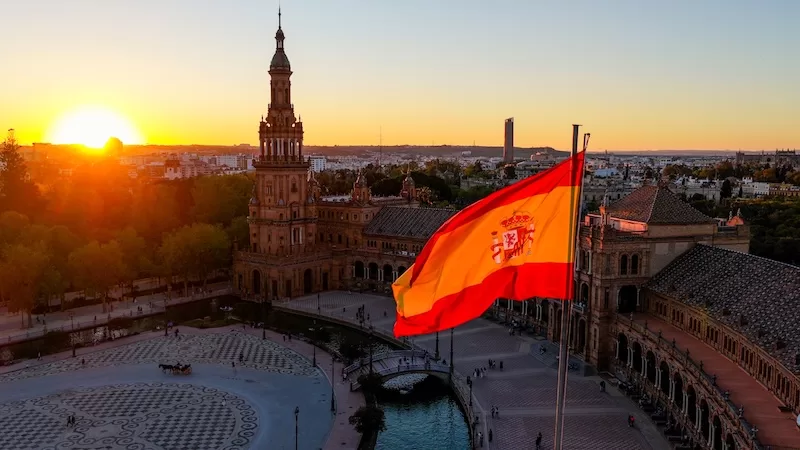
The countries actually gaining the most ground are not the ones featured in longevity documentaries either. Spain is projected, in a widely cited study affiliated with the University of Washington’s Institute for Health Metrics and Evaluation and published in The Lancet, to overtake Japan for the world’s longest life expectancy by around 2040, reaching roughly 85.8 years. The drivers cited are a combination of Mediterranean diet, comparatively low smoking and alcohol trends, and a universal healthcare system that reaches nearly the entire population at low direct cost to patients.
South Korea’s trajectory is even more dramatic. Life expectancy there rose by nearly eight years between 2000 and 2021, among the fastest sustained increases recorded anywhere in the world during that period. Projections suggest South Korea will overtake Japan for the global lead sometime between 2030 and 2040. Most strikingly, researchers project that Korean women born in 2030 will be the first population in recorded human history to average a life expectancy above ninety years, a shift driven overwhelmingly by near-universal healthcare access and steep, sustained declines in cardiovascular disease and infant mortality. South Korea’s earlier gains came largely from reducing infectious disease and childhood mortality; its current gains are coming from keeping older adults alive and healthier for longer, which is precisely the harder, more durable kind of progress.
Switzerland belongs in this conversation too, not for dramatic recent gains but for consistency. Its healthcare system is frequently ranked among the best in the world, financed at a high level with mandatory insurance and government subsidies for those whose premiums would otherwise exceed roughly eight percent of household income. Life expectancy there sits at approximately 84 years, and it has held near the top of every major ranking for decades without much fanfare, a reminder that quiet, well-funded consistency can be just as effective as any dramatic policy shift.
Read More Like This: Your 2025-2026 Guide to Which Countries Offer Retirement Visas
What Actually Explains It

Strip away the mythology and a consistent pattern emerges across every one of these places, and it is not a specific diet or a specific pace of life. It is healthcare systems that are genuinely universal and genuinely accessible rather than universal on paper, cities and towns designed so that daily movement is unavoidable rather than optional, and, notably, low variation in health outcomes across income groups. The places at the top of the longevity tables are not necessarily the most relaxed or the most traditional. They are the places where a long, healthy life is not a privilege reserved for whoever can afford good insurance.
This is also why the Blue Zones controversy matters beyond academic circles. If longevity really were mostly a matter of unhurried living and homegrown vegetables, it would be a story with no real policy lesson and no real relocation lesson either, just a wistful fantasy about slowing down. If it is instead mostly a matter of healthcare infrastructure and preventive care reaching everyone equally, it becomes a far more useful and far more actionable piece of information for anyone actually choosing where to build a life.

Read More Like This: Top Countries with Retirement Visa Pathways
Where You Could Actually Go
Monaco and Liechtenstein are, realistically, closed doors for most people, small, wealthy enclaves with residency pathways built around significant capital and, in Monaco’s case, a substantial bank deposit and property lease. San Marino is similarly narrow, with residency largely reserved for those with local employment or family ties. These places make for a striking statistic, but not a realistic relocation plan for most readers.
Several of the genuine longevity leaders, however, are places people can actually move to and build a life in. Spain offers accessible long-term residency routes, an excellent and largely free public healthcare system available to legal residents, and a cost of living far below what its longevity numbers might suggest, particularly outside Madrid and Barcelona. Japan and South Korea are both considerably more open to long-term foreign residents than their reputations suggest, particularly for skilled workers, and both offer national health insurance systems that foreign residents can enroll in on the same terms as citizens.
Switzerland is more expensive and its immigration system more selective, but for those who qualify through employment, the healthcare system there is genuinely among the best available anywhere, universal, well-funded, and subsidized for lower earners. Singapore remains costly and its immigration system tightly controlled, but for those who can secure the right visa, usually through employment, it currently offers the best combination anywhere in the world of long life and healthy life, which, as the HALE data makes clear, is really the number worth chasing.
The story longevity researchers are converging on, after all the documentaries and dietary folklore, is not really about finding a hidden village with a secret. It is about identifying, and where possible moving toward, a system that already works, one where healthcare is not a gamble, where staying active is built into the shape of daily life rather than scheduled in as exercise, and where growing old does not mean growing old alone.
Key Takeaways
Q: Which country currently has the highest life expectancy?
A: Monaco currently sits at the top, with life expectancy at roughly 86.7 years, followed by San Marino and Hong Kong.
Q: Are the longest-living places mostly rural villages?
A: Not really. Many of the current longevity leaders are small, wealthy, dense, and highly modern territories rather than slow rural communities.
Q: Why does Hong Kong rank so highly for life expectancy?
A: Hong Kong’s longevity appears connected to healthcare access, dense walkable urban design, and very low infant mortality, despite long working hours and high inequality.
Q: What is HALE?
A: HALE means healthy life expectancy. It measures years lived in good health, not just total years alive.
Q: Why does healthspan matter more than lifespan?
A: A country may help people live longer, but the more useful measure is how many of those years are spent in good health.
Q: Which country leads healthy life expectancy rankings?
A: Singapore leads the global HALE rankings at around 73.6 years, ahead of Japan and South Korea.
Q: Are Blue Zones still reliable?
A: The Blue Zones concept is debated. Some researchers argue that age-record issues may have inflated the claims, while Blue Zones researchers continue to defend their methodology.
Q: What actually explains longer lives across leading countries?
A: The common thread is accessible healthcare, preventive care, chronic disease management, walkable environments, and lower variation in health outcomes across income groups.
Q: Which longevity leaders are realistic relocation options?
A: Spain, Japan, South Korea, Switzerland, and Singapore are more realistic than Monaco, Liechtenstein, or San Marino, depending on visa eligibility and cost.
About the Author
Contact Author
"*" indicates required fields
Stay Ahead on Every Adventure!
Stay updated with the World News on Escape Artist. Get all the travel news, international destinations, expat living, moving abroad, Lifestyle Tips, and digital nomad opportunities. Your next journey starts here—don’t miss a moment! Subscribe Now !
For most of the past two decades, the story of long life has been told through a handful of postcard villages. A grandmother tending olive trees in Sardinia. A fisherman on a Greek island who still swims every morning at ninety-four. A Costa Rican farmer in his hundreds, credited to clean air and strong family ties. The idea took hold that longevity was something rural, slow, and Mediterranean or tropical, a reward for having escaped the modern world rather than mastered it.
The actual data tells a different story, and it is a far more interesting one. The places where people live longest today are not villages that time forgot. They are among the densest, richest, and most administratively modern territories on the planet, and the mechanism behind their longevity has far less to do with olive oil or sea air than with how well a healthcare system is built and who it actually reaches.
If you'd like to read the full story, simply enter your email to subscribe to our newsletter.
For even more expert insights, unmissable resources, and exclusive invites, explore our premium subscription offers here.
OR
Already a Subscriber? Click here to login
Subscription required
You've reached your limit of free articles. For full access to Escape Artist, and all of our insights on travel, moving abroad, and the digital nomad life, click here to Subscribe.
Already a Subscriber? Log in here