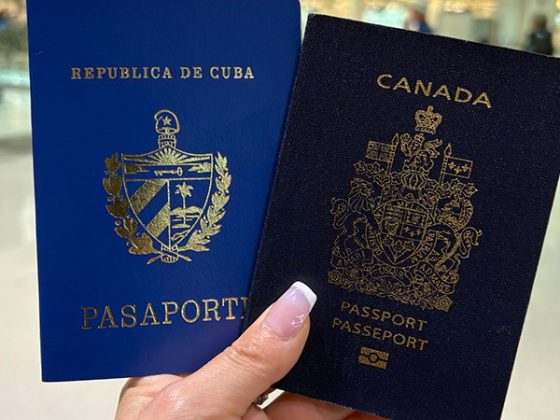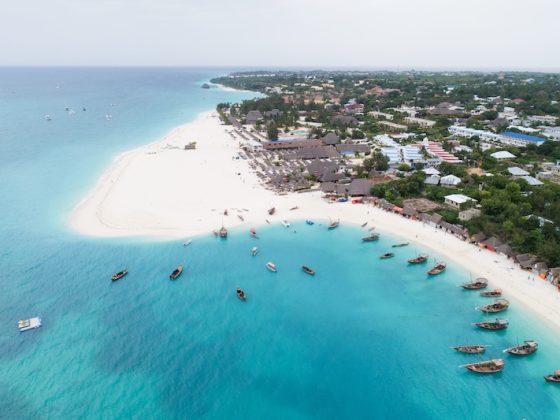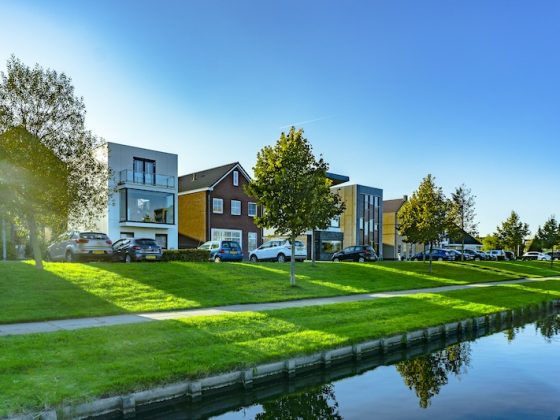
For much of the past two decades, cities like Dubai have symbolized stability, ambition, and opportunity in an otherwise volatile region. Positioned as a global financial hub with world-class infrastructure, favorable tax regimes, and a strategic geographic location, the Gulf states, particularly the United Arab Emirates, have successfully attracted international capital, entrepreneurs, and high-net-worth individuals seeking both growth and security.
Yet, beneath this narrative of stability lies a more complex and evolving reality. The Middle East remains one of the most geopolitically sensitive regions in the world. From persistent tensions involving Iran and its regional proxies, to the ongoing ripple effects of conflicts such as the Syrian Civil War, and the ever-present uncertainty surrounding energy markets and global power dynamics, risk has not disappeared, it has merely been managed.
Today, a growing number of global investors, family offices, and internationally mobile individuals are quietly reassessing their exposure to the region. This is not a sudden exodus, but rather a strategic diversification, a prudent repositioning of both capital and personal footprint in anticipation of a less predictable future.

From Concentration to Diversification
Historically, wealth flowing into the Gulf was driven by a combination of economic opportunity and relative regional stability. However, recent geopolitical developments have sharpened awareness of concentration risk. Investors are increasingly recognizing that even well-managed jurisdictions can be affected by external shocks, whether through regional escalation, sanctions dynamics, or disruptions to global trade routes.
As a result, capital is no longer being concentrated in a single “safe haven,” but rather distributed across multiple jurisdictions. This trend mirrors broader portfolio theory: diversification is not just for asset classes, but for geography and jurisdictional risk.
In this context, smaller, well-regulated international financial centers are emerging as attractive complements to Gulf-based holdings. Jurisdictions that offer political neutrality, legal certainty, and flexible structuring options are increasingly in demand.
The Rise of Alternative Jurisdictions
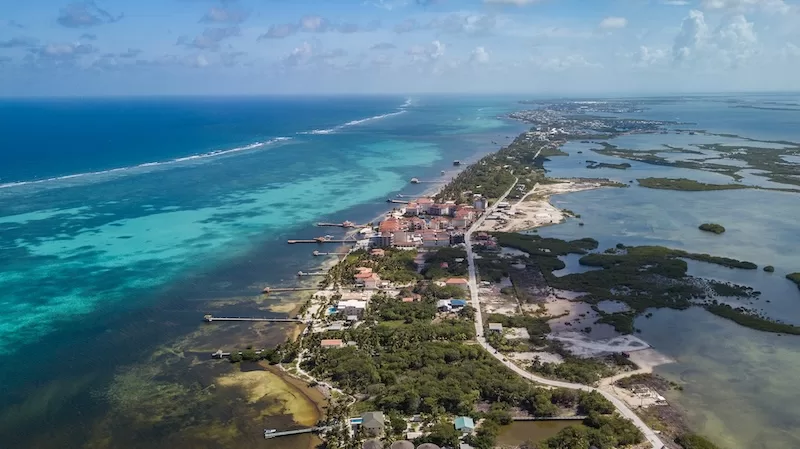
Among these, Belize has begun to attract renewed attention. While historically associated with offshore banking and international financial services, Belize is increasingly being viewed through a broader lens: as a jurisdiction offering both financial diversification and lifestyle optionality.
What distinguishes Belize, and similar jurisdictions, is not scale, but agility. Smaller economies often have the ability to adapt regulatory frameworks, maintain competitive cost structures, and offer personalized financial services in ways that larger financial centers cannot. In an era where flexibility is paramount, this is a meaningful advantage.
Moreover, Belize’s positioning outside of major geopolitical flashpoints provides a level of insulation that is increasingly valued. It is not directly exposed to the tensions shaping the Middle East, nor is it at the center of great power competition. For investors seeking geographic balance, this matters.
Beyond Capital: The Human Dimension
Perhaps more importantly, this shift is not solely about money, it is about mobility, security, and optionality.
A growing number of individuals based in the Gulf are now exploring second residency options, not as a reactionary measure, but as a form of strategic planning. The logic is simple: in an uncertain world, having a credible alternative, whether for business continuity, family security, or lifestyle flexibility, is increasingly viewed as essential.
This is where jurisdictions like Belize again come into focus. With accessible residency pathways, English-speaking legal systems, and a high quality of life relative to cost, it offers a compelling proposition for those seeking a “Plan B” that is both practical and sustainable.
Unlike more saturated residency markets in Europe or North America, Belize remains relatively under the radar. This creates an opportunity for early movers to establish a presence without the complexity, cost, and regulatory burden often associated with more traditional destinations.
Real Estate as a Strategic Anchor
Alongside financial diversification and residency planning, real estate has emerged as a key component of this broader shift. Investors are not simply moving capital; they are anchoring it in tangible assets that provide both utility and long-term value.
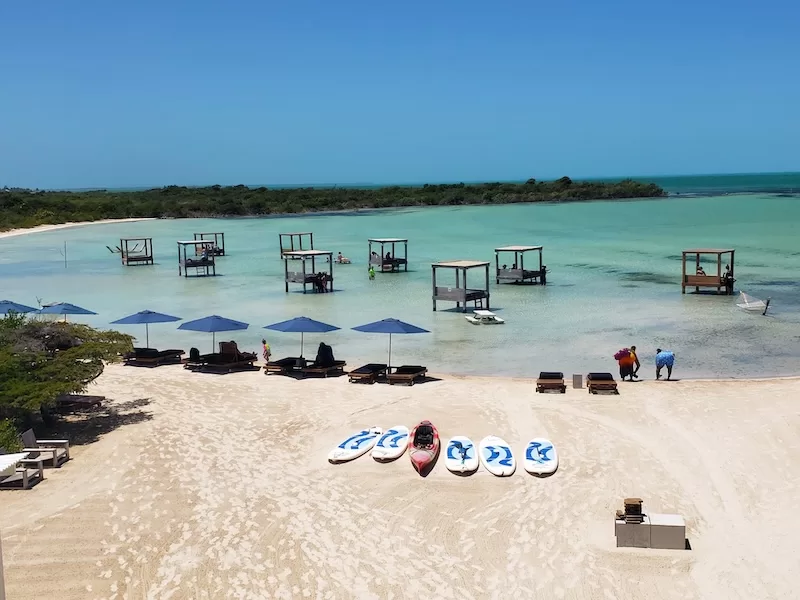
In Belize, coastal and island properties offer a unique combination of lifestyle appeal and investment potential. For many, the acquisition of a home is not just a financial decision, but a strategic one: a place that can be used immediately, rented for income, or held as a long-term hedge against uncertainty elsewhere.
This dual-purpose nature of real estate, both as an asset and as a contingency plan, aligns closely with the mindset of today’s globally mobile investor.
A Structural, Not Temporary, Shift
It is important to emphasize that this trend is not a repudiation of the Gulf. Cities like Dubai will continue to play a central role in global finance and commerce. Rather, what we are witnessing is a maturation of investor behavior.
High-net-worth individuals and institutions are no longer content with a single jurisdictional exposure, no matter how attractive it may be. Instead, they are building multi-jurisdictional strategies that reflect the realities of a more fragmented and uncertain world.

In this sense, the movement of capital, and people, from the Gulf to jurisdictions like Belize is not a sign of decline, but of evolution.

Looking Ahead
As geopolitical tensions persist and global uncertainty becomes a defining feature of the economic landscape, the demand for diversification, both financial and personal, will only increase.
Jurisdictions that can offer stability, flexibility, and a credible alternative lifestyle will be the beneficiaries of this shift. Belize, along with a select group of similar destinations, is well positioned to capture this emerging flow.
For investors and families alike, the message is clear: in a world where risk cannot be eliminated, it can and must be managed. And increasingly, that management includes not just where money is invested, but where life itself can be lived if circumstances require it.
Key Takeaways
Why are investors looking beyond the Gulf now?
Because geopolitical uncertainty has sharpened awareness of concentration risk. Even successful and well-managed Gulf jurisdictions can still be affected by regional tensions, sanctions dynamics, and wider disruptions to trade and global power balances.
Is this a move away from Dubai and the Gulf altogether?
No. This is not framed as an exodus or a rejection of the Gulf, but as a more mature diversification strategy. Investors are keeping the Gulf in the picture while reducing the risks of relying too heavily on a single region.
Why is diversification now going beyond just asset classes?
Because investors are increasingly treating geography and jurisdiction as part of risk management. Wealth is no longer being spread only across stocks, bonds, or businesses, but across countries, legal systems, residency options, and real estate markets as well.
Why is Belize coming into the conversation?
Belize offers a combination of political distance from major geopolitical flashpoints, flexible financial structuring, accessible residency pathways, an English-speaking legal environment, and lifestyle appeal at a lower level of complexity than more saturated markets.
Why does residency matter as much as money now?
Because modern planning is no longer only about protecting capital. It is also about mobility, family security, business continuity, and having a credible alternative place to live if circumstances change.
Why is real estate part of the strategy?
Real estate gives investors something tangible that can serve multiple purposes at once. It can preserve value, generate rental income, provide lifestyle use, and act as a practical foothold in a second jurisdiction.
What is the bigger message of the piece?
In a more fragmented world, the smartest investors are not relying on one “safe” place. They are building multi-jurisdictional strategies that combine wealth protection, residency, and real assets across more stable and flexible destinations.
About the Author
Luigi Wewege is the CEO of award-winning, Belize-based Caye International Bank and co-author of The Digital Banking Revolution, now in its 3rd edition.
Contact Author
"*" indicates required fields
Stay Ahead on Every Adventure!
Stay updated with the World News on Escape Artist. Get all the travel news, international destinations, expat living, moving abroad, Lifestyle Tips, and digital nomad opportunities. Your next journey starts here—don’t miss a moment! Subscribe Now !
For much of the past two decades, cities like Dubai have symbolized stability, ambition, and opportunity in an otherwise volatile region. Positioned as a global financial hub with world-class infrastructure, favorable tax regimes, and a strategic geographic location, the Gulf states, particularly the United Arab Emirates, have successfully attracted international capital, entrepreneurs, and high-net-worth individuals seeking both growth and security.
Yet, beneath this narrative of stability lies a more complex and evolving reality. The Middle East remains one of the most geopolitically sensitive regions in the world. From persistent tensions involving Iran and its regional proxies, to the ongoing ripple effects of conflicts such as the Syrian Civil War, and the ever-present uncertainty surrounding energy markets and global power dynamics, risk has not disappeared, it has merely been managed.
Today, a growing number of global investors, family offices, and internationally mobile individuals are quietly reassessing their exposure to the region. This is not a sudden exodus, but rather a strategic diversification, a prudent repositioning of both capital and personal footprint in anticipation of a less predictable future.
If you'd like to read the full story, simply enter your email to subscribe to our newsletter.
For even more expert insights, unmissable resources, and exclusive invites, explore our premium subscription offers here.
OR
Already a Subscriber? Click here to login
Subscription required
You've reached your limit of free articles. For full access to Escape Artist, and all of our insights on travel, moving abroad, and the digital nomad life, click here to Subscribe.
Already a Subscriber? Log in here