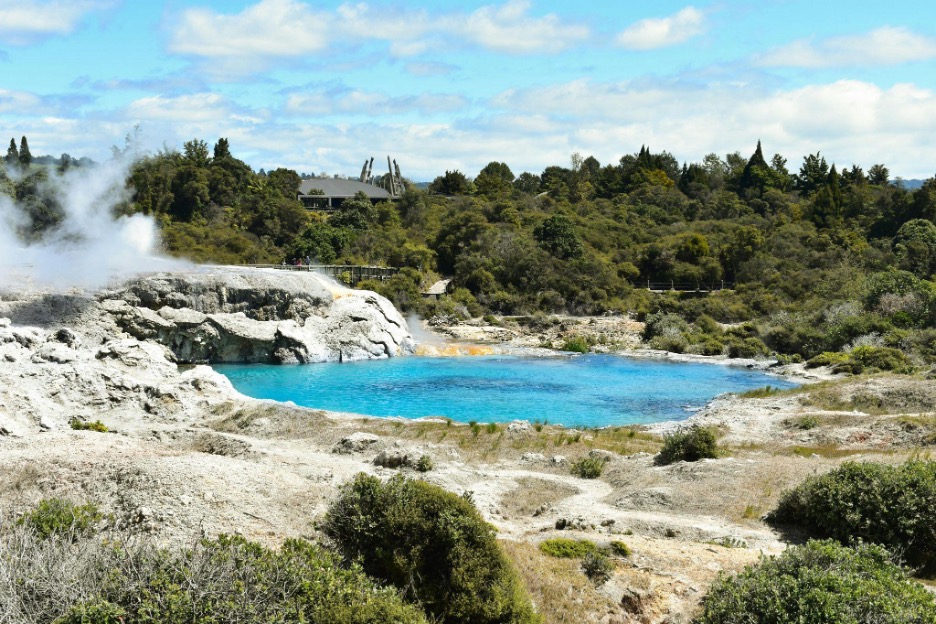
Here, “spa culture” is not only about luxury resorts and cucumber water. It is geothermal steam rising from the earth. It is mineral-rich mud pulled straight from volcanic ground. It is cedar hot tubs on back decks overlooking sheep paddocks. It is practical, outdoorsy, and deeply woven into everyday life.
If you want to understand New Zealand properly, you have to understand how Kiwis unwind. City by city, the spa story shifts — from geothermal wonders to ocean plunges to backyard soaking rituals. And unlike some wellness trends, this one is grounded in geography and habit.
Here’s what you should know.
Rotorua
Geothermal Is Not a Gimmick
Start in Rotorua, because this is where New Zealand’s spa identity is most obvious.
The city literally steams. Sulphur hangs in the air. Geysers erupt without warning. Beneath your feet, geothermal water heats naturally through volcanic activity. Māori communities have used these thermal waters for centuries for bathing and healing.
The famous Polynesian Spa sits beside Lake Rotorua and taps directly into mineral springs. Pools vary in temperature and mineral composition. Some are acidic, some alkaline. Locals don’t treat it as a novelty — it’s part of the regional rhythm.
The key here is understanding that this is not decorative wellness. The minerals are real. The heat is real. The smell is real. And so are the benefits people swear by, from muscle relaxation to skin clarity.
If you want to see Rotorua properly, walk the geothermal parks during the day, then soak at dusk when steam rises against a darkening sky. That contrast is the city’s essence.
Taupō
Hot Water from the Earth
South of Rotorua lies Taupo, perched on the edge of Lake Taupō, itself formed by a massive volcanic eruption.
Here, one of the most understated spa experiences in the country is completely free: Spa Thermal Park. Locals and visitors alike head to a natural hot stream that flows into the Waikato River. You sit in warm water while the cooler river rushes beside you.
It’s not polished. There are no spa attendants. Just river stones, steam, and conversation. That’s very Kiwi.
Taupō also has private hot pool complexes if you want something more controlled, but the natural soak tells you more about the culture. People bring towels, sometimes a thermos, and stay until their fingers wrinkle.
Nelson
Sunshine and Backyard Soaks
Cross to the South Island and head to Nelson. Nelson is known for having some of the highest sunshine hours in the country. It’s artsy, coastal, and compact — close to Abel Tasman National Park but very much its own community.
Unlike Rotorua or Taupō, Nelson doesn’t sit on geothermal hotspots. Instead, its spa culture reflects something else: the Kiwi love of having a spa pool at home.
Drive through suburban streets here and you’ll notice something common — fenced decks with covered corners, often hiding a hot tub. In New Zealand, spa pools are not rare luxuries. They are lifestyle investments, especially in regions with cool evenings and clear skies.
For locals exploring options, Spa World Nelson serves as a dedicated showroom for home spa pools. It reflects a broader trend: Kiwis increasingly integrate hydrotherapy into everyday living, not just holiday retreats.
When in Nelson, pair your spa experience with a local meal. The city has a strong seafood and produce scene thanks to its coastal location and fertile surrounds. A relaxed dinner near the waterfront followed by a long soak at your accommodation is very much the Nelson way.
Queenstown
Cold Plunge Meets Mountain Heat
If Rotorua is geothermal and Nelson is domestic spa culture, Queenstown is alpine contrast therapy.
Set beside Lake Wakatipu and surrounded by the Remarkables mountain range, Queenstown leans into extremes. Ski in winter. Hike in summer. Then soak.

The iconic cedar hot tubs overlooking the Shotover River — like those at Onsen Hot Pools — combine private soaking with mountain views. Snow on peaks, steam in the air. It’s dramatic but grounded in the landscape.
Locals here often balance hot tubs with cold plunges, jumping into alpine lakes or using contrast showers after outdoor adventures. The idea isn’t indulgence alone. It’s recovery. Queenstown’s spa culture exists because the terrain demands it.
Hanmer Springs
Further north on the South Island sits Hanmer Springs, arguably the country’s most traditional thermal spa town.
The Hanmer Springs Thermal Pools and Spa complex features multiple mineral pools, sulphur pools, and private relaxation areas. It feels more structured than Taupō’s riverside soak but less tourist-slick than some overseas spa destinations.
Families visit. Couples visit. Retirees visit. It’s mainstream and accepted, not niche wellness culture.
Hanmer Springs shows how deeply normalized thermal bathing is in New Zealand. It’s something you grow up doing.
Auckland
Urban Spa Meets Coastal Reset
In Auckland, New Zealand’s largest city, spa culture adapts to urban life.
You’ll find day spas and rooftop wellness spaces, but you’ll also find ocean swimming as a ritual. Locals head to beaches like Mission Bay year-round. Cold water immersion has become part of wellness culture in Auckland, especially among early-morning swimmers.
The spa secret here isn’t necessarily geothermal. It’s consistency. Even in a major city, Kiwis prioritize time outdoors and water exposure.
The Real Kiwi Spa Secret
Here’s what ties it all together.
In New Zealand, water is not ornamental. It is participatory. Whether it bubbles up from volcanic ground, runs down a mountain river, or circulates in a backyard spa pool, it’s integrated into life.
There’s also practicality to it. Spa pools are used for muscle recovery after farm work, hiking, or surfing. They’re used for socializing. They’re used in winter when nights turn sharp and clear.
And importantly, spa culture here is rarely about display. It’s about function.
If you visit New Zealand expecting only scenic landscapes, you’ll miss something essential. The soaking — in mineral pools, private hot tubs, alpine baths, or riverside springs — is part of how Kiwis inhabit their environment.
City by city, the form changes. Rotorua steams. Taupō flows. Nelson installs spa pools at home. Queenstown contrasts heat and cold. Hanmer Springs refines thermal bathing. Auckland blends urban life with ocean ritual.
The secret isn’t hidden. It’s just embedded in daily living.
Contact Author
"*" indicates required fields
Stay Ahead on Every Adventure!
Stay updated with the World News on Escape Artist. Get all the travel news, international destinations, expat living, moving abroad, Lifestyle Tips, and digital nomad opportunities. Your next journey starts here—don’t miss a moment! Subscribe Now !
Here, “spa culture” is not only about luxury resorts and cucumber water. It is geothermal steam rising from the earth. It is mineral-rich mud pulled straight from volcanic ground. It is cedar hot tubs on back decks overlooking sheep paddocks. It is practical, outdoorsy, and deeply woven into everyday life.
If you want to understand New Zealand properly, you have to understand how Kiwis unwind. City by city, the spa story shifts — from geothermal wonders to ocean plunges to backyard soaking rituals. And unlike some wellness trends, this one is grounded in geography and habit.
Here’s what you should know.
If you'd like to read the full story, simply enter your email to subscribe to our newsletter.
For even more expert insights, unmissable resources, and exclusive invites, explore our premium subscription offers here.
OR
Already a Subscriber? Click here to login
Subscription required
You've reached your limit of free articles. For full access to Escape Artist, and all of our insights on travel, moving abroad, and the digital nomad life, click here to Subscribe.
Already a Subscriber? Log in here