For many first-time travelers, the resort feels like a safety net. After all, it’s a carefully curated ecosystem where the local culture is distilled into a loosely drawn sketch, ensuring you never have to grapple with anything more challenging than a lukewarm omelet station at the buffet.
While lounging in a sanitized paradise has its charms, the economic reality is staggering. In discussions of economic leakage in international tourism, researchers have found that in some developing countries, a very large share of the money spent by tourists does not stay with local workers and businesses. In cases such as all-inclusive package tours in small economies or regions dominated by all-inclusive package tours and foreign-owned conglomerates, estimates of leakage have reached levels where 70–80 % of tourist spending leaves the local economy through import costs, foreign-owned airlines, hotels and tour operators, and other channels. Stepping off the manicured grounds of a resort is what converts you from a passive consumer into an actual participant in a foreign economy.
True immersion is found in the spontaneous charm of a regular weekday afternoon. It’s the ego-bruising process of navigating a transit system that ignores the concept of linear time or attempting to order dinner when the menu looks like a Rorschach test. These moments force a recalibration of the Western internal clock, which is usually set to urgent by default. Research into the slow travel movement suggests that abandoning the frantic, checklist-style itinerary lowers cortisol levels, exchanging the stress of the must-see with the clarity of the already-here.
In this article, we aim to explore the logistical pivots and psychological shifts required to trade the safety net for a seat at the local table.
The Importance of Going Beyond the Resort
The line between ease and engagement
When we boil it down, there are two ways to look at traveling: comfort travel (typically associated with resorts that make for a really smooth experience but keep you at bay from reality) or the high-fidelity feedback of engaging through cultural immersion.
Comfort travel is essentially the safety scissors of the international experience, designed to ensure nobody gets hurt, but making it impossible to cut through anything substantial. It is a world of prearranged shuttles and meals that arrive with the terrifying punctuality of a Swiss train, where cultural differences are trotted out as scheduled dinner entertainment between the appetizers and the main course. Sure, there is an undeniable charm to being indulged like a VIP guest, but this route is a bit of a dead end for the traveler who wants a legitimate, first-hand audit of a country’s vibe. Sticking at a resort can sandpaper the soul out of a destination, leaving you with a two-dimensional version of a place that deserves better.
True cultural contact, on the other hand, comes with the beautiful texture that reveals itself after you stop being handled like fragile cargo. It’s the realization that most of the world operates on a system of unwritten rules and social cues that don’t come with a translated PDF, and that need to be experienced to be understood. Simply trading a hotel breakfast for a local café is enough to bring insight you wouldn’t get otherwise.
According to the World Travel & Tourism Council, travel and tourism now contribute over $10 trillion to the global economy. Research from the World Bank shows that much of tourism’s real economic impact is shaped by where the currency truly lands. When your spending is directed toward local lodging, neighborhood eateries, and regional transport, it circulates within the host community instead of being captured by the closed-loop vacuum of an international resort, so immersing yourself is beneficial to both you and the communities you’re visiting. And you still reap other benefits, like the hard-earned confidence that you can navigate a foreign economy without a concierge holding your hand, a skill that pays significantly higher interest than a week of pampering.
Why first trips shape long-term attitudes toward life abroad
These inaugural border crossings function as a high-stakes adjustment of your internal threat detection system. If your first experience of a foreign land is viewed through the reinforced glass of a private transfer, you’re effectively training your brain to see the rest of the planet as a hostile environment requiring a tactical escort. This creates a psychological dependency where safety is incorrectly conflated with service.
The tension of the unmediated world is where the most valuable data points for a Plan B are collected. Venturing out, even for something as mundane as a local hardware store or a neighborhood post office, helps you see that the locals aren’t operating on some higher plane of cultural mastery; they’re simply following a different set of habits that are easy enough to adopt.
This realization is eye-opening for the aspiring global citizen. It replaces the paralyzing “What If?” scenarios with a functional “How To” mindset. Once you’ve successfully navigated a day in a place where nobody knows your name or your preferred coffee order, the mystical aura surrounding international living evaporates. You stop viewing a move abroad as a drastic act of bravery and start seeing it for what it really is: a simple shift in geography that requires a little more observation and a lot less ego.
What Authentic Cultural Immersion Looks Like
Daily life participation versus curated experiences
When we pit daily participation against curated experiences, we’re really choosing between being a guest and being a stakeholder. Curated travel is a controlled experiment where the variables are rigged in your favor; it’s a pleasant way to burn a week, but it offers zero insight on whether you could thrive in a new environment.
Authentic immersion lives in the mundane, fluorescent-lit aisles of a suburban grocery store or the confusing choreography of a local pharmacy. These are the places where the vacation mask slips and reveals the true mechanics of a society. You learn more about a culture by observing what people complain about in a slow-moving post office line than you ever will from a plaque on a monument.
These unscripted spaces are a masterclass in local sociology. You notice the contents of a shopping basket, the specific way neighbors acknowledge each other without speaking, and how the elderly are integrated into (or ignored by) the daily rush. Pay attention to the high-trust indicators: are the newspapers left out on an honor system, or is the 20-cent lighter chained to the counter like a crown jewel? Observing how much of a community’s social capital is built on trust and routine offers a deeper audit of your potential future than anything found behind a resort wall.
In the world of urban planning, the 15-minute neighborhood isn’t a buzzword so much as a dress rehearsal for your future. Witnessing how a city buzzes at 8:00 AM (the logistical ballet of school runs, subway schedules, espresso shots, and transit timing) is infinitely more informative than any so-called authentic folklore show performed at 8:00 PM for an audience of people wearing identical sun hats. Curated shows end when the curtains close, but a community continues to pay dividends long after the tourists have gone home.
Language exposure
First-time travelers sometimes treat a foreign language like a high-stakes bomb-disposal mission where one wrong syllable leads to total catastrophe. But as you probably noticed through experiences on your own life, a lot of human interaction is carried by tone and facial expressions. Psychologists have long emphasized that in face-to-face encounters, nonverbal cues such as facial expression, body language do the heavy lifting of communication. Classic work on this topic, like Albert Mehrabian’s communication research, suggests that when assessing feelings or attitudes, tone and facial expression together frequently outweigh the content of the words in how messages are interpreted. So, while fluency is a noble long-term pursuit, basic survival is mostly a matter of patience and the willingness to look slightly ridiculous while gesturing toward a specific pastry.
Repetition is the secret weapon of the non-fluent. Ordering the same coffee at the same counter three mornings in a row does more for your confidence than a month of staring at flashcards. Around the time you reach your third attempt, the Foreign Language Effect (a psychological phenomenon where thinking in and using a second language helps you make more rational, less emotional decisions) kicks in. You stop worrying about the perfect subjunctive tense and start focusing on the fact that you successfully exchanged currency for caffeine without a translator.
Time, repetition, and familiarity
Immersion accelerates when you stop treating your trip like a high-speed scavenger hunt. The checklist traveler is perpetually stuck in a state of high alert, scanning for the next landmark and missing the true atmosphere of a place. It’s a frantic, shallow way to move through the world that results in a camera roll full of monuments and a brain that can’t remember the name of the street they were on.
On the other hand, returning to the same park bench or the same neighborhood food stall compresses time, allowing your nervous system to realize that you aren’t in any immediate danger of being eaten by the unknown.
This shift marks the moment your brain stops processing novelty and starts recognizing normal. Research in environmental psychology shows that place attachment begins with these small, repetitive loops. The moment you stop scanning for what might go wrong and start noticing the specific way the light hits the street at 4:00 PM, you’ve effectively transitioned from being a target of the tourism industry to being a temporary participant in the world.
The Gentle Learning Curve First-Timers Don’t Expect
Navigating discomfort without romanticizing struggle
Cultural immersion usually introduces a specific brand of low-stakes anxiety, the kind born from realizing you’re the only person in the room who didn’t get the memo on how the local queue works. This discomfort can feel like an impending social catastrophe, but it’s simply the stress of your brain working to process new data. These moments are just slightly awkward pauses in a world that has seen plenty of confused foreigners before you.
Interpreting this initial clunkiness as a personal failure is a classic rookie mistake. It’s actually the sound of your cultural intelligence (CQ) being forged in real-time. High CQ is a muscle built through the repeated, mildly embarrassing process of being wrong. Much like a cold plunge, the shock is brief; comfort returns the second you stop fighting the current and start noticing the patterns.
Data on psychological resilience suggests that successfully navigating these minor stressors is what builds the cross-cultural competence needed for a long-term international life. Those who lean into the discomfort find that their adaptive capacity increases by orders of magnitude. You aren’t failing at being a traveler; you’re just in the middle of a software update.
Cultural misunderstandings as part of integration
You will, at some point, misread a social cue with the confidence of a person who is absolutely certain they are doing it right. You’ll try to tip in a culture where it’s viewed as a condescending bribe, or you’ll hit a casual shopkeeper with a formal greeting so stiff it sounds like you’re addressing royalty. In the moment, your internal monologue will scream international incident, but the reality turn out to mostly be a polite shrug or a corrective smirk. We can look at this as error-based learning, where the sting of a minor social faux pas burns the correct behavior into your memory far more effectively than any guidebook ever could.
Integration is a messy, iterative process that looks less like a straight line and more like a series of course corrections. It’s built on the willingness to be wrong, the observation of why you were wrong, and the immediate application of that new knowledge. Each time you apply a correction, you’re building cognitive flexibility and teaching your brain that the unknown is nothing but a set of rules you haven’t bothered to learn yet. This feedback loop of observation, blunder, and correction is what eventually transforms the unfamiliar into the intuitive.
Read More Like This: Meeting locals and travelers makes for a better expat experience
Practical Ways to Step Outside the Resort
Choosing neighborhoods over attractions
Tourist attractions are essentially the greatest hits of a country: remastered, overpriced, and loud. Neighborhoods, however, are the deep cuts where the real vibe of the place lives. Spending an afternoon in a residential district where absolutely nothing historic happened is a high-level travel hack. It reveals the local scale of life: the distance between a pharmacy and a park, the quality of the sidewalk, the pets that always come out for their walks at the same time, and the unique way residents defend their parking spots.
These underappreciated streets offer a blueprint of what society values enough to maintain when there isn’t a TripAdvisor rating at stake. While the resort offers a sanitized version of the exotic, a local neighborhood provides the raw data of the ordinary. The day you start noticing walkability isn’t the day you become boring. It’s the day you stop being a tourist. Finding charm in grocery runs, café hops, and daily errands done on foot is how a country goes from interesting to livable.
Food, markets, and routine-based discovery
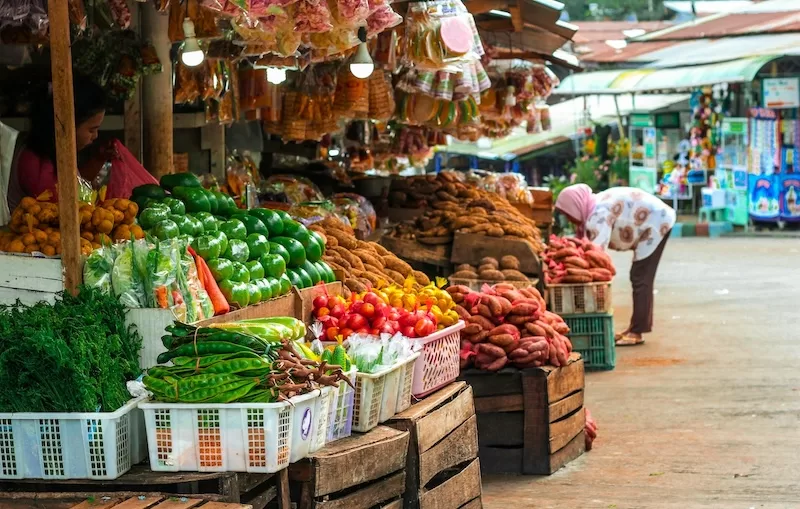
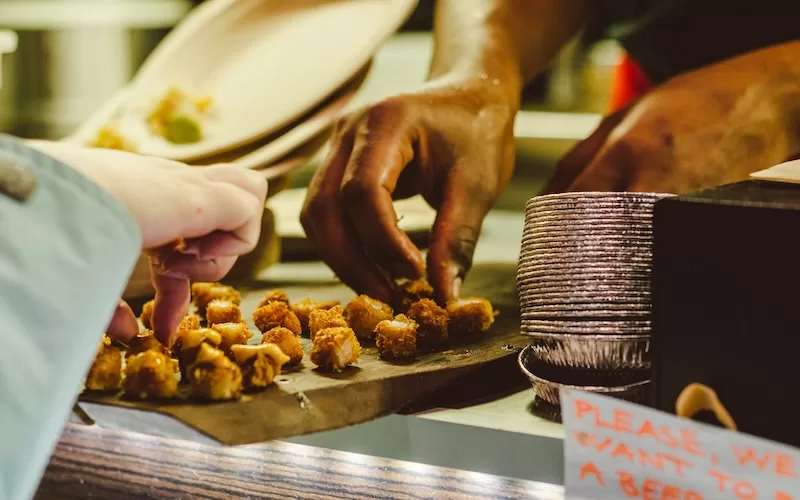
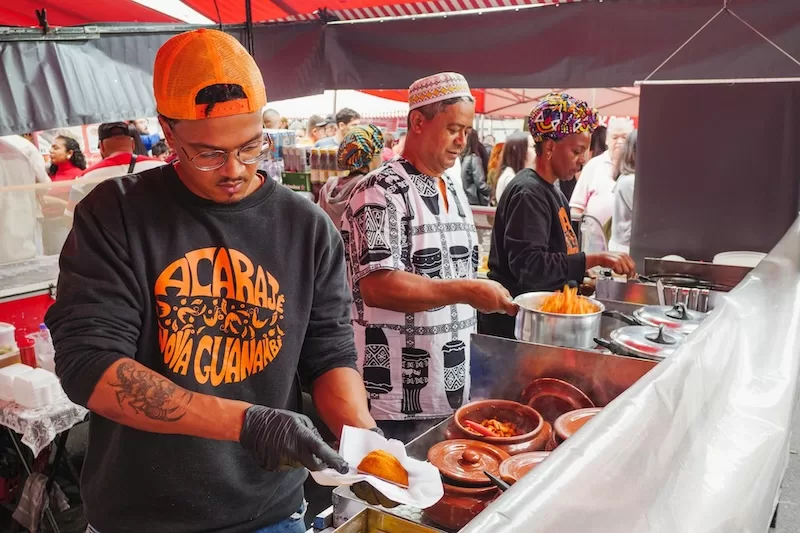
Local markets and eateries that don’t have a tourist menu in four languages are the ultimate economic classrooms. This is where you witness the intersection of affordability and social interaction. Prices make sense within the local context, and the food reflects long-standing habits rather than whatever fusion trend is currently colonizing Instagram. Eating stops being a performance and starts being an education.
The true pro move is the second visit. Returning to the same stall or the same lunch counter triggers a psychological shift for both you and the proprietor. In the world of social psychology, this is the mere-exposure effect in action: people tend to develop a preference for things (and people) merely because they are familiar.
Recognition is a powerful currency. It crystalizes the moment you stop being a walking wallet and start being a recognizable face. It’s also where the best off-menu advice usually comes from, once you’ve proven you aren’t just passing through for a photo op.
Commuting with the locals
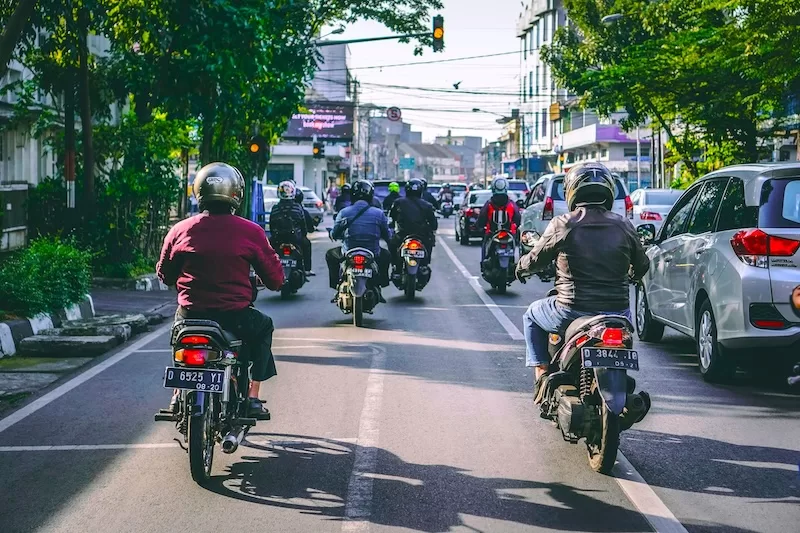
Cabs and private shuttles are essentially mobile bubbles that preserve your ignorance of a city’s geography. They whisk you from Point A to Point B while bypassing the connective tissue that define the resident experience. Using public transportation (even if you spend twenty minutes staring at a map that looks like a bowl of neon spaghetti) reframes your entire understanding of distance and time. You get to see where people are going to and from at 5:30 PM and exactly how much inconvenience the average citizen is willing to tolerate.
These logistical details are the stress tests of a potential future home. You learn the social etiquette of the subway or the unspoken hierarchy of the bus, gaining insights that a private driver would inadvertently hide from you. Urban planners don’t obsess over public transit by accident. In the Arcadis Sustainable Cities Index, transport reliability is treated as a core signal of how well a city functions socially. In plain terms: if the buses run on time and people happily use them as their main transport and not a last resort, you’re probably dealing with a competent system. If every commute feels like an endurance sport with emotional stakes, at worst you’ve collected a very useful data point for your Plan B risk assessment.
Navigating the essential service sector
If you want to stop being treated like a guest, you need a reason to use a local service that has nothing to do with leisure. Skip the pool. Walk into a neighborhood pharmacy and ask for a specific brand of aspirin or try mailing a postcard from the local post office. These are low-stakes errands with outsized informational value.
Places like pharmacies, hair salons, post offices, mobile phone shops, dry cleaners, hardware stores and others in the same category are where a society shows its social operating system. You learn how lines work, how much paperwork is expected, what questions get asked, and which rules are flexible and which absolutely are not. This sort of interaction is something a resort concierge is paid to spare you from, but that’s precisely why it’s useful.
Economists might call these high-engagement transactions. You’re using local currency, reading tone and facial expressions, and testing your tolerance for minor confusion. Occasionally, you will lose a round to the language barrier. That’s fine: the payoff comes quickly.
Successfully handling an errand without backup confirms that you’re capable of functioning in a different place and that’s where the real assessment begins.
How Immersion Changes Perceptions of Cost, Pace, and Quality of Life
The neighborhood audit: recalibrating cost and scale
Step outside the tourist tax radius and the financial architecture of a country snaps into focus. In the resort, you’re paying for the pleasures of outsized comfort; in the neighborhood, you’re paying for the reality of the destination. This is where the “Big Mac Index” meets the “Neighborhood Bakery Reality.” You begin to see that affordability is about the proportion of income to quality of life.
Scanning a supermarket’s shelves for the price of milk or haggling with a ticket counter for the cost of a monthly transit pass is what really allows you to make a true-to-life cost of living assessment. While navigating through a neighborhood, you also notice the local exchange of effort for daily needs: how far a resident is willing to walk for the good produce, or the societal value placed on a high-quality, three-hour lunch that would get you fired in Manhattan. In many developing markets, you’ll find that while some things you take for granted may be a tad more inaccessible, the human elements of life (fresh food, services, and social time) are a lot more valued.

This recalibration will help you understand that expensive is a relative term, dictated by how much of an artificial bubble you insist on maintaining. If you demand a carbon-copy of your suburban life in a foreign capital, you’ll pay a convenience ransom that would make a billionaire blink. But as soon as you align your consumption with local patterns, the scale shifts in your favor.
Rethinking convenience, time, and social connection
The Western obsession with efficiency sometimes hits a wall the moment you leave the hotel lobby. Things close for a mid-afternoon break, processes involve three more forms than you’d like, and “now” often means “eventually.” At the start, this might feel like a systematic failure of the modern world. However, after a few days, the realization dawns that a society not sprinting toward a burnout-induced heart attack might actually be onto something.
Social connection also shifts from a scheduled event on a calendar to a byproduct of existing in public. In spots where life happens on the street, in the plazas, and over the counters of local shops, loneliness has a much harder time taking root. You see that casual interactions replace the rigid, high-effort social engagements of home. For the future expat, this might be the most compelling data point of all: the discovery that a life with less convenience can leave a lot more room for true connection.
When Short Trips Turn Into Long-Term Curiosity
From cultural exposure to lifestyle questions
The transition from vacationer to prospective resident usually begins with a series of inconvenient questions that the resort gift shop isn’t exactly equipped to answer. Once the novelty of the local transit system wears off and you’ve successfully navigated a pharmacy without a translator, the brain pivots from “Isn’t this charming?” to “Could I really do this on a Thursday in November?” These questions are based in the unpolished but true reality of experience.
You start evaluating the local pace not as a temporary novelty, but as a potential permanent setting for your nervous system. You begin to audit the local infrastructure (the reliability of the Wi-Fi, the quality of the coffee, the accessibility of a decent gym) with the cold, calculating eye of a person looking for a home rather than a hotel room.
When this happens, your traveler ego (that persona that lives for souvenirs and sunsets) begins to dissolve. It is replaced by the pragmatic curiosity of a future expat who is busy performing a SWOT analysis on their own life. In psychological terms, this is a shift from hedonic pleasure (the temporary high of a vacation) to eudaimonic searching (the pursuit of a life that fits your purpose). The shift is subtle, but it’s then you decide if a Plan B can work there as a deliberate piece of lifestyle engineering or falls apart.
Read More Like This: Limited Time, Better Travel: How to Make Short Trips Count
How immersion plants the seed for a Plan B abroad
A viable Plan B is built on the sturdy foundation of familiarity, whereas a fantasy is built on the shaky ground of idealization. Spending time in the unmediated world provides a systemic feel that no amount of remote research or forum lurking can replicate. You learn how the bureaucracy trudges along, how the social safety net catches people, and discover if the local definition of organized aligns with your own.
This stint of genuine immersion strips away the “Eat Pray Love” romanticism and replaces it with a sharpened perspective on what are your non-negotiables for a high-quality life. In engineering terms, this is a proof of concept. You’re making sure you can handle the local frequency before you commit your capital or your family’s future to it. Data from the digital nomad and remote work sectors consistently confirms that, because digital nomadism depends on ongoing participation in work while living abroad, a period of extended stay functions as a de-facto field test of how a location supports day-to-day life, a pattern that folks considering longer relocations find very eye opening.
If your psychological shift started during your time away, when you head back to the airport it’ll probably be complete. You’re likely to be going back home to begin the logistical outline of your Plan B. You’ve traded the temporary high of a tourist for the long-term leverage of a global citizen who knows exactly where the exits are located.
Key Takeaways
Is it safe to leave the resort when traveling abroad for the first time?
Safety depends less on the act of leaving the resort and more on situational awareness and local norms. Many first-time travelers find that ordinary neighborhoods, markets, and transport hubs feel more predictable than expected.
Do you need to speak the local language to experience real cultural immersion?
Fluency isn’t required for early immersion. Repetition, context, and nonverbal communication go a long way. Most meaningful interactions begin with routine activities and grow through familiarity and not necessarily pure vocabulary depth.
How much time does cultural immersion take?
Immersion isn’t a function of your odometer; it’s a function of your engagement. Even a short stay can provide deep insight if you spend it participating in local life instead of frantically checking landmarks off a must-see list.
What’s the difference between cultural tourism and cultural immersion?
Cultural tourism regularly presents local life as a product to observe. Cultural immersion involves participating in everyday systems like food, transport, and social space, allowing understanding to emerge organically.
Can stepping outside the resort change how you think about living abroad long term?
For many travelers, yes. Experiencing ordinary life abroad can reframe assumptions about affordability and adaptability, and can spark deeper questions about long-term possibilities.
How do you start experiencing local life without feeling intrusive?
Most meaningful interactions begin with participation, not observation. Using local services, returning to the same places, and following established routines allows travelers to blend in naturally without demanding attention or access.
Why does cultural immersion often lead people to consider longer stays abroad?
Because it transforms a destination from a temporary escape into a plausible place to live. Once travelers understand how everyday systems work, long-term questions feel less abstract and more practical.
A First Step That May Lead Further Than Expected
Stepping beyond the resort gates is as easy as going for a short walk, a suspiciously cheap meal, or starting a conversation that flows without a script. Still, small as they are, these minor deviations are the ones that stick to your gut. They shift a country from being a static destination on a postcard into a living, breathing environment where real life is allowed to happen without a chaperone.
For the first-time traveler, this is when travel stops being an act of temporary escapism and starts becoming a form of orientation. You begin to catalog what feels lighter, what feels surprisingly manageable, and what is merely a different kind of normal. The grand epiphany is the realization that living abroad isn’t a specialized skill set reserved for grizzled adventurers or tax-shelter savants. It’s built from the same basic components as life in your hometown (groceries, commutes, and coffee) but arranged in a pattern that can leave more room for you.
That awareness is the one souvenir that refuses to stay in the suitcase. It follows you home, manifesting as a persistent curiosity that makes your old assumptions feel a bit too tight. Sometimes that curiosity leads to nothing more than a new appreciation for fermented condiments; other times, it leads to a serious audit of your one-passport, one-address existence.
Escape Artist exists for those standing at that specific edge of curiosity. If the idea of a life less mediated resonates with you, the next step is a logical one. Subscribe to the Escape Artist newsletter for sharp reporting, lived experience, and practical insight into international living and second citizenship to help you plan whatever journey you might be dreaming to make.
The door beyond the resort is already open. Staying curious about what’s on the other side is how the rest of your story gets written.
About the Author
Contact Author
"*" indicates required fields
Stay Ahead on Every Adventure!
Stay updated with the World News on Escape Artist. Get all the travel news, international destinations, expat living, moving abroad, Lifestyle Tips, and digital nomad opportunities. Your next journey starts here—don’t miss a moment! Subscribe Now !
For many first-time travelers, the resort feels like a safety net. After all, it’s a carefully curated ecosystem where the local culture is distilled into a loosely drawn sketch, ensuring you never have to grapple with anything more challenging than a lukewarm omelet station at the buffet.
While lounging in a sanitized paradise has its charms, the economic reality is staggering. In discussions of economic leakage in international tourism, researchers have found that in some developing countries, a very large share of the money spent by tourists does not stay with local workers and businesses. In cases such as all-inclusive package tours in small economies or regions dominated by all-inclusive package tours and foreign-owned conglomerates, estimates of leakage have reached levels where 70–80 % of tourist spending leaves the local economy through import costs, foreign-owned airlines, hotels and tour operators, and other channels. Stepping off the manicured grounds of a resort is what converts you from a passive consumer into an actual participant in a foreign economy.
True immersion is found in the spontaneous charm of a regular weekday afternoon. It’s the ego-bruising process of navigating a transit system that ignores the concept of linear time or attempting to order dinner when the menu looks like a Rorschach test. These moments force a recalibration of the Western internal clock, which is usually set to urgent by default. Research into the slow travel movement suggests that abandoning the frantic, checklist-style itinerary lowers cortisol levels, exchanging the stress of the must-see with the clarity of the already-here.
If you'd like to read the full story, simply enter your email to subscribe to our newsletter.
For even more expert insights, unmissable resources, and exclusive invites, explore our premium subscription offers here.
OR
Already a Subscriber? Click here to login
Subscription required
You've reached your limit of free articles. For full access to Escape Artist, and all of our insights on travel, moving abroad, and the digital nomad life, click here to Subscribe.
Already a Subscriber? Log in here