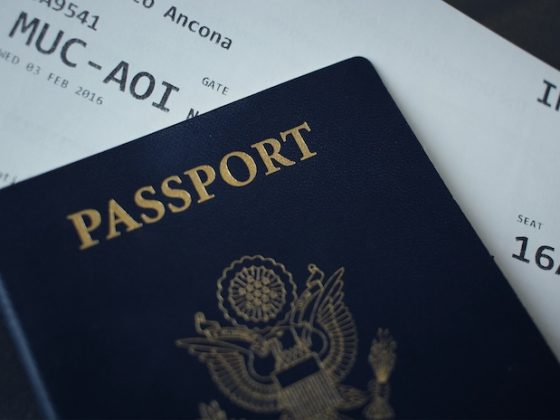
It often starts subtly. Someone runs the numbers after another year of rising expenses or spends a week abroad and realizes how different life feels when the cost of living doesn’t hover over every decision like a dark cloud. Eventually, the question becomes inevitable: is the life you’re working so hard to afford available, attainable, possible where you are, or does it take shape only once you’re willing to look beyond your own borders? More people are asking themselves this question as the gap widens between where opportunity used to be and where it is emerging now.
The pressure compounds: rent increases that outpace raises, tax bills that take a little more each year, healthcare costs that feel strangely detached from the care received. In many major cities, even strong incomes no longer buy the sense of security they once did. In contrast, entire regions of the world offer affordability, stability, generous legal frameworks, and pathways to wealth preservation that are nearly impossible to replicate within traditional Western systems. For many globally minded individuals, the question is no longer whether they should explore life abroad, but how much longer they can afford not to.
The case for international living has grown more compelling each year, and the motivation behind the movement is shifting. It is no longer about escaping something unpleasant, but about choosing something better, more sustainable, and more aligned with long-term financial freedom. In a world where mobility is increasingly accessible, building a life abroad might end up influencing your finances more than any single investment or career decision you have made so far.
Sooner or later the question shifts into something more direct: what if the financial life you are trying to build is easier to achieve, and perhaps even only possible, somewhere else?
The Growing Cost of Staying Still
Talk to anyone who has tried to buy a home in a major Western city recently, and the story repeats itself: rising prices, shrinking options, and a nagging sense that the math no longer works. This creeping realization often becomes the first nudge toward looking beyond familiar borders. In the United States, Canada, and the United Kingdom, rising living expenses have redefined the concept of middle-class security. Rent consumes large portions of income. Homeownership has slipped out of reach for younger generations. Retirement age edges upward. Social systems strain under demographic and political pressures. The cost of staying in one place is no longer only symbolic; it is measurable in dollars, opportunity, and time.
Those who study these patterns see clear divergence across the globe. In some countries, a stable middle-class lifestyle requires increasingly high earnings. In others, the same standard of living can be achieved with far less, freeing income for savings, investment, and personal pursuits. A teacher, engineer, freelancer, or entrepreneur who feels financially constrained in London or Los Angeles may find that the same income supports a fuller life, with margin left over instead of constant trade-offs, in places like Portugal, Panama, Mexico, or Malaysia. The disparity is experienced each day by people who have made the leap and watched their cost of living drop while their quality of life rises.

Financial well-being depends not only on what one earns, but on what one keeps, what one spends, and what one gains access to. Remaining anchored in a high-cost jurisdiction means absorbing every consequence of inflation, political cycles, housing shortages, and tax increases. By contrast, rebuilding life abroad introduces a new set of variables (many of them positive) into the personal financial equation. It is not a withdrawal from ambition but a recalibration of it, shifting focus toward value, sustainability, and long-term independence.
A World of Tax Systems, and the Freedom to Choose
Taxation reshapes far more of a person’s financial life than most people realize, especially once they start comparing how different countries approach it. Most people accept their country’s tax framework as inevitable, and for citizens of some countries, particularly the United States, the obligation indeed follows them around the world. However, a surprising number of nations base taxation on residence, not citizenship, and many actively design their tax systems to attract foreign residents seeking efficiency and predictability.
This global diversity creates profound opportunities for individuals willing to relocate. Territorial tax countries, for example, only impose taxes on income earned within the country itself. Foreign investment returns, rental income abroad, dividends, capital gains, and consulting income earned outside the jurisdiction may remain completely untaxed. For someone accustomed to handing over large portions of their income to the government each year, the impact can feel transformative.
Even countries with worldwide taxation often offer exemption regimes for new residents, granting reduced tax rates or full exemptions on certain foreign income for fixed periods. Portugal’s former NHR program drew tens of thousands of newcomers seeking relief from heavy tax burdens. Panama’s friendly legal frameworks and territorial rules continue to attract retirees and entrepreneurs. Costa Rica and Belize provide gentle on-ramps for those seeking a simpler, less extractive environment. In Asian hubs like Malaysia and Thailand, residency programs support both lifestyle and financial goals.
The point is not to avoid taxation entirely, nor is that necessary for most people. Instead, the goal is to find a jurisdiction whose rules align with one’s financial structure, income sources, and long-term objectives. Taxation becomes not a punishment for productivity, but a tool to support it. It becomes part of a broader architecture of autonomy, allowing individuals to keep more of what they earn and direct those funds toward building their future, not merely maintaining their present.

Real Estate as a Financial Foundation, Not a Burden
You can often understand a place simply by looking at its housing market and how attainable stability feels there. In some places, purchasing a home feels like chasing a constantly moving target: prices climb faster than wages, supply lags behind demand, and even modest accommodations require disproportionate financial sacrifice. In other regions, the real estate market tells a very different story, offering affordability, stable appreciation, and lower carrying costs that allow ownership to be a realistic and even strategic part of wealth building.
For many investors, buying property abroad is often the first major financial step toward establishing a life elsewhere. It creates a physical anchor that cannot be inflated away, devalued overnight, or erased by a market crash. It unlocks rental income in desirable travel and expat destinations. It diversifies currency exposure. In some jurisdictions, it offers a direct route to residency or even citizenship. And unlike crowded metropolitan markets in the West, real estate abroad often remains grounded in local affordability rather than speculative frenzy.
Those who build a life abroad through real estate often talk about an emotional change they did not fully anticipate. Owning a home in another country shifts perspective: the world feels larger, not smaller, and personal horizons expand along with asset diversification. More than a vacation spot or financial hedge, a second home becomes an alternative future, a different kind of safety net, and a doorway into a lifestyle where stability comes from choices rather than constraints.
The financial argument for offshore property is not about finding the cheapest place to live. It is about placing long-term capital in a jurisdiction where ownership is attainable, cost of living is sustainable, and return on investment is strengthened by global demand. It is about converting a basic need (in this case, housing) into a strategic advantage rather than a recurring burden.
Earnings, Entrepreneurship, and the Geography of Opportunity
One of the most powerful arguments for relocating abroad is the freedom it provides to restructure how income is earned, taxed, and preserved. What happens when the cost side of your life equation becomes flexible, but the earning side remains strong? For many, the answer is transformative. Entrepreneurs, freelancers, and remote workers increasingly find that their earning potential is no longer tied to a single location. A designer in Lisbon can serve clients in New York without absorbing the overhead of New York living. A consultant in Thailand can maintain a full U.S. client roster while benefiting from dramatically lower operational costs. A retiree in Panama can stretch fixed income twice as far as in North America.

Once location stops dictating your expenses, the numbers begin working in your favor in ways that are difficult to replicate at home. Lower living costs reduce pressure to chase higher income. Healthier tax systems increase take-home earnings without additional work. Stable or appreciating real estate markets grow wealth while maintaining affordable entry points. These factors compound, year after year, until the financial contrast between living abroad and living “back home” becomes unmistakable.
Location also influences the psychology of money. In lower-stress environments where daily life doesn’t demand the same constant urgency, individuals often report increased productivity, greater satisfaction with their work, better performance, and more intentional decision-making.
Financial planning becomes more proactive rather than reactive. Investments become long-term by design. Entrepreneurship becomes more viable, not because markets are easier, but because the individual finally has the bandwidth to think creatively and sustainably.
In this way, the financial case for living abroad is intertwined with the human case. The two reinforce each other. A life with fewer structural burdens naturally creates space for ambition, strategy, innovation, and rest; four ingredients that rarely coexist in high-pressure domestic economies.
Mobility as a Financial Shield
What many people misunderstand about building a life abroad is that it is rarely about rejecting one country in favor of another, but rather about having more than one place to stand when circumstances change. Just as investors diversify portfolios to protect against market volatility, individuals can position their lives in more than one jurisdiction so they aren’t wholly shaped by the fortunes of a single political or economic system.
Residency and citizenship pathways deepen this resilience. A second residency can open doors to new financial systems, private and public healthcare networks, and legal protections that might be unavailable (or prohibitively expensive) in one’s home country. A second citizenship goes further, expanding mobility, banking access, education options, and long-term inheritance planning. For families, it transforms into a generational tool that allows children and grandchildren to enter adulthood with broader opportunity and fewer built-in limitations.
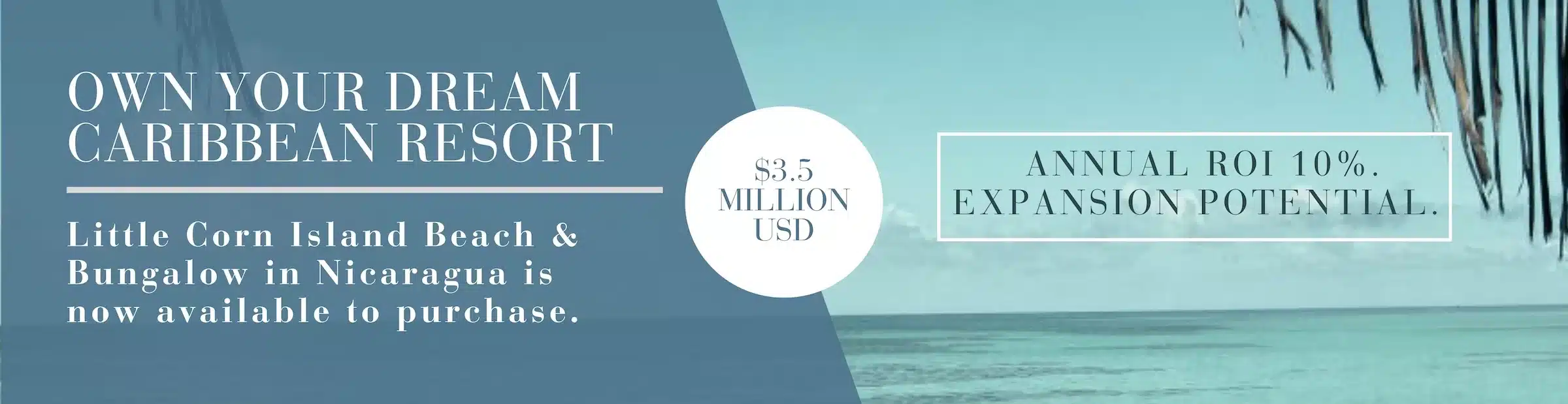
The financial case for mobility lies not in constant travel but in the stability that additional legal footholds provide. With a home in another country and a residency permit in hand, a person gains the freedom to move toward opportunity rather than remain tethered to uncertainty. This mobility is not a luxury. It is a hedge, a strategy, and in many cases, a sense of relief that comes from knowing their future isn’t tied to one set of rules.
Cost of Living as an Investment Multiplier
Cost of living influences virtually every financial outcome, but most people often only notice its power once they experience a different version of it. In high-cost countries, a six-figure income may feel strained. Abroad, a fraction of that amount can support a full, satisfying life with money left over to invest. Every dollar saved on healthcare, housing, food, and transportation becomes a dollar redirected into retirement accounts, real estate, businesses, or educational opportunities.
Over time, this difference compounds dramatically. Someone living abroad might need less income to retire comfortably, withdraw less from savings each year, and accumulate more wealth through lower expenses alone. These are not abstract calculations. They are lived realities for countless retirees who discovered that moving abroad allowed them to retire ten or even fifteen years earlier than expected, simply because their money finally worked for them rather than against them.
The emotional burden of financial stress fades in environments where everyday costs feel manageable and the pressure that once shaped every decision finally loosens its grip. The financial burden fades too, replaced by a different kind of abundance, one measured not only in savings but in time, health, and the ability to enjoy what one has built.

Pitfalls, Realities, and the Importance of Structure
None of this means that building a life abroad is simple. The decision requires planning, due diligence, and a willingness to adapt to new systems and cultural rhythms. Banking, taxation, residency permits, property laws, and inheritance rules differ from one country to another. Healthcare systems require understanding. Language barriers can frustrate. Bureaucracies may move more slowly than one expects.
Still, these challenges are manageable when approached with structure and informed counsel. What often begins as a logistical adjustment eventually becomes part of daily life. In many countries, the systems are designed with expats in mind, offering clear routes for newcomers who are intentional and compliant.
The pitfalls do not outweigh the benefits. Instead, they reinforce the need for planning and the understanding that any significant financial move deserves guidance. Those who navigate the process thoughtfully find themselves rewarded with a life that is richer, more stable, and more aligned with their financial and personal aspirations.
A Broader Vision of Wealth
The financial case for building a life abroad is not only about numbers, though the numbers are compelling. It is about redefining wealth in a world where freedom, time, mobility, and choice have become as valuable as income or assets. A life abroad offers the possibility of aligning financial goals with personal ones, creating a structure where money supports life rather than dictates it.
For some, the shift may be subtle: a residency permit, a pied-à-terre in another country, a gradual transition toward living part-time abroad. For others, it becomes a full transformation: new community, new lifestyle, new opportunities, and a renewed sense of control over one’s financial destiny. The road looks different for everyone, but the underlying motivation is the same: a desire for a life where financial pressure softens, possibilities widen, and the future feels expansive rather than constrained.
At a time when volatility and rising costs at home feel increasingly familiar, the world beyond one’s borders offers options that once felt out of reach. It offers jurisdictions where income expands further, where wealth is protected rather than eroded, where governments welcome participation, and where individuals can build lives that feel deliberate rather than reactive.
Building a life abroad is an investment in sovereignty, stability, and long-term well-being. It is a recognition that geography shapes financial outcomes more powerfully than most people realize. And it is a reminder that the world is full of places where effort goes further, resources last longer, and the everyday experience aligns more closely with what people have spent years trying to build.
The numbers argue in favor of the move. The real life, day-to-day experience often does too. And for those ready to step into a broader life, the world is open, waiting, and full of possibility.
Key Takeaways
1. What is the main financial argument for moving abroad?
The primary financial argument is that you can achieve a higher quality of life for a lower cost. By relocating to a country with a lower cost of living, you can significantly reduce expenses on housing, healthcare, and daily necessities, freeing up more of your income for savings, investment, and personal growth.
2. How can moving abroad help with taxes?
Many countries offer more favorable tax systems than the US, Canada, or the UK. Some have territorial tax systems where you only pay taxes on income earned within that country. Others have special programs for new residents with reduced tax rates. This allows you to legally keep more of your earnings.
3. Is buying property overseas a good investment?
Yes, for many it is. Real estate abroad can be a stable investment that diversifies your assets and provides a hedge against inflation. In many regions, property is more affordable and can generate rental income. It can also be a pathway to residency in some countries.
4. How does living abroad impact my earning potential?
For remote workers, freelancers, and entrepreneurs, living abroad can be a game-changer. You can maintain your client base and income from high-paying markets while benefiting from a lower cost of living. This financial flexibility can reduce stress and create more opportunities for growth and investment.
5. What are the risks of moving abroad?
While the benefits are significant, there are challenges. You’ll need to navigate new legal and banking systems, deal with bureaucracy, and potentially face language barriers. It’s important to do thorough research and seek expert advice to manage these risks effectively.
Contact Author
"*" indicates required fields
Stay Ahead on Every Adventure!
Stay updated with the World News on Escape Artist. Get all the travel news, international destinations, expat living, moving abroad, Lifestyle Tips, and digital nomad opportunities. Your next journey starts here—don’t miss a moment! Subscribe Now !
It often starts subtly. Someone runs the numbers after another year of rising expenses or spends a week abroad and realizes how different life feels when the cost of living doesn’t hover over every decision like a dark cloud. Eventually, the question becomes inevitable: is the life you’re working so hard to afford available, attainable, possible where you are, or does it take shape only once you’re willing to look beyond your own borders? More people are asking themselves this question as the gap widens between where opportunity used to be and where it is emerging now.
The pressure compounds: rent increases that outpace raises, tax bills that take a little more each year, healthcare costs that feel strangely detached from the care received. In many major cities, even strong incomes no longer buy the sense of security they once did. In contrast, entire regions of the world offer affordability, stability, generous legal frameworks, and pathways to wealth preservation that are nearly impossible to replicate within traditional Western systems. For many globally minded individuals, the question is no longer whether they should explore life abroad, but how much longer they can afford not to.
The case for international living has grown more compelling each year, and the motivation behind the movement is shifting. It is no longer about escaping something unpleasant, but about choosing something better, more sustainable, and more aligned with long-term financial freedom. In a world where mobility is increasingly accessible, building a life abroad might end up influencing your finances more than any single investment or career decision you have made so far.
If you'd like to read the full story, simply enter your email to subscribe to our newsletter.
For even more expert insights, unmissable resources, and exclusive invites, explore our premium subscription offers here.
OR
Already a Subscriber? Click here to login
Subscription required
You've reached your limit of free articles. For full access to Escape Artist, and all of our insights on travel, moving abroad, and the digital nomad life, click here to Subscribe.
Already a Subscriber? Log in here