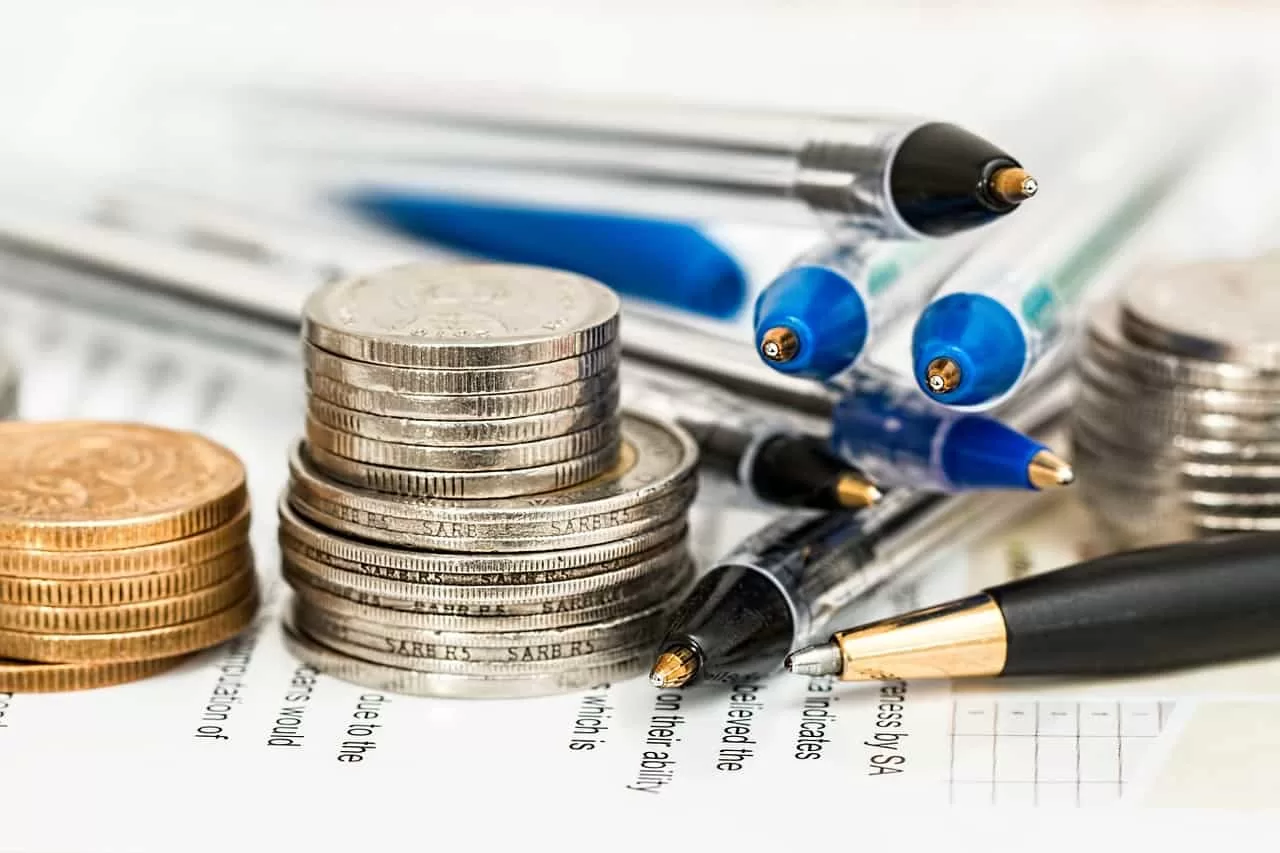
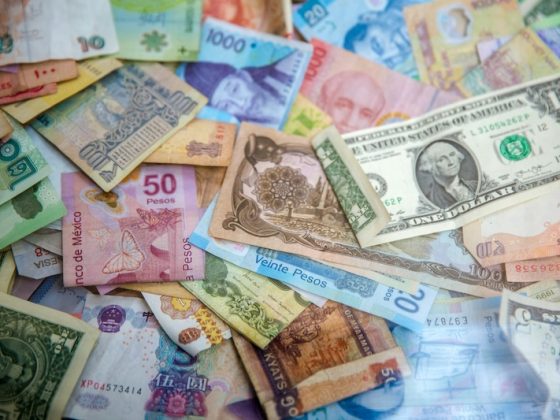
United States economics, it’s sad to say, is not looking too promising. The Federal Reserve is printing cash at unprecedented, over-the-top rates. Interest rates are stagnant and bordering on turning negative. With top financial analysts claiming chances are as low as 1% that the market will turn positive in 2016, it should be clear that in spite of any rebounds, the overall trend will continue downward towards another, likely worse recession than that of 2008, or even total collapse. The best strategy to protect assets against domestic currency volatility or collapse is to diversify holdings into foreign currencies. Foreign currencies are rising in value relative to a dollar that fails to dominate through pure brute strength any longer.
As for the federal funds rate, global headwinds are revealing a bleak forecast. Major central banks around the world have shoved interest rates into negative territory. It’s a challenge for even the world’s most important central bank to raise rates when they are falling everywhere else. Global tides are pressuring U.S. rates downward. For opportunists, it’s clear –the American dream has gone global.
Americans filed 8% more Reports of Foreign Bank and Financial Accounts (FBARs) last year than the year prior, setting a new record high. If the number of Americans renouncing citizenship is any indicator, we can only expect that this year will yield a similar increase. In fact, the trend has already become noticeable in the last five years, with a 17% increase in FBAR filings overall in that time. In the face of all this compliance, the U.S. is looking high and low for noncompliance upon which to enforce its draconian rules. The Fed is looking at the very real possibility of dire straits. So of course they are clawing and scratching at every last dollar they can.
This is a result of the de-risking strategies currently being imposed on countries worldwide by the United States. De-risking is basically the elimination of threats to anti-money laundering compliance. In doing this, the Treasury is demanding greater transparency from banking jurisdictions over which they have no legal authority. For emerging countries, compliance now means dealing with a bunch of massive issues and no existing solutions. Essentially, it is up to individual banks around the world to file in rank with U.S. demands.
The reasons for this new scrutiny become clear if we examine the USD Index. There we see a trend indicating a downward trajectory —lower lows and lower highs. Simply, the value of U.S. dollars is withering. But this loss of value bears implications far outside U.S. borders. This downward trajectory will undoubtedly lead to a host of problems worldwide. The global monetary system will become even more prone to crises, leaving the U.S. unable to isolate itself from the potential costs.
If the Fed were to instead raise interest rates, foreign currencies too, not just the dollar, would soar. This might hurt U.S. exports, but otherwise the value of the world’s enormous reserves of dollars appear to be at risk from falling prices, inflation or even default. Besides, as reported by the Economist, “the number of countries for which America is the biggest export market has dropped from 44 in 1994 to 32 now. Over the same period the equivalent figure for China has risen from two to 43,” and “America’s share of global imports has fallen by a third since 2000, to 12%.” So U.S. exports are already hurting. Admittedly, however, the United States is a bold, unpredictable financial superpower whose faculty to influence economies will persevere and even find new strengths, regardless of its global economic weight lessening.
What we are seeing then is, in a word, globalization. The nature of economic activity is changing, having already shifted significantly towards intangible, globalized services. These are things like cloud computing, computerized financial trading, and artificial intelligence. With information being freer than ever, it’s also true that capital flows are larger than any time in history. Just look at Putin and his musician friends. What the U.S. is doing is increasing its dominance remotely through legislation and tax provisions, not necessarily by adapting to a changing economy.
The Obama administration’s recent decision to create legislation that will crack down on domestic tax avoidance is just a response to the stir created by the Panama Papers leak. It appears to the masses that the U.S. is cracking down on those domestically held assets, too. And they are. But, since September 11th, 2001, the U.S. has vigorously asserted control over the principal mechanism of global finance and trade –the dollar payment system. Uncooperative countries, companies or people can simply be removed from the system leaving them searching for new friends. The threat of such sanctions have given the U.S. a reborn extra-territorial reach. Surely Uncle Sam cannot expect to so effortlessly dominate global finance and technology while his shares of world trade and GDP decline and dollar interests become ever more inward-facing.
Back to that unprecedented printing of cash –the Fed seems to think that if they print enough it and it becomes devalued, then everyone will be forced to use other payment systems. The elimination of cash is scary –it eliminates the possibility of private business. But it is happening right under our noses. Even Canada has already acted to get rid of their penny, and is moving towards eliminating the nickel from circulation next. The $100 bill represents the largest percentage of the various denominations of Canadian bills. Those bills are being held as a store of value. As of 2013, with $80 billion worth of Canadian currency in circulation, a figure that grows each year by at least a few percent, cash transactions are down to just 43% countrywide. The solution to making odd-cent transactions sans penny will eventually be to round. That is, until cash is eliminated altogether. Canada’s 2012 federal budget states: “The government expects that businesses will apply rounding for cash transactions in a fair and transparent manner.” This sounds like a dangerous experiment in cashless economics. Soon, Americans will also face the challenges of a cashless society.

Unfortunately for U.S. nationals, the domestic war on the dollar is a lot more winnable than the war abroad. Since the global financial crisis eight years ago, the offshore dollar system has only expanded. It now equals roughly half of America’s domestic banking industry, compared with just 10% of it forty years ago. But, as a result of FATCA and other international tax legislation enacted by the United States, emerging economies and whole countries have begun to find their relationship with the U.S. tilted. Vague new money-laundering rules force heretofore unrequired compliance that is costly and ultimately imprecise. The dollar amounts many of these developing countries represent on a global scale are small compared to the costs of regulating them. Banks from emerging jurisdictions have been all but totally cut off from the dollar payments system. In effect, this is pushing the global banking system away from the U.S. At the same time, these economies are ever more reliant on the dollar. As their finance sectors develop, dollar use will increase, not decrease. According to the Economist, “if the relationship between offshore dollar borrowing and non-American GDP stays on its current trend, the offshore dollar market could reach $20-40 trillion by 2030.”
To stay put and hunker down for the economic storm that’s about to hit the United States is to willingly choose to take your chances at riding it out, perhaps suddenly cashless. If the current economic system, which is the results of decades of globalization, reverses and unravels, it could make a real mess fast. Emerging markets will begin selling down reserves, sending capital pouring out, perhaps even disrupting the Treasury. An investment portfolio that’s not diversified into foreign currencies is one thing, but to stay living in the heartland at the same time is like locking yourself in a cage. Socioeconomic factors resulting from a dollar collapse will drastically shift everyday life for those left clinging to the past inside the States. You and everyone else locked in the cage will be competing for the same worthless dollars in a harshly different landscape.
Given the increasing polarity and impasse in politics, is it a chance you want to take to wait and see if the incoming administration will severely redirect fiscal policy and our entire economic system? Would you bet that the old declining dollar will somehow be boosted into a permanent rise against foreign currencies, even as the U.S. falls farther into domestic unrest and economic uncertainty? The fact is, those political conditions of the past that drove the U.S. to act in thoughtful self-interest won’t be replicated. The dollar’s biggest strength lies in the weaknesses of its worthiest competitors. One election won’t right the ship.
Foreign currency exposure is the only surefire way to avoid being stuck inside the U.S. when all dollar-backed investments come toppling down on one another. Just as with stocks, buying low is the goal. While foreign countries struggle now to keep up with all the new rules, choice currencies are apt investments. The dollar is strong, but after its day is done, they will be the new players in a global economy.
Contact Author
"*" indicates required fields
Stay Ahead on Every Adventure!
Stay updated with the World News on Escape Artist. Get all the travel news, international destinations, expat living, moving abroad, Lifestyle Tips, and digital nomad opportunities. Your next journey starts here—don’t miss a moment! Subscribe Now !
United States economics, it’s sad to say, is not looking too promising. The Federal Reserve is printing cash at unprecedented, over-the-top rates. Interest rates are stagnant and bordering on turning negative. With top financial analysts claiming chances are as low as 1% that the market will turn positive in 2016, it should be clear that in spite of any rebounds, the overall trend will continue downward towards another, likely worse recession than that of 2008, or even total collapse. The best strategy to protect assets against domestic currency volatility or collapse is to diversify holdings into foreign currencies. Foreign currencies are rising in value relative to a dollar that fails to dominate through pure brute strength any longer.
As for the federal funds rate, global headwinds are revealing a bleak forecast. Major central banks around the world have shoved interest rates into negative territory. It’s a challenge for even the world’s most important central bank to raise rates when they are falling everywhere else. Global tides are pressuring U.S. rates downward. For opportunists, it’s clear –the American dream has gone global.
Americans filed 8% more Reports of Foreign Bank and Financial Accounts (FBARs) last year than the year prior, setting a new record high. If the number of Americans renouncing citizenship is any indicator, we can only expect that this year will yield a similar increase. In fact, the trend has already become noticeable in the last five years, with a 17% increase in FBAR filings overall in that time. In the face of all this compliance, the U.S. is looking high and low for noncompliance upon which to enforce its draconian rules. The Fed is looking at the very real possibility of dire straits. So of course they are clawing and scratching at every last dollar they can.
If you'd like to read the full story, simply enter your email to subscribe to our newsletter.
For even more expert insights, unmissable resources, and exclusive invites, explore our premium subscription offers here.
OR
Already a Subscriber? Click here to login
Subscription required
You've reached your limit of free articles. For full access to Escape Artist, and all of our insights on travel, moving abroad, and the digital nomad life, click here to Subscribe.
Already a Subscriber? Log in here