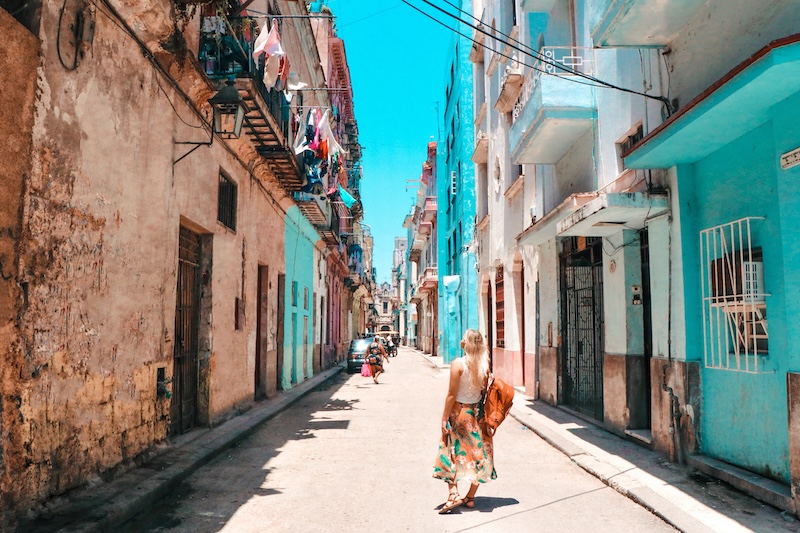
The island nation of Cuba has been at the fore of global fascination for decades. Its very existence is romanticised by some and brings ire to others. The word Cuba can invoke imagery of sunny beaches, vintage cars, bloody revolution and nuclear war.
It has retained a defiant independence for seven decades despite a blockade and constant threat from its neighbour and biggest enemy – The USA. Cuba is a country that is projected onto by many people but seldom properly understood. At a time when geopolitical incidents around the world are threatening the very foundation of the Cuban state it is important to see the country in all its nuances and to look into what the future could hold for the small island nation.
The Revolution
Prior to the 1959 revolution, Cuba was a regional hub for business, tourism and entertainment. It drew huge levels of investment from America in particular. The country had more modern infrastructure than most other Caribbean nations and enjoyed a respected status amongst its neighbours.
From the outside looking in, Cuba was a little paradise in the Caribbean perfect for holidaymaking and for investment. This prosperity was hugely uneven though. Cuba was ruled by a brutal dictator called Batista who was very close with the US and effectively ran Cuba as a sort of economic colony for US interests.
Inequality Beneath the Boom
Wealth was concentrated into the touristic urban centres and amongst the elites, while the rural majority remained in great poverty. The Batista regime was openly corrupt and created an economy that relied almost entirely on the United States – leading many to believe that Cuba was not quite as independent as it seemed.
Within this context, Fidel Castro led a revolutionary movement that promised political change as well as a complete restructuring of Cuban society. Castro took power in 1959 and began to radically transform the country. Private property was nationalised, industry was brought under state control and the country aligned itself with the Soviet Union. The revolution prioritised universal healthcare, education and social welfare, areas in which Cuba would later achieve notable success.
Isolation and Collapse
These gains came at a strong cost. The United States imposed a trade embargo on Cuba that has remained to this day in various forms. For six decades, Cuba’s economy was forced to rely on the Soviet Union to cushion the effects of this isolation.
Catastrophe struck when the USSR collapsed in 1991. Cuba’s GDP contracted sharply and fuel shortages crippled transportation. Food scarcity became widespread and the state was cautiously forced to open parts of the economy to the free market. This marked the beginning of Cuba’s modern day balancing act of preserving its planned social economy whilst selectively introducing market mechanisms.
Life in Cuba Today
Cuba introduced modest economic reforms throughout the 2010s under the pressure of the embargo which expanded the private sector. Relations with the United States improved during the Obama administration but have nosedived under the Trump presidency.
Tourism has become one of the island’s primary industries now with billions being generated annually and the ecosystem of small businesses being supported. Throughout the 2010s the island seemed to be stabilising and finding an amicable way out of the US embargo. This progress proved fragile following Trump’s tightening of U.S. sanctions following his election in 2024. This being combined with the collapse of Venezuelan oil support and the global shock of Covid-19 has left Cuba in a dire state of emergency.
A Tourism Collapse
In 2025, Cuba received just 1.8 million international tourists. A decline of 18% from previous years and one of the worst performances in decades. This happened in a year where global tourism grew by 4%. This collapse has been catastrophic for a country which relies on tourism.
Scarcity as Daily Reality
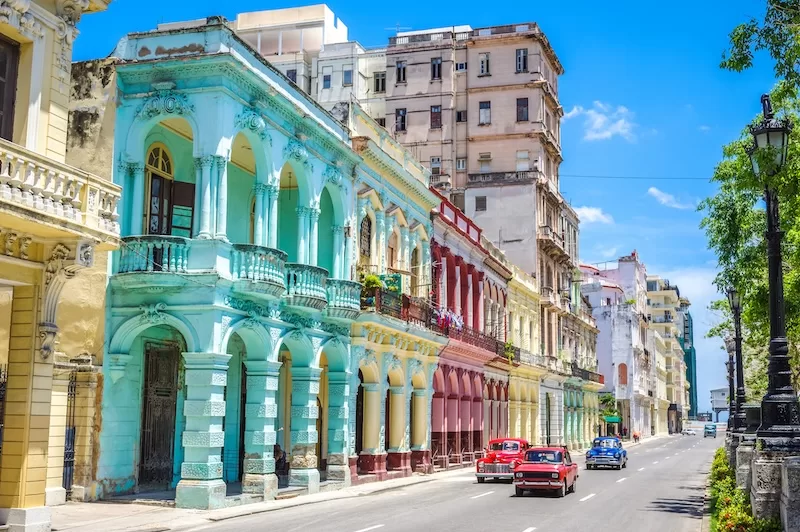
Cuba today is defined by scarcity and increasing uncertainty. Fuel shortages have become one of the most visible symptoms of the crisis. In early 2026 the island faced severe disruptions to its energy supply with blackouts affecting homes, hospitals, and businesses.The country once required around 100,000 barrels of oil per day, but supply disruptions have left it struggling to meet even basic demand.
These shortages ripple through every aspect of life. Public transportation has become unreliable. Refrigeration failures have led to food spoilage. Entire sectors have ground to a halt.
Ordinary Cubans are currently struggling to access basic goods from food to medicine. The United Nations estimates that nearly 5 million people on the island lack essential medications.
A System Under Strain
Cuba’s healthcare system has for a long time been one of the best in the world and a source of national pride. In the last couple of months it has come under huge strain due to increased demand and power outages.
The economy persists in whatever way it can. Small private businesses are still operating and increasingly relying on dollar transactions as the Cuban Peso loses value. This dual-currency reality has deepened inequality between those with access to foreign income and those without.
Emigration and Decline
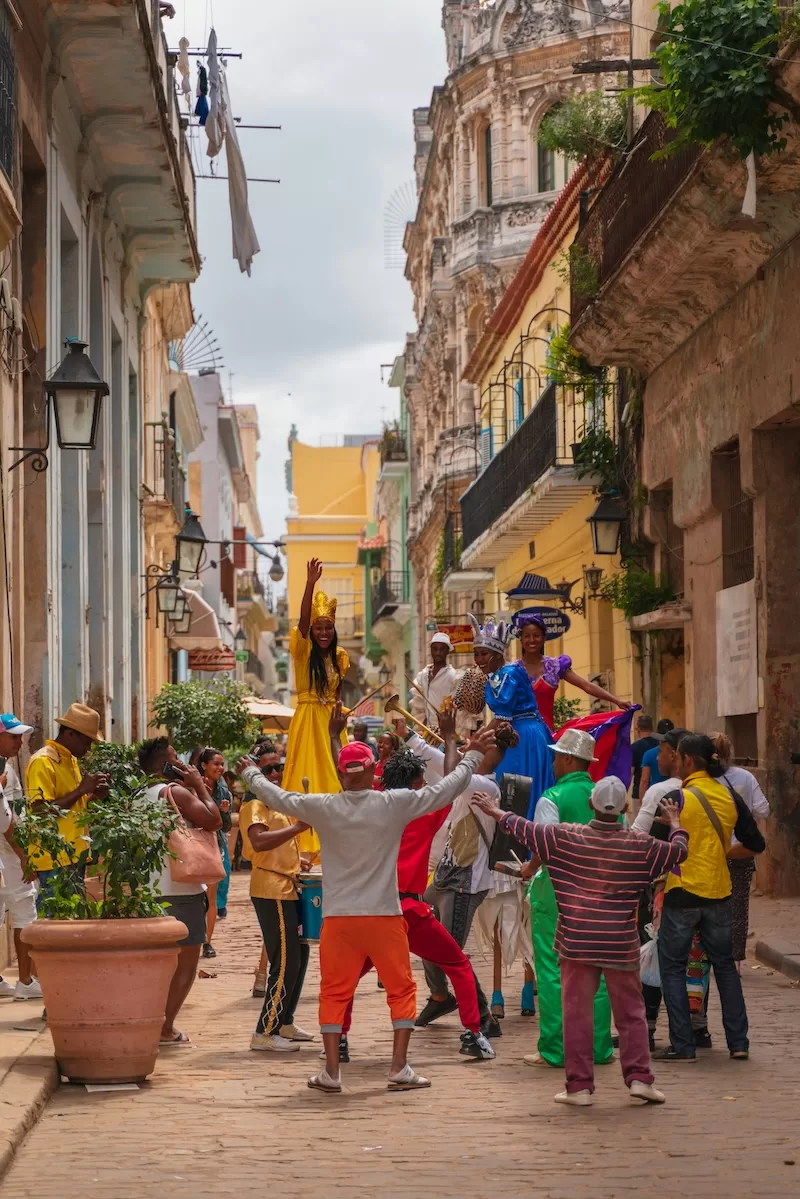
The economic strain is also driving demographic change. Emigration has surged in recent years as Cubans seek opportunities abroad. This “brain drain” further weakens the country’s long-term prospects, removing skilled workers from an already fragile economy.
Internationally, the situation has drawn increasing concern. In April 2026, the European Union announced an additional €2 million in humanitarian aid to address deteriorating conditions on the island. Geopolitical tensions continue to shape Cuba’s trajectory. U.S. policy remains a decisive factor, with sanctions and energy restrictions playing a central role in the current crisis.
What Comes Next?
Predicting Cuba’s future has always been difficult. The country has shown remarkable resilience over decades of external pressure and internal challenges. But the current crisis feels different in both scale and complexity.
Politically, leadership continuity remains intact under President Miguel Díaz-Canel, but questions about succession and reform are growing.
It is possible that without a major shift on US policy towards Cuba, or within Cuba itself that there will be a slow erosion of living standards, punctuated by periodic crises and limited external relief. The recent arrival of emergency oil shipments, for example, may provide temporary respite but does little to address underlying structural issues.
A Case Study for the Outside World
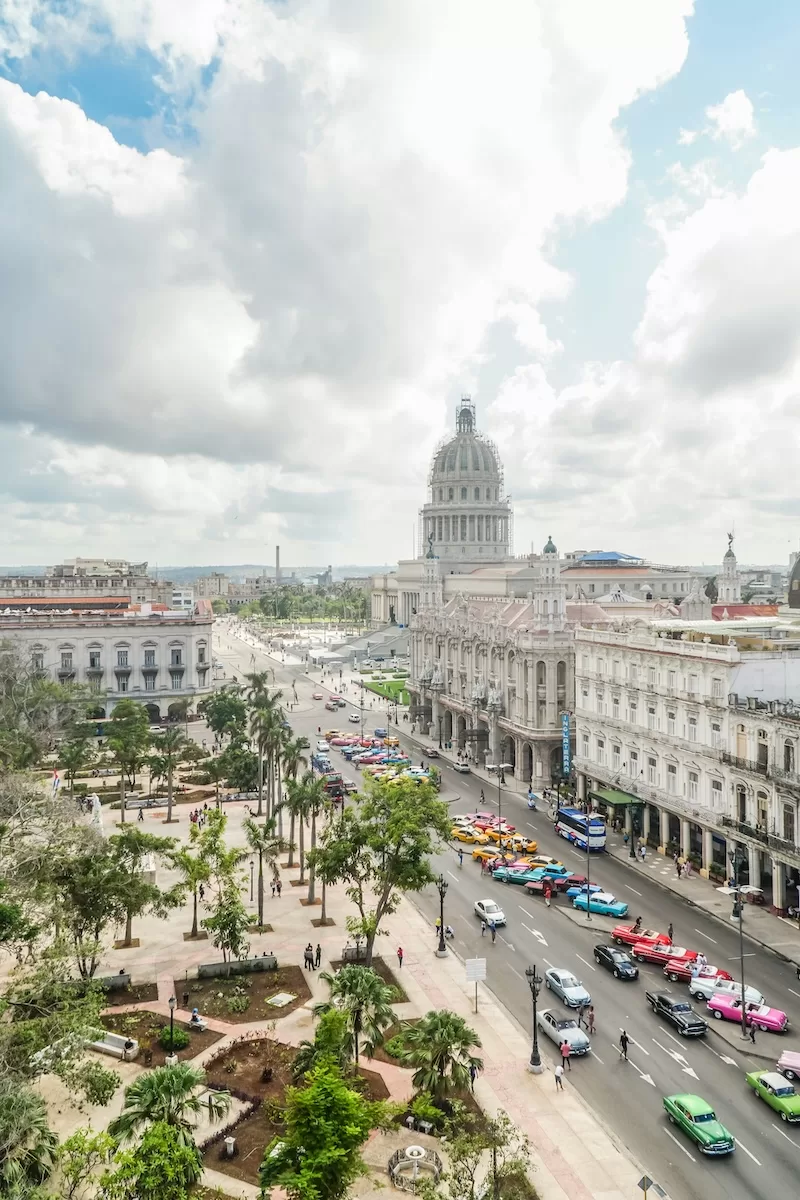
For globally mobile professionals, Cuba remains more of a case study than a destination. It highlights both the importance of macroeconomic stability and the limits of resilience in a closed system. Cuba’s story is often told in extremes – either as a symbol of resistance or as a cautionary tale. The truth, as always, lies somewhere in between.
It is a country that has achieved impressive social outcomes under difficult conditions while also struggling with inefficiencies, constraints, and isolation. Whether Cuba moves forward, sideways or backwards will depend on decisions made both within the island and far beyond its shores.
Key Takeaways
What is life in Cuba defined by right now?
By scarcity, uncertainty, and mounting pressure on everyday life. Fuel shortages, blackouts, food insecurity, medicine shortages, and a weakening economy are shaping how people live across the island.
Why is Cuba in such a difficult position?
Because the current crisis is not the result of one problem alone. It sits at the intersection of long-term U.S. sanctions, dependence on outside support, fragile tourism recovery, reduced Venezuelan oil backing, and the lasting effects of the pandemic.
Why does tourism matter so much to Cuba?
Because tourism became one of the country’s main economic lifelines. When arrivals dropped sharply in 2025, it hit not just state revenues but also the broader network of small businesses and services that depend on visitor spending.
What do shortages look like in real daily terms?
They affect nearly everything: transport becomes unreliable, refrigeration fails, hospitals and businesses struggle through power outages, and ordinary people find it harder to access food, medicine, and other essentials.
Is Cuba’s healthcare system still a strength?
It remains a major source of pride and one of the country’s most important social achievements, but it is now under serious strain from power outages, shortages, and increased demand.
Why is emigration such an important part of the story?
Because people leaving the country are not only reacting to hardship, they are also weakening Cuba’s long-term prospects by taking skills, labor, and future capacity with them. That makes recovery even harder.
What is the article’s main conclusion about Cuba?
That Cuba cannot be understood through simple slogans. It is neither just a symbol of resistance nor only a cautionary tale. It is a country with real social achievements, real structural limits, and a future that depends on decisions made both inside and outside the island.
About the Author
Ethan Rooney is an Irish journalist covering global communities, culture, and niche movements. You can find more of his work here.
Contact Author
"*" indicates required fields
Stay Ahead on Every Adventure!
Stay updated with the World News on Escape Artist. Get all the travel news, international destinations, expat living, moving abroad, Lifestyle Tips, and digital nomad opportunities. Your next journey starts here—don’t miss a moment! Subscribe Now!
The island nation of Cuba has been at the fore of global fascination for decades. Its very existence is romanticised by some and brings ire to others. The word Cuba can invoke imagery of sunny beaches, vintage cars, bloody revolution and nuclear war.
It has retained a defiant independence for seven decades despite a blockade and constant threat from its neighbour and biggest enemy – The USA. Cuba is a country that is projected onto by many people but seldom properly understood. At a time when geopolitical incidents around the world are threatening the very foundation of the Cuban state it is important to see the country in all its nuances and to look into what the future could hold for the small island nation.
The Revolution
Prior to the 1959 revolution, Cuba was a regional hub for business, tourism and entertainment. It drew huge levels of investment from America in particular. The country had more modern infrastructure than most other Caribbean nations and enjoyed a respected status amongst its neighbours.
From the outside looking in, Cuba was a little paradise in the Caribbean perfect for holidaymaking and for investment. This prosperity was hugely uneven though. Cuba was ruled by a brutal dictator called Batista who was very close with the US and effectively ran Cuba as a sort of economic colony for US interests.
Inequality Beneath the Boom
Wealth was concentrated into the touristic urban centres and amongst the elites, while the rural majority remained in great poverty. The Batista regime was openly corrupt and created an economy that relied almost entirely on the United States – leading many to believe that Cuba was not quite as independent as it seemed.
Within this context, Fidel Castro led a revolutionary movement that promised political change as well as a complete restructuring of Cuban society. Castro took power in 1959 and began to radically transform the country. Private property was nationalised, industry was brought under state control and the country aligned itself with the Soviet Union. The revolution prioritised universal healthcare, education and social welfare, areas in which Cuba would later achieve notable success.
Isolation and Collapse
These gains came at a strong cost. The United States imposed a trade embargo on Cuba that has remained to this day in various forms. For six decades, Cuba’s economy was forced to rely on the Soviet Union to cushion the effects of this isolation.
Catastrophe struck when the USSR collapsed in 1991. Cuba’s GDP contracted sharply and fuel shortages crippled transportation. Food scarcity became widespread and the state was cautiously forced to open parts of the economy to the free market. This marked the beginning of Cuba’s modern day balancing act of preserving its planned social economy whilst selectively introducing market mechanisms.
Life in Cuba Today
Cuba introduced modest economic reforms throughout the 2010s under the pressure of the embargo which expanded the private sector. Relations with the United States improved during the Obama administration but have nosedived under the Trump presidency.
Tourism has become one of the island’s primary industries now with billions being generated annually and the ecosystem of small businesses being supported. Throughout the 2010s the island seemed to be stabilising and finding an amicable way out of the US embargo. This progress proved fragile following Trump’s tightening of U.S. sanctions following his election in 2024. This being combined with the collapse of Venezuelan oil support and the global shock of Covid-19 has left Cuba in a dire state of emergency.
A Tourism Collapse
In 2025, Cuba received just 1.8 million international tourists. A decline of 18% from previous years and one of the worst performances in decades. This happened in a year where global tourism grew by 4%. This collapse has been catastrophic for a country which relies on tourism.
Scarcity as Daily Reality
Cuba today is defined by scarcity and increasing uncertainty. Fuel shortages have become one of the most visible symptoms of the crisis. In early 2026 the island faced severe disruptions to its energy supply with blackouts affecting homes, hospitals, and businesses.The country once required around 100,000 barrels of oil per day, but supply disruptions have left it struggling to meet even basic demand.
These shortages ripple through every aspect of life. Public transportation has become unreliable. Refrigeration failures have led to food spoilage. Entire sectors have ground to a halt.
Ordinary Cubans are currently struggling to access basic goods from food to medicine. The United Nations estimates that nearly 5 million people on the island lack essential medications.
A System Under Strain
Cuba’s healthcare system has for a long time been one of the best in the world and a source of national pride. In the last couple of months it has come under huge strain due to increased demand and power outages.
The economy persists in whatever way it can. Small private businesses are still operating and increasingly relying on dollar transactions as the Cuban Peso loses value. This dual-currency reality has deepened inequality between those with access to foreign income and those without.
Emigration and Decline
The economic strain is also driving demographic change. Emigration has surged in recent years as Cubans seek opportunities abroad. This “brain drain” further weakens the country’s long-term prospects, removing skilled workers from an already fragile economy.
Internationally, the situation has drawn increasing concern. In April 2026, the European Union announced an additional €2 million in humanitarian aid to address deteriorating conditions on the island. Geopolitical tensions continue to shape Cuba’s trajectory. U.S. policy remains a decisive factor, with sanctions and energy restrictions playing a central role in the current crisis.
What Comes Next?
Predicting Cuba’s future has always been difficult. The country has shown remarkable resilience over decades of external pressure and internal challenges. But the current crisis feels different in both scale and complexity.
Politically, leadership continuity remains intact under President Miguel Díaz-Canel, but questions about succession and reform are growing.
It is possible that without a major shift on US policy towards Cuba, or within Cuba itself that there will be a slow erosion of living standards, punctuated by periodic crises and limited external relief. The recent arrival of emergency oil shipments, for example, may provide temporary respite but does little to address underlying structural issues.
A Case Study for the Outside World
For globally mobile professionals, Cuba remains more of a case study than a destination. It highlights both the importance of macroeconomic stability and the limits of resilience in a closed system. Cuba’s story is often told in extremes – either as a symbol of resistance or as a cautionary tale. The truth, as always, lies somewhere in between.
It is a country that has achieved impressive social outcomes under difficult conditions while also struggling with inefficiencies, constraints, and isolation. Whether Cuba moves forward, sideways or backwards will depend on decisions made both within the island and far beyond its shores.
Key Takeaways
What is life in Cuba defined by right now?
By scarcity, uncertainty, and mounting pressure on everyday life. Fuel shortages, blackouts, food insecurity, medicine shortages, and a weakening economy are shaping how people live across the island.
If you'd like to read the full story, simply enter your email to subscribe to our newsletter.
For even more expert insights, unmissable resources, and exclusive invites, explore our premium subscription offers here.
OR
Already a Subscriber? Click here to login
Subscription required
You've reached your limit of free articles. For full access to Escape Artist, and all of our insights on travel, moving abroad, and the digital nomad life, click here to Subscribe.
Already a Subscriber? Log in here