Introduction
Few places hold cultural layers as vividly as Chile. The land stretches long and slender through time and geography. Sun-bleached desert towns stand guard in the north while glacial fjords curl along the far south. Cities lean toward the Pacific. Valleys fill with vines. Across this vast line of latitude, traditions are not museum pieces. They are alive, cooked over coals, sung with brass and drum, stepped into with dusty boots and polished shoes.
Understanding Chile traditions is an invitation to all the senses. Imagine the smell of meat grilling in a park during early spring when flags start appearing on balconies. Hear the quick shuffle of cueca, the stomping sound rising up from wooden floors as handkerchiefs flutter like sails. Watch children chase colored kites through bright September skies. Feel the warmth of shared wine on a cool Andean night. Fireworks crackle, horses trot in the arena, grandmothers guard family recipes as though history depends on them.
This article explores the rituals that shape Chile. Independence festivals that turn cities into open-air dance halls. Andean pilgrimages that draw crowds through dusty desert roads. Meals prepared with memory and pride. Music that refuses to stay still. It is a look at how a country celebrates itself all year long, in small gestures and in roaring parades. Before any official label. Before any UNESCO certificate. This is the Chile traditions that Chileans live.
Origins of Chile’s Cultural Mosaic
Indigenous roots and regional diversity
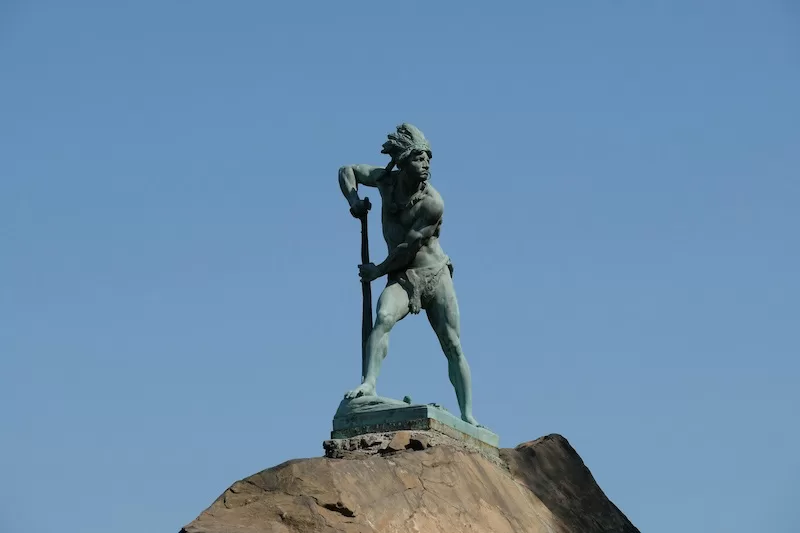
Long before modern Chile took shape on any map, the land was home to distinct indigenous nations with their own languages, cosmologies and seasonal rituals. The Mapuche (also known as Araucanians, an Indigenous nation whose identity is grounded in the Mapudungun language, strong community bonds, traditional knowledge and a worldview that places land and ancestry at the center of life) cultivated powerful traditions in the southern forests and valleys, honoring earth and ancestors through community gatherings, music, weaving and storytelling that passed knowledge from one generation to the next.
In the Atacama, desert communities learned to read the sky and the scarce water beneath their feet. Coastal peoples followed the tides and carved their identity in boats, nets and sea winds.
These customs still pulse in daily life. Araucanía, Los Lagos and other southern regions hold Mapuche ceremonies tied to harvests and renewal. Northern highland towns blend Andean beliefs with Catholic worship. Even foods like merkén spice and crafts like horsehair weaving tell stories older than the republic itself.
Chile’s vast north-to-south stretch helped preserve this variety. Climate shifts from sun-cracked desert to fertile valleys to glacial rainlands. Each territory shaped its own pace and memory. Regional diversity remained strong after independence because distance and geography protected local identities as much as borders ever could.
Influence of colonial and immigrant heritage
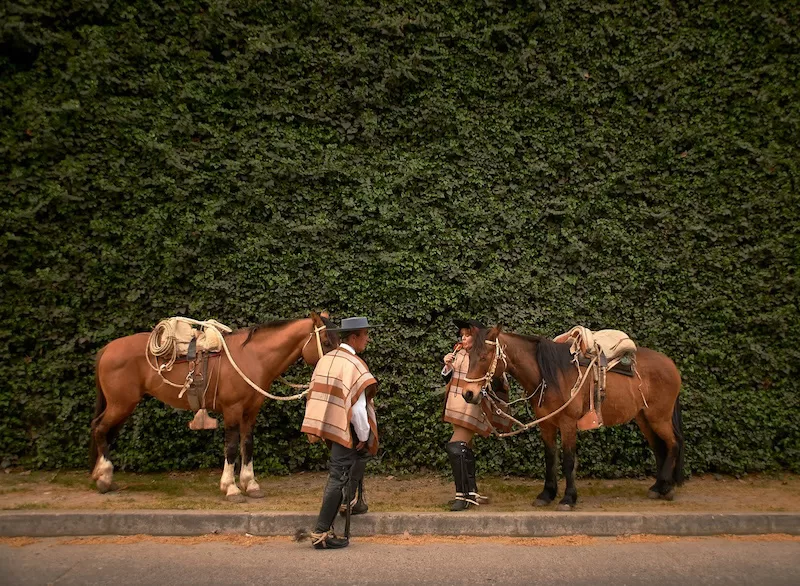
Spanish colonization altered the cultural map through Catholic traditions, European architecture and new farming systems. Livestock culture developed in the central valleys and gave rise to the figure of the huaso, a rural horseman whose style and customs still define Chile’s countryside. Churches, patron saint festivals and Christmas celebrations wove into the indigenous calendar, creating layered rituals with blended meaning.
Later waves of immigration added new threads to this already diverse tapestry. German settlers in the south brought timber houses, pastry traditions and a taste for brewing. Croatians, Italians and British families influenced fishing towns and mining culture. Each arrival brought customs that adapted to the land around them. Over time, native and imported elements intertwined into something uniquely Chilean.
This fusion explains why a September dance might follow the rhythm of ancient courtship symbolism while a July procession honors a European saint dressed in Andean color. It is the coexistence of roots that makes Chilean traditions feel both firmly connected to the past and endlessly evolving.
Read More Like This: Chile
Fiestas Patrias: The Heartbeat of National Celebration
What Fiestas Patrias commemorate
Each September, Chile fills with anticipation. Flags roll out across balconies. Kites wait by doorways. Cities buzz with excitement. The countdown toward Fiestas Patrias begins.
The holiday officially honors two dates. September 18 marks the first national governing body formed in 1810, the starting point in Chile’s long road to independence. September 19 celebrates the Glories of the Chilean Army with ceremonies and a grand parade in Santiago.
Those are the historical facts. Chileans take them as the foundation for something much bigger. Work pauses. Schools close. A country shifts into celebration mode. The spirit of the holiday often expands into an entire week where everyday routines give way to the pulse of dance, food and national pride.
In many ways, September becomes a season of its own.
Typical festivities: fondas, ramadas, dance and parades
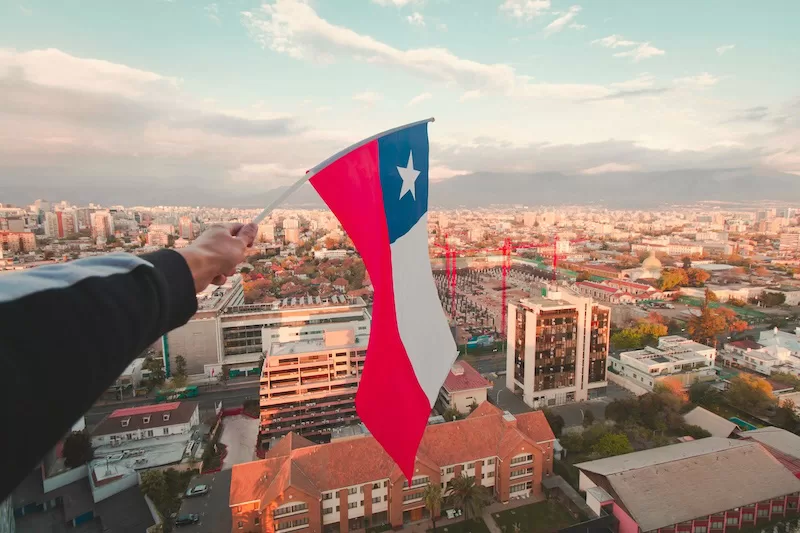
During Fiestas Patrias, public spaces transform. Parks and plazas turn into playful villages where everyone seems to know each other. Temporary wooden structures known as fondas and ramadas rise everywhere, decorated with straw roofing, paper garlands and long strings of flags that crack slightly in the wind.
Inside, the music takes over. Cueca troupes step boldly. Brass bands throw out quick melodies. Handkerchiefs wave above heads. Children test new dance steps with shy smiles before breaking into laughter.
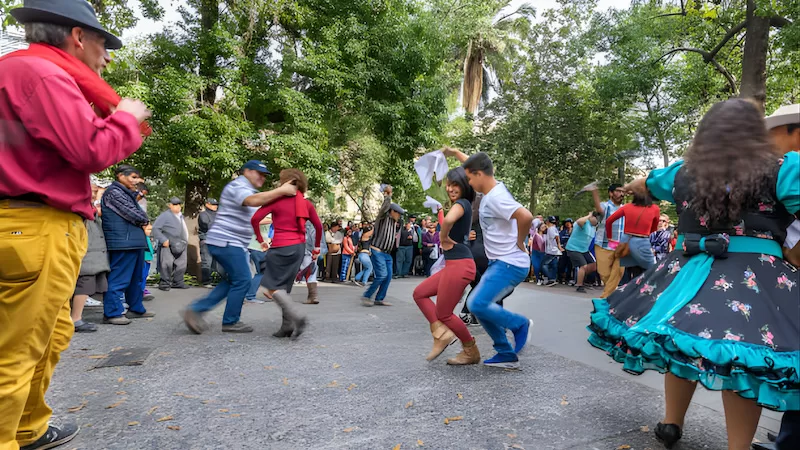
Carnival games add a rowdy note. In rural towns, horsemen perform in rodeos while families sit on bleachers with plates of food balanced on their knees.
Parades march through major cities. Military units in perfect formation. School groups proud and jittery. Communities lining the streets with cameras and small flags. Families gather early in the day and stay long after the last song fades. Cousins, neighbors, coworkers mix together. It turns even the shyest person into part of the show.
Culinary traditions during the holiday
The taste of Fiestas Patrias stays with people long after the last flag is folded away. Food creates its own parade, one that fills the air with the smell of celebration.
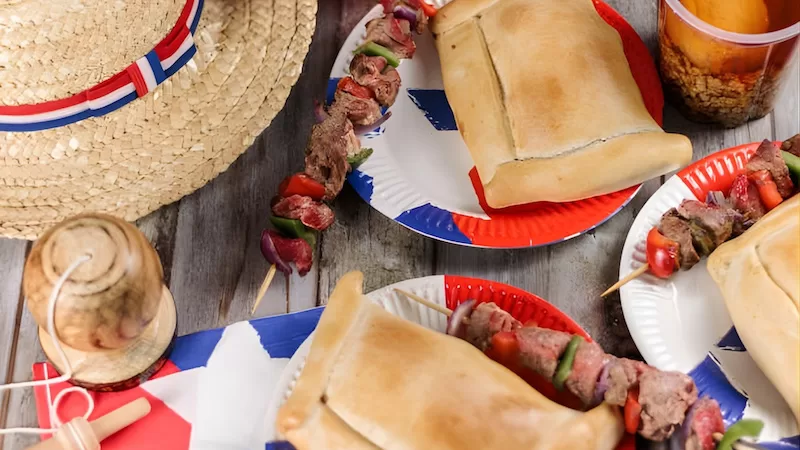
Empanadas de pino take center stage while anticuchos follow. Choripán steps in whenever energy dips. Pebre waits close by, and bread itself plays a role, passed around often, warm if the timing is lucky. Each one offers a culinary delight that keeps stomachs full and the celebrations going, proving that nobody here eats alone.
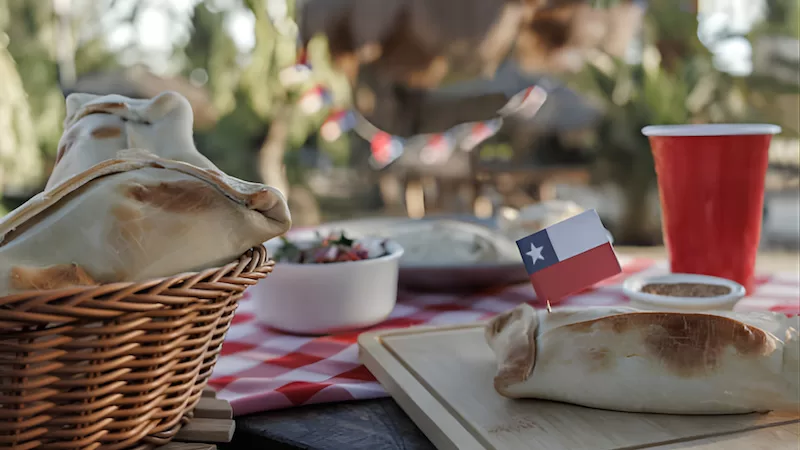
Drinks join the chorus. Chicha returns for its brief annual moment, fruit fermented lightly into something sweet and cheerful. Local wines flow as easily as conversation. Cold beers keep the heat from winning. When glasses rise, they honor the country, the togetherness, and the memories still being made at the table.
Folk Dance and Music: The Soul of Chilean Identity
Cueca and its symbolism
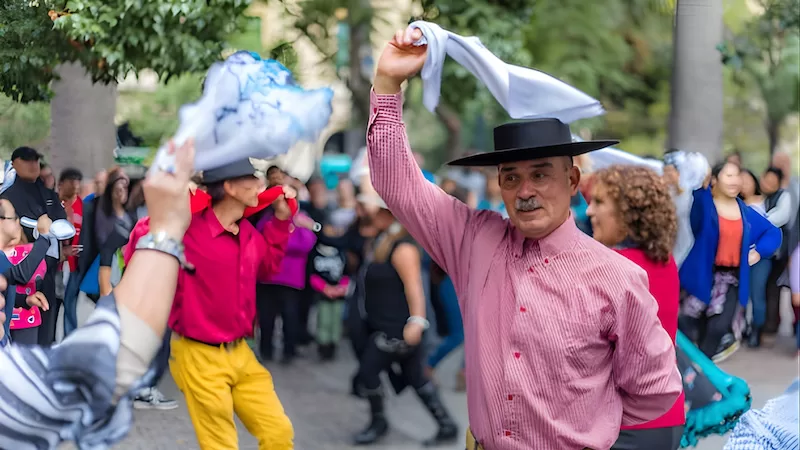
Cueca is not just Chile’s national dance. It is a story told with heels, skirts and a handkerchief that becomes part-flag, part-fluttering signal of interest. Since 1979, cueca has symbolized national identity, performed during Fiestas Patrias and other festivities across the country. Couples dance holding a white handkerchief, feet tapping sharp beats, shoulders angled with playful confidence. The choreography mirrors a rooster courting a hen, an age-old narrative still alive beneath the stage lights or under a country sun.
The music blends guitars, accordions and percussion into something that feels both festive and intimate. In Santiago, cueca might spill from a stage in a crowded fonda. In a rural town, it might happen in a dusty courtyard after the last animals are corralled. Wherever it appears, applause breaks quickly because cueca draws people into its joy.
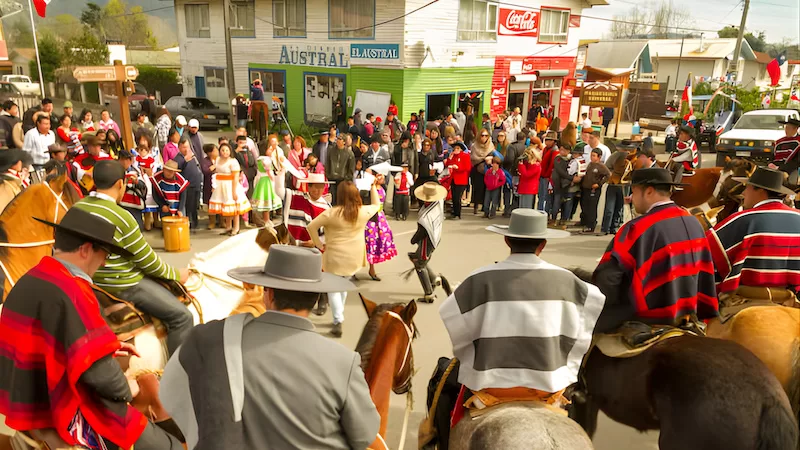
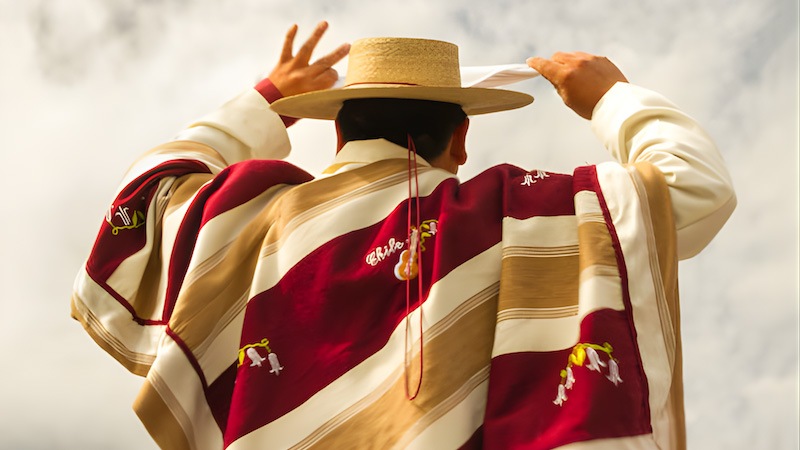
Costumes deepen the symbolism. Huaso hats and patterned ponchos in central Chile. Flowing floral dresses that move like wind through a wheat field. The dance becomes geography made visible.
Chile’s length gives rise to many expressions of musicality. Northern regions often reflect Andean heritage with brass bands, drums and processions that mix devotion and celebration. In La Tirana, dancers move for days in bright masks and embroidered outfits, following patterns passed down through faith and family.
Along the coast, cultural influences from Afro-descendant communities add a different pulse, anchored in percussion and sea-born movement. In the south, colder nights bring gatherings inside wooden halls with folk bands playing cueca sureña or regional canciones that pull voices together.
These traditions evolve with time. Young musicians remix folk melodies into modern arrangements. Dance troupes experiment with new styles while honoring the original steps. Still, the essence remains. Chile expresses pride through movement. Community through song. History through a vibe that refuses to fade into silence.
There is always a moment when the music picks up, the floor shakes a little, and even the most reserved person taps a foot. That is the heartbeat of Chile. Alive. Shared. Impossible to ignore.
Regional and Seasonal Festivals Beyond Independence Day
Fiesta de La Tirana and Andean spiritual heritage
In the far north, the desert quiet breaks every July when the tiny village of La Tirana turns into a pilgrimage of movement, color and devotion. A place that holds only around a thousand permanent residents suddenly welcomes hundreds of thousands of visitors each year, drawn by music, faith and a promise of collective celebration.
Devotional troupes dance day and night. Costumes glitter with sequins and beads that catch the desert sun. Drums and trumpets echo across open ground. The reason is spiritual, but the experience feels fully alive in the present. It honors the Virgin del Carmen, but behind the religious image lies something older. Indigenous Andean symbolism persists in the steps, in the masks, in the way dancers form a circle that feels like the desert sky closing in close.
Sore feet and tired lungs do not deter anyone. This is not a performance for applause. It is devotion through endurance. A ritual of gratitude to land and life that stretches back generations.
Harvest traditions and seasonal gatherings
As summer eases into autumn, the vineyards of the central region celebrate Vendimia, the grape harvest. Towns honor the vendimia with parades, food stalls and contests that feel both rural and grand. Towns like Santa Cruz, Curicó and Casablanca pour into their plazas. Winemakers offer their best bottles. Stalls serve empanadas and cheeses made a few kilometers from where you stand. Workers who spent long days tending vines become the stars of the celebration. Locals toast not just the wine but the year of labor behind every pour. Visitors leave with grape-stained smiles and a deeper understanding of how Chile became one of the world’s great wine voices.
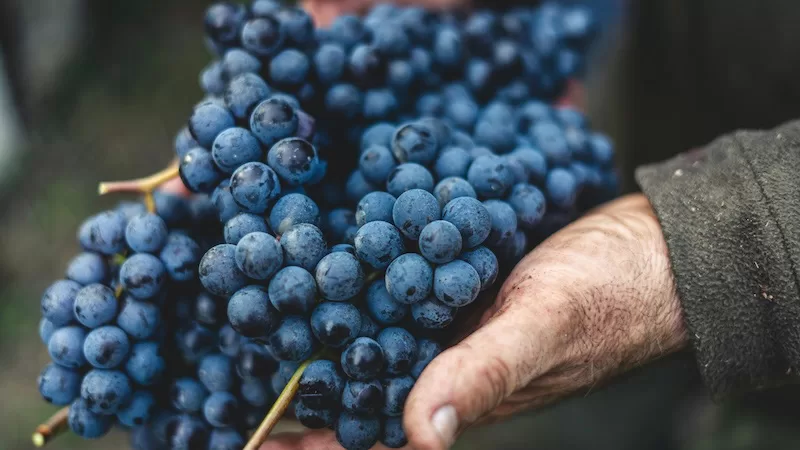
In the south, seasonal fairs revolve around livestock, apples, seaweed or cheese depending on the coast or valley. These gatherings are a reminder that Chile’s backbone is not only in skyscrapers or ports. It also comes from farmers, fisherfolk and artisans who keep ancestral skills alive. Visitors who stumble into a small-town harvest celebration often walk away changed. There is something grounding in watching locals toast a crop they know intimately.
Indigenous new year and ceremonies tied to the land
In June, when the longest night of the year settles over the southern regions, many Mapuche communities celebrate We Tripantu, the indigenous new year. It marks the return of the sun, the renewal of the cycle and the start of a spiritual new beginning.
Fires crackle. Families gather before sunrise. Rivers and streams become places of renewal as some participants bathe in cold water to purify body and spirit. Words spoken softly in Mapudungun remind everyone how time works differently when measured through nature instead of a calendar page.
This celebration does not feel like a tourist attraction. It is a direct line to the land and the ancestors who walked it first. Those invited to witness learn quickly that Chile’s cultural heartbeat does not only rush during parades and fireworks. Sometimes it moves softly, like light slowly returning after the longest night.
Coastal traditions and maritime culture
Along the Pacific, celebrations rise from the sea. In fishing towns, boats are blessed at the start of each season. Nets receive careful attention. The shore becomes a place of thanksgiving where the ocean’s generosity is never taken lightly.
Some communities dedicate festivals to Saint Peter in June, the protector of fishers. Colorful processions carry his statue toward the harbor. Oars and sails become ceremonial tools. Music rings out above the tide. Seafood dishes appear in abundance and neighbors share what the ocean has given them.
Southern identity and cultural pride
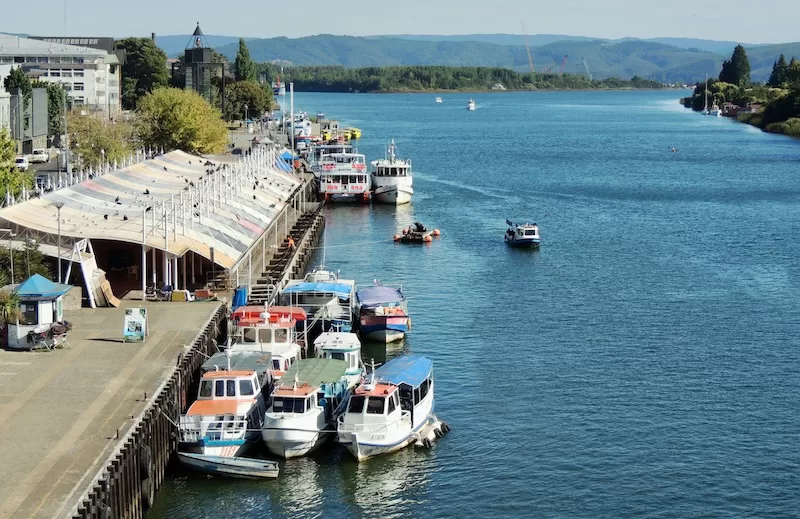
Farther south, cities like Valdivia host events that reflect a blend of Mapuche culture and later European influences. Beer festivals celebrate brewing traditions brought by immigrants. Local bands play as people gather along the riverbanks. Even the architecture around them whispers the story of how communities formed through cooperation in a rainy, green world. In Patagonia, communities embrace both isolation and celebration. Seasonal fairs might involve sheep shearing demonstrations, rustic markets or long meals of slow cooked lamb enjoyed around communal tables while the cold stays politely outside.
Food and Drink as Cultural Storytellers
Food in Chile traditions is more than sustenance. It carries history. It reflects seasons. It connects families who might live scattered across neighborhoods or mountainsides. Every celebration sets a table that doubles as a cultural lesson.
Dishes that mark celebration and daily life
Empanadas de pino appear in both festivals and Sundays. The edges are carefully folded by hand. Steam escapes as someone breaks one open. Inside, soft onion meets seasoned beef, the slice of egg giving richness, the olive adding a jolt of salt and nostalgia. Recipes differ from house to house. Each one claims to be the most authentic.
Then come anticuchos. They arrive sizzling from the grill, skewers stacked with chunks of meat and vegetables that catch smoke along the way. The first bite almost always stings with heat, though nobody waits long enough for it to cool. That smoky chew rewards patience, even if nobody shows much of it.
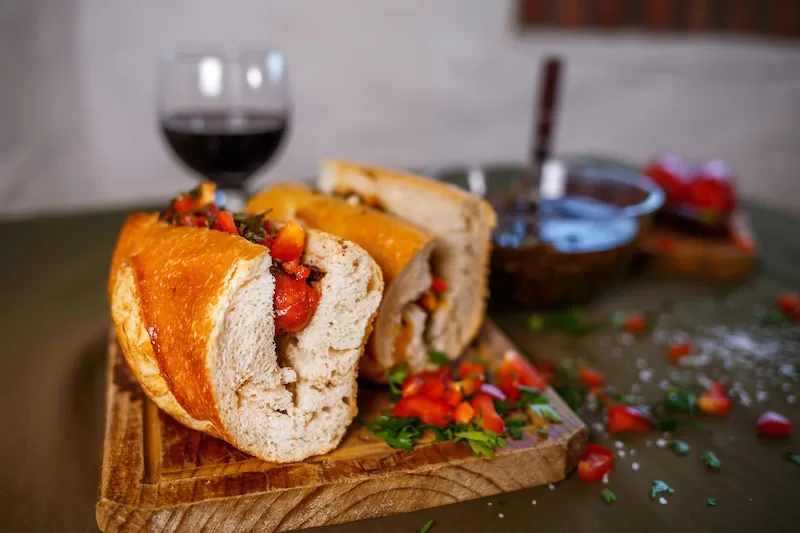
Choripán keeps the energy going. Sausage tucked into a fresh roll, eaten while standing, walking, laughing. It is quick and messy, a snack meant for people who do not feel like putting the celebration on pause. Pebre sits close by, a bright salsa of tomato, cilantro and lemon. It wakes up bread and meat alike, and nobody minds if a splash runs down a wrist. That is part of the fun.
Even desserts tell their own stories. In central valleys, layers of manjar (dulce de leche) fill flaky pastries. In the south, kuchen reveals the influence of German settlers, baked with seasonal berries that stain fingers and smiles.
Eating at a celebration in Chile feels like joining a chorus: everyone different, yet in harmony.
Drinks that accompany the seasons
Chicha appears as the unofficial signal that September has arrived. Lightly fermented fruit wine served in chilled glasses or clay cups. It tastes like the pause between winter and spring.
Wine anchors many gatherings. The central regions have ideal growing conditions, which means bottles on the table rarely travel far. Reds from Maipo. Whites from Casablanca. Sparkling wines from Limarí. Each region speaks through the glass.
On hot coastal afternoons, someone inevitably hands a beer to a friend who did not ask for one. In later hours, a cocktail might appear. A quick pour of pisco with lemon and sugar creates a drink that wakes up tired feet after hours of dancing.
Food as memory
Every bite holds recognition. A grandmother correcting the fold of an empanada. A father guarding the grill as though national security depends on it. Children sneaking extra spoonfuls of pebre when they think no one is watching.
Meals in Chile traditions document continuity. They remind families that celebration can be simple. Fire. Dough. Shared appetite.
There is always a moment during a festival when music softens and conversation takes over. Plates clear. Someone reaches for another serving. A toast rises. That is when culture feels most real.
How Traditions Shape Everyday Life in Chile
Traditions in Chile are not stored away for national holidays. They weave into ordinary days and animate neighborhoods throughout the year. Culture lives in the small rituals that happen without grand planning. It grows in kitchens, plazas and workplaces as people move through their routines with a sense of shared heritage.
Community as a living thread
Chileans often stay connected to extended family and long-time friends. Even in busy cities, gatherings are common. Birthdays become multi-hour meals where music takes over once plates are cleared. Sundays often draw families together around grills or long dining tables. Everyday hospitality reinforces a collective spirit and the joy of coming together just because time allows it.
Public spaces also play a central role. Parks are not only places to pass through. They are meeting grounds where children learn games their parents once played. Strangers strike up conversation while waiting in line for mote con huesillo, a sweet summertime drink sold by street vendors. Communities grow through these simple encounters.
Rural traditions that anchor identity
Outside urban centers, customs tied to land and labor remain strong. In the countryside, rodeo culture shapes the year. Farmers train their horses and prepare cattle as part of a lifestyle that blends skill, pride and continuity. Seasonal routines, from harvest to planting, become markers of the calendar.
Even the way houses are built in rural regions reflects the climate and heritage. Wooden shingles in southern towns. Adobe walls in dry valleys. Architecture becomes a material memory of how families adapted to terrain over centuries.
The role of music, dance and food in everyday joy
A folk song can appear anywhere. On a bus ride. In a grocery store queue. At the beach. Cueca might emerge during a street celebration when a guitar starts strumming and someone calls a partner to the open pavement. The dance does not need a festival. It only needs people willing to step into its rhythm.
Food traditions are equally present in daily life. Largo lunches on Sundays. Fresh bread bought in the evening from a neighborhood bakery. Coastal towns where fishing still dictates the menu. Plates filled with seasonality and local pride.
Pride layered into daily life
National symbols emerge in surprising places. The flag shows up not only in September but also at soccer matches or outside small homes in distant towns. Schoolchildren learn patriotic songs early and perform them eagerly. Pride feels personal here. It belongs to individuals, not only institutions.
Traditions in Chile do not fade between celebrations. They simmer constantly, ready to rise when music starts or when families gather. They teach belonging through everyday gestures. A shared dance step. A recipe handed down carefully. A greeting to a neighbor who becomes part of your life simply by living nearby.
Culture here is continuous. It is not something people attend. It is something they carry.
Experiencing Traditions with Respect
To experience Chile traditions fully, timing matters, but approach matters even more. Festivals and gatherings invite participation, yet each one carries its own etiquette and emotional weight. Visitors who step in with curiosity and kindness discover the most memorable parts of Chile at ground level.
Choose the right season for celebration
September is the busiest cultural moment of the year. Fiestas Patrias turn public spaces into dance floors and grilling stations. Travelers who arrive earlier in the month will notice the anticipation growing with each new flag hung out to the breeze.
In July, the north fills with dancers and pilgrims for Fiesta de La Tirana, where the desert air crackles with devotion. In June, southern communities celebrate We Tripantu during the winter solstice, a spiritual gathering connected to the Mapuche calendar. Harvest festivals appear across wine valleys in late summer and autumn, offering a local, rural perspective on celebration.
Pick a season that matches the kind of experience you want. Spirited dance and public joy. Deep tradition rooted in belief. Rural gatherings tied to the earth.
Participate with attention to local customs
In fondas and ramadas, it is common to greet the person serving your food, offer a friendly smile and thank them before moving along. If invited to dance cueca, accept the invitation if you can. The steps may feel unfamiliar at first, but the energy is contagious.
During religious or indigenous ceremonies, modest clothing and serene observation show respect. Photography is not always welcome. It helps to ask or wait to see how others behave. A gentle, attentive presence creates a better connection than a front-row view.
Blend into the celebration
Chileans celebrate in long stretches. Meals last hours. Conversations happen standing around grills or leaning over folding tables. There is no rush to move on to the next thing. Let time soften.
The best guide is often whoever stands beside you. Locals are generous with explanations, dance steps, and suggestions for food. Accepting an offer to try something new is one of the fastest ways to feel included.
Learn a few simple phrases
A short greeting or thank you in Spanish can shift an interaction from transactional to warm.
Try:
• Hola, muchas gracias (Hello, thank you very much)
• Que rico está esto (This tastes great)
• Muy linda la fiesta (The celebration is beautiful)
Small language bridges open big cultural doors.
Read More Like This: 11 Great Reasons to Move to Chile
FAQs
Q1: What are the most important traditions in Chile?
Fiestas Patrias in September lead the national calendar, followed by regional celebrations such as the Fiesta de La Tirana in the north and harvest festivals in wine country. Cueca, family gatherings and seasonal food customs also shape daily life all year.
Q2: How do Chileans celebrate Fiestas Patrias?
Communities gather in fondas and ramadas with music, cueca dancing, barbecues, flag displays and friendly games. Many people take several days away from work to enjoy parades, rodeos and long outdoor meals with friends and family.
Q3: Is it easy for visitors to take part in celebrations?
Yes. Most public festivals welcome travelers. Respect for local customs and a willingness to participate kindly help you fit right into the atmosphere.
Q4: What food should travelers try during Chilean festivities?
Empanadas de pino, anticuchos, choripán and pebre are staples during celebrations. Regional specialties like kuchen in the south or fresh seafood near the coast reveal cultural diversity through flavor.
Q5: Do traditions vary across Chile?
They do. Andean influence shapes northern customs. Central regions highlight agricultural life and huaso culture. The south reflects Mapuche roots and European immigration. Geography gives each area its own character.
Q6: Is cueca danced only on national holidays?
Cueca dominates the September season, but it appears throughout the year at community events, cultural centers and neighborhood gatherings where music calls people to dance.
Q7: Are religious festivals open to visitors?
Many welcome outsiders, though some rituals hold deep personal meaning for local communities. Quiet observation and permission for photos show respect.
Q8: What is the best way to learn more about local culture while visiting Chile?
Join community events, try regional dishes, ask questions and follow daily life. Culture in Chile reveals itself most clearly in human connection.
Q9: What is the Fiesta de La Tirana?
A major religious celebration in northern Chile each July where dancers, musicians and pilgrims honor the Virgin del Carmen with days of processions, music and devotion. Indigenous Andean influences shape the vibe and costumes.
Q10: What is We Tripantu?
We Tripantu is the Mapuche new year celebrated during the winter solstice in June. Families gather before sunrise, hold cleansing rituals near rivers and share meals that welcome the return of the sun and a renewed cycle of life.
Q11: Are there wine harvest festivals in Chile?
Yes. Vendimia celebrations appear across central valleys in late summer. Towns honor the grape harvest with parades, tastings, folk music and a chance to meet the people behind Chile’s celebrated wine regions.
Q12: Do coastal regions have their own festivals?
Many coastal towns celebrate local fishing and maritime traditions with regattas, seafood fairs and public gatherings tied to the ocean that supports their livelihoods.
Q13: What celebrations are tied to Easter or Catholic traditions?
Holy Week brings processions in cities and towns, especially in central and southern Chile. Some regions incorporate indigenous symbolism into these solemn events, blending spiritual histories.
Q14: Does Christmas have unique traditions in Chile?
Yes. Christmas arrives in summer. Families often gather late on December 24 for meals that spill into midnight gift-giving and warm evenings outdoors. Seasonal sweets and children’s songs add a festive note.
Q15: Are there celebrations dedicated to local saints or patron figures?
Throughout the year, smaller towns host festivals honoring patron saints or spiritual protectors. These events usually combine faith, music, craft markets and communal meals that bring entire communities together.
Q16: How can visitors learn when local festivals take place?
Tourism offices, local cultural centers and regional government websites often share festival calendars. Asking residents can reveal small celebrations not widely advertised.
The Vibe of a Country That Celebrates Itself
Chile traditions are invitations. The kind that welcome you into someone’s backyard, put a plate in your hands and teach you the rhythm one step at a time. Every region has a celebration that reveals a new side of the country. Barbecue smoke lifting into spring skies. Drums rolling through the desert. A sunrise ceremony that honors the return of light.
Planning a trip around these cultural moments turns travel into connection. Flags overhead become more than decorations. Music becomes a shared language. Meals feel like stories told through flavor. When visitors join the celebration thoughtfully, the memories often stay long after the passport gets stamped again.
Explore at the right season. Taste the dishes people wait all year to make. Step into a cueca circle and let the beat carry you. Chile traditions are best learned in motion.
If you want to dive deeper into regional culture or plan a trip around festivals, subscribe to our newsletter. We deliver cultural insights, practical advice, lived experience and timely updates for people with wanderlust who want to explore life beyond borders.
Contact Author
"*" indicates required fields
Stay Ahead on Every Adventure!
Stay updated with the World News on Escape Artist. Get all the travel news, international destinations, expat living, moving abroad, Lifestyle Tips, and digital nomad opportunities. Your next journey starts here—don’t miss a moment! Subscribe Now!