Augie Byllott, co-founder of Chair the Love, didn’t want to talk about wheelchairs. That was the first thing he corrected, gently, before we’d even properly started. Chair the Love was in the wheelchair business once, he says, and it isn’t anymore. What they actually do, in his telling, is run a growing movement of people committed to dignity, freedom, and hope for people living with disabilities, and the chair is just the key that opens the door. Everything else, the trips, the containers, the ten months of planning behind each one, exists to get that key into the right hands.
He has also, by his own account, cried at nearly every distribution he has ever attended. Not the same kind of tears each time, he told me. That distinction turned out to matter more than almost anything else we talked about. Sitting with him was Wendy Coles, who chairs the organization’s mission and logistics committee and has led close to ten distribution trips of her own over the past few years, with several more already scheduled as Chair the Love moves into 2027.
Not About the Wheelchair
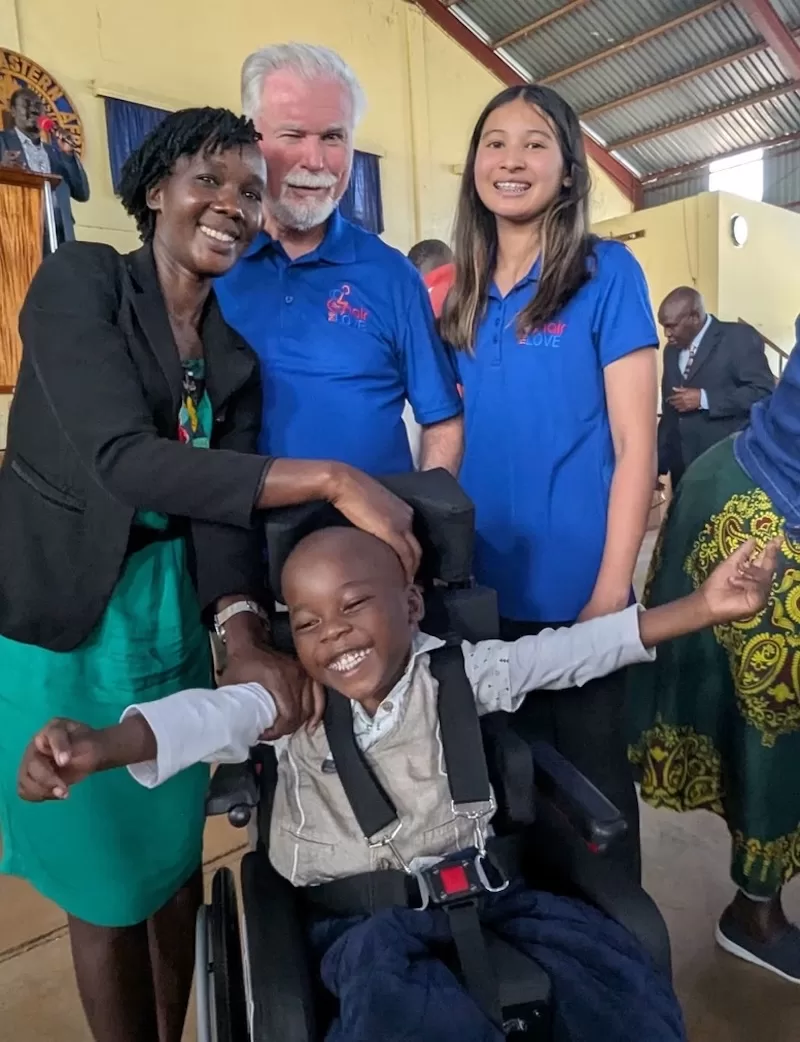
Ask either of them what the recipients actually talk about, and neither says the chair. They talk about a mother finally getting a moment’s rest from carrying a fifteen-year-old with the weight of an adult. A father with polio who can finally get back out and work. A child who can get to school at all.
One of those conversations, Augie said, still knocks the wind out of him when he retells it. In the Philippines this past April, he met a young woman he assumed was twelve. She turned out to be twenty. She wants to become a psychologist or an attorney, and for now the only path open to her runs through a teaching degree, because that is what her mobility allows her to reach. He told her the teaching degree wasn’t the end of the story, just the first rung. She looked at him and said the wheelchair was going to be her best friend, and the stepping stone to her dreams.
This wheelchair is going to be my best friend, and the stepping stone to my dreams.
The Boy Who Had to Give His Chair Back
Wendy’s first trip was Nicaragua, in 2023, and she still calls it the most impactful one she has done, precisely because she went in with no real idea what to expect. What she found wasn’t the tents and campfires she’d braced for. It was well-run, well-hosted, genuinely beautiful, and threaded through five days with four or five distributions.
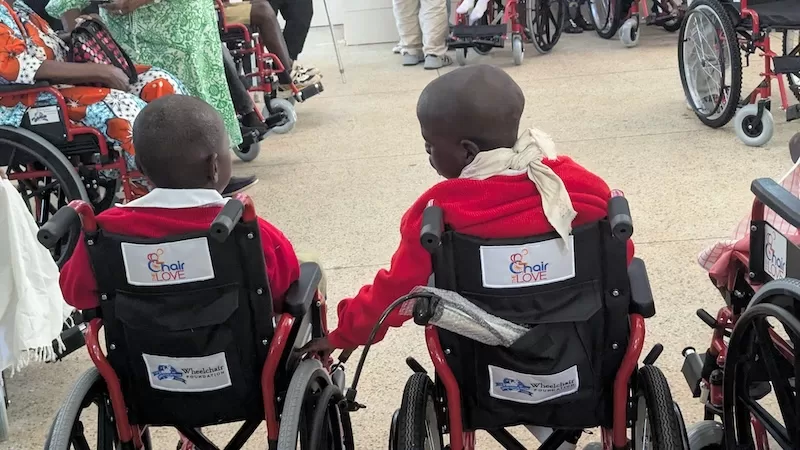
The one that has stayed with her is a boy named Justin. He had cerebral palsy and used a wheelchair all the way through school, and when he graduated and aged out, he had to hand the chair back. He was tall, close to five foot ten, and his parents, both smaller than him, had been carrying him everywhere ever since. When Chair the Love arrived with a chair for him, he didn’t understand at first that it was his to keep. It took a doctor translating for him to grasp that he never had to give this one back. Wendy watched the relief land on his face, and then on his parents’.
Seventy-Five Years on Her Hands and Knees
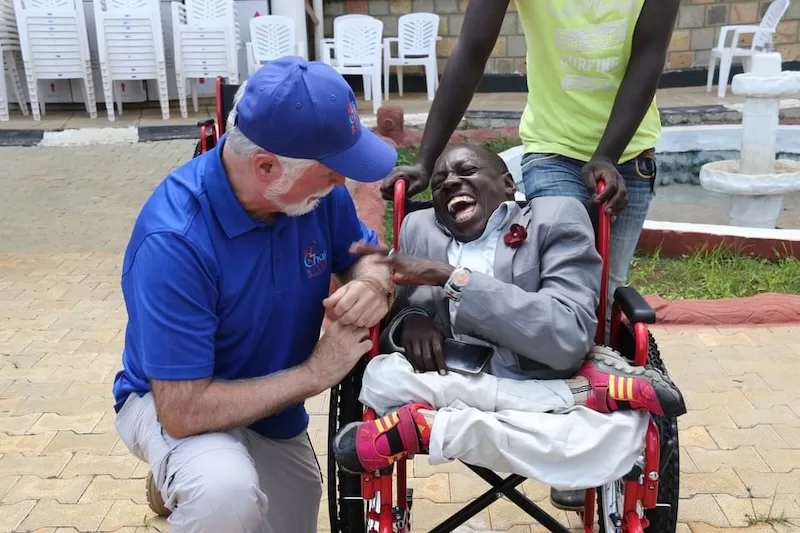
Some stories don’t need much framing. In a small village in Mexico, Augie watched a woman named Soledad climb out of a three-wheeled taxi the local county had paid to bring her to the distribution, because she had no other way to get there. She got down and began crossing the cobblestones on her hands and knees. One of the team ran out, lifted her, and set her in a wheelchair. It was the first one she had ever had, at seventy-five years old, having crawled everywhere for her entire life.
Augie is careful to say she is still Soledad, still everything she has always been. But something shifted the moment she was sitting up instead of looking at the world by everyone’s kneecaps. A different kind of dignity. A different set of faces to look into.
From Victim to Victor
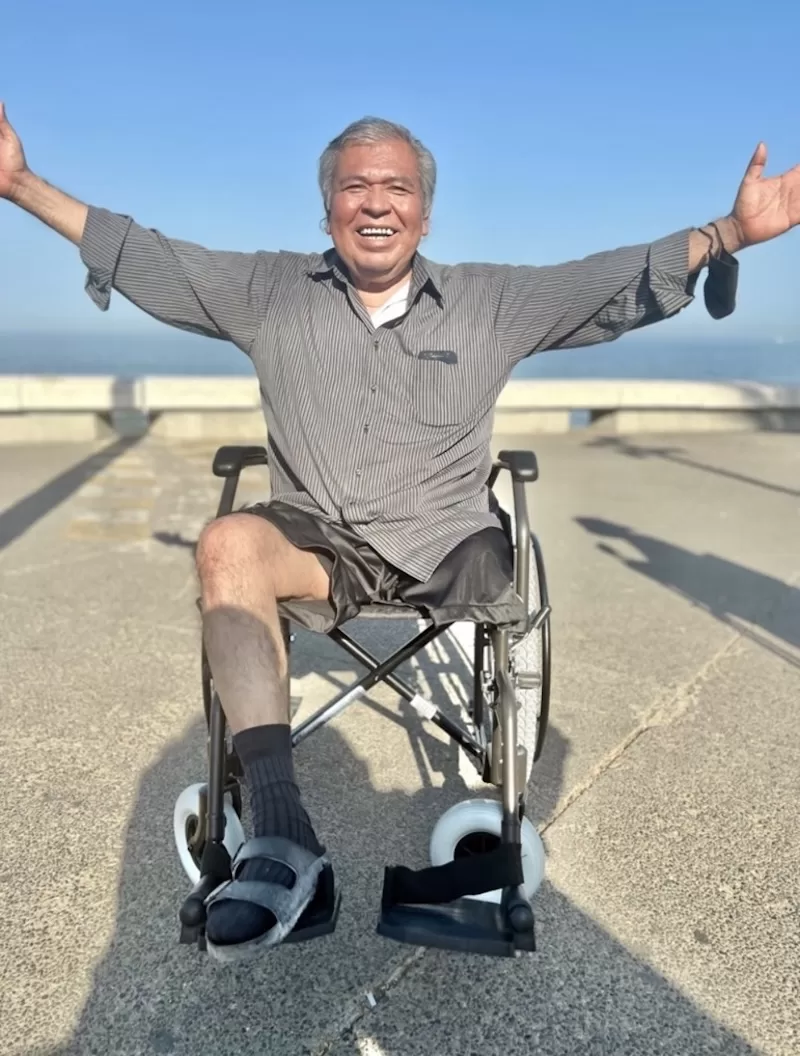
Not every story stays where it starts. Four years ago in Kenya, Augie met a young man in his mid-twenties who had been paralyzed from the waist down in a scooter accident, and who had spent two years in bed before his brother finally brought him to a distribution. He had a young wife and two small boys, and what struck Augie wasn’t just his broken spine. It was watching his spirit go with it.
Augie has been back to Kenya every year since, and every year, the young man finds his way to the distribution just to say hello. This past January, he was elected to public office, the state representative for people with disabilities in his region. He now calls governors, Augie says, and they take his call. He calls Augie “Daddy,” which he has learned is a title of honor there. He has taught Augie something in return: disability is not inability.
He went from a state of severe depression and loss to, I guess, victim to victor.
The Logistics of Dignity
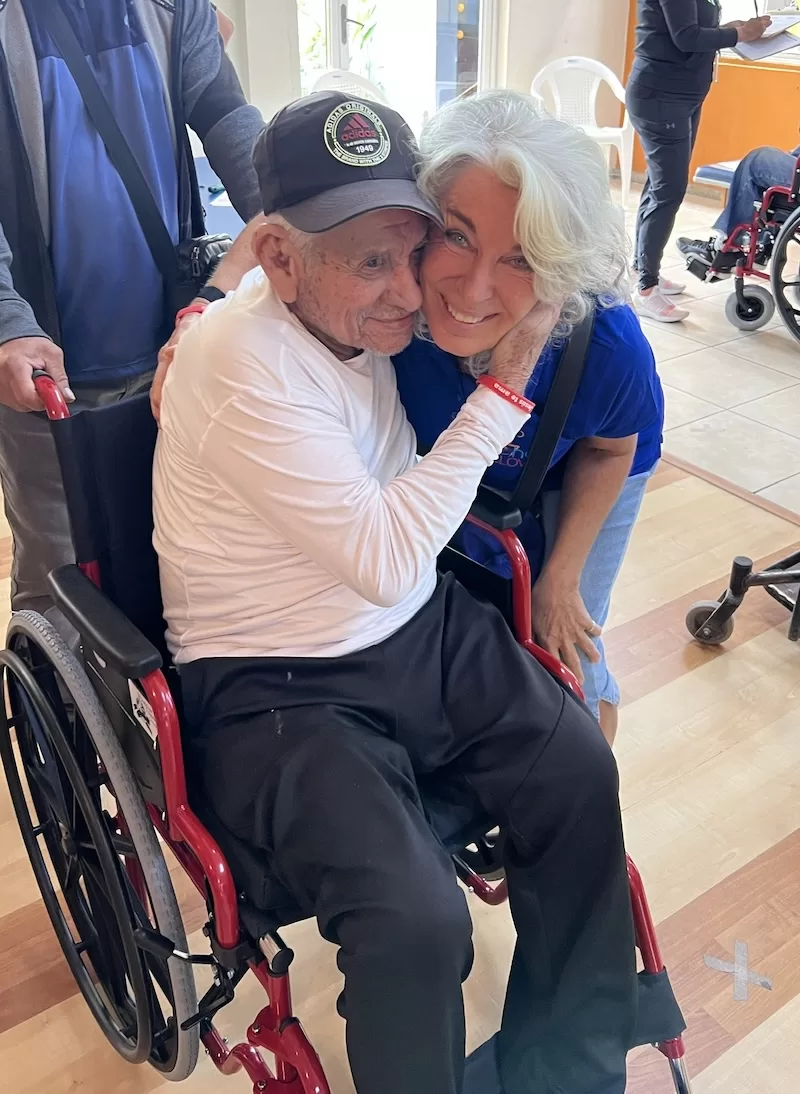
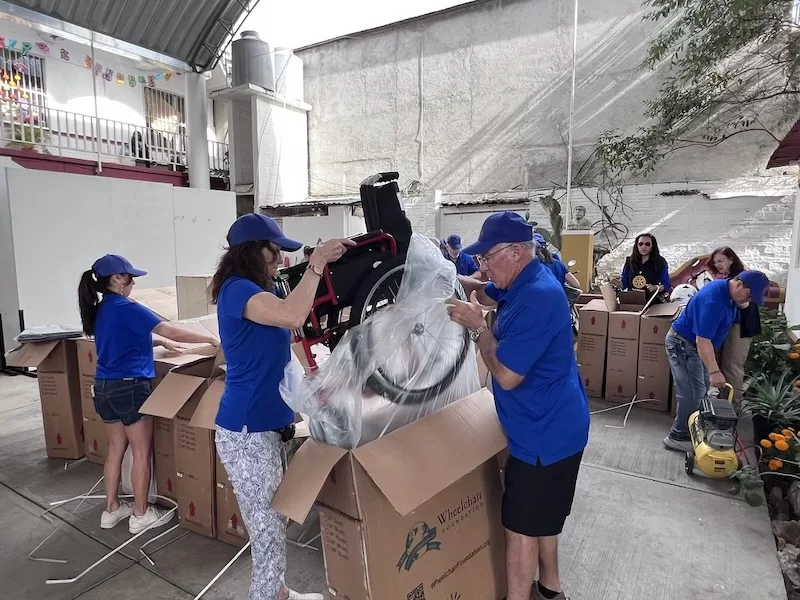
None of this happens without an unglamorous amount of planning. Chair the Love works through in-country partners, hospitals, churches, universities, Rotary and Kiwanis clubs, NGOs, who help identify recipients and run assessments before a single chair is fitted. Wendy helped build that assessment process herself: measuring for a child versus an adult, flagging the recipients who need a specialized chair for cerebral palsy or spina bifida rather than a standard one, even choosing between mountain-bike tires and slim ones depending on the terrain a chair will actually have to cross.
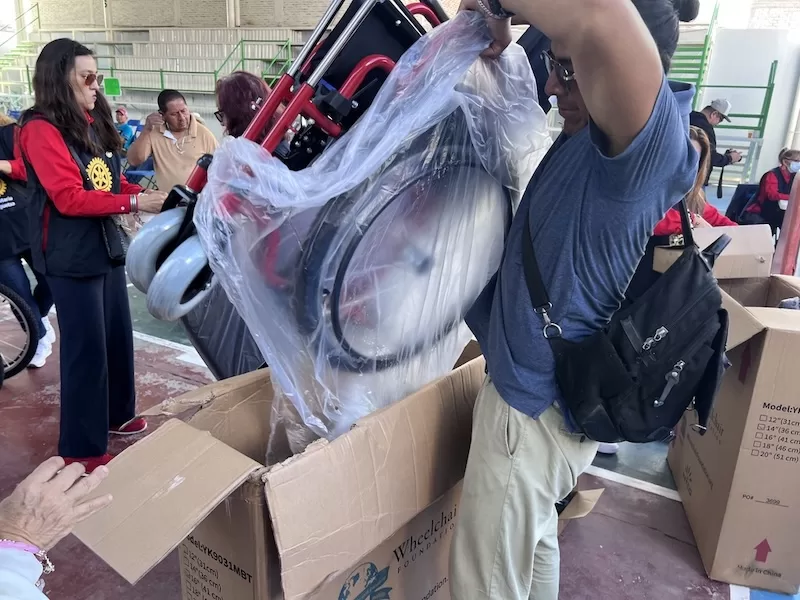
A container holds 260 chairs, 245 standard and 15 specialty, and costs $56,000 once you account for manufacturing and shipping through their partner, the Wheelchair Foundation, out of California. Augie calls it an investment rather than a donation, because that is closer to what it is: not just welfare, but somebody’s future. The organization now runs fourteen to sixteen trips a year, and delivered twenty containers last year alone, across twenty-five countries and five continents, from long-standing work in Nicaragua and El Salvador to a newer partnership in Uganda with the O.J. Cares Disability Foundation, run by a man who has used a wheelchair himself since he was three.
Transformational Travel
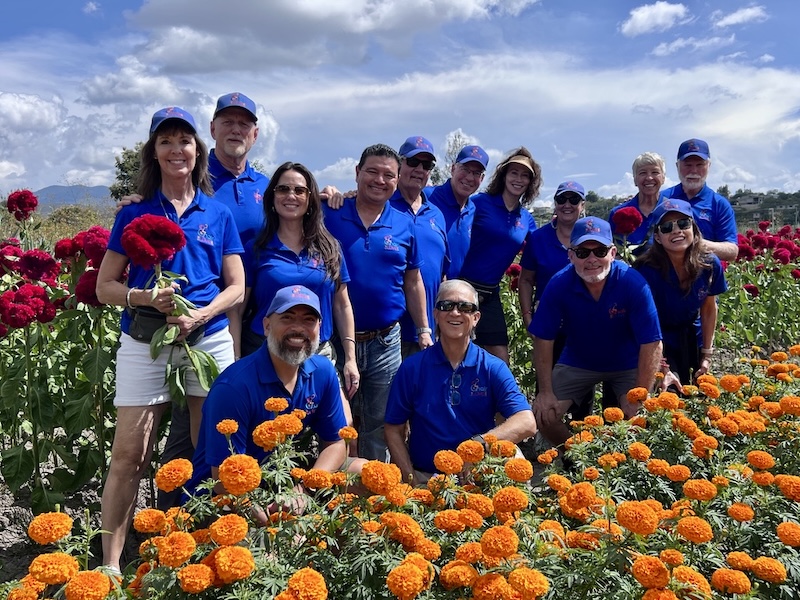
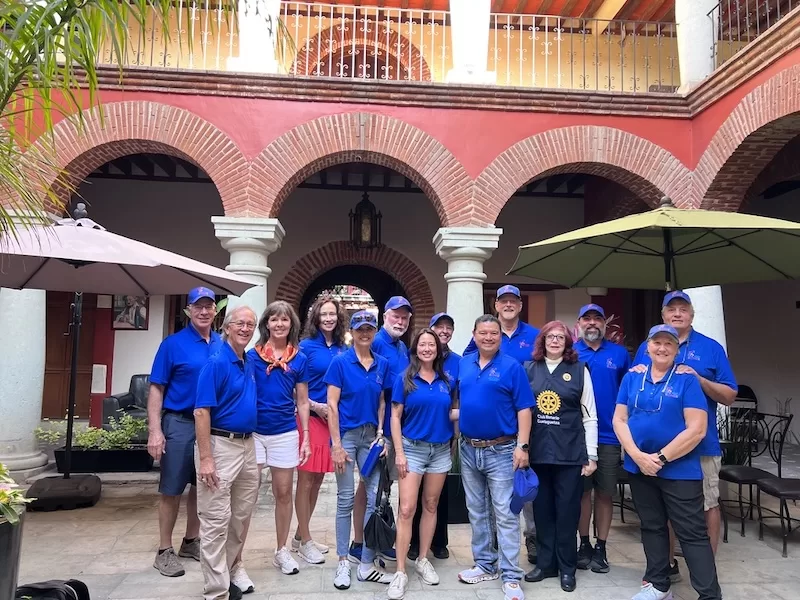
What began as distribution trips has become something Augie now calls humanitarian adventures, or transformational travel, a phrase that sounds like marketing until you hear him explain it. Travelers stay in real hotels, eat well, move around in air-conditioned vans, and spend their days doing distributions and their evenings actually experiencing the country they’re in, not observing it from behind a fence. This October, a group of nineteen is heading to Oaxaca, Mexico, partly to distribute wheelchairs and partly to take in the Day of the Dead, two days set aside to honor the dead that Augie admits he once mistook for a version of Halloween, before he understood what it actually was.
Strangers on day one, he says, tend to feel like old friends by day five. Not because of anything engineered about the trip, but because service does something to a group of people that sightseeing alone doesn’t.
The Math That Doesn’t Feel Like Math
The World Health Organization estimates that one wheelchair changes the lives of eight to ten people around the recipient, not just the person sitting in it. By the end of this year, Chair the Love will have delivered 20,000 wheelchairs, which puts the number of lives touched somewhere close to 200,000.

Eighteen dollars a month funds one chair. Augie still finds the scale hard to hold in his head next to the individual faces he remembers, the father of eight who told him a wheelchair meant he could finally work enough to support his family, the woman who grabbed his arm and told him he’d given her daughter wings, the man who had waited nine years for a chair after losing both legs and an arm, whose wife had carried, dressed, bathed, and fed him every day of that wait.
He’s not looking for a handout. He’s looking for a hand up. You give me wheels, you give me mobility, and watch what I can do.
He describes the moment of fitting someone into a chair, kneeling to lower the footrests and lift their feet into place, as close to a spiritual experience as anything he has known. Eye to eye, heart to heart, with someone who was a stranger five seconds earlier.
How to Be Part of Chair the Love
Chair the Love holds its annual Gala and Golf Tournament in Florida on October 4th and 5th, the organization’s biggest fundraising weekend of the year and, by every account, one worth attending in person if you can. A gift of $250 funds a wheelchair outright and is fully tax-deductible. For those who want to see the work up close, Chair the Love runs distribution trips throughout the year that travelers, donors, and family members can join, including next year’s family trip built specifically to bring children along.
Full details on the gala, the golf tournament, and how to get involved are at chairthelove.org.
Chair the Love is a U.S. nonprofit that has delivered more than 20,000 wheelchairs across 25 countries and five continents since becoming an official 501(c)(3) in 2017, working through local partners to bring mobility, dignity, and a second chance to people who need it most.
Chair the Love: Common Questions
What does Chair the Love do?
Chair the Love is a U.S. 501(c)(3) nonprofit that funds and runs wheelchair distribution trips through local partners, hospitals, churches, Rotary and Kiwanis clubs and NGOs, in 25 countries across five continents. Since 2017 it has delivered more than 20,000 wheelchairs, fitted to each recipient before they are given.
How much does it cost to fund a wheelchair?
A gift of $250 funds one wheelchair outright and is fully tax-deductible. A full shipping container of 260 chairs, 245 standard and 15 specialty, costs $56,000 including manufacturing and shipping, and $18 a month funds one chair over time.
Can you join a Chair the Love distribution trip?
Yes. Distribution trips run throughout the year and are open to travelers, donors, and family members, including a family trip next year built specifically to bring children along. Details are at chairthelove.org.
When is the Chair the Love Gala and Golf Tournament?
The annual Gala and Golf Tournament takes place in Florida on October 4th and 5th, the organization’s biggest fundraising weekend of the year.
About the Author
Contact Author
"*" indicates required fields
Stay Ahead on Every Adventure!
Stay updated with the World News on Escape Artist. Get all the travel news, international destinations, expat living, moving abroad, Lifestyle Tips, and digital nomad opportunities. Your next journey starts here—don’t miss a moment! Subscribe Now !
Augie Byllott, co-founder of Chair the Love, didn’t want to talk about wheelchairs. That was the first thing he corrected, gently, before we’d even properly started. Chair the Love was in the wheelchair business once, he says, and it isn’t anymore. What they actually do, in his telling, is run a growing movement of people committed to dignity, freedom, and hope for people living with disabilities, and the chair is just the key that opens the door. Everything else, the trips, the containers, the ten months of planning behind each one, exists to get that key into the right hands.
He has also, by his own account, cried at nearly every distribution he has ever attended. Not the same kind of tears each time, he told me. That distinction turned out to matter more than almost anything else we talked about. Sitting with him was Wendy Coles, who chairs the organization’s mission and logistics committee and has led close to ten distribution trips of her own over the past few years, with several more already scheduled as Chair the Love moves into 2027.
If you'd like to read the full story, simply enter your email to subscribe to our newsletter.
For even more expert insights, unmissable resources, and exclusive invites, explore our premium subscription offers here.
OR
Already a Subscriber? Click here to login
Subscription required
You've reached your limit of free articles. For full access to Escape Artist, and all of our insights on travel, moving abroad, and the digital nomad life, click here to Subscribe.
Already a Subscriber? Log in here