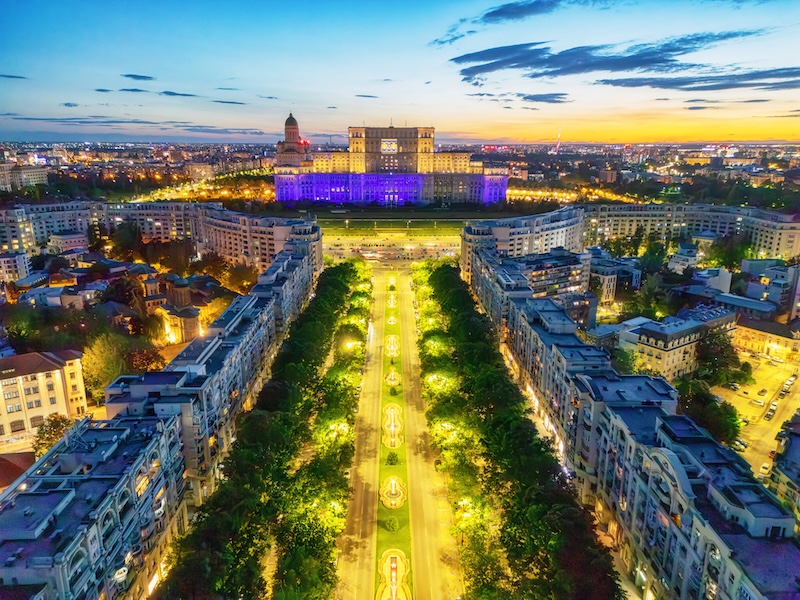
Added 10 September 2026. This guide says living costs are “significantly lower than Western European capitals” without ever saying what they are. Here is what Bucharest actually costs.
| Bucharest | Per month |
|---|---|
| One-bedroom flat, outside the centre | about 430 euros |
| One-bedroom flat, city centre | about 645 euros |
| Three-bedroom, outside the centre | about 683 euros |
| Three-bedroom, city centre | about 1,030 euros |
| Basic utilities, 915 sq ft flat | about 177 euros |
| Home internet, 60 Mbps or better | about 9 euros |
| Public transport pass | about 20 euros |
| Average take-home pay | about 1,350 euros |
The claim in this guide holds. A one-bedroom outside central Bucharest costs about a third of what the same flat costs in Porto or Valencia, and internet at nine euros a month is among the cheapest in Europe. What makes Romania work is the second column of that table read against the last row: average take-home pay of about 1,350 euros against rent of 430 leaves real room, which is not true in most of Western Europe.
Current figures are crowd-sourced from residents, 2,451 submissions by 273 contributors over the past year, via Numbeo, last updated 9 September 2026. Bucharest is not Romania: Cluj is dearer and smaller cities are cheaper again.
Potentially more than any other country in Europe, Romania has long been synonymous with outward migration. Throughout the 1990s and 2000s, the Eastern European nation recorded the highest levels of emigration on the continent. In 1990—the first year after communism collapsed—97,000 Romanians left the country. The numbers continued to rise, reaching a peak in 2007 when Romania joined the European Union and an estimated 560,000 citizens emigrated, primarily to Western European countries.
It almost became a national reflex. Parents often encouraged their children to leave as soon as they could. As Romania’s youth boarded buses for Italy, Germany, the UK, and Spain, towns and cities were slowly hollowed out, stripped of much of their vibrancy. What remained was a rapidly aging population and a country increasingly defined by departure.
Since 2020, however, this trajectory has begun to flip. More young Romanians are choosing to stay, and a growing number of foreigners are opting to move to Romania and make it home. Quietly, and without fanfare, Romania is becoming one of Europe’s most compelling places to land.
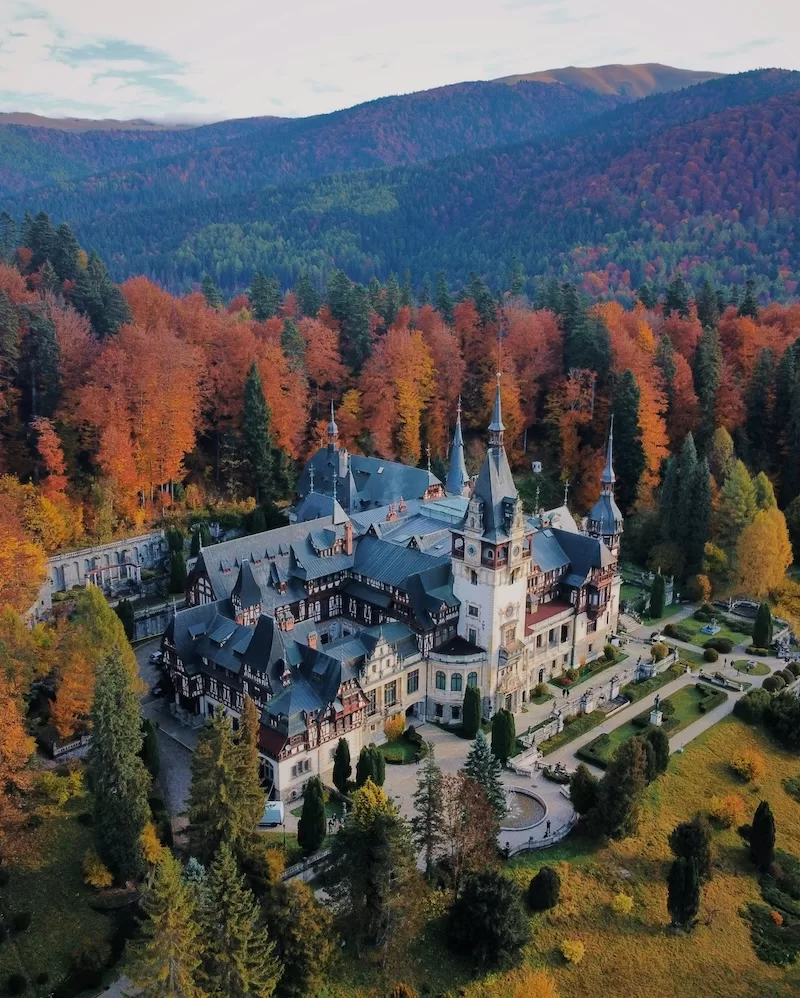
Why Did So Many Romanians Once Leave?
To understand why this shift matters, it helps to understand how deeply emigration is woven into Romania’s modern story.
Romania was ruled by Nicolae Ceaușescu from 1965 to 1989 as a communist dictatorship. His era was marked by mounting national debt and severe austerity policies. Food rationing and electricity cuts were common. Romania struggled to keep pace with neighboring countries, and entire rural villages were demolished in an effort to force the population into industrialized cities.
As the country’s problems mounted, Ceaușescu decided that many of Romania’s challenges could be solved by growing the population. The logic was simple, if flawed: more babies would mean more workers, more workers would mean more productivity, and productivity would eventually bring prosperity.
In 1966, the government introduced a series of extreme policies banning abortion, contraception, and divorce, while imposing heavy taxes on childless couples. In the short term, the plan worked. Romania experienced a massive baby boom in the late 1960s. By 1967, the number of births had doubled.
Over the following years, however, the flaws became obvious. Infrastructure could not keep up with the rapid population growth. Many families could not afford to care for their children, leading to overcrowded orphanages and widespread poverty. Romania now had a much larger population than it could support, but Ceaușescu believed he was playing a long game.
Post-Communist Population Decline
When Ceaușescu was overthrown during the Christmas Day uprising of 1989, the communist regime collapsed and Romania’s borders reopened. The timing could not have been more destabilizing. With the sudden collapse of the planned economy and no structured transition in place, the country entered economic free fall. Industry collapsed, inflation soared, and thousands of jobs disappeared overnight.
Romania found itself with a large population and almost no opportunity. For millions, emigration became a necessity. By the early 2000s, Romania had become one of Europe’s largest exporters of migrant labor. Estimates suggest that more than four million Romanians—roughly one in five—were living abroad at the height of the exodus.
EU accession in 2007 accelerated the trend, making movement across the continent far easier. Romania’s population continued to decline throughout the 2000s and 2010s, shrinking by millions. Entire regions aged rapidly. The country developed a reputation as a place people escaped from, not moved to.
But beneath the surface, Romania was changing.
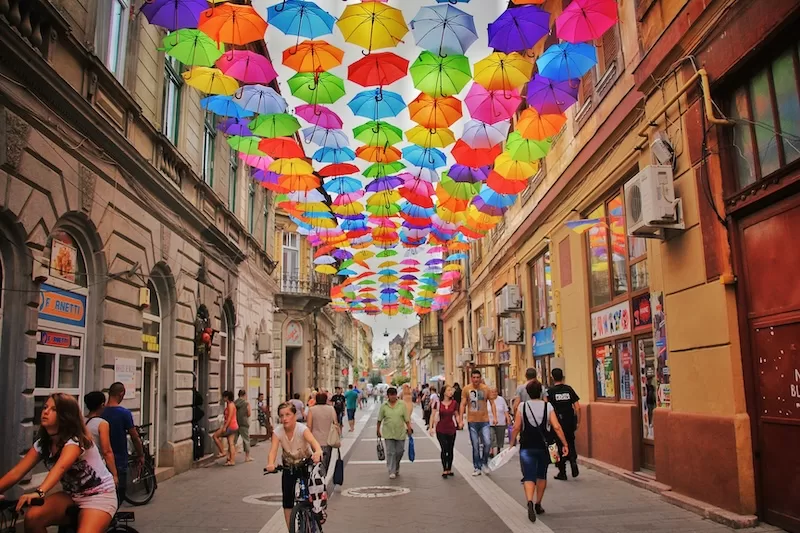
Romania’s Slow Transformation
Through deeper EU integration and the emergence of new industries, Romania began to see steady economic growth throughout the 2010s. Unlike some of its neighbors, it avoided dramatic boom-and-bust cycles, building gradually instead.
Bucharest transformed from a gray post-communist capital into a dynamic metropolis attracting growing numbers of tourists. Cluj emerged as a technology and university hub, while cities like Brașov, Sibiu, and Timișoara leveraged their historical heritage and livability to attract both investment and people.
Romania’s IT and software services sector grew into a major export industry, employing hundreds of thousands and anchoring a new middle class.
A Quiet Reversal
By 2021 and 2022, Romania recorded consecutive years of positive net migration—an extraordinary reversal after decades of population loss. Much of this inflow consists of Romanians returning home, often with savings, skills, and expectations shaped by life abroad. But an increasing share comes from elsewhere: non-EU workers, entrepreneurs, and a small but growing cohort of expats discovering Romania not as a last resort, but as a strategic choice.
Economics plays a major role. Romania remains one of the most affordable countries in the European Union. While rents in Lisbon, Barcelona, and Berlin have doubled or tripled, Romanian cities still offer a version of Europe that feels financially breathable. A one-bedroom apartment in a central neighborhood of Bucharest or Cluj costs a fraction of what similar housing demands in Western capitals. Daily expenses such as food and transportation remain modest by EU standards, even as quality steadily improves.
A comfortable urban lifestyle is attainable on a budget that would barely cover rent elsewhere in Europe. That gap creates room for savings and risk-taking—both increasingly rare across the continent.
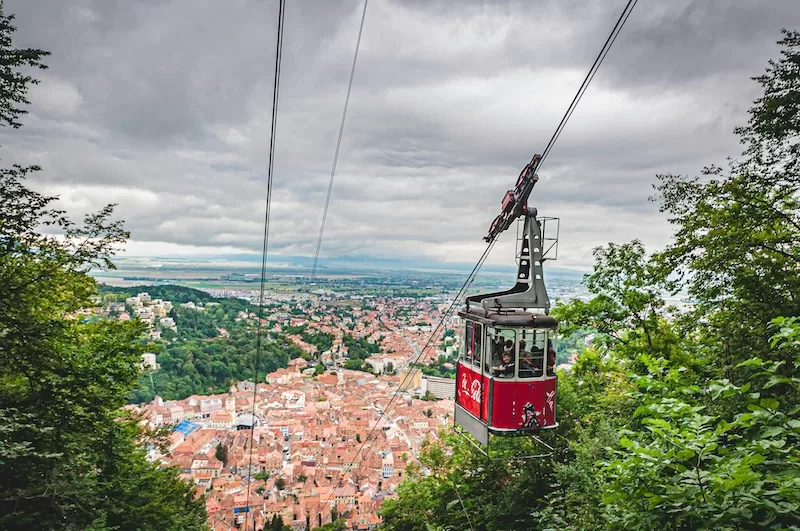
Built for a Different Kind of Europe

Infrastructure has become an unexpected advantage. Romania boasts some of the fastest and cheapest internet in the EU, the result of late but aggressive investment in fiber networks. High-speed connections are common even outside major cities, making remote work smoother than in many countries where broadband remains expensive and unreliable.
Romania’s full inclusion in the Schengen Area has removed one of the last psychological and practical barriers to long-term relocation. Travel across Europe is now seamless. Business logistics are easier. The sense of being “on the edge” of Europe is fading, replaced by the reality of being firmly inside it.
Over the past decade, Romania has been among the faster-growing economies in the EU, with GDP per capita more than doubling since the early 2010s. In cities like Bucharest and Cluj-Napoca, average wages—especially in IT—have risen sharply. Bucharest alone generates roughly a quarter of Romania’s
GDP while hosting one of Eastern Europe’s largest concentrations of software developers.
Homeownership levels remain high, speculative foreign property investment is still limited, and many
mid-sized cities operate below the radar of international capital. The result is a structural gap: Romania functions like a mid-income EU economy but is priced closer to a peripheral one.
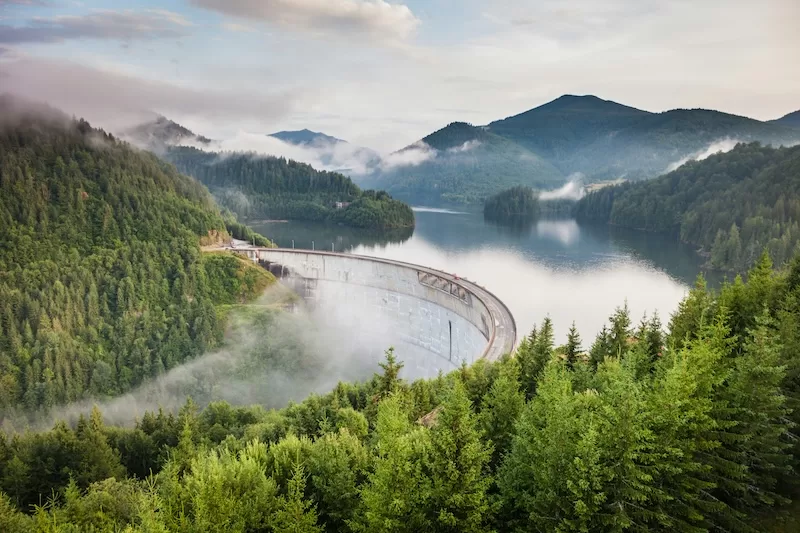
Understated, Not Undeveloped
In rural areas, traditional life persists as lived reality rather than tourist performance. In cities, cafés, cultural venues, and creative scenes feel organic rather than engineered. Tourism exists, but it has not flattened local character.
Romania still faces challenges left over from decades of economic hardship and corruption. Bureaucracy can be slow. Infrastructure quality varies. Public healthcare and transportation lag behind Western norms. But Romania’s story is no longer one-directional.
Young people still leave—but many are returning, and others are arriving. What was once a country defined by population loss is now experiencing a genuine reversal.
Romania may never become Europe’s next Portugal or Spain, and that may be precisely its advantage. It remains underestimated, underpriced, and underexamined. For decades, Romania was a place people fled in search of opportunity. Today, quietly and without spectacle, it is becoming a place where opportunity is found.
Key Takeaways
Why is Romania seeing a reversal in its migration trends?
After decades of population loss, Romania is now attracting returning citizens and foreign expats due to its rapid economic growth, high-speed infrastructure, and EU integration.
What makes Romania an attractive destination for digital nomads?
Romania offers some of the fastest and most affordable internet in the European Union, combined with a cost of living that is significantly lower than in Western European capitals.
How has Romania’s economy changed since joining the EU?
Since 2007, Romania has become one of the fastest-growing economies in the EU, with its GDP per capita more than doubling and a thriving IT sector anchoring a new middle class.
Is Romania now part of the Schengen Area?
Yes, Romania’s inclusion in the Schengen Area has removed major travel and logistical barriers, making it a seamless and strategic base for living and doing business in Europe.
Which Romanian cities are best for expats and investors?
Bucharest is a dynamic metropolis for business, Cluj-Napoca is a leading tech hub, while cities like Brasov and Sibiu offer high livability and rich historical heritage.
About the Author
Ethan Rooney is an Irish journalist covering global communities, culture, and niche movements. You can find more of his work here.
Contact Author
"*" indicates required fields
Stay Ahead on Every Adventure!
Stay updated with the World News on Escape Artist. Get all the travel news, international destinations, expat living, moving abroad, Lifestyle Tips, and digital nomad opportunities. Your next journey starts here—don’t miss a moment! Subscribe Now !
Added 10 September 2026. This guide says living costs are “significantly lower than Western European capitals” without ever saying what they are. Here is what Bucharest actually costs.
| Bucharest | Per month |
|---|---|
| One-bedroom flat, outside the centre | about 430 euros |
| One-bedroom flat, city centre | about 645 euros |
| Three-bedroom, outside the centre | about 683 euros |
| Three-bedroom, city centre | about 1,030 euros |
| Basic utilities, 915 sq ft flat | about 177 euros |
| Home internet, 60 Mbps or better | about 9 euros |
| Public transport pass | about 20 euros |
| Average take-home pay | about 1,350 euros |
The claim in this guide holds. A one-bedroom outside central Bucharest costs about a third of what the same flat costs in Porto or Valencia, and internet at nine euros a month is among the cheapest in Europe. What makes Romania work is the second column of that table read against the last row: average take-home pay of about 1,350 euros against rent of 430 leaves real room, which is not true in most of Western Europe.
If you'd like to read the full story, simply enter your email to subscribe to our newsletter.
For even more expert insights, unmissable resources, and exclusive invites, explore our premium subscription offers here.
OR
Already a Subscriber? Click here to login
Subscription required
You've reached your limit of free articles. For full access to Escape Artist, and all of our insights on travel, moving abroad, and the digital nomad life, click here to Subscribe.
Already a Subscriber? Log in here