A Nation at the Edge of Existence
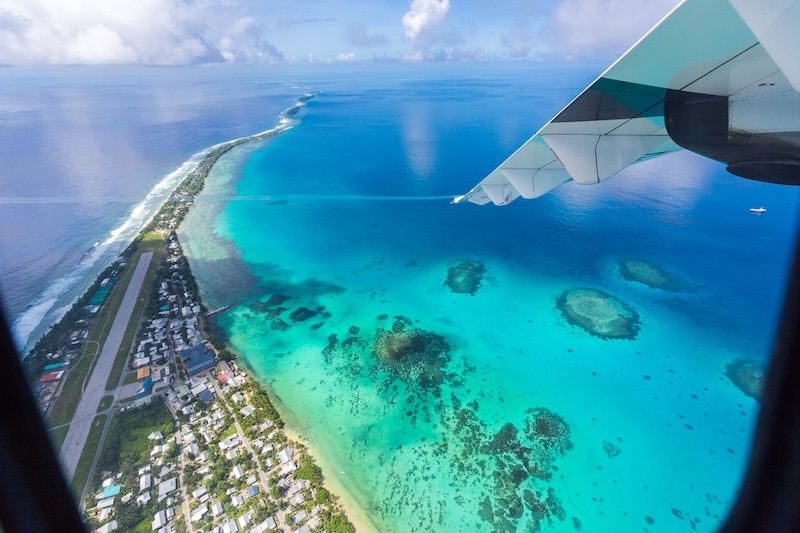
Tuvalu is an isolated country in the middle of the Pacific Ocean. It consists of nine low-lying islands and a population of roughly 12,000 people. It’s one of the hardest places in the world to reach. The only air connection runs to Fiji, there are no ATMs, and the country’s only hotel has nine rooms. Tuvalu is, by every measure, the world’s least visited country.
It is also one of the most endangered. Within the next 30 years, Tuvalu will be completely underwater.
Every year, the tides creep higher, swallowing a little more of the land. Scientists predict the nation will be nearly uninhabitable by 2050. For Tuvaluans, this isn’t just a natural disaster—it’s an existential crisis unlike any other.
Yet this is a people known for resilience and resourcefulness. Throughout their history, Tuvaluans have adapted to isolation, scarcity, and shifting seas. Now, as their islands disappear, they are turning to a new frontier for survival: the digital world.
The Australian government has offered resettlement pathways for Tuvalu’s citizens. But the islands themselves—their landscapes, their churches, their songs—are being moved somewhere no nation has gone before: the Metaverse.
An Ancient Island Civilization
Tuvalu’s story began more than 3,000 years ago. Its first settlers were Polynesian voyagers who developed a network of small island communities bound by trade, kinship, and shared traditions.
For centuries, Tuvalu’s isolation protected its culture. Even during Europe’s Age of Exploration, the islands remained largely untouched—until the 19th century, when English missionaries arrived. They brought Christianity and engaged in a brutal practice known as blackbirding, kidnapping locals to work as forced laborers on foreign plantations. The islands were renamed the Ellice Islands and later became a British colony before gaining independence in 1978.
Despite centuries of upheaval, Tuvaluan culture endures—rooted in Polynesian values of harmony, respect, and connection to the land. Traditional dances, songs, and ceremonies pay tribute to Fenua, the word Tuvaluans use to describe homeland, ancestry, and identity.
To them, the land is not property. It is family, memory, and belonging. Losing it means losing everything that defines who they are.
Read more like this: Top 10 Things to Know if You’re Moving to the Cayman Islands
Tuvalu: Life at Sea Level
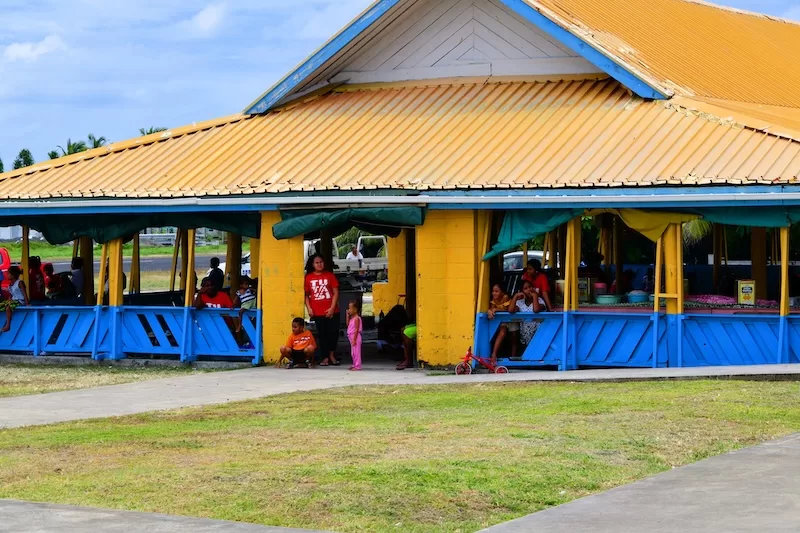
Tuvalu’s small size belies its vibrancy. The community’s isolation has created a strong sense of togetherness, known locally as Falepili—the spirit of caring for one another.
The airport runway in Funafuti, the capital, serves as the island’s largest public park. On most days, it’s a playground and gathering place where children play soccer, families picnic, and friends chat in the shade. When one of the three weekly flights is due, people clear the space an hour in advance—then return once the plane departs.
But beneath the tranquility lies dread. That same runway floods regularly during high tides. Saltwater seeps into freshwater wells. Crops fail. Homes crumble into the sea. Even the island cemetery has begun to wash away.
The Tuvaluans’ relationship with the land is spiritual and ancestral. Every meter of coastline lost erases a piece of collective memory. Yet, despite contributing almost nothing to global carbon emissions, Tuvalu faces the harshest consequences of climate change.
Its leaders have become fierce advocates at international summits, calling out the moral hypocrisy of wealthier nations. In Tuvalu, there is no debate over whether climate change exists—only how long they have left.
Inventive Ways to Survive
For decades, Tuvalu has found ingenious ways to endure. About ten percent of its GDP comes from licensing the country’s internet domain is: .tv. Every streaming platform and broadcaster using that suffix pays Tuvalu for the privilege—a rare economic win for a nation with limited exports.
That same spirit of innovation now shapes its survival strategy. In 2023, Tuvalu declared itself “eternally sovereign,” meaning that even if the land disappears, Tuvalu will continue to exist through its people, its government, and its culture—wherever they are.
Australia has pledged millions in aid and opened migration pathways for Tuvaluans displaced by rising seas. But the question remains: how do you preserve a country when its land no longer exists?
The Future Now Project
In 2021, Tuvalu’s government unveiled a groundbreaking idea: to become the world’s first digital nation.
The initiative, known as the Future Now Project, will scan and recreate every inch of the islands—its geography, heritage sites, songs, stories, and archives—and upload them to the Metaverse.
Tuvalu’s ministries are already transitioning their administrative functions online. The goal is to ensure that the nation can continue to operate, vote, and educate citizens—even in exile.
The vision is both breathtaking and unsettling. Tuvalu’s digital replica would allow future generations to explore their homeland long after it’s gone, walking its beaches and villages through virtual reality. Every song, every dance, every church and palm-fringed lagoon will live on as data.
It’s an act of defiance—a way of saying that Tuvalu may sink, but it will never disappear.
Between Innovation and Loss
Not everyone welcomes the idea. Critics argue it’s dystopian to replace lived experience with virtual nostalgia. For some, it’s unbearable to imagine future Tuvaluans “visiting” their homeland only as avatars.
And yet, others see it as visionary. In a world that often frames small island nations as victims, Tuvalu’s digital pivot is a declaration of autonomy. It transforms tragedy into invention, history into endurance.
Still, even the most advanced servers cannot replace the smell of the sea or the warmth of the sand. Thousands will lose their homes. Some will refuse to leave until the ocean reaches their doorstep.
But Tuvalu’s decision may set a precedent for a future where climate migration becomes the norm—and where nationhood itself must evolve.

What Is a Country Without Land?
Visitors to Tuvalu today describe a strange awareness—the feeling of walking through a place already turning into memory. The streets, the laughter, the ceremonies—all destined to exist one day only as pixels on a screen.
And yet, life goes on. Children still play on the flooded runway. Families still sing hymns under the stars. There’s resilience in the rhythm of daily life, a quiet insistence that the islands still belong to their people, no matter what the sea takes.
Thinking of Where to Move Next? Check the Best Expatriate Countries in 2025
Tuvalu forces the world to confront uncomfortable questions:
What defines a nation—its borders, or its people?
Can sovereignty exist without geography?
And if a country can live online, what does that mean for all of us?
Tuvalu’s answer is simple and profound: it will not be erased.
The islands may be sinking, but Tuvalu is going nowhere.
————————————-
Ethan Rooney is an Irish journalist covering global communities, culture, and niche movements. You can find more of his work here.
About the Author
Ethan Rooney is an Irish journalist covering global communities, culture, and niche movements. You can find more of his work here.
Contact Author
"*" indicates required fields
Stay Ahead on Every Adventure!
Stay updated with the World News on Escape Artist. Get all the travel news, international destinations, expat living, moving abroad, Lifestyle Tips, and digital nomad opportunities. Your next journey starts here—don’t miss a moment! Subscribe Now!